


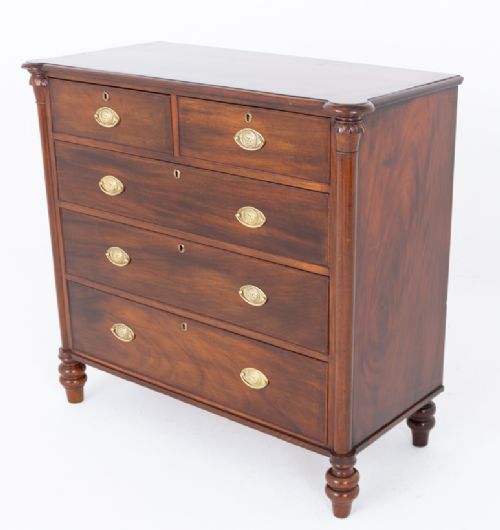


Turned Leg Mahogany Bureau
These turned leg mahogany bureau pieces offer a practical writing surface paired with timber construction, suiting studies and living spaces alike.
Turned Leg Mahogany Bureau
A turned leg mahogany bureau brings together the practical workspace of a writing desk and the rich grain of mahogany timber. When people search for a turned leg mahogany bureau, they encounter pieces originating from the Georgian, Victorian, and William IV periods, alongside specific examples by makers such as James Mein of Kelso.
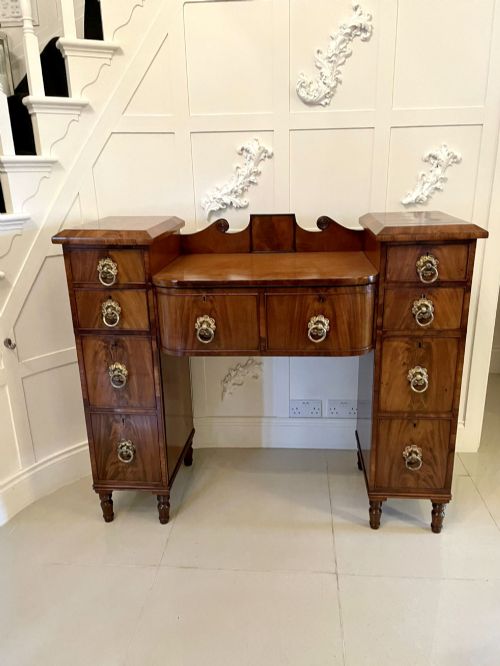
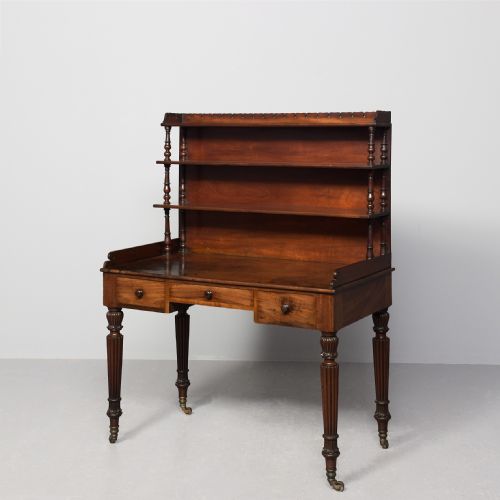
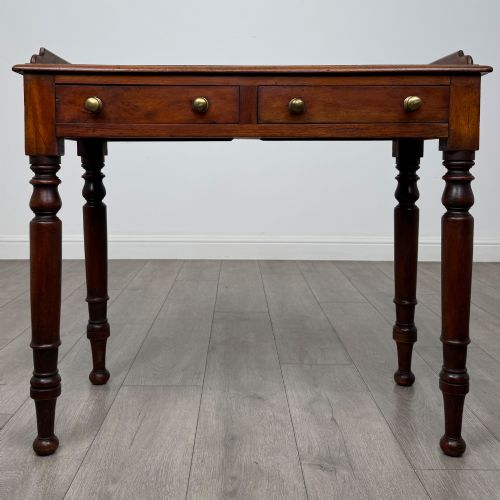
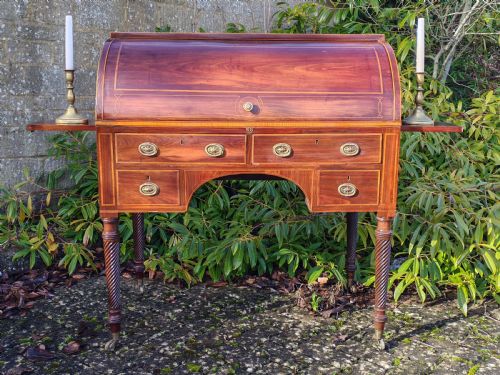
The forms span writing desks, writing tables, and cylinder top desks, alongside occasional chests of drawers with writing surfaces. The turned leg variety demonstrates specific carpentry techniques typical of nineteenth-century workshops, providing both stability and decorative turning.
These items serve as functional writing stations while displaying the varied character of mahogany. The listings show forms ranging from compact kneehole writing desks to larger cylinder top desks and library writing tables.
How they were made
Makers constructed these pieces primarily from solid mahogany and mahogany veneers, often incorporating brass hardware and fitted leather writing surfaces. Workshops employed turning lathes to shape the legs, producing cylindrical or fluted supports that elevate the writing compartment.
Internal compartments frequently feature secondary timbers such as satinwood inlay, creating contrast within the writing drawers and pigeonholes. The structural joints rely on traditional cabinetmaking methods to support the heavy timber frames and hinged writing flaps.
Turned Leg Mahogany Bureau Retail Price Guide 2026
Typical asking prices for turned leg mahogany bureau among the pieces listed under this phrase on Sellingantiques today, from the lower quarter to the upper quarter. They describe what is for sale here now, not the wider market.
Current listings feature nineteenth-century examples incorporating mahogany, brass, leather, and satinwood inlay across forms such as writing tables and chests of drawers.
What varies in quality
The sophistication of the timber figure largely dictates the distinction between standard and superior pieces, particularly when flame mahogany or intricate satinwood inlay is present. Finer examples display careful grain matching across the fall front and drawer faces, ensuring visual continuity.
The execution of the turned legs and the retention of original brass handles or leather inserts influence the overall integrity of the piece. Workshops that invested greater time in hand-carved turning details and precise dovetail joinery produced desks that maintain their structural cohesion over centuries.
James Mein of Kelso
The Turned Leg Mahogany Bureau Glossary
- Bureau
- A writing desk featuring a sloping hinged lid that opens to reveal a fitted interior of small drawers and pigeonholes. This form provides a concealed workspace that can be closed when not in use.
- Mahogany
- A durable tropical hardwood prized for its rich reddish-brown colour and stability in furniture construction. It accepts fine polishing and displays varied grain patterns including flame and straight figures.
- Cylinder top
- A desk design featuring a quarter-circle rotating wooden cylinder that covers the writing surface and interior compartments. When rolled back, it retracts into the body of the desk.
- Satinwood inlay
- Ornamental decoration utilising contrasting light yellow timber inserted into recesses within the mahogany surface. This technique creates geometric or floral borders around drawer fronts and borders.
- Kneehole writing desk
- A compact desk configuration featuring a central recess for the user's legs, flanked by pedestals of small drawers. This layout maximises storage whilst maintaining a modest footprint.
Turned Leg Mahogany Bureau: Frequently Asked Questions
What periods do these desks date from?
The available pieces span the Georgian, Victorian, and William IV eras, covering the nineteenth century. Specific construction dates range from around 1800 through to the late Victorian decades.
Craftsmen during these periods adapted traditional forms like the cylinder top desk and the writing table, incorporating regional variations in turning and timber selection.
What materials were used?
Mahogany serves as the primary structural and surface timber, frequently enhanced by satinwood inlay and brass mounts. Writing surfaces often feature inset leather panels for a durable writing plane.
Internal compartments utilise secondary timbers for drawer linings and dividers, maintaining traditional cabinetmaking standards throughout the construction.
Are these desks suitable for daily use?
These pieces function effectively as working desks, offering stable writing surfaces and compartmentalised storage for stationery. The solid mahogany construction provides the necessary durability for modern placement.
Care should be taken to protect the leather inserts and polished mahogany surfaces from moisture and excessive direct sunlight.
How do I identify a Georgian piece?
Georgian desks typically exhibit restrained classical proportions, premium flame mahogany veneers, and precise hand-cut dovetailing in the drawer construction. Cabinetmakers of this era focused on timber figure and structural harmony.
Hardware such as brass handles and escutcheons on Georgian examples generally reflects the neoclassical taste of the period.