


Turned Leg Lounge
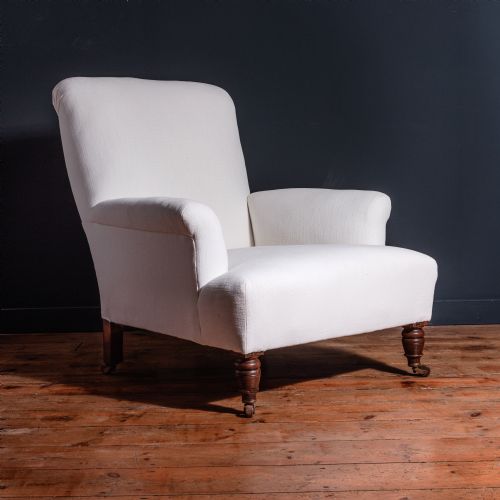
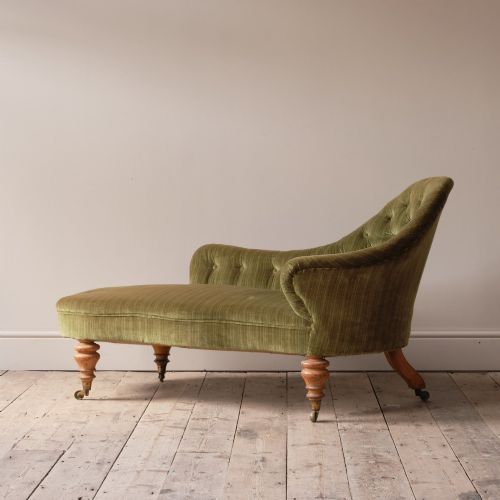
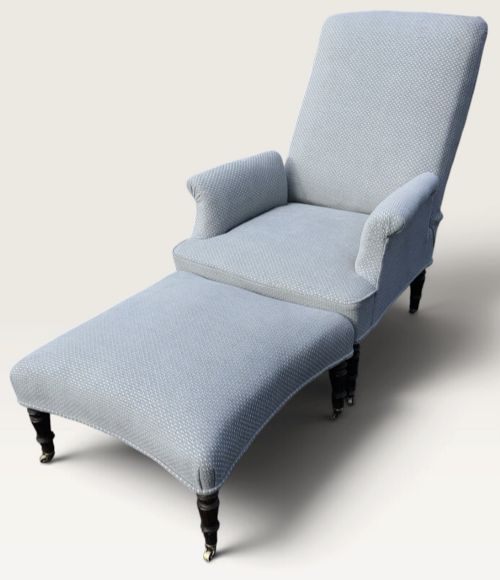
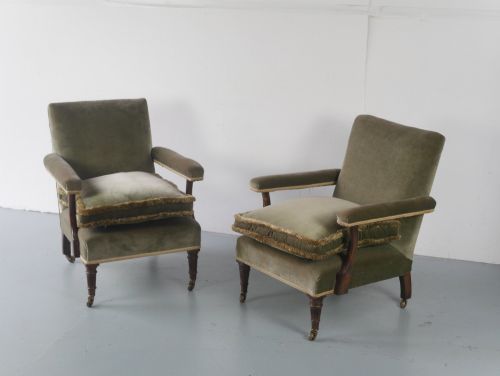
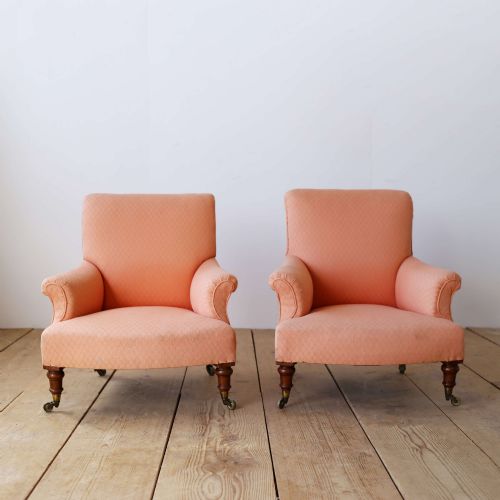
Turned leg lounge seating spans robust country house armchairs and upholstered chaises, offering solid timber frames paired with deep, comfortable seating.
Turned Leg Lounge
A turned leg lounge search brings together a variety of seating forms, most commonly armchairs, daybeds, and chaise longues originating from the nineteenth and early twentieth centuries. Pieces often reflect English country house, Victorian, and Edwardian aesthetic traditions, alongside French nineteenth-century examples.
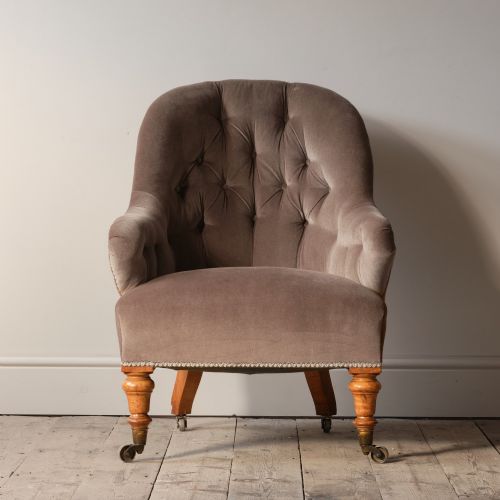
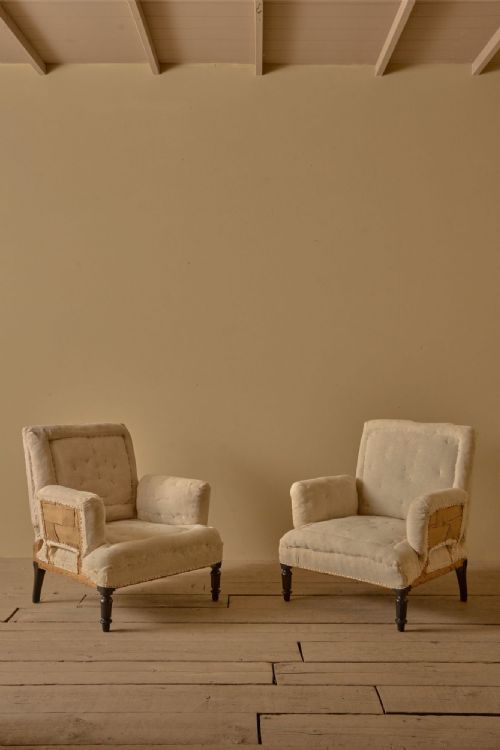
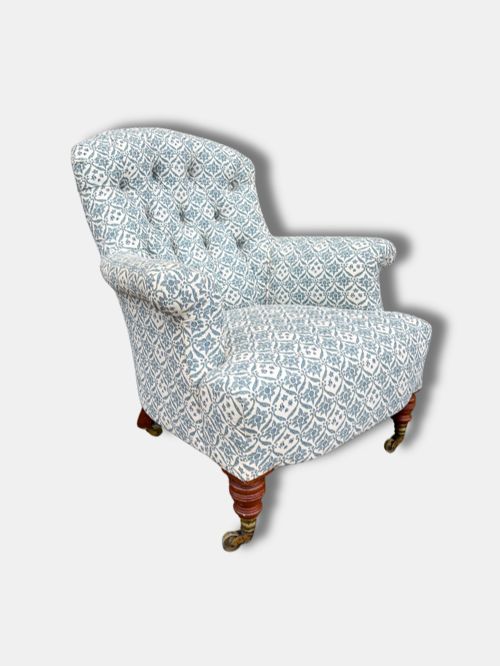
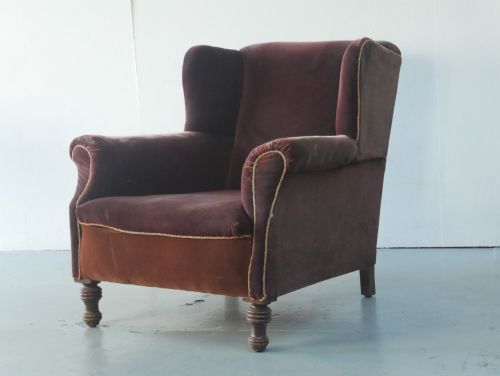
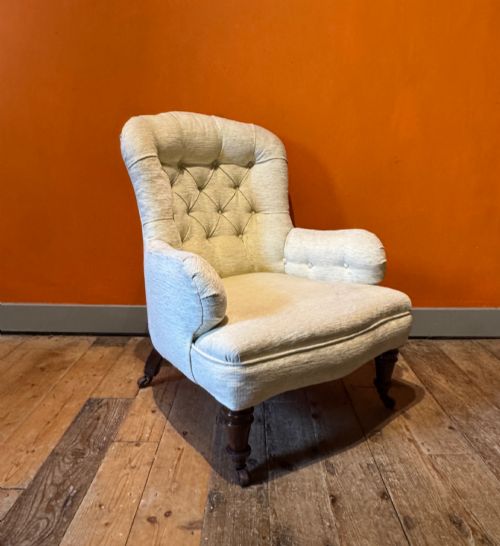
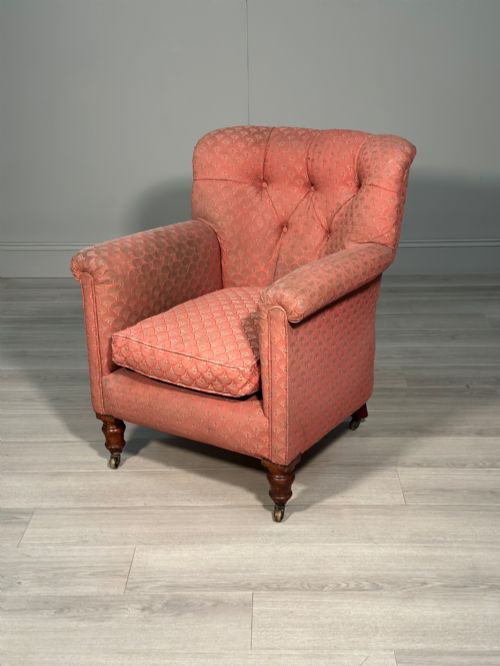
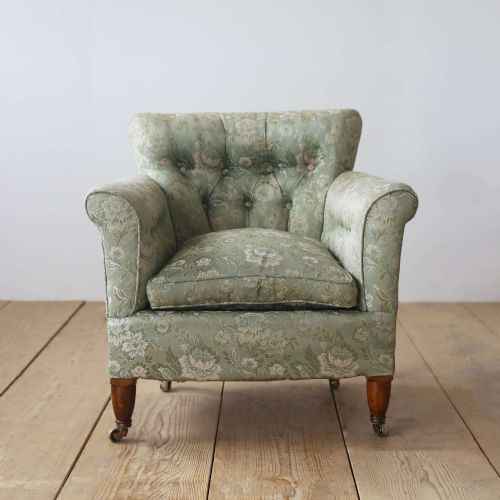
The inventory on this page leans heavily toward armchairs featuring upholstered button backs, scroll arms, and robust wooden framing. Alongside these, buyers find occasional tables and slipper chairs, all sharing the characteristic turned wooden supports.
Origins stretch across English, Irish, and French workshops, encompassing styles from early Victorian country pieces to late Victorian bedroom chairs. The common thread uniting these diverse forms remains the distinct turned timber leg supporting the upholstered or wooden superstructure above.
Materials and construction
Frames rely predominantly on hardwoods such as mahogany, walnut, oak, and pine, shaped and joined to bear heavy daily use. Turned legs are lathe-turned from these solid timbers, sometimes fitted with brass castors to ease movement across heavy carpets.
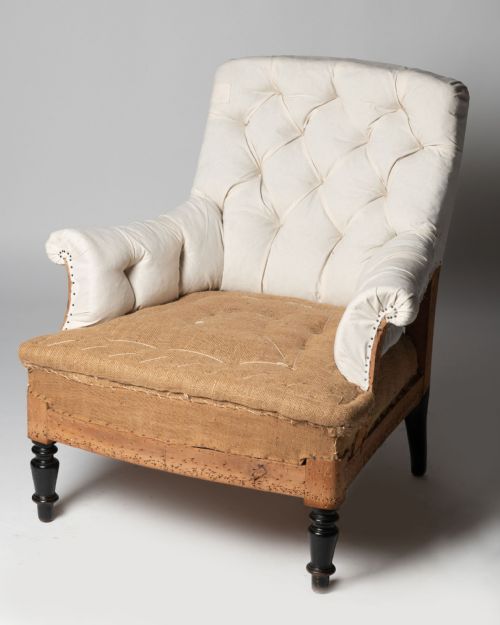
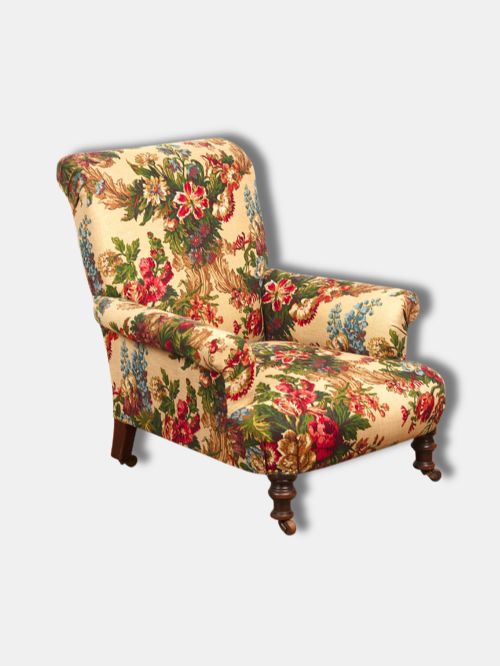
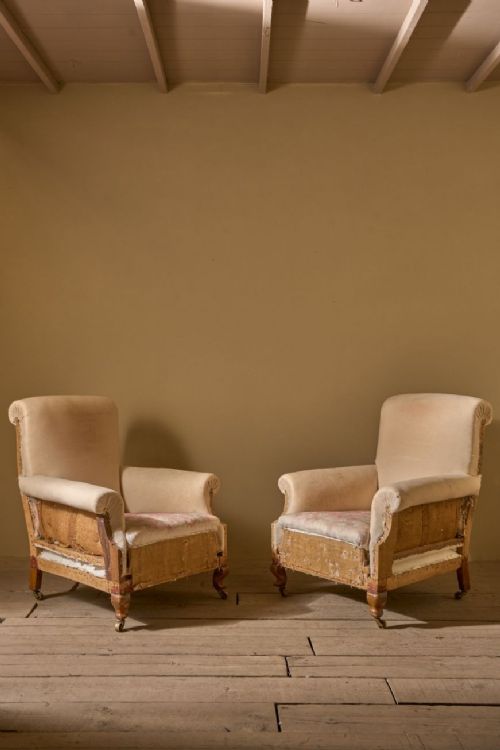
Upholstery techniques utilise traditional stuffing materials layered over webbing and springs, finished with fabrics including velvet, calico, hessian, and floral printed textiles. Button-tufting secures the interior padding while creating the characteristic dimpled surface pattern on nineteenth-century chair backs.
Turned Leg Lounge Retail Price Guide 2026
Typical asking prices for turned leg lounge among the pieces listed under this phrase on Sellingantiques today, from the lower quarter to the upper quarter. They describe what is for sale here now, not the wider market.
Periods represented span from the early eighteenth century through the Victorian and Edwardian eras up to the nineteen-thirties.
What separates the best from the rest
Quality rests in the integrity of the timber frame and the precision of the lathe work on the legs. Superior pieces maintain tight joinery without structural wobble, whereas lesser examples show excessive timber shrinkage or replacement components.
The execution of the upholstery foundation dictates the longevity of the piece. Master workshops balance spring tension and padding depth to ensure the seat retains its proper proportions and comfort over decades of use.
Strahan And Co Dublin·Howard And Sons·George Jack For Morris And Co·Gillows
The Turned Leg Lounge Glossary
- Chaise Longue
- An elongated chair form designed for reclining, combining a chair back with a seat long enough to support the legs. These pieces appear frequently in nineteenth-century French and English country house interiors.
- Button Back
- An upholstery method where deep buttons are pulled through the padding and secured to the frame in a grid pattern. This technique creates a firm, tailored surface common on Victorian armchairs.
- Slipper Chair
- A low-to-the-ground upholstered chair originally designed for bedrooms to assist with putting on footwear. They typically feature short turned legs and supportive high backs.
- Tub Library Armchair
- A compact seating form with a curved, continuous back and armrest rail enclosing the sitter. Regency and nineteenth-century examples frequently employ mahogany framing.
- Wingback Armchair
- A high-backed chair with projecting side panels designed to shield the sitter from drafts. Early examples utilise heavy oak or walnut frames.
Turned Leg Lounge: Frequently Asked Questions
What defines a turned leg lounge chair?
These chairs combine a substantial upholstered upper section with solid wooden legs shaped on a lathe. The turned woodwork provides structural support while adding decorative detail.
Such pieces range from compact bedroom chairs to deep-seated country house armchairs dating from the nineteenth and early twentieth centuries.
How do I identify a Victorian armchair?
Victorian armchairs typically display heavy timber frames of walnut or mahogany, often paired with button-tufted upholstery and sprung seats. Turned wooden legs frequently feature brass castors at the base.
Proportions tend to be generous, reflecting the comfort-focused interior design trends of the mid to late nineteenth century.
Where were these lounge pieces used?
Historically, these items furnished drawing rooms, libraries, and bedrooms in country houses and urban residences alike. Chaise longues and daybeds suited formal entertaining spaces for resting during the day.
Smaller slipper chairs and bedroom chairs found their place in private dressing quarters for daily routines.
How do I care for antique upholstery?
Maintenance requires gentle vacuuming using a soft brush attachment to remove dust from crevices and button folds. Avoiding direct sunlight prevents the textile colours from fading over time.
Wooden turned legs benefit from occasional dusting and mild beeswax polishing to preserve the timber grain without building up heavy residues.