

Turned Leg Chair on Castors
Turned leg chair on castors examples are sturdy nineteenth-century seating solutions offering mobility alongside traditional comfort for daily use.
Turned Leg Chair on Castors
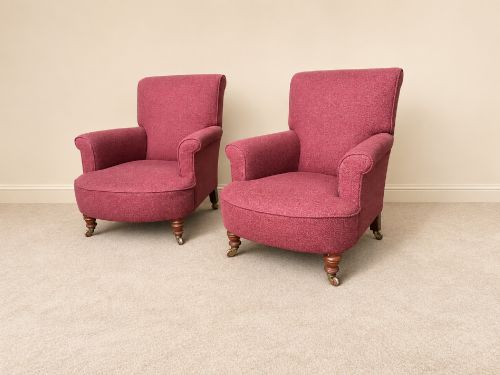
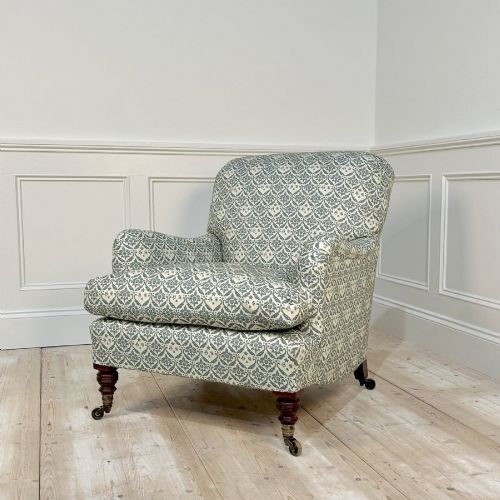
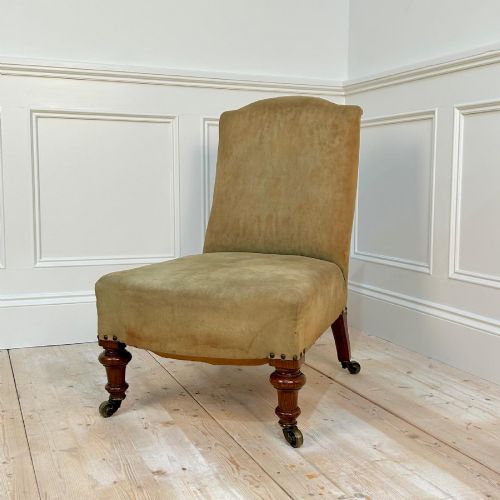
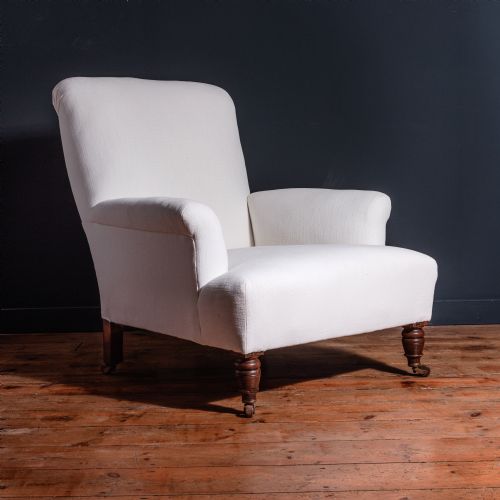
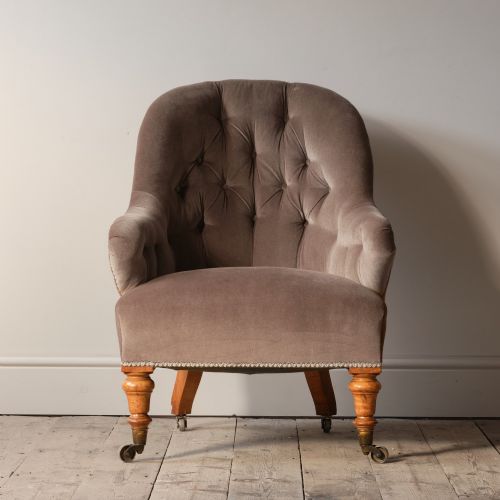
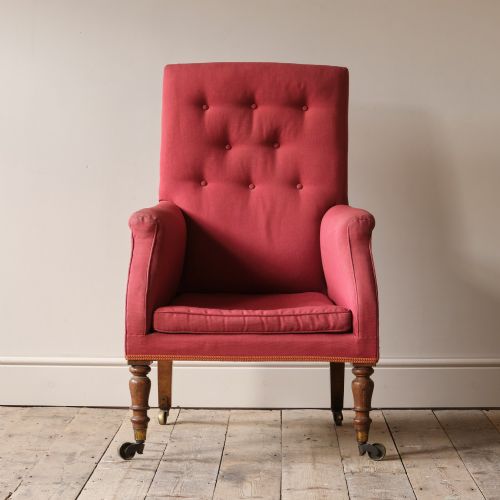
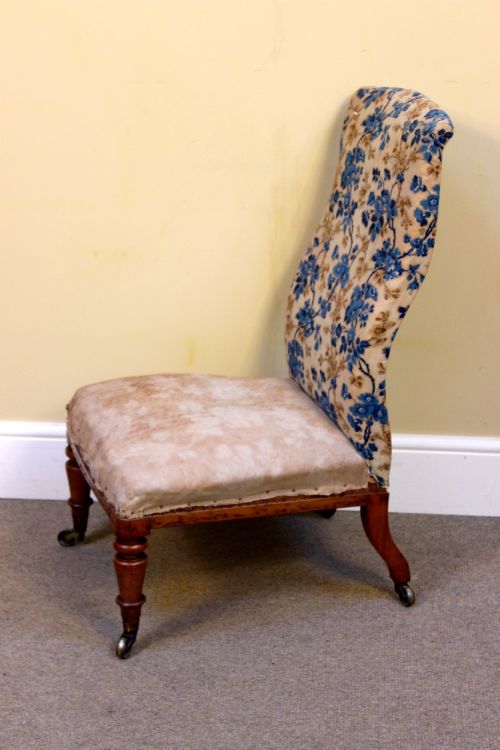
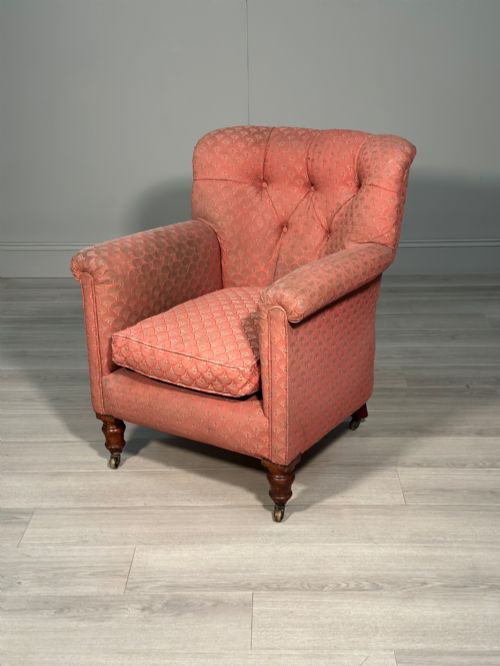
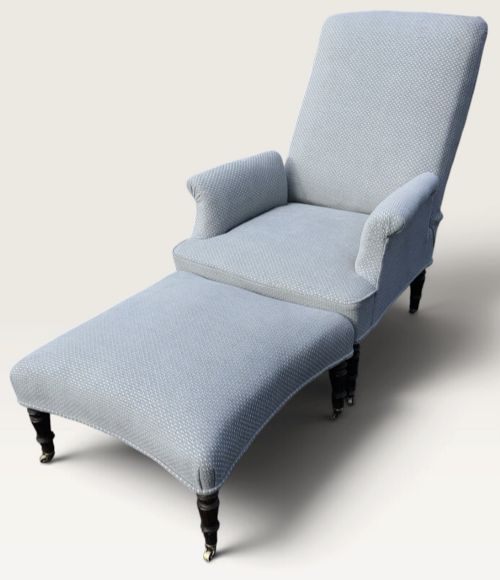
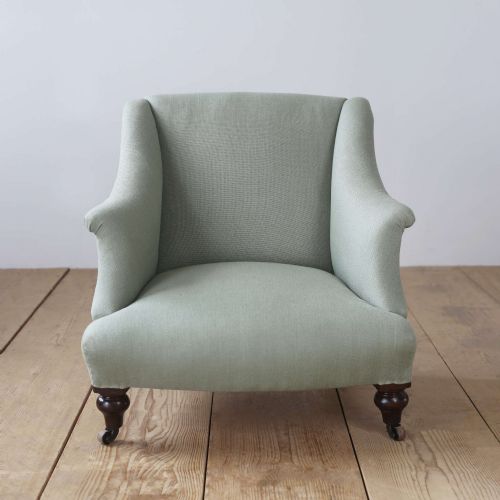
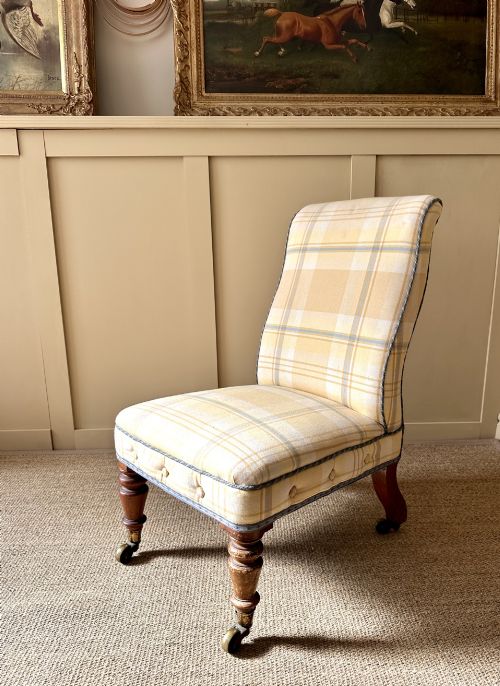
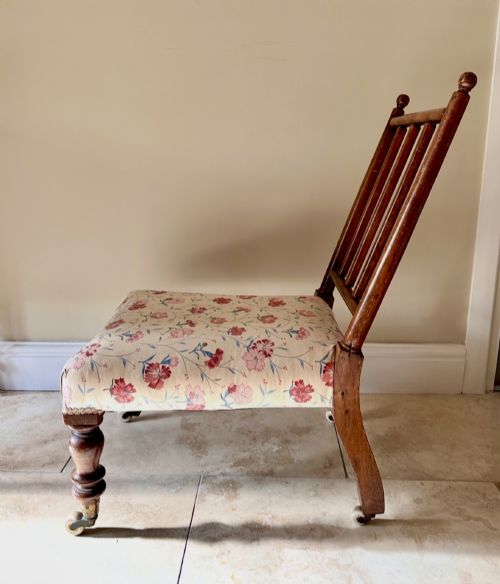
A turned leg chair on castors is a substantial seating form primarily appearing across the nineteenth century, including Victorian, Edwardian, and Regency periods. These pieces span various forms such as library armchairs, country house armchairs, and slipper chairs designed for domestic comfort.
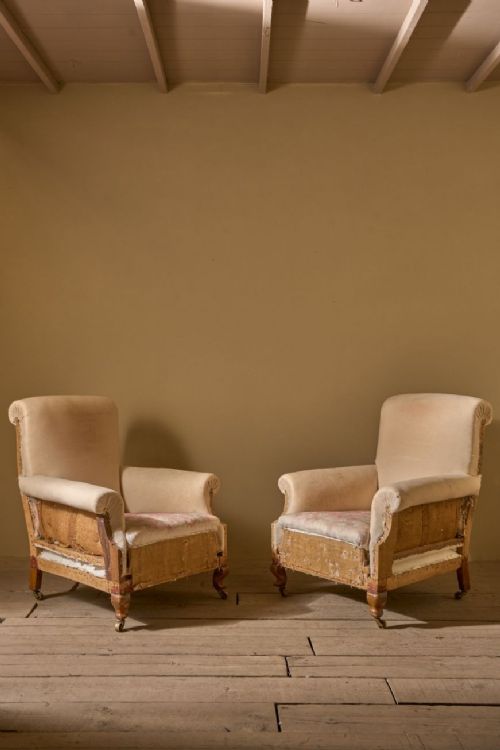
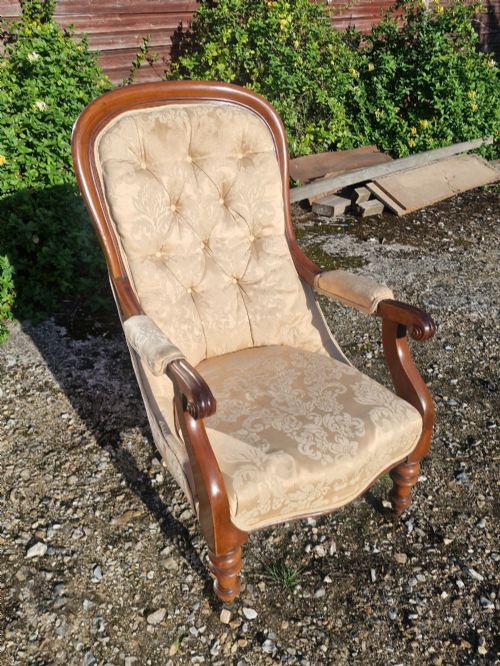
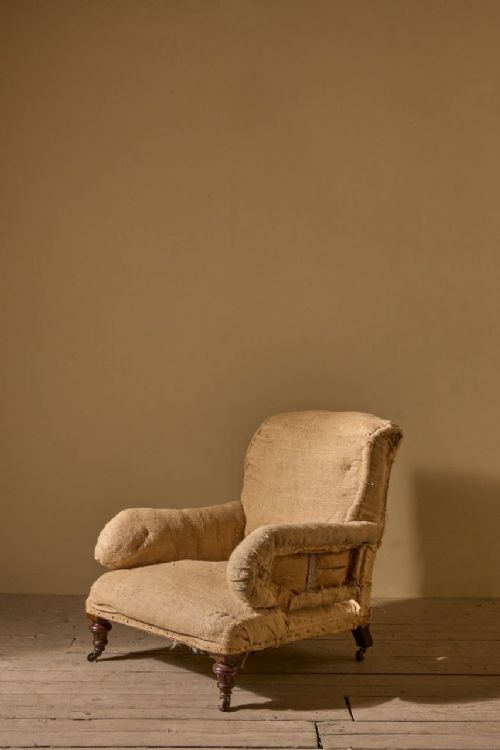
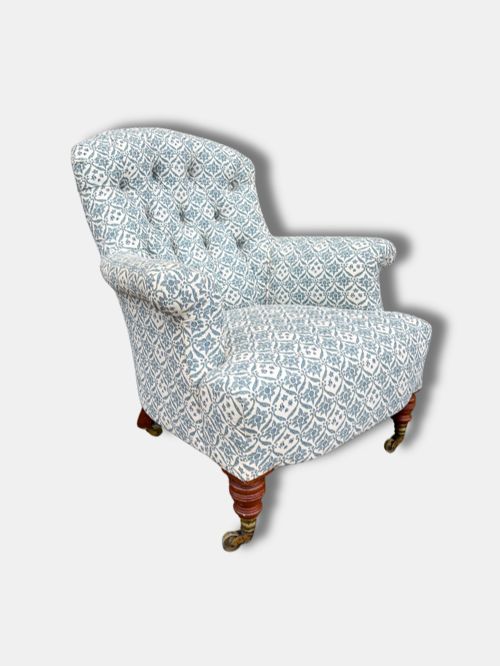
The most common examples on this page are nineteenth-century armchairs featuring upholstered frames and turned wooden supports fitted with brass castors for easy movement across carpets. Makers and country house workshops produced these comfortable seats using robust timbers like mahogany, walnut, and oak.
Materials and construction
Construction relies on solid hardwoods such as mahogany, oak, and walnut to form the structural frame and the characteristic turned legs. These wooden supports are then fitted with metal brass cappings and swivel castors.
Upholstery involves traditional materials including hessian, calico, fabric, leather, velvet, and wool, often finished with button backs or deep cushioning.
Turned Leg Chair on Castors Retail Price Guide 2026
Typical asking prices for turned leg chair on castors among the pieces listed under this phrase on Sellingantiques today, from the lower quarter to the upper quarter. They describe what is for sale here now, not the wider market.
Listings feature woods like mahogany, walnut, and oak paired with brass, leather, velvet, and hessian across Victorian and Edwardian periods.
Assessing quality
Quality rests in the firmness and depth of the internal springing and the weight of the timber used in the frame. Superior examples display crisp turning on the wooden legs and heavy brass castors that move smoothly.
The integrity of the original upholstery materials and the reputation of the maker or workshop influence the standing of an individual piece within the range.
Howard and Sons·Morris and Co·Gillows·Holland and Sons·William Birch
The Turned Leg Chair on Castors Glossary
- Castor
- A small wheel fitted to the foot of a leg to allow smooth rolling movement across floors. These are typically mounted in brass sockets.
- Turned leg
- A cylindrical wooden support shaped on a lathe to create decorative profiles and rings. This method was widely used on nineteenth-century seating.
- Library armchair
- A deep, upholstered seat designed for reading rooms, often featuring padded arms and robust wooden framing. They prioritize long-term seated comfort.
- Button back
- An upholstery technique where indentations are formed by pulling twine through the padding and securing it with buttons. This creates a tufted surface pattern.
Turned Leg Chair on Castors: Frequently Asked Questions
What periods do these chairs come from?
The listings span the nineteenth century, with particular concentrations in the Victorian and Edwardian eras. Pieces also appear from Regency, William IV, and Georgian periods.
Craftsmen continued refining these upholstered armchair designs well into the twentieth century, maintaining traditional turning and castor styles.
How do castors attach to the legs?
Castors are generally fitted into the base of the turned wooden legs using brass cappings or stem mounts. This allows the small metal wheels to swivel freely.
Solid brass mounts provide secure attachment while supporting the heavy weight of upholstered frames.
What fabrics cover these armchairs?
Original and replacement coverings include leather, velvet, calico, hessian, tapestry, and wool plaid. Many incorporate specialised textiles from traditional design houses.
Inner stuffing often relies on traditional materials like down, hair, and coil springs to maintain deep seat comfort.
Where were these chairs used?
These seating pieces served primarily in libraries, drawing rooms, and country house reception spaces. Their mobility made them practical for repositioning near firesides.
Smaller variants like slipper chairs and nursing rooms seats were designed for bedrooms and private chambers.