



Turned Handle Chest Drawers
Turned handle chest drawers are practical storage furniture defined by characteristic circular wooden or brass pulls, offering robust utility and period character.
Turned Handle Chest Drawers
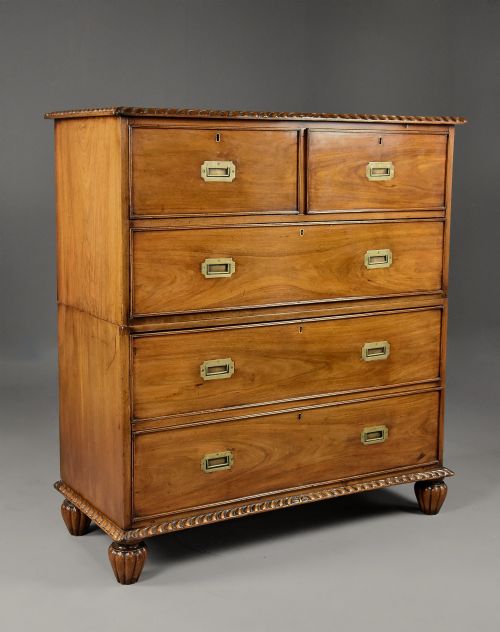
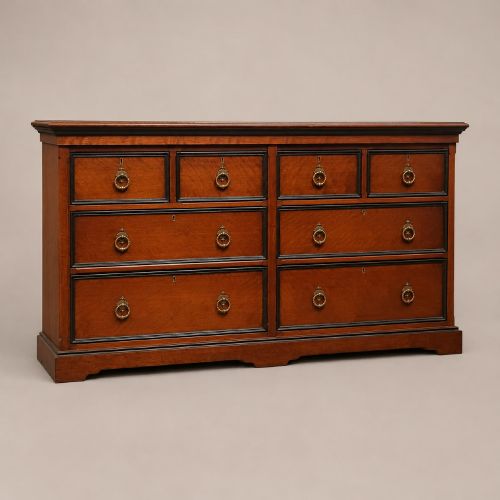
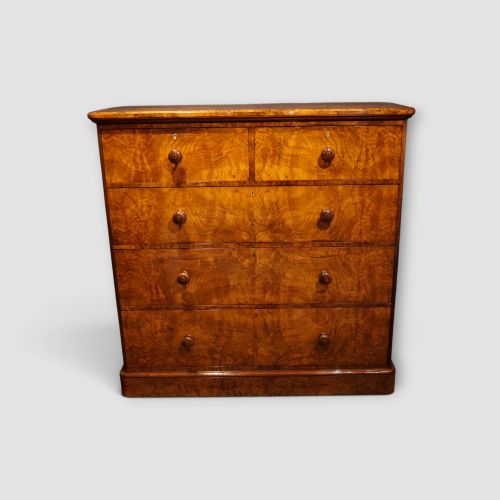
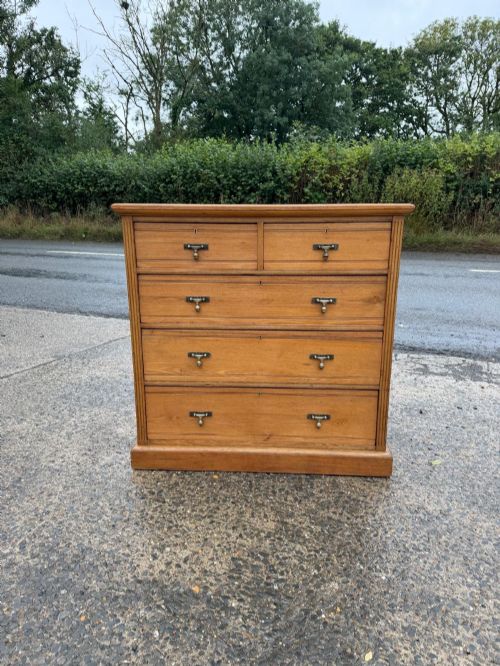
A turned handle chest drawers search brings up sturdy storage furniture originating primarily from the Georgian, Victorian, and early twentieth century periods. These pieces span standard multi-drawer chests, chests on stand, and cabinets utilising distinct turned wooden knobs and pulls.
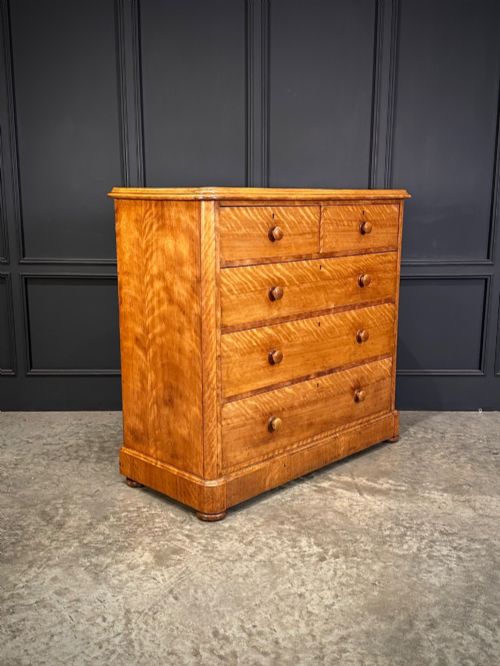
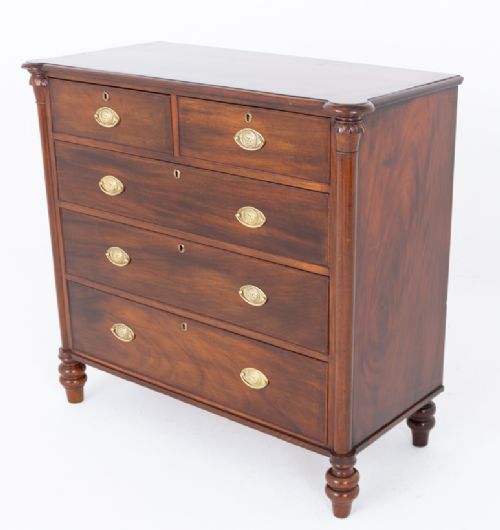
The most common examples encountered on this page are Victorian mahogany and pine pieces, often arranged in traditional two-over-three configurations. Robust pine versions sit alongside more formal mahogany and satinwood iterations, demonstrating the wide domestic appeal of these turned handle designs.
Earlier Georgian and late nineteenth century examples appear alongside revival styles such as William and Mary and Jacobean influences. These varied forms showcase how cabinetmakers adapted the fundamental turned handle chest drawers design across multiple decades.
Materials and Construction
Makers constructed these chests using solid timbers like mahogany, walnut, pine, and satinwood, frequently pairing cabinet carcasses with decorative drawer fronts. Selected woods received hand-turned pulls, knobs, and occasionally specialised embellishments such as laburnum oyster veneers or painted scumble finishes.
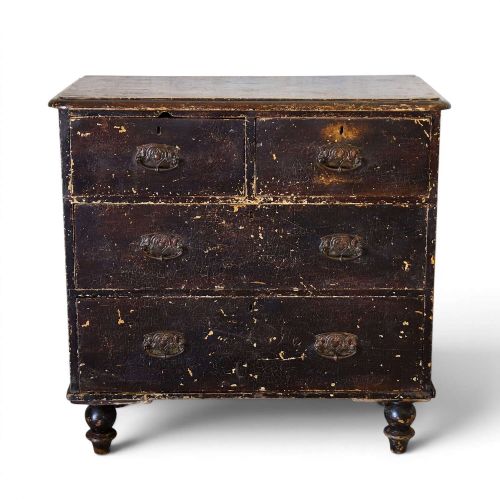
Construction methods rely on traditional joinery techniques suited to heavy domestic storage, utilising sturdy drawer boxes and solid timber backs. Surface treatments range from original brown scumble paint to polished mahogany and walnut grains, protecting the wood while accentuating natural figures.
Turned Handle Chest Drawers Retail Price Guide 2026
Typical asking prices for turned handle chest drawers among the pieces listed under this phrase on Sellingantiques today, from the lower quarter to the upper quarter. They describe what is for sale here now, not the wider market.
Some nineteenth century pine chests feature clever scumble paint designed to fool visitors into thinking common softwood was expensive exotic timber.
Factors of Quality
Superior quality in these pieces rests upon the selection of timbers, such as figured mahogany, burr walnut, or carefully matched satinwood. Finer chests display crisp turning on handles and legs, tight joinery, and well-proportioned drawer arrangements rather than plain utility construction.
Original surface finishes and intact decorative elements, including scumble paint or specialised veneers like laburnum oyster, elevate a piece above standard utilitarian storage. The integrity of the drawer construction and matching turned components determine the overall standing of the item.
The Turned Handle Chest Drawers Glossary
- Scumble paint
- A decorative surface finish applied with a translucent glaze and manipulated with tools to imitate richer wood grains or textures. This technique appears on nineteenth century pine furniture.
- Chest on stand
- A storage chest elevated on an integrated or separate support frame with legs. This form lifts the primary drawers higher off the floor.
- Bow front
- A convex curved drawer front and cabinet facade popular during the Georgian and Victorian eras. This shape softens the linear profile of standard case furniture.
- Turned handle
- A grip or knob shaped on a lathe from wood or brass. These pulls provide the defining functional detail for this category of furniture.
Turned Handle Chest Drawers: Frequently Asked Questions
What periods do these chests come from?
These chests originate from the Georgian era, the Victorian period, and the early twentieth century. Designs span straightforward pine utility pieces to formal mahogany and walnut examples.
Revival styles from later decades also draw upon these earlier historical periods, reflecting enduring preferences for turned handle designs.
How do I identify pine versus mahogany?
Pine is a softer, lighter softwood often seen with painted finishes, rustic patination, or simpler nineteenth century domestic construction. Mahogany is a dense, heavy hardwood displaying rich reddish-brown tones and finer grain patterns.
Hardwood chests generally indicate a more formal household origin compared to everyday painted or polished pine.
Were these chests used in bedrooms?
These pieces served primarily as domestic storage for garments, linens, and personal items in bedrooms and private chambers. Tall chests and wider configurations accommodated various household textiles.
Smaller formats and chests on stand suited dressing rooms and parlours where space or specific storage needs varied.
How should I care for the wood?
Maintain these surfaces by keeping them away from direct heat sources and sudden humidity changes that cause timber to warp. Dust regularly with a dry cloth and apply appropriate natural wax sparingly.
Avoid commercial silicone sprays which can damage older polished finishes and historic painted scumble surfaces.