


Turned Brass Table Lights
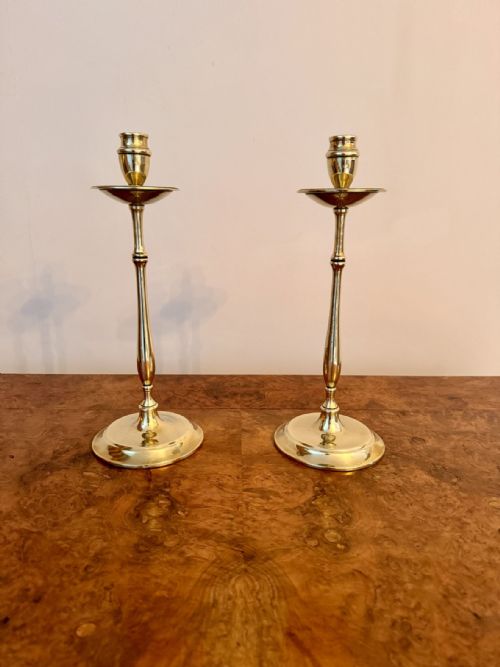
Turned brass table lights bring warmth and practical illumination to a room, ranging from simple Georgian columns to ornate Victorian designs.
Turned Brass Table Lights
Turned brass table lights encompass domestic illumination and converted candlesticks spanning the eighteenth, nineteenth, and early twentieth centuries. These pieces display the metalworking traditions of Georgian, Victorian, and Edwardian makers who shaped solid brass into functional household objects.
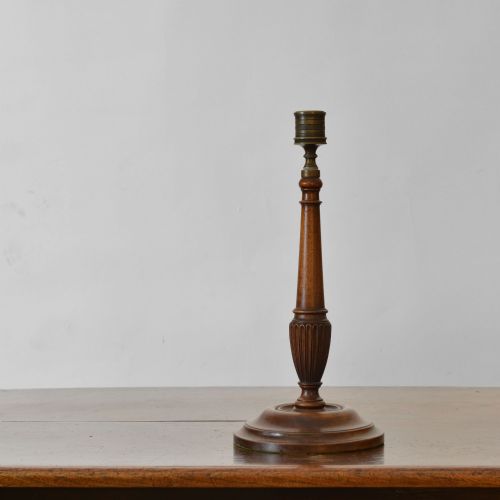
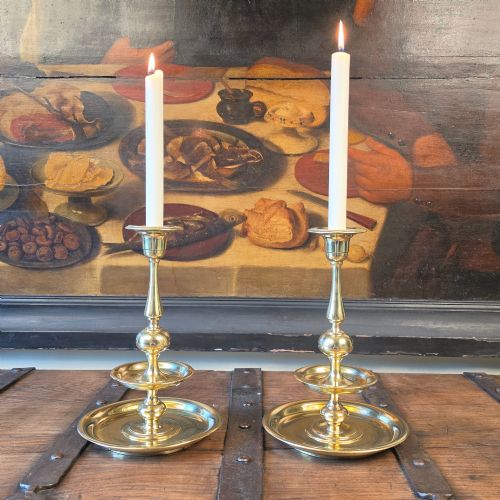
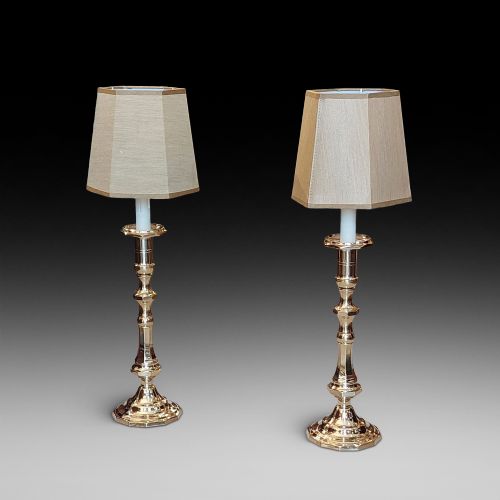
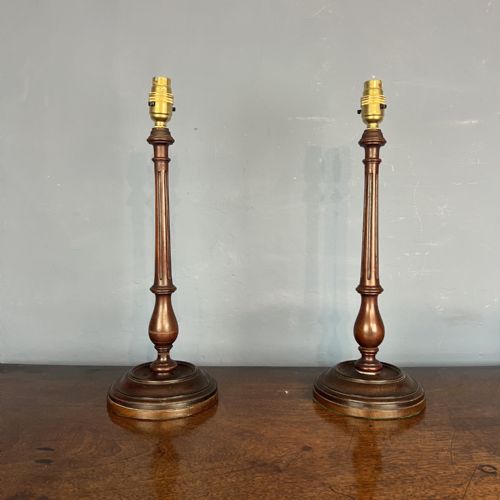
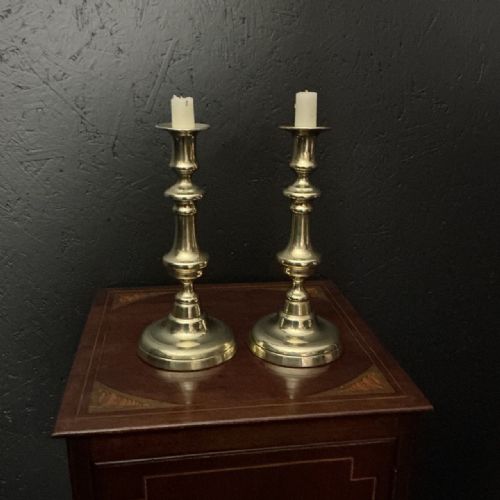
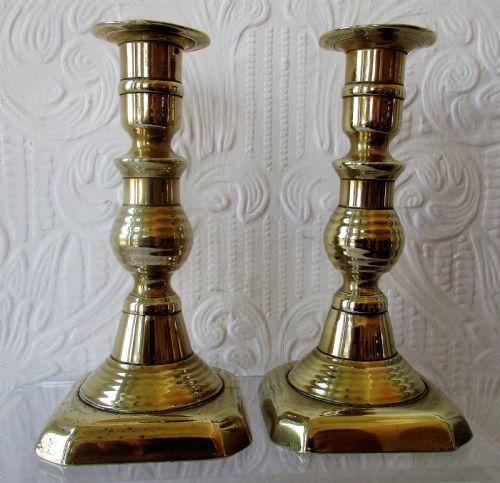
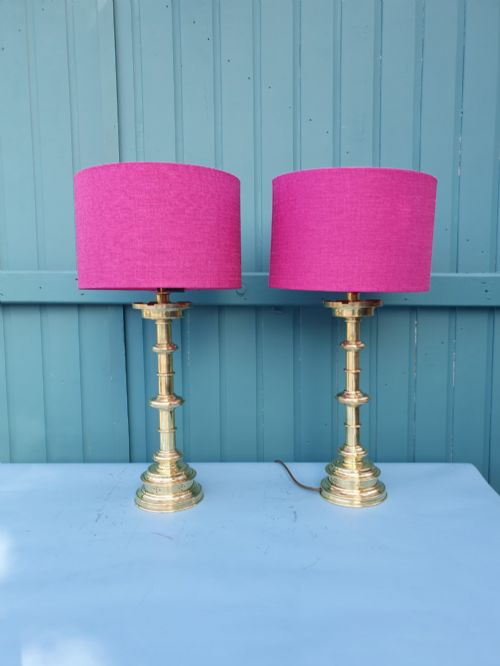
The inventory on this page relies heavily on pairs of candlesticks adapted for electricity, alongside standard table lamps and desk lamps. Forms incorporate vase-shaped columns, hexagonal bases, and dual chamber stick configurations alongside timber and marble elements.
Origins stretch from traditional English workshops to continental examples, reflecting the changing interior tastes of the nineteenth century and the early nineteen-hundreds. Buyers encounter everything from utilitarian desk pieces to tall, decorative lighting with fabric shades.
Materials and Construction
Makers utilised solid brass, often combined with secondary materials such as mahogany, lacquered wood, glass, marble, and painted surfaces. Metal components were turned on lathes to achieve precise profiles, creating the characteristic rings and curves of the column shafts.
Many examples began life as domestic candlesticks before receiving later electrical wiring, while others were constructed specifically as lamps during the Edwardian period and the early twentieth century. Structural stability relied on heavy cast or turned bases to support the weight of the metal and any fitted shades.
Certain Victorian candlesticks bear the proud stamp Queen of Diamonds, proving that even brass hardware fancied royal company.
Distinctions in Quality
Quality rests upon the crispness of the turning work and the weight of the brass utilised in the body and base. Superior examples exhibit clean lines, balanced proportions, and substantial metal thickness rather than hollow, pressed lightweight construction.
The integration of secondary materials, such as polished marble, opaline glass, or turned mahogany, distinguishes finer decorative pieces from standard utilitarian items. Makers who incorporated maker marks, stamps, or distinct regional styles like Secessionist or Arts and Crafts designs add further dimension to the range.
FREDERICK J SMITH & CO
The Turned Brass Table Lights Glossary
- Turned brass
- Metal shaped by rotation on a lathe. This technique produces symmetrical profiles and decorative rings characteristic of traditional candlesticks.
- Pricket table lamp
- A lighting form featuring a sharp metal spike designed to secure a candle, later adapted for electrical fittings.
- Chinoiserie lacquer
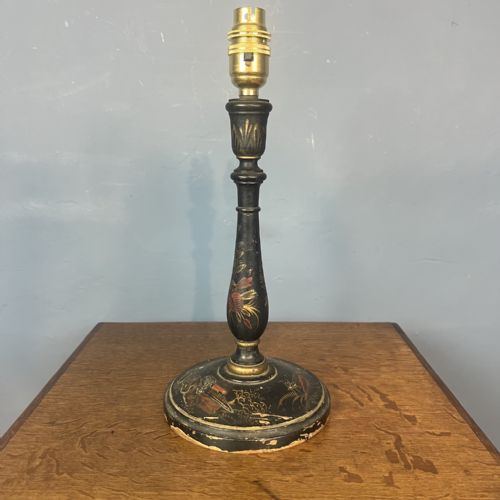
- A decorative technique imitating Asian export screens and furniture. Edwardian makers applied this finish to wooden lamp bodies.
- Secessionist
- A stylistic movement rejecting historicism in favour of geometric forms and clean lines. Pieces from this tradition display distinct modern influences.
- Dual chamber stick
- A portable lighting form featuring two candle pans or receptacles and a finger ring. These items were designed for movement between rooms.
Turned Brass Table Lights: Frequently Asked Questions
How do I date turned brass lights?
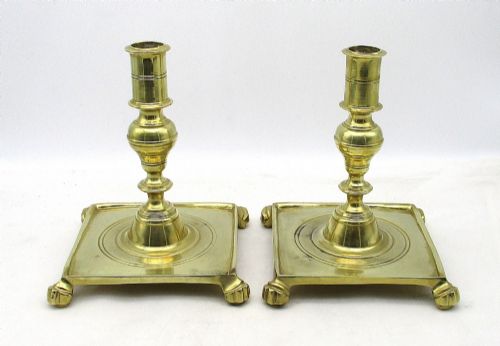
Dating relies on base construction, column profiles, and the transition from seventeenth-century casting methods to nineteenth-century machine turning. Georgian examples often feature simpler ejector mechanisms or heavier hexagonal bases, while Victorian and Edwardian pieces incorporate varied column shapes.
Examination of the metal patina, assembly screws, and any stamped maker marks or registry numbers provides further evidence for chronological placement.
Were these originally made as lamps?
Many turned brass lighting items began as domestic candlesticks during the eighteenth and nineteenth centuries. These pieces were subsequently converted to accept electrical fittings during the twentieth century.
Purpose-built electric table lamps emerge more frequently by the late Victorian and Edwardian periods, coinciding with the spread of domestic household electricity.
What styles are available?
The selection encompasses Georgian neoclassical simplicity, Victorian ornamentation, and Edwardian variations including Arts and Crafts and Chinoiserie lacquer. Some pieces reflect continental Secessionist design.
Materials extend beyond plain metal to incorporate mahogany, painted wood, opaline glass, and polished marble.
Are these sold in pairs?
A substantial portion of the inventory consists of matched pairs, particularly those converted from nineteenth-century candlesticks. Single lamps also appear, often representing desk lights, chamber sticks, or larger decorative table fixtures.
Matching pairs offer symmetry for mantelpieces, sideboards, or bedside tables.