

Turkmenistan Wool Rug
A turkmenistan wool rug brings tactile warmth and ancient nomadic geometry into modern interiors through deep madder red tones.
Turkmenistan Wool Rug
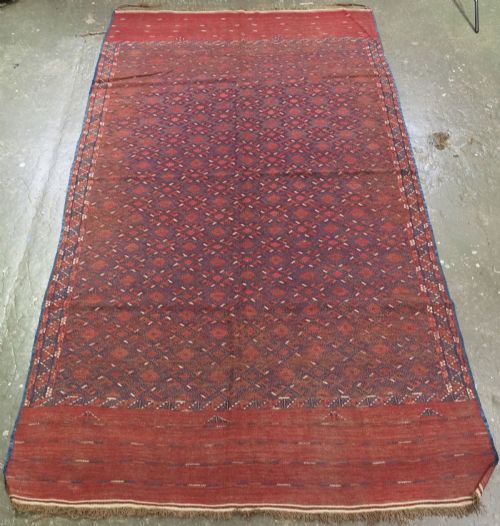
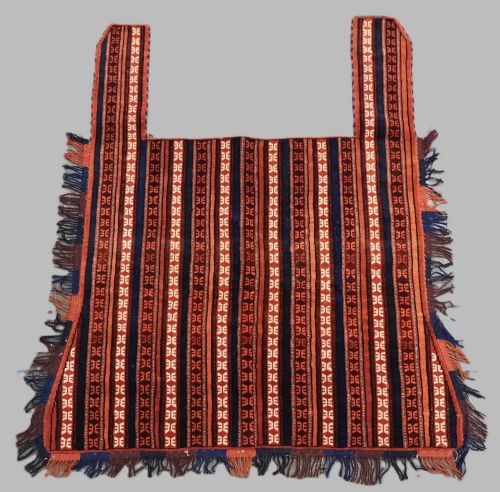
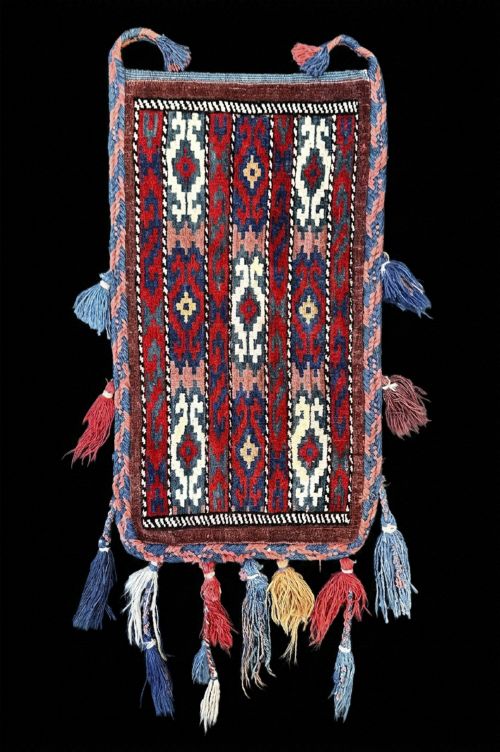
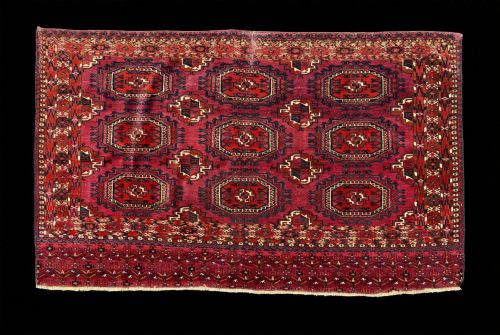
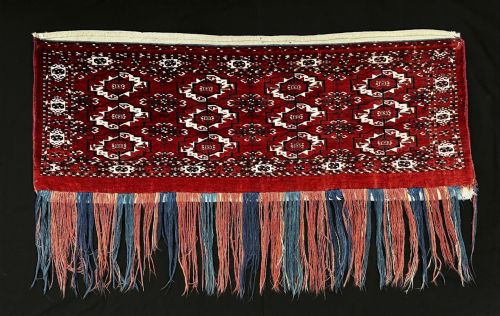
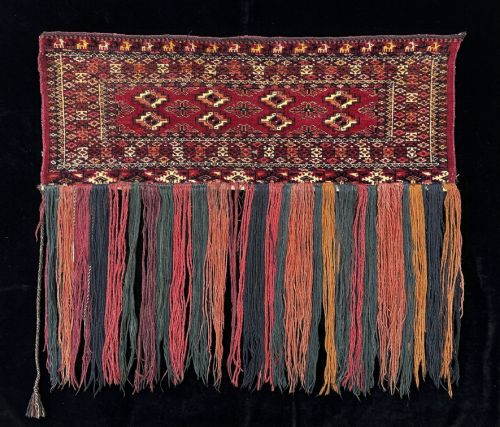
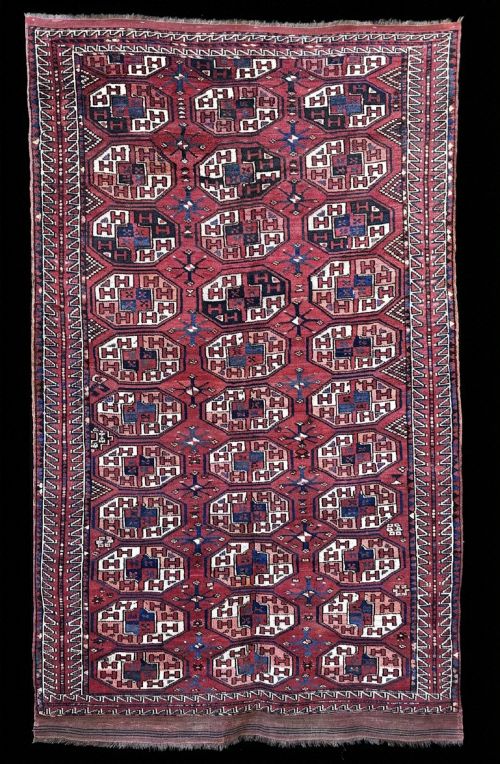
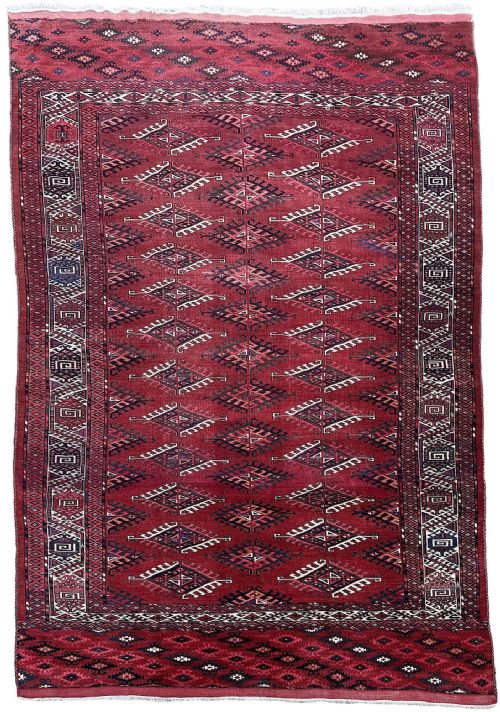
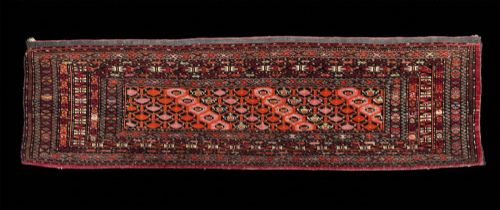
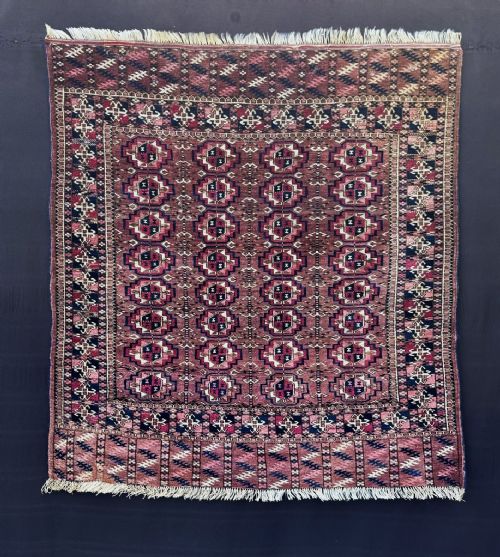
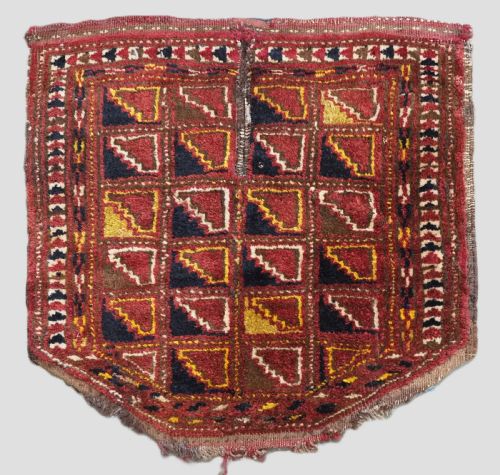
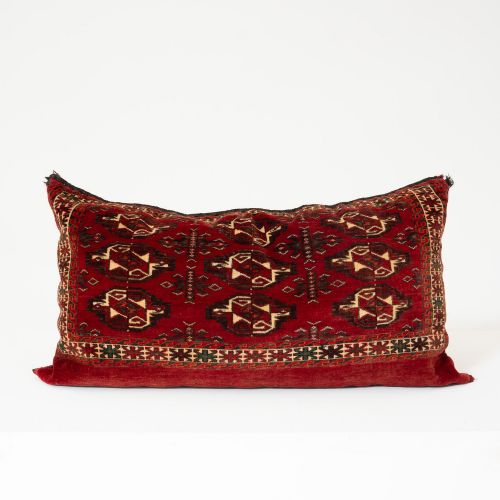
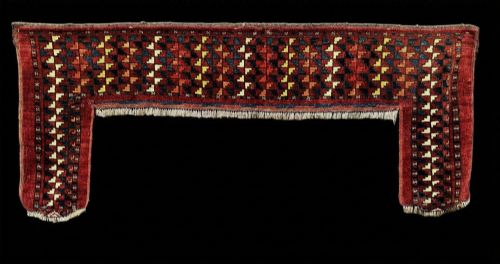
When you examine a turkmenistan wool rug, you are looking at hand-woven textiles created by nomadic and tribal groups such as the Yomut, Tekke, and Ersari across Central Asian steppes and oases. These pieces range from large main carpets and tent door hangings to smaller utilitarian items including storage bags, saddle covers, and wedding trappings.
The items listed on this page span the mid-nineteenth century up to the early twentieth century, reflecting traditional tribal weaving practices that survived through generations. Rather than commercial factory products, they represent functional tribal art made for nomadic daily life, camel transport, and yurt decoration.
How they were made
Weavers utilised hand-spun wool for the pile and foundation, often combining it with natural dyes derived from plants and insects to achieve enduring saturation in reds, browns, and dark blues. Cotton and linen occasionally appear within the structural foundations and flat-weave sections of specific bags and tent bands.
Construction techniques vary from dense pile knotting on carpets to flat-weave methods such as soumak, cicim, and palas weaving for storage bags and tent trappings. Artisans finished these textiles with secure backs, side cords, and wool tassels to withstand the rigours of nomadic existence.
Turkmenistan Wool Rug Retail Price Guide 2026
Typical asking prices for turkmenistan wool rug among the pieces listed under this phrase on Sellingantiques today, from the lower quarter to the upper quarter. They describe what is for sale here now, not the wider market.
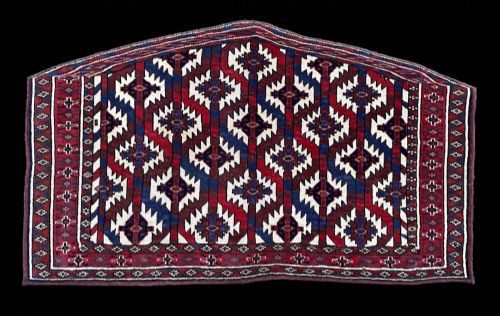
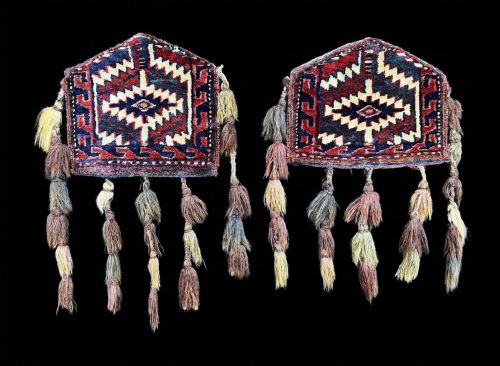
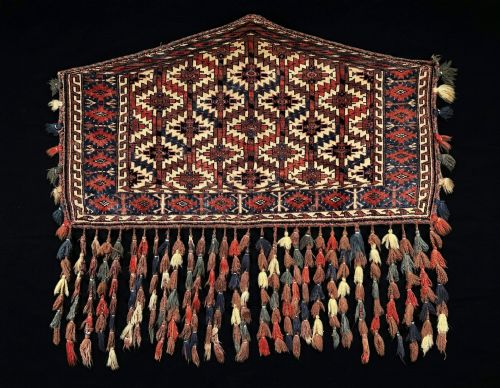
Several textiles served as camel decorations for weddings, ensuring the bride arrived at her new yurt accompanied by dense rows of wool tassels.
What varies in quality
The distinction between ordinary and exceptional pieces rests upon the precision of the knotting, the depth and clarity of the natural dyes, and the integrity of the surviving wool pile. Finer examples display tightly packed knots and crisp secondary colours that maintain their vibrancy across the field.
Completeness also dictates standing, as pieces retaining their original side corduroy, flat-weave backs, and tassel fringes hold greater historical integrity than heavily trimmed fragments or worn down surfaces.
The Turkmenistan Wool Rug Glossary
- Asmalyk
- A triangular or pentagonal camel trapping used during wedding processions in Central Asian nomadic cultures. These decorative pieces hung on the flanks of a bride's camel.
- Chuval
- A large rectangular storage bag utilised within yurts for household possessions and bedding. They frequently feature rows of primary gul motifs.
- Gul
- A repeating octagonal medallion motif used across Central Asian tribal textiles to identify specific clans and lineages. Each tribe favoured distinct geometric variations.
- Ensi
- A tribal rug functioning specifically as a tent door hanging rather than a floor covering. They typically display a quartered field design separated by a candelabra motif.
- Soumak
- A flat-weave textile technique where weft threads wrap around the warp threads in a continuous over-and-under pattern. This method produces a durable structure without a cut pile.
Turkmenistan Wool Rug: Frequently Asked Questions
What is a turkmenistan wool rug used for?
These textiles served primarily as functional items in nomadic tents, acting as floor carpets, door covers, and storage containers for household goods.
Today, collectors use them as decorative floor coverings, wall hangings, or striking accent pieces in living spaces.
How do I clean a vintage wool rug?
Regular gentle vacuuming without a rotating brush helps remove surface dust and loose grit from the wool pile.
Professional specialist cleaning is essential for addressing deep soiling to protect the natural dyes and hand-spun fibres.
How can I tell the different tribes apart?
Tribal attribution relies heavily on the specific gul motifs, border designs, and primary colour palettes used across the textile.
For example, Yomut and Tekke pieces display distinct geometric arrangements and secondary filler ornaments unique to their respective clans.
Where were these tribal rugs made?
Nomadic and semi-nomadic weavers produced these textiles across the Trans-Caspian steppes, the Merv oasis, and the Amu Darya region.
These landscapes shaped the pastoral lifestyle and materials available to the weavers of Turkmenistan and wider Central Asia.