

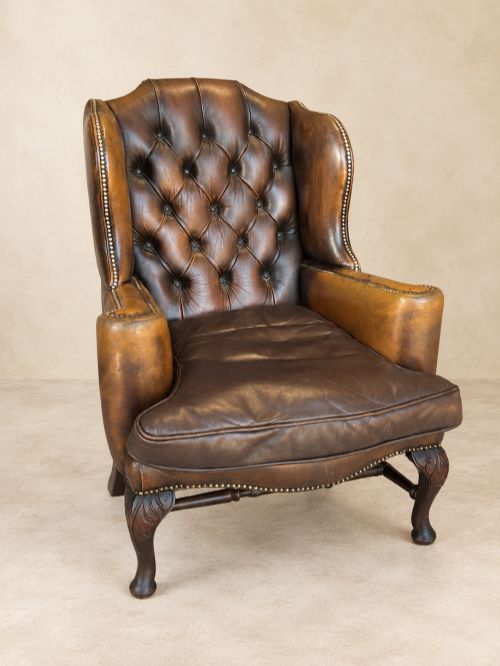
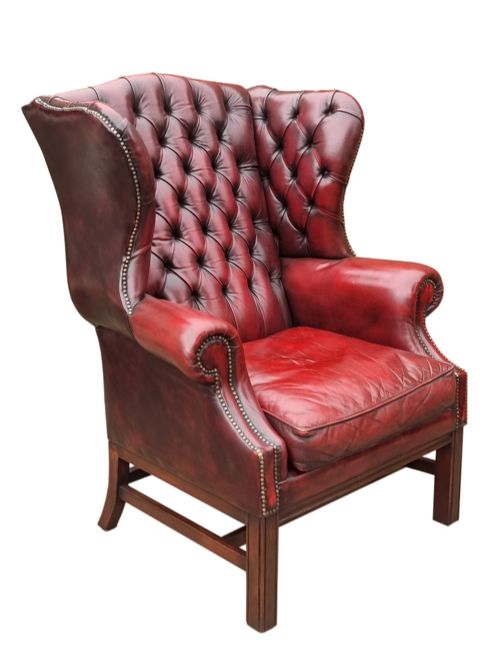
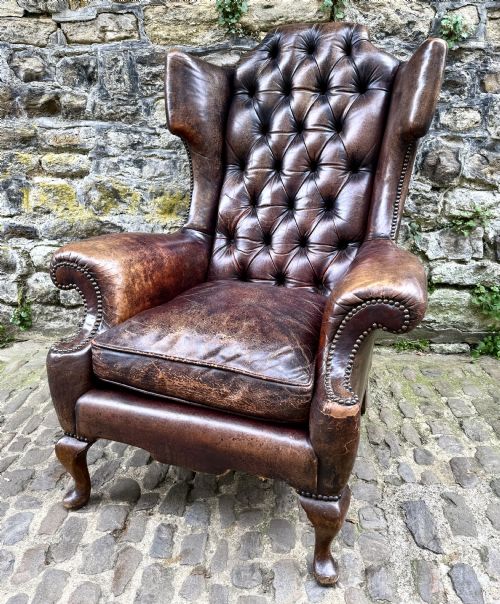


Tufted Leather Wingback Chair
A tufted leather wingback chair provides deep-seated comfort while sheltering the occupant from draughts, making it a timeless fireside favourite.
Tufted Leather Wingback Chair
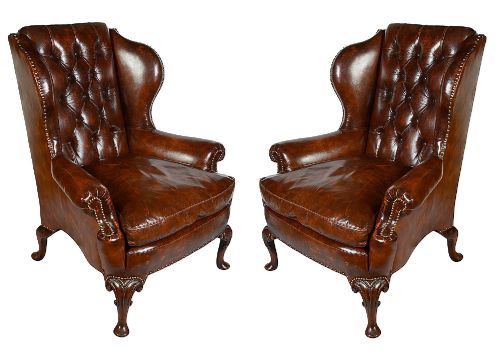
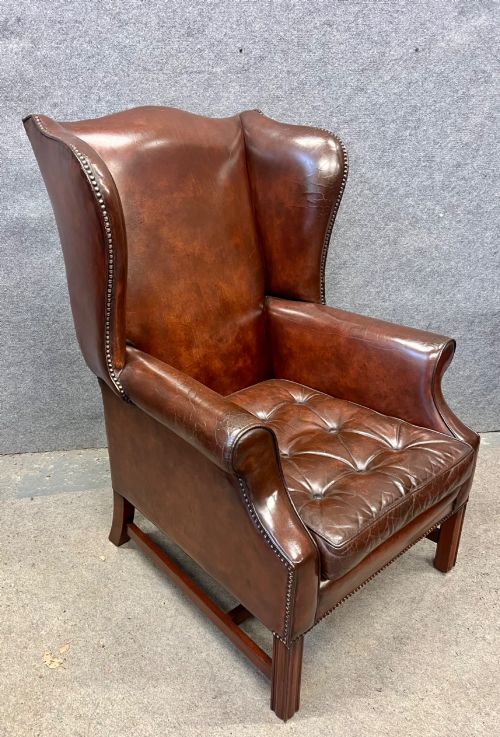
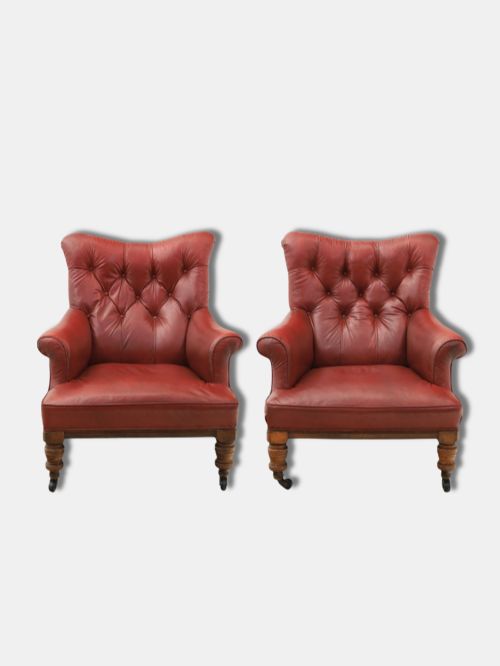
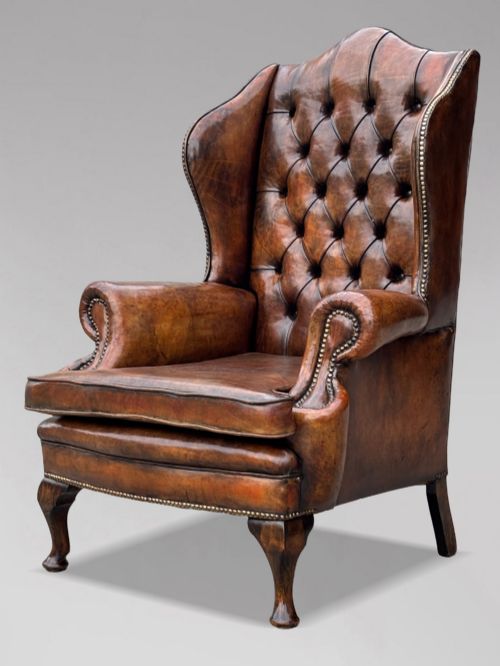
A tufted leather wingback chair brings substantial seating to a room, combining high protective sides with a buttoned backrest for support. The listings here span several eras, showing that this form remained popular from the eighteenth century through to the early twentieth century.
You will frequently encounter examples from the Victorian and Edwardian periods alongside pieces built in earlier Georgian styles. These chairs often appear in traditional tan, brown, or oxblood leather, occasionally accompanied by matching sofas and footstools.
How they were made
Makers constructed the internal frames of these chairs using sturdy timbers such as mahogany, oak, and general hardwood. Upholsters then secured durable leather or rexine over padding, employing buttoning techniques to keep the filling evenly distributed.
Many examples incorporate brass detailing, such as stud work along the seams, while specific pieces feature carved mahogany frames or lion carvings on the woodwork. Hand-dyed leather finishes appear across various periods, giving the hides distinct depth.
Tufted Leather Wingback Chair Retail Price Guide 2026
Typical asking prices for tufted leather wingback chair among the pieces listed under this phrase on Sellingantiques today, from the lower quarter to the upper quarter. They describe what is for sale here now, not the wider market.
The listings on this page include chairs and sofas from the Georgian, Victorian, Edwardian, and 1920s periods, constructed using mahogany, oak, brass, and leather.
What varies in quality
The distinction between standard examples and superior pieces rests largely on the timber used for the frame and the depth of the carving. Chairs with solid mahogany structures and detailed woodwork sit at the higher end of the range compared to simpler hardwood frames.
The handling of the leather also defines the calibre of a piece. Hand-dyed hides and full buttoning executed with precision demonstrate superior craftsmanship, whereas simpler materials like rexine represent alternative production standards from the early twentieth century.
The Tufted Leather Wingback Chair Glossary
- Wingback
- An armchair featuring protective side panels designed to shield the sitter from fireplace draughts. These wings extend from the upholstered back.
- Buttoning
- An upholstery method where deep depressions are created in the leather using buttons secured tightly to the frame. This technique keeps the internal padding firmly in place.
- Rexine
- A branded artificial leather fabric utilised as an alternative to genuine hide. It appears on certain twentieth-century seating options in this category.
- George III style
- A revival aesthetic drawing on eighteenth-century British design principles. Pieces in this style often incorporate mahogany frames and classic proportions.
Tufted Leather Wingback Chair: Frequently Asked Questions
What is a tufted leather wingback chair used for?
These chairs serve primarily as comfortable seating for studies, libraries, and living rooms. The high back and wings provide insulation against cold air currents around fireplaces.
Occupants often utilise them for reading or relaxing over extended periods due to the supportive padded structure.
How do I identify a Victorian wingback chair?
Victorian examples frequently display darker brown leather, deep buttoning, and robust proportions. Some incorporate distinct decorative elements such as carved wooden details on the frame.
Comparing the upholstery style and timber characteristics against known nineteenth-century pieces helps determine the correct era.
Are rexine chairs authentic antiques?
Rexine was introduced as a durable coated fabric in the early twentieth century. Chairs utilising this material typically date from the 1920s rather than the eighteenth or nineteenth centuries.
While not genuine leather, these pieces remain collectible examples of period manufacturing materials.
How should I care for antique leather upholstery?
Historic leather benefits from gentle cleaning and occasional conditioning to prevent the hide from drying out. Avoiding direct sunlight and excessive heat protects the natural material from cracking.
Preserving the original surface finish maintains the character acquired over decades of use.