





Tudor Oak Buffet
These pieces known as a tudor oak buffet bring substantial timber and historical presence into a room.
Tudor Oak Buffet
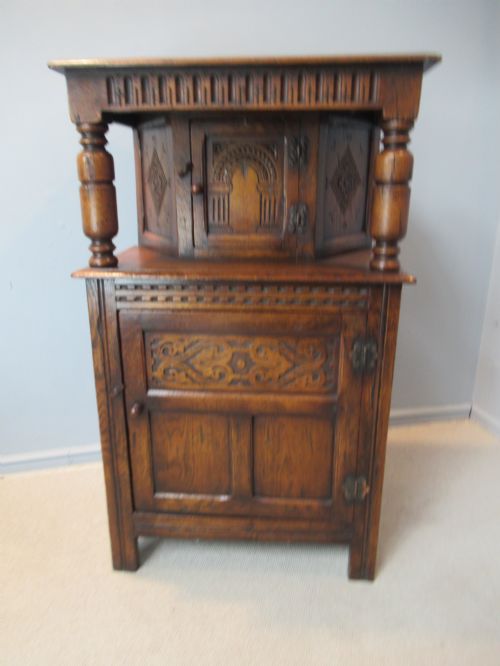
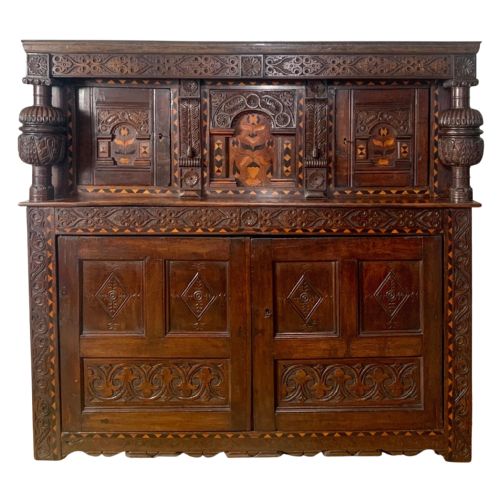
A tudor oak buffet generally takes the form of a court cupboard or carved sideboard, designed for storage and display in early domestic interiors. These heavy pieces serve as grounding focal points in modern dining rooms or hallways.
The inventory on this page ranges from authentic late sixteenth century examples to nineteenth and twentieth century revival pieces created in the Jacobean and Gothic styles. Buyers will frequently encounter compact court cupboards and larger carved sideboards representing these historic periods.
How They Were Made
Construction relies heavily upon solid oak, utilising mortise and tenon joints to build sturdy frameworks capable of supporting heavy upper tiers. Iron and brass fittings provide structural reinforcement and functional hardware.
Carving defines the surface decoration, with craftsmen working directly into the timber to create traditional motifs. Mixed wood inlay occasionally appears to add decorative contrast to the primary oak structure.
Tudor Oak Buffet Retail Price Guide 2026
Typical asking prices for tudor oak buffet among the pieces listed under this phrase on Sellingantiques today, from the lower quarter to the upper quarter. They describe what is for sale here now, not the wider market.
What Varies in Quality
Quality rests upon the depth and crispness of the timber carving, distinguishing master craftsmanship from simpler revival work. The choice of oak boards and the integrity of the original joints further separate standard examples from finer pieces.
The Tudor Oak Buffet Glossary
- Court cupboard
- A traditional enclosed storage piece with an upper and lower section, frequently featuring recessed upper doors.
- Jacobean revival
- A nineteenth and twentieth century style mimicking the heavy, carved aesthetic of early seventeenth century English furniture.
- Mortise and tenon
- A traditional woodworking joint where a projecting tongue fits snugly into a corresponding hole.
- Mixed wood inlay
- The practice of inserting contrasting pieces of timber into the main oak surface for decorative effect.
Tudor Oak Buffet: Frequently Asked Questions
What is a court cupboard?
A court cupboard is a traditional form of storage furniture featuring two stacked tiers, often with an enclosed upper section supported by columns or carved pillars. These pieces were historically used to display plate and store food.
Today they function effectively as sideboards or display cabinets in dining spaces, offering generous enclosed storage combined with strong historical character.
How do I date an oak buffet?
Dating relies on examining the construction methods, tool marks, and style of carving present on the timber. Sixteenth century pieces show distinct hand-tool signatures and pegged joinery.
Revival pieces from the nineteenth and twentieth centuries often feature machine-sawn elements or softer carving styles that reflect the manufacturing techniques of their specific eras.
Where should I place a heavy oak sideboard?
These substantial timber items require stable flooring and adequate wall space to balance their visual weight. Placing them against a primary wall in a dining room or large hallway lets them anchor the surrounding decor.
Avoid positioning them in areas subject to extreme humidity or direct sunlight, which can dry out and split the ancient oak.
How do I care for antique oak furniture?
Maintain the timber by applying natural beeswax periodically to nourish the dry grain and protect the surface from moisture. Avoid using modern silicone polishes that build up a sticky residue over time.
Keeping the piece away from direct heat sources prevents the solid oak from warping or cracking as seasonal temperatures shift.