






Tub Swivel Chair
A tub swivel chair gives you the firm, curved embrace of a traditional club form on a rotating base designed for working.
Tub Swivel Chair
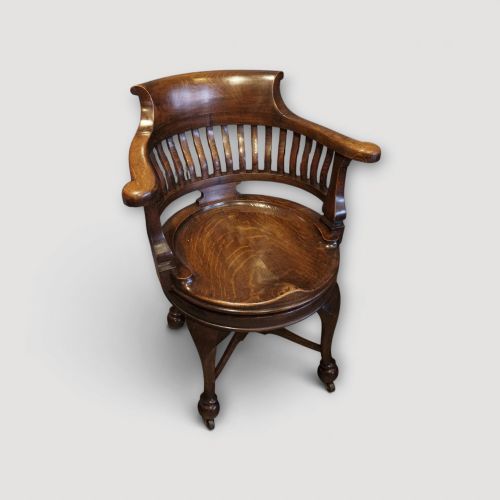
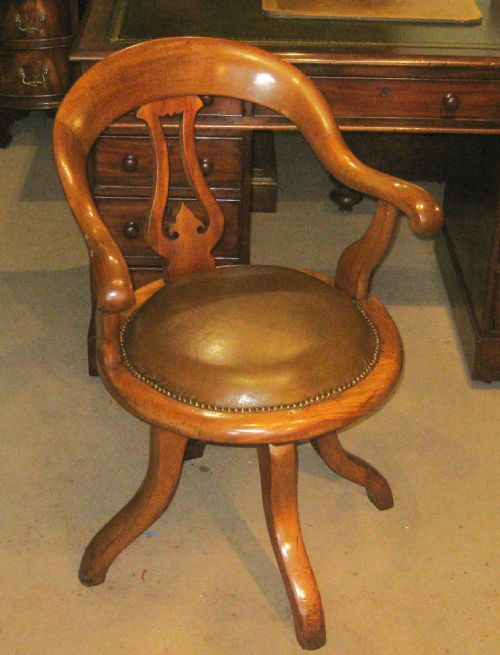
A tub swivel chair brings together the enclosing, rounded back of a classic tub armchair with a mechanical rotating pivot underneath. You are looking at desk chairs and armchairs shaped for long hours of writing or administration.
The most common versions on this page date from the Victorian and Edwardian eras, spanning the late nineteenth century into the nineteen-twenties. These pieces take the form of heavy revolving seats intended for study rooms, offices and libraries.
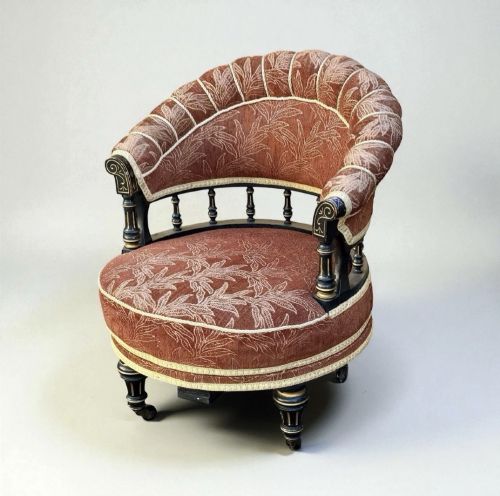
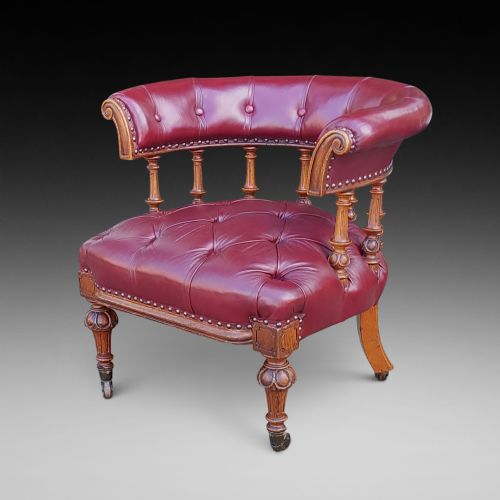
Makers built these chairs using woods like mahogany, oak, walnut and ebonised hardwood, often pairing the timber frame with a leather, hide or upholstered seat. They appear as both compact desk chairs and broader captain's chairs.
How they were made
Craftsmen shaped solid timbers such as mahogany and oak into curved, supportive backs that wrapped around the sitter. These wooden frames relied on sturdy joinery to withstand the constant twisting motion of the revolving mechanism.
Mechanisms combined iron and brass components beneath the seat to allow smooth rotation. Upholsterers fitted these frames with leather hides, tan leather coverings and padded seat pads fixed with traditional methods.
Tub Swivel Chair Retail Price Guide 2026
Typical asking prices for tub swivel chair among the pieces listed under this phrase on Sellingantiques today, from the lower quarter to the upper quarter. They describe what is for sale here now, not the wider market.
Listings span the Victorian and Edwardian eras up to nineteen-twenty, featuring mahogany, oak, walnut, brass and leather.
What varies in quality
Quality depends upon the substance of the timber and the weight of the rotating iron and brass undercarriage. Heavier woods like solid mahogany and walnut provide a sturdier foundation than lighter secondary timbers.
The sophistication of the turning mechanism and the grade of the leather covering dictate the overall standard of the piece. Superior examples display dense grain in the wood and robust metal engineering that maintains a steady rotation over time.
The Tub Swivel Chair Glossary
- Tub chair
- An armchair with a low, curved back that flows continuously into the arms, forming an enclosing shape. This design creates a snug seating position.
- Revolving mechanism
- The iron or brass swivel device fitted beneath the seat to allow the chair to turn. It is essential for mobility at a desk.
- Captain's chair
- A sturdy wooden armchair with a rounded top rail supported by spindles, often adapted for office use. These frequently feature on swivel bases.
- Ebonised hardwood
- Timber treated with a dark finish to imitate expensive ebony. This technique was popular in Victorian furniture production.
Tub Swivel Chair: Frequently Asked Questions
What is a tub swivel chair?
A tub swivel chair is a seated piece combining a rounded, enclosing back with a revolving base. It is designed for movement and support at a desk or table.
Most examples found here originate from the Victorian and Edwardian periods, constructed in timbers such as mahogany and oak.
How do I date a swivel desk chair?
Dating relies upon examining the timber species, the style of the turnings, and the engineering of the iron or brass mechanism underneath. Victorian and Edwardian pieces show specific cabinet-making traits.
Earlier models often utilise solid mahogany or walnut, whilst later twentieth-century versions introduce different styling and standardised metalwork.
Were these chairs used in offices?
These revolving seats served primarily in studies, administrative offices, and home libraries during the nineteenth and early twentieth centuries. The swivel function allowed clerks and scholars to reach different parts of a desk easily.
Upholstered leather pads and supportive wooden backs accommodated long working hours.
What woods were used for these chairs?
Cabinet makers built these revolving seats using mahogany, oak, walnut, beech and ebonised hardwood. Solid mahogany and oak appear most frequently across the listed pieces.
Some examples combine multiple timbers, pairing an oak frame with a beech structure or a walnut upper section.