


Tripod Music Rest
A tripod music rest is an adjustable stand for holding scores during performance or study, prized by musicians and collectors for its elegant timber form.
Tripod Music Rest
When you search for a tripod music rest, you encounter specialised stands designed to support sheets or books at a readable angle. These pieces serve musicians, readers and collectors who appreciate functional antique furniture.
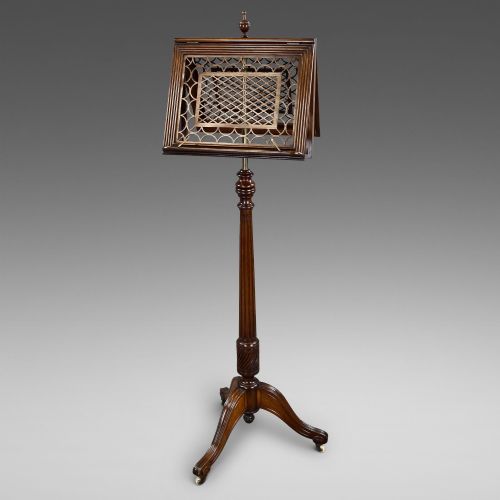
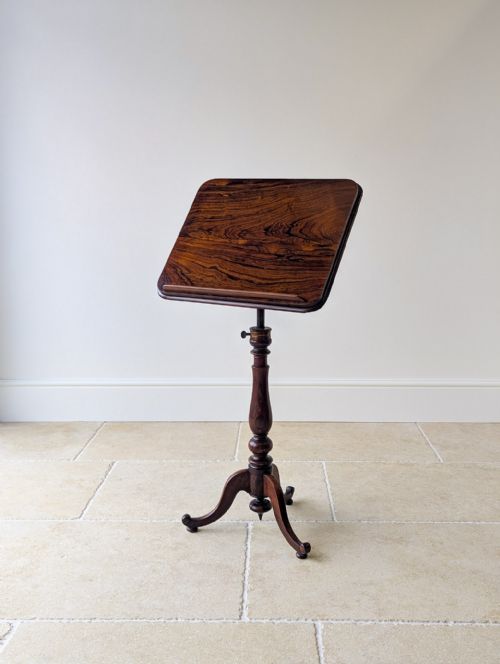
The pieces listed on this page span the eighteenth and nineteenth centuries, taking forms such as duet stands, reading tables and adjustable lecterns. Mahogany and walnut appear frequently, alongside rosewood and satinwood inlay.
You are most likely to meet Victorian and Regency examples here, often featuring pivoting tops and folding or three-legged bases. These variations reflect the shifting domestic tastes and musical habits of their original owners.
How they were made
Cabinetmakers utilised dense hardwoods such as mahogany, walnut and rosewood to construct these stable, weight-bearing bases and adjustable shafts. Figured timbers like burr walnut and delicate satinwood inlay were selected for visual depth and decorative contrast.
Brass fittings and ratchets were integrated into the design to permit precise height adjustment and desk tilting. These mechanical elements required careful brass casting and fitting to ensure smooth operation without damaging the timber shaft.
The object forms recorded on this page include music stands, reading tables, duet stands and adjustable lecterns.
What varies in quality
The distinction between standard examples and the finest pieces lies in the sophistication of the adjustment mechanisms and the choice of timber. Robust brass ratchets and screw assemblies that operate smoothly indicate superior workshop execution.
Cabinetwork precision also separates ordinary stands from exceptional ones, particularly in the joinery of the tripod base and the sharpness of fretwork or inlay. Richly figured grains and well-preserved patination elevate the visual presence of a piece.
The Tripod Music Rest Glossary
- Duet stand
- A music stand wide enough to accommodate two musicians reading from the same score. These double desks often feature adjustable heights and folding ledges.
- Lectern
- A slanted reading desk designed to hold books or papers for a standing speaker or musician. They frequently incorporate pivoting mechanisms for optimal viewing angles.
- Reading table
- A multi-functional piece combining a surface for writing or reading with an adjustable book rest. Regency and Georgian examples often double as occasional tables.
- Lyre-shaped
- A decorative motif shaped like an ancient musical instrument, frequently incorporated into the central column or desk support of nineteenth-century stands.
- Ratchet
- A mechanical mechanism with a notched bar and catch that allows the music desk to be secured at various angles. Fine examples operate smoothly and lock firmly.
Tripod Music Rest: Frequently Asked Questions
How do I adjust the height?
Most tripod music rests utilise a central brass screw or ratchet mechanism hidden within or alongside the upright shaft. Loosening this fastener allows the upper stem to slide to the desired position before tightening.
Older examples from the Georgian and Regency periods rely on hand-fitted brass collars and pins. Care must be taken when adjusting these to protect the internal timber threads and brass components from wear.
Were these made for homes or churches?
The pieces found in this category were primarily manufactured for domestic music rooms, libraries and parlours. Wealthy households utilised adjustable stands during evening recitals and private study.
Heavier lecterns could also serve ecclesiastical purposes, but the presence of richly figured mahogany, rosewood and satinwood inlay points towards refined domestic use.
How do I date a walnut music stand?
Dating relies on examining the timber selection, construction techniques and decorative style of the base and desk. Mid-nineteenth-century pieces often display burr walnut veneers and elaborate turning typical of the Victorian era.
Earlier eighteenth-century and Regency examples tend to feature solid mahogany or rosewood with simpler, more restrained lines and hand-cut brass joinery.