



Triple Wall Sconces
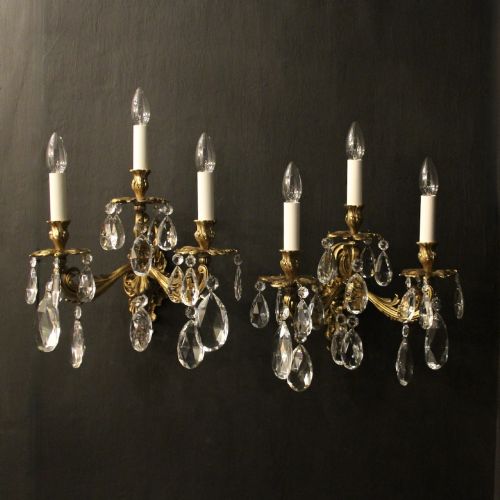
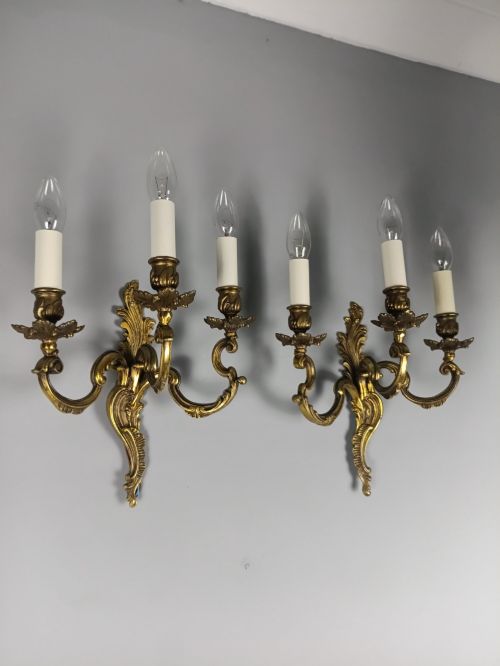
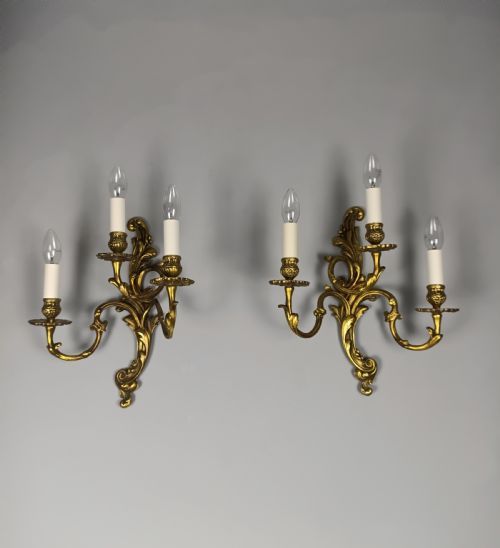
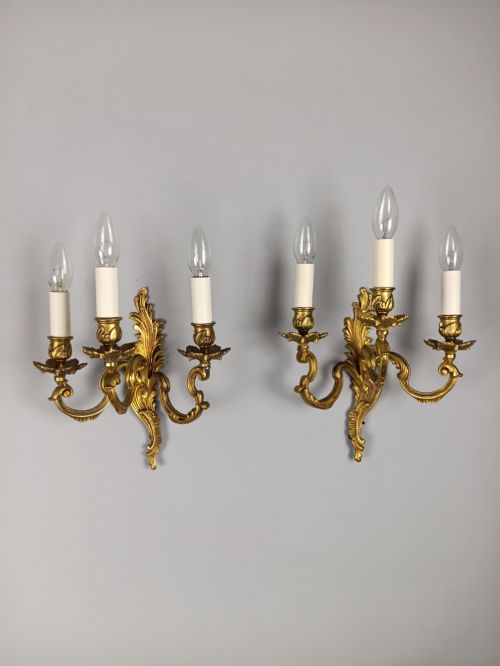
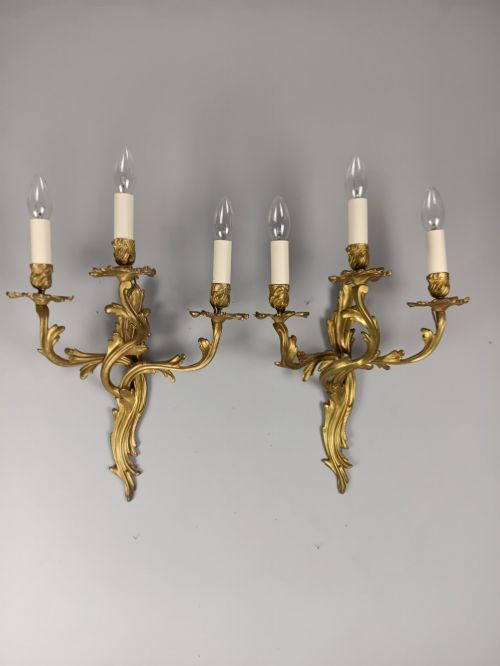
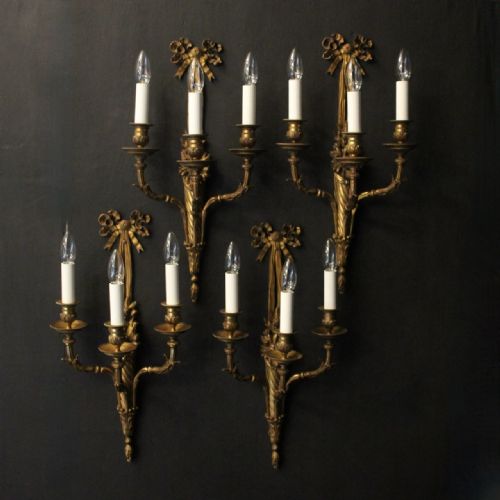
These triple wall sconces bring three-branch illumination to interiors, uniting period metalwork and carved giltwood.
Triple Wall Sconces
Triple wall sconces are three-branch wall lights designed to project illumination across a room while resting flat against a vertical surface. The selection here leans heavily towards French and Italian origin, spanning the nineteenth century through the 1930s.
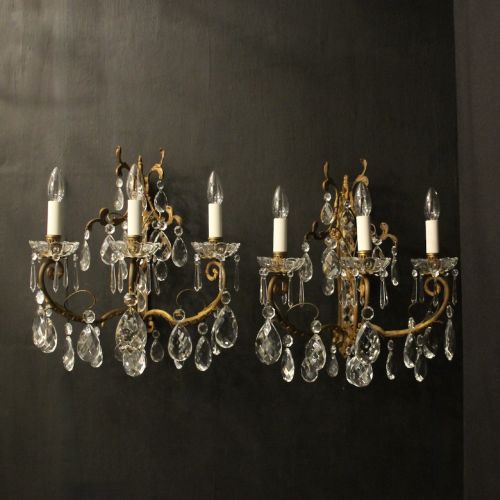
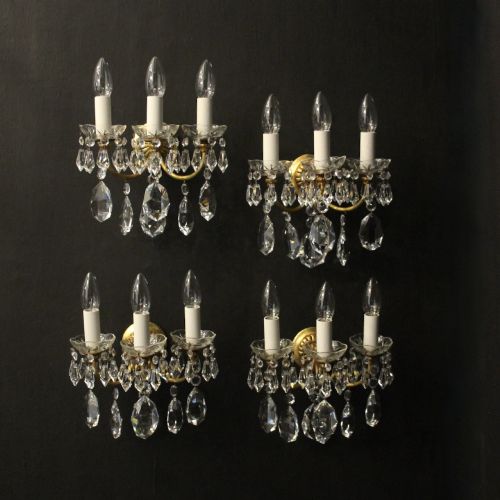
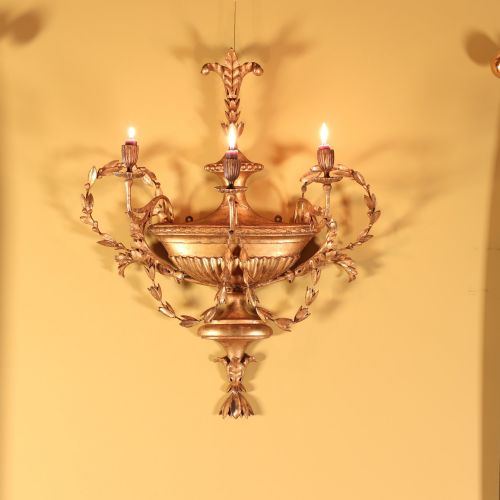
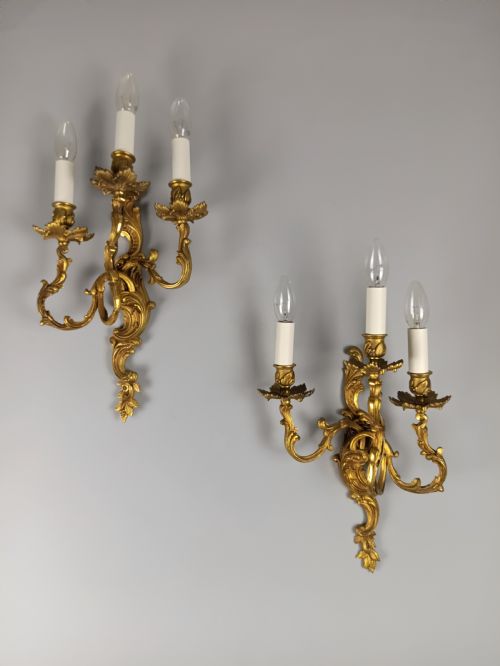
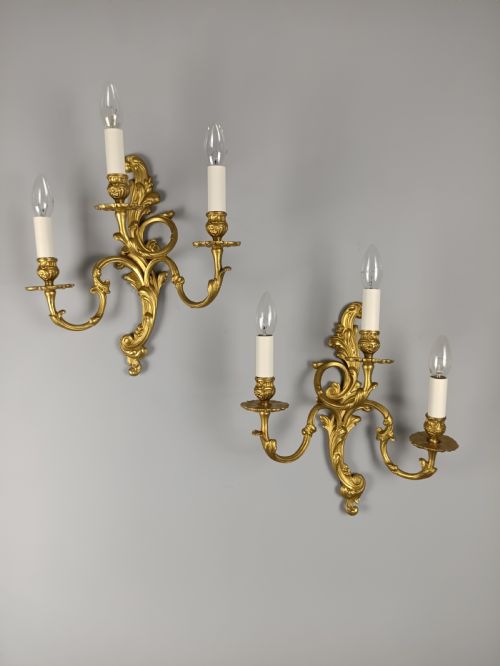
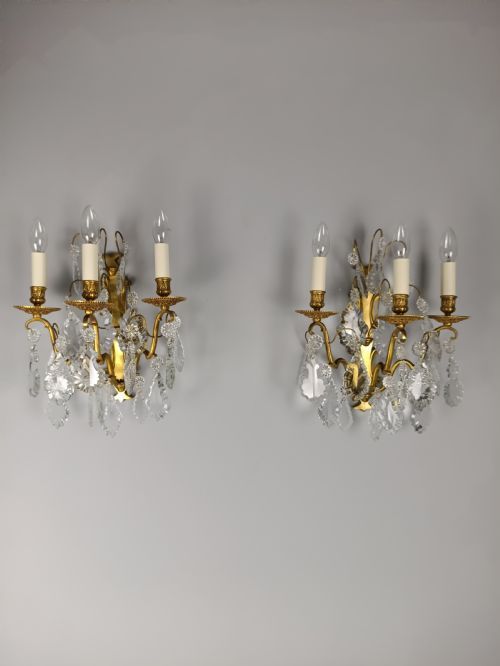
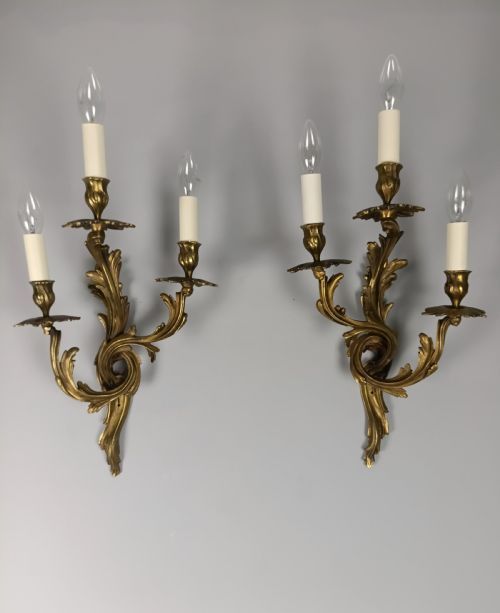
Buyers will most commonly encounter pairs of French rococo or baroque revival wall lights featuring three arms, alongside Florentine giltwood pieces and George III neoclassical examples. The forms include matched pairs and sets of four, predominantly wired for interior installation.
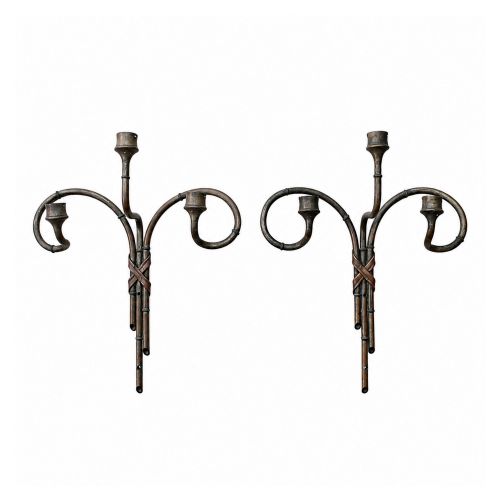
The style vocabulary draws on French chateau aesthetics, Japanese-inspired bamboo motifs, and Adam revival patterns. These fixtures function effectively in pairs flanking mirrors, fireplaces, or architectural doorways.
Materials and construction
The physical construction relies heavily on cast metal and carved timber, utilising gilded bronze, solid brass, and patinated bronze. Giltwood and gesso form the structural base for Italian Florentine and Georgian pieces, providing a lightweight yet rigid core for water gilding.
Glass and crystal elements appear frequently as drops, pendants, or bobeches suspended from the arms to refract the light. Metal components are cast, chased, and subsequently gilded or finished with silver leaf and polychrome pigments.
Triple Wall Sconces Retail Price Guide 2026
Typical asking prices for triple wall sconces among the pieces listed under this phrase on Sellingantiques today, from the lower quarter to the upper quarter. They describe what is for sale here now, not the wider market.
Bamboo makes an unexpected metal appearance in early 20th-century wall lights, proving that even rigid brass can imitate a tropical grass.
Quality variations
The distinction between standard and superior pieces rests in the crispness of the metal chasing and the depth of the wood carving. Finer examples display sharp relief work on rococo scrolls and botanical motifs, whereas lesser items show softer, generalized casting details.
The composition of the materials also dictates the grade, with heavy gilded bronze commanding a different presence than pressed brass or thin gesso over wood. Intact crystal drops and original surface gilding elevate the integrity of the finished object.
The Triple Wall Sconces Glossary
- Gilded bronze
- Metal cast and coated in a layer of gold, often termed bronze d'orlu or Ormolu in French pieces. It provides a durable, non-tarnishing surface that retains sharp detail.
- Giltwood
- Timber, typically lime or pine, carved and coated with gold leaf over a prepared gesso ground. This technique creates a luminous, reflective surface popular in Florentine and Georgian design.
- Bobeche
- A small collar or drip pan fitted beneath the candle nozzle to catch melting wax. These glass or metal saucers frequently hold crystal pendants.
- Rococo revival
- A nineteenth-century design movement resurrecting the asymmetric scrolls, shell motifs, and naturalistic curves of the eighteenth century. It dominates the French wall lights in this selection.
- Japonisme
- The nineteenth-century artistic influence of Japanese art on Western design, visible here in bamboo-form metal framing. It breaks from standard classical geometry.
Triple Wall Sconces: Frequently Asked Questions
Are these sconces meant for candles or electricity?
The listings consist of wall lights adapted for electrical wiring, though their historical lineage stems from candle-burning branches. Many retain dummy candles or drip pans that mimic earlier lighting methods.
Converting them back to wax is unnecessary since modern internal wiring preserves the external antique appearance. They provide ambient rather than task lighting.
How do I distinguish French rococo from Florentine pieces?
French rococo sconces utilise cast bronze or brass, emphasising asymmetrical C-scrolls, acanthus leaves, and shell motifs. They often feature heavy chasing and bright gilding.
Florentine pieces rely on carved wood and gesso, frequently finished in gold or silver leaf with a softer, more planar construction. Their motifs draw on Italian decorative traditions rather than French court styles.
How do I clean gilded bronze and giltwood?
Dusting with a dry, soft brush prevents particle accumulation without disturbing fragile gold leaf or patinated surfaces. Liquid cleaners and abrasive cloths strip the historical finish and must be avoided.
Crystal drops and glass pendants can be removed gently and washed in warm water if necessary, then dried completely before reattachment.