
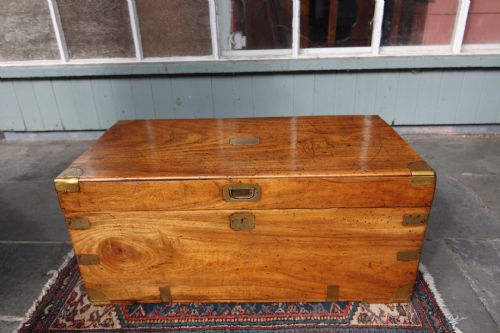
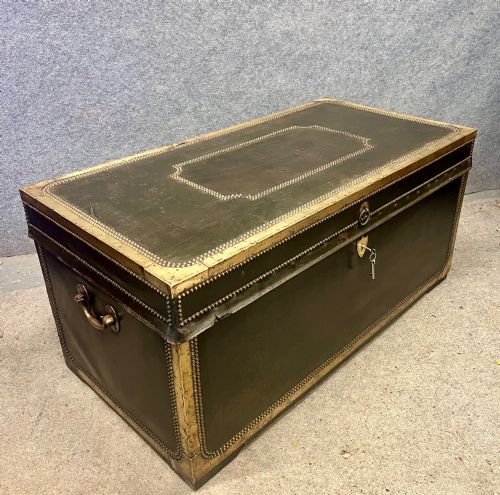
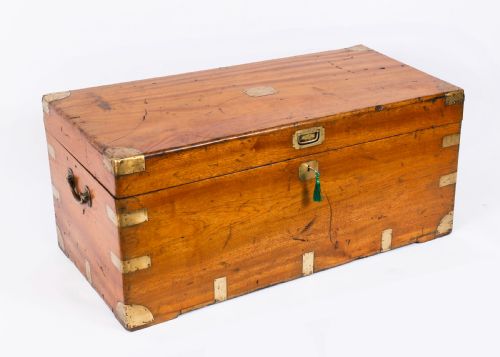
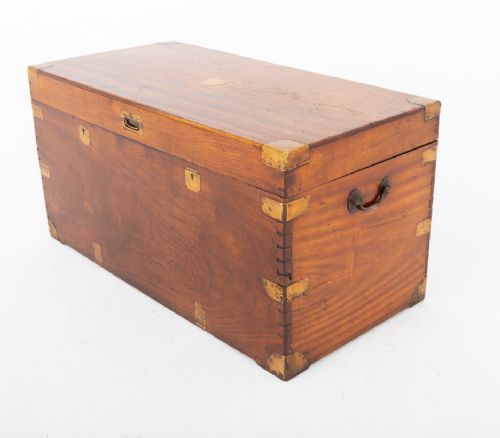
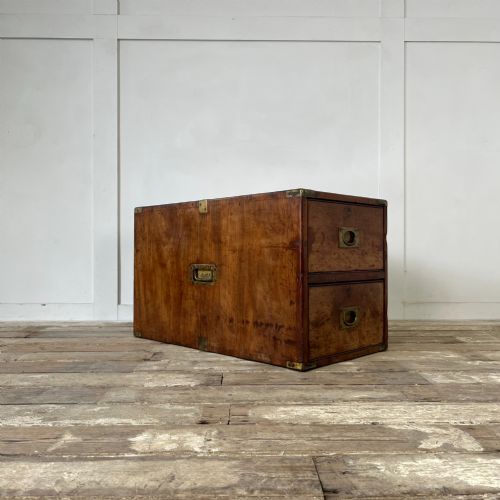


Travelling Officer Chest
A travelling officer chest is a sturdy, brass-bound piece of portable furniture designed for colonial service.
Travelling Officer Chest
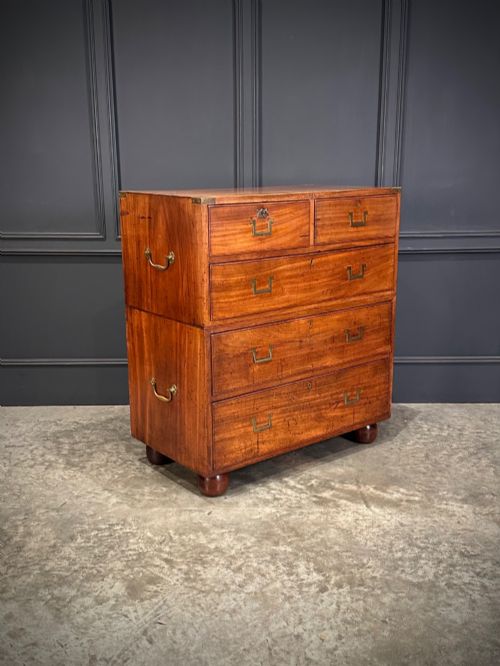
A travelling officer chest is a robust container built for colonial service and military life during the Georgian and Victorian eras. These portable pieces of furniture allowed officers to transport uniforms, documents and personal belongings across vast distances.
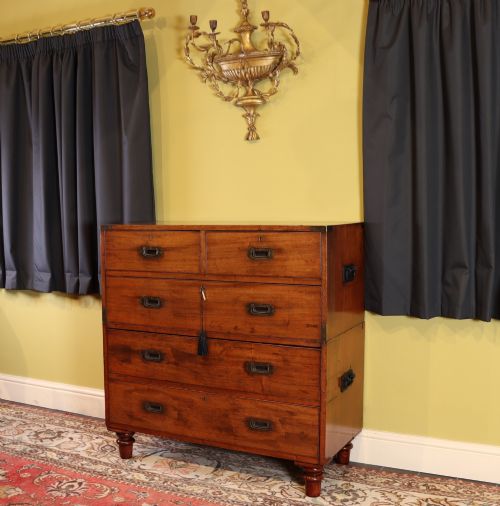
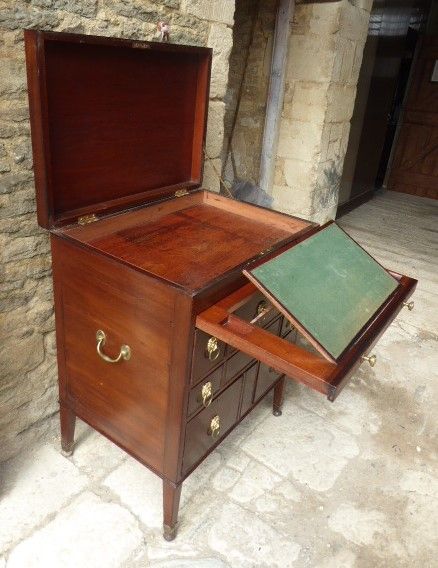
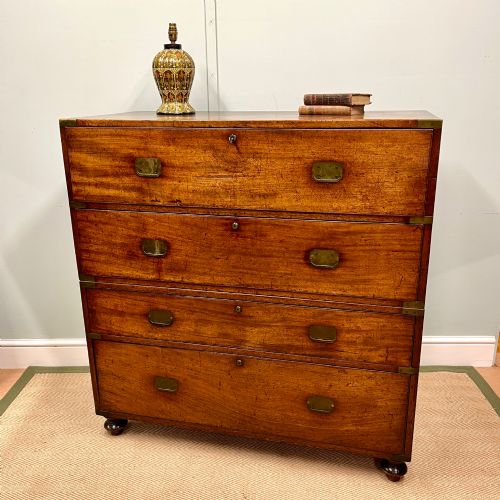
Camphorwood and mahogany versions dominate the selection on this page, often constructed in two distinct sections for easier loading onto pack animals or ships. The form ranges from simple hinged trunks to elaborate chests of drawers and secretaire desks fitted with folding handles.
China Trade examples and pieces associated with military outfitters frequently appear alongside standard British campaign furniture. Buyers encounter everything from brass-bound blanket boxes to zinc-lined travel trunks designed to withstand tropical moisture.
How they were made
Cabinet makers utilised dense, resilient timbers such as camphorwood, teak and mahogany to endure harsh climates and rough handling during transit. Camphorwood served a dual purpose by naturally repelling insects from uniforms stored inside.
Brass corners, flush-fitting ring handles and bound edges reinforced the structural integrity of each trunk while protecting vulnerable joints from impact. Iron fittings and leather coverings also appear on specific travel pieces.
The multi-part construction relied on secure locking pins and bracket feet that allowed rapid dismantling and reassembly without compromising stability. Drawers often incorporated internal dust seals and secret compartments for valuable documents.
The selection spans the Regency, Georgian and Victorian periods, including pieces from China Trade workshops.
What varies in quality
The standard of internal fittings and cabinet work dictates the standing of a piece, particularly in how drawers align and how securely the brass mounts are sunk into the timber. Superior examples feature dovetail joinery executed with precision and secret locking mechanisms that remain fully operational.
The choice and figuring of the primary wood establish the visual merit of the chest, whether it is richly grained camphorwood, deep red mahogany or warm teak. Original hardware, including functioning locks and matching brass drop handles, elevates the integrity of the item.
Pieces bearing the stamps or inscriptions of established military outfitters carry an additional layer of documented origin. The survival of original leather linings, key sets and inscribed brass presentation plates further distinguishes the finest specimens.
S. W. Silver And Co·Drew And Sons·Allen Of London·Army And Navy
The Travelling Officer Chest Glossary
- Campaign chest
- A piece of portable furniture designed to dismantle into sections for military transport. These items feature recessed brass handles and protective corner braces.
- Secretaire chest
- A chest of drawers incorporating a fitted writing drawer with a drop-front writing surface. It often contains small pigeonholes and secret compartments for correspondence.
- China Trade
- Goods manufactured in China during the 18th and 19th centuries specifically for Western export. These items frequently utilise local camphorwood and distinct decorative hardware.
- Flush handle
- A metal pull inset into the surface of a drawer or lid so it does not project beyond the wood. This design prevents snagging during transport.
- Zinc lined
- An interior sheathing of zinc sheeting applied to protect contents from moisture and damp conditions. This feature is common on travel trunks intended for tropical service.
Travelling Officer Chest: Frequently Asked Questions
What is a travelling officer chest?
A travelling officer chest is a portable storage piece built for British military personnel on active service abroad. These chests were constructed to withstand frequent journeys by ship, rail and wagon.
They combine the storage capacity of a standard chest of drawers with the protective reinforcement required for military campaigns.
How were these chests used?
Officers utilised these chests to carry uniforms, official documents and personal valuables during colonial postings. The segmented design allowed the furniture to be separated into manageable parts for transport.
Writing compartments provided a stable desk surface for officers working in temporary field quarters.
Why use camphorwood for chests?
Cabinet makers selected camphorwood for its natural insect-repellent properties, which protected stored woollen uniforms from moths in tropical climates. The timber also resists moisture damage.
Its distinct aromatic quality remains noticeable in many antique examples surviving today.
How to date a campaign chest?
Dating relies on timber choice, construction methods and hardware styles observed across the 18th and 19th centuries. Earlier Georgian examples often display simpler brass work, while Victorian pieces frequently utilise two-part modular drawer sections.
Maker stamps and original inscriptions provide definitive dates for documented pieces.