



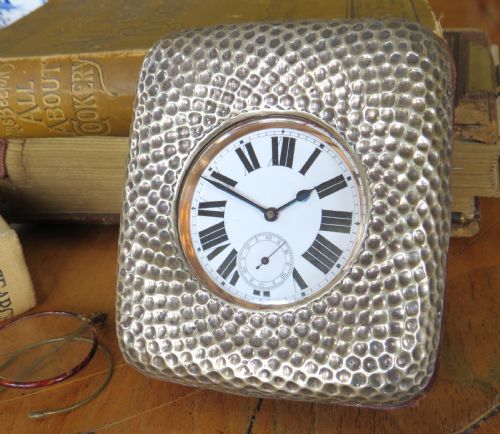


Travelling Clock with Case
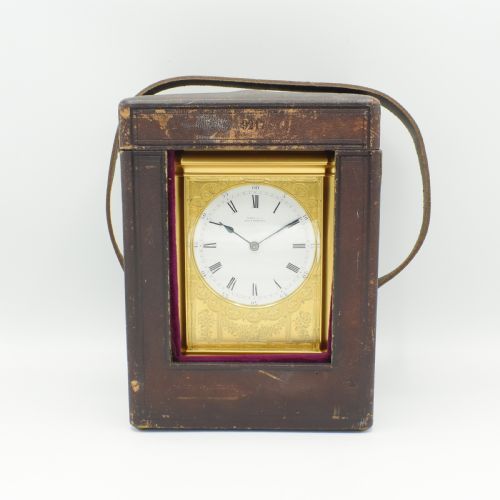
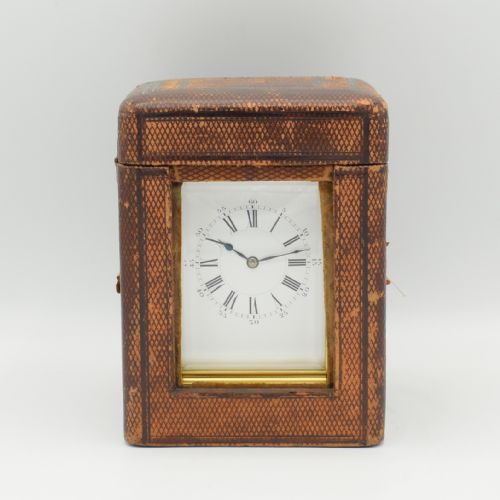
A travelling clock with case is a portable timepiece designed for the journey, combining heavy brass or silver framing with protective leather outer housing.
Travelling Clock with Case
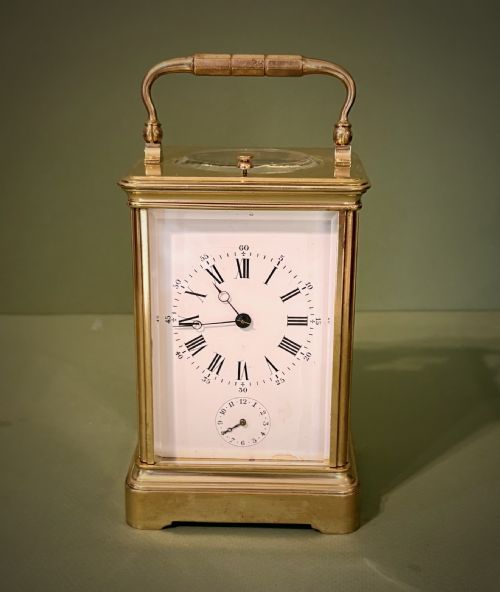
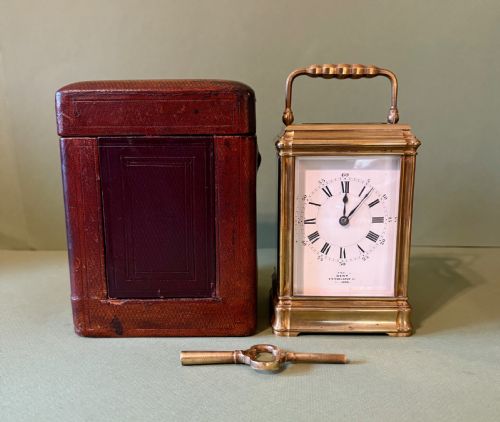
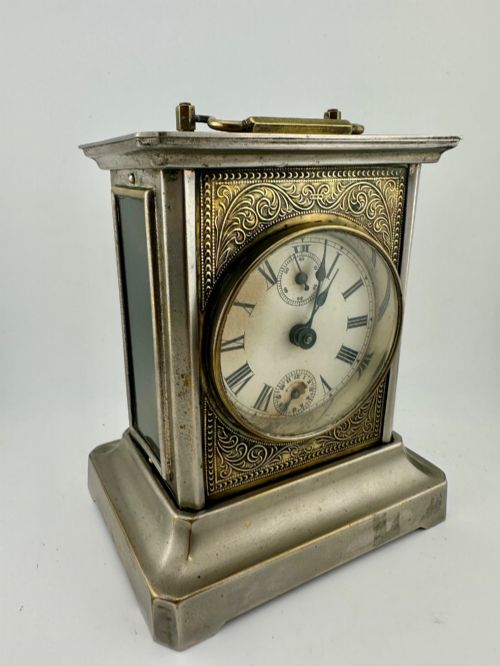
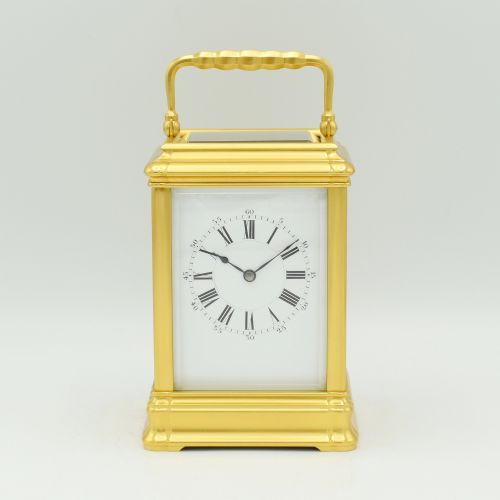
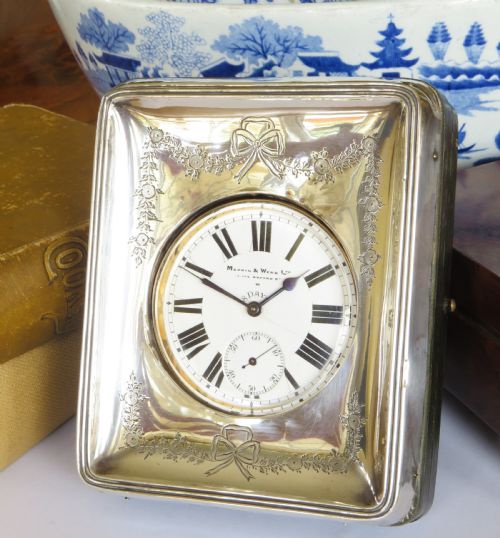
A travelling clock with case is primarily represented on this page by carriage clocks and small boudoir timepieces originating from the nineteenth and early twentieth centuries, spanning Victorian, Edwardian, and Art Deco periods.
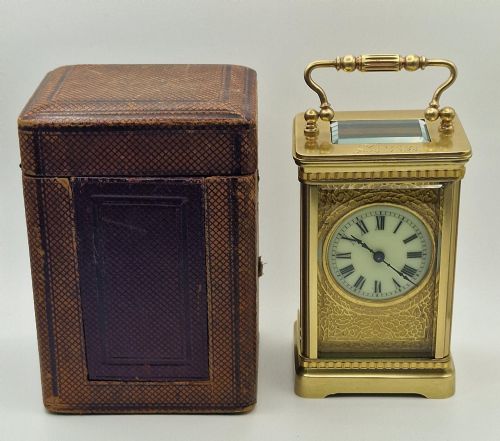
The objects combine heavy metal frames, glass panels, and mechanical movements with fitted leather travel cases or boxes to protect the piece during transit.
Makers and retailers such as Henri Jacot, Drocourt, and London houses like Pickford or Clerke produced these portable mechanisms for travellers.
How they were made
Makers utilised brass, gilt brass, gilded bronze, and sterling silver to construct the rigid outer frames and detailed dials, often incorporating bevelled glass panels to reveal the gear trains.
Protective outer housings were fashioned from leather, tailored tightly to the specific dimensions of the clock case and frequently lined with velvet or silk.
Travelling Clock with Case Retail Price Guide 2026
Typical asking prices for travelling clock with case among the pieces listed under this phrase on Sellingantiques today, from the lower quarter to the upper quarter. They describe what is for sale here now, not the wider market.
One exceptional giant carriage clock on record includes a compass and thermometer, ready for an explorer facing unpredictable weather.
What varies in quality
Construction standards range from standard timepieces to complex movements featuring alarms, repeaters, grande sonnerie striking, and additional complications like thermometers and compasses.
The survival of original fitted leather boxes, keys, and presentation inscriptions distinguishes individual examples within the selection.
Henri Jacot·Pickford of London·Clerke Royal Exchange London·A Delépine·Drocourt·Richard and Co
The Travelling Clock with Case Glossary
- Gorge case
- A specific pillar-framed rectangular brass clock case style with moulded stepped top and bottom tiers. This form is common among French carriage clocks.
- Corniche case
- A simple rounded pillar design framing the glass panels of a clock. It provides a clean architectural outline.
- Repeating
- A mechanism function that allows the clock to chime the last hour or quarter-hour on demand when a button or lever is pressed. This was useful for checking time in the dark.
- Sonnerie
- A striking train that automatically sounds the hours and quarters as they pass. Grand sonnerie chimes both hours and quarters at each quarter hour.
- Boudoir timepiece
- A smaller decorative clock intended for private rooms rather than large public spaces. They often feature enamel dial details.
Travelling Clock with Case: Frequently Asked Questions
How do I wind a carriage clock?
Most mechanical travelling clocks utilise a key inserted into the winding squares on the back plate. Turn the key gently until resistance is felt.
Avoid over-winding the mainspring to prevent internal damage to the movement gears.
What is the difference between a timepiece and a clock?
In antique horology, a timepiece indicates hours and minutes without a striking train or alarm mechanism. A clock includes additional gear trains for sounding the time.
Timepieces are generally simpler in internal architecture and maintenance requirements.
Why do some travel clocks have leather cases?
Leather travel cases protected delicate glass panels and polished brass frames from the rigours of nineteenth-century transit by rail or carriage. They often include drop fronts or lift-off lids for quick viewing.
Finding a clock with its original fitted case adds historical completeness.
How do I date a brass carriage clock?
Dating relies on stylistic shifts in case architecture, escapement types, maker marks stamped on the back plates, and occasionally accompanying hallmarked silver cases. Victorian and Edwardian examples often display registration numbers or maker signatures.
Comparing movement serial numbers with maker records provides precise manufacturing years.