

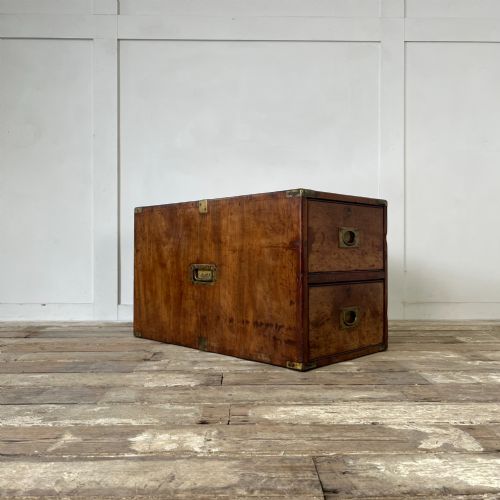


Travel Chest Furniture
Travel chest furniture brings ingenious portable engineering to your home, offering sturdy storage built for officers on the move.
Travel Chest Furniture
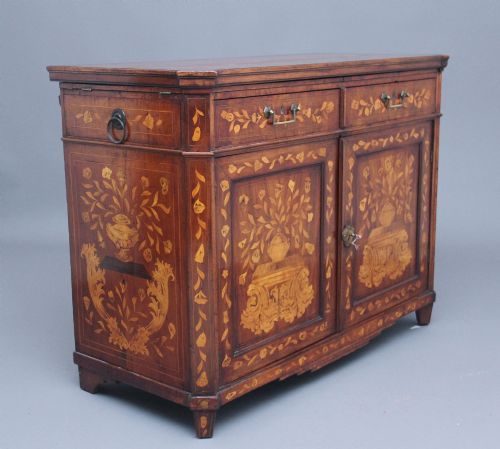
Travel chest furniture encompasses practical storage pieces designed for transport during military campaigns and long journeys across the nineteenth century and earlier periods. These items include chests of drawers, secretaire bureaus, and cabinets intended to withstand rigorous movement while maintaining domestic utility.
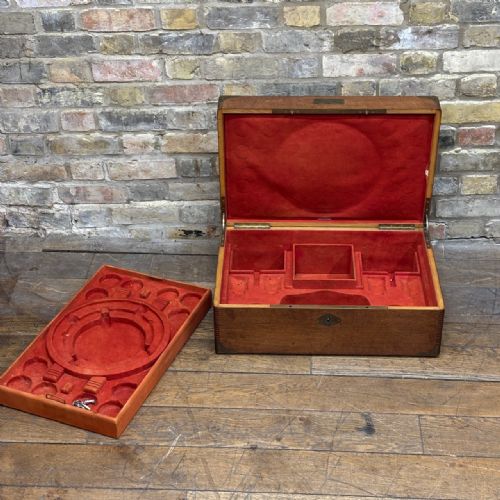
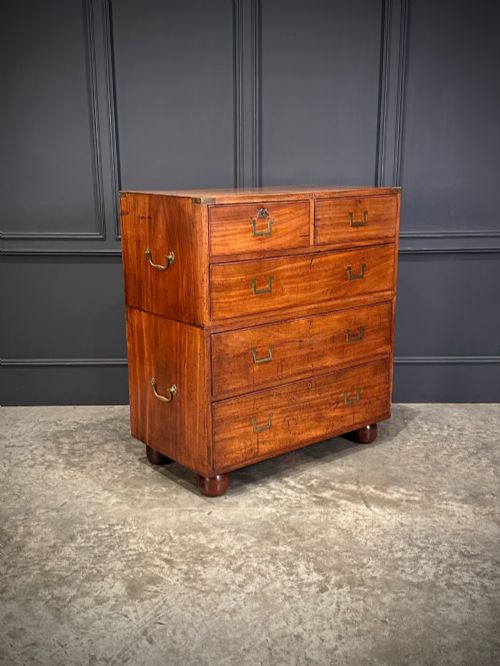
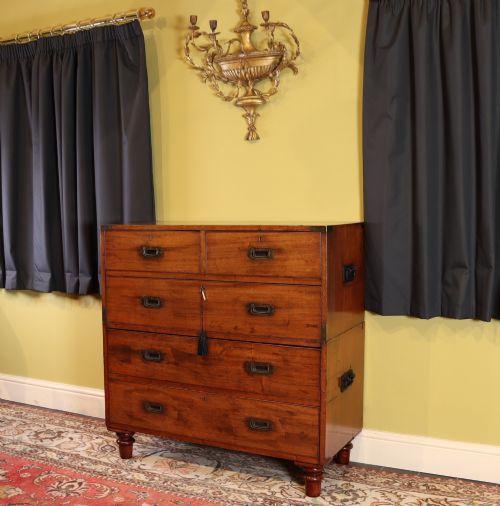
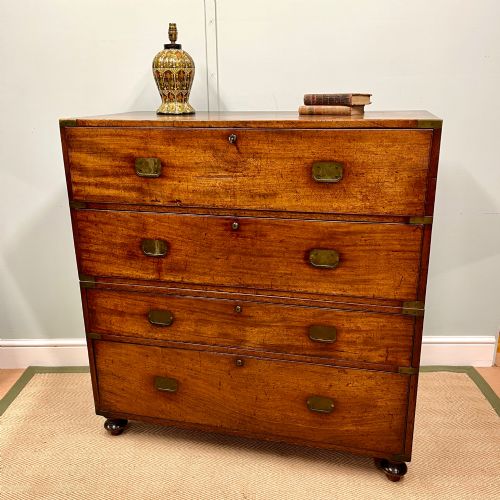
The version most commonly encountered on this page is the campaign chest, frequently fashioned in sections with recessed brass handles and corner brackets. Mahogany, camphor wood, and teak examples appear alongside specialised packing cases and smaller desktop storage items.
Origins span Georgian, Victorian, and later nineteenth-century eras, reflecting the logistical demands of British officers and travellers abroad. Pieces range from simple travelling trunks to elaborate dressing chests and silverware boxes inscribed for military use.
Materials and Construction
Craftsmen utilised dense timbers such as mahogany, teak, and camphor wood to resist warping and endure harsh travelling conditions. Camphor wood provided the added benefit of natural insect deterrence for clothing and textiles stored within.
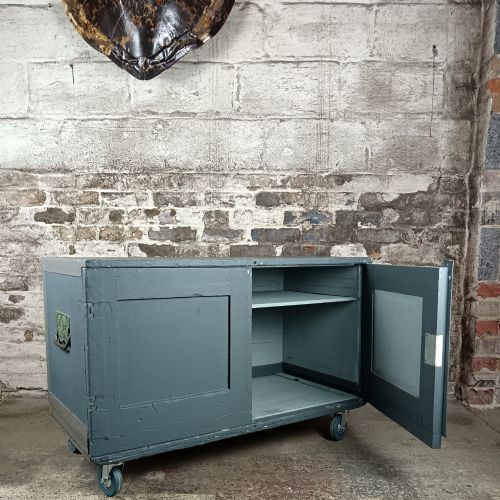
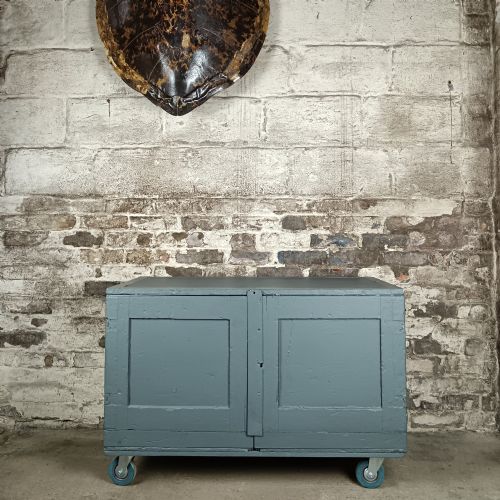
Metal reinforcement defined the construction, utilising brass corners, binding, and flush-fitting hardware to protect vulnerable edges from impact during transit. Iron and paint also appear on utilitarian packing cases and trunks.
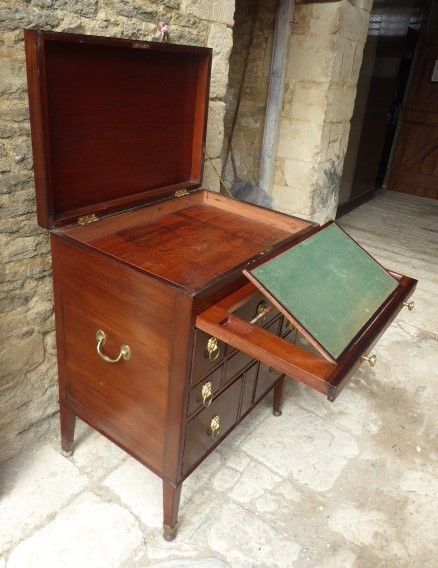
Modular design characterised these pieces, separating into distinct stacking sections or incorporating folding writing surfaces to maximise space efficiency. Secret compartments and fitted drawers served the specialised needs of officers on active service.
Travel Chest Furniture Retail Price Guide 2026
Typical asking prices for travel chest furniture among the pieces listed under this phrase on Sellingantiques today, from the lower quarter to the upper quarter. They describe what is for sale here now, not the wider market.
The selection includes specialised forms such as silverware trunks, dressing chests, and desktop storage alongside standard chests of drawers.
Distinctions in Quality
Quality rests in the precision of the modular joinery and the integrity of the brass hardware, where tightly fitted joints ensure stability when stacked. Superior examples retain original flush mounts and working locks with functional keys.
The choice of timber dictates the upper tier of the range, with well-figured mahogany, rich teak, and aromatic camphor wood demonstrating superior selection. Maker inscriptions and documented provenance elevate specific pieces above standard military issue.
S. W. Silver & Co. London & Liverpool·Allen of London
The Travel Chest Furniture Glossary
- Campaign chest
- A modular chest of drawers made in two or more stacking sections for ease of transport during military deployment. These pieces typically feature recessed brass handles to prevent snagging.
- Secretaire bureau
- A writing cabinet incorporating a drop-front drawer that conceals a fitted interior of small compartments and pigeonholes. This form allowed officers to manage correspondence while travelling.
- Camphor wood
- An aromatic timber utilised for trunks and chests to protect stored garments from moths and damp conditions. Its distinctive scent remains recognizable in antique examples.
- Brass bound
- Furniture strengthened along the edges and corners with brass strips and brackets to absorb the impacts of frequent transit. This technique serves both a structural and decorative purpose.
- Hongmu
- A dense hardwood category used in traditional Chinese furniture making, seen in travelling box construction. The material offers exceptional weight and durability.
Travel Chest Furniture: Frequently Asked Questions
How were campaign chests used?
Campaign chests functioned primarily as portable wardrobes and desks for military personnel stationed abroad. Officers packed uniforms, documents, and personal valuables inside these secure containers.
Many incorporated writing surfaces and secret compartments to manage administrative duties and safeguard sensitive items while on the move.
How do I identify a period piece?
Period identification relies on examining timber species, construction methods, and hardware styles associated with Georgian and Victorian eras. Look for hand-cut dovetails and period-appropriate brass fixings.
Maker plaques and inscriptions offer definitive clues regarding the date of manufacture and the original owner or regiment.
How do I live with these pieces?
These chests integrate well into modern interiors as bedside tables, living room storage, or hallway focal points. Their compact proportions and flat tops make them practical surfaces for lamps and display.
Maintaining stable indoor humidity protects the dense timbers and prevents movement in the modular joints over time.