


Transferware Serving Dish
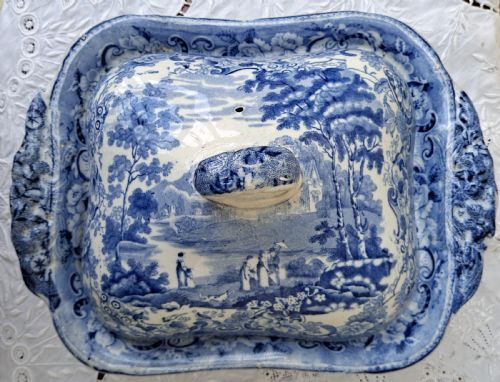
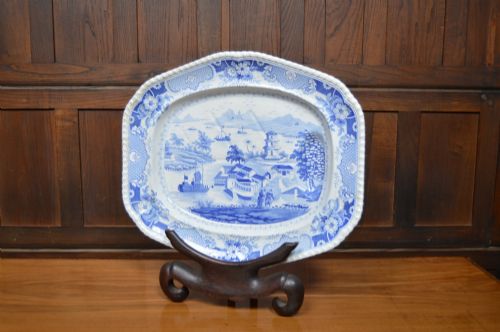
A transferware serving dish brings printed pictorial scenes from the nineteenth century directly to the table.
Transferware Serving Dish
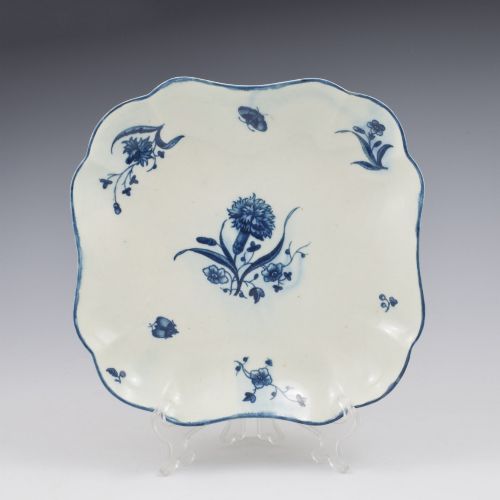
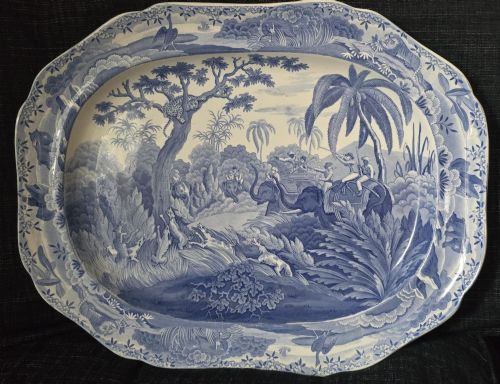
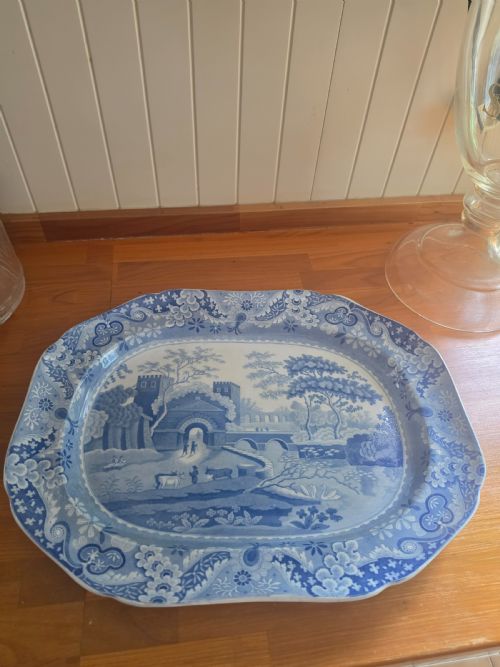
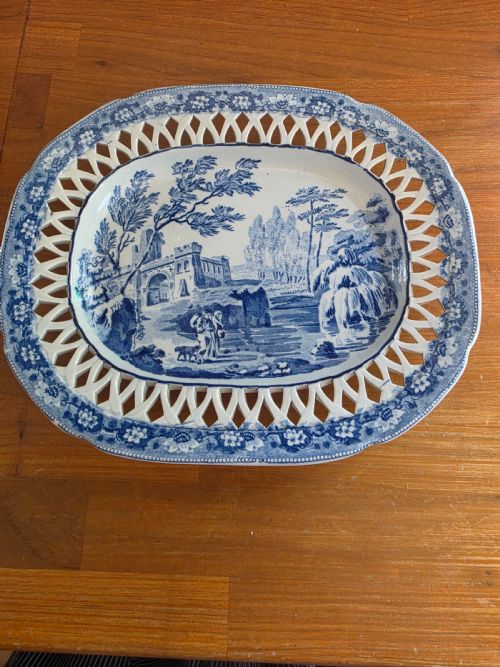
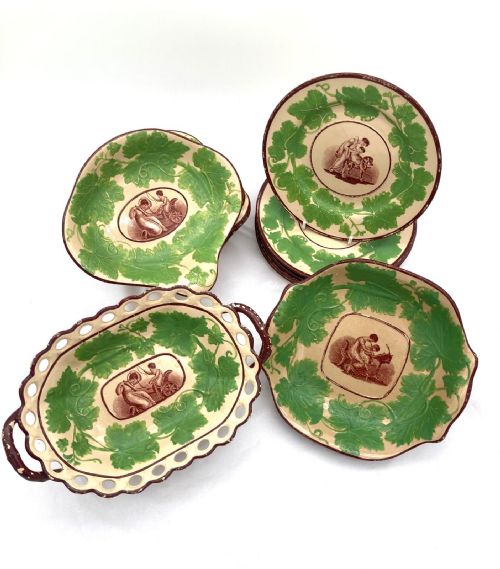
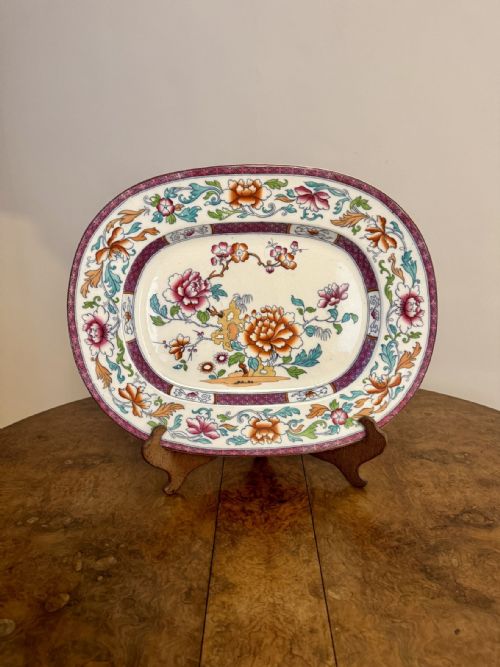
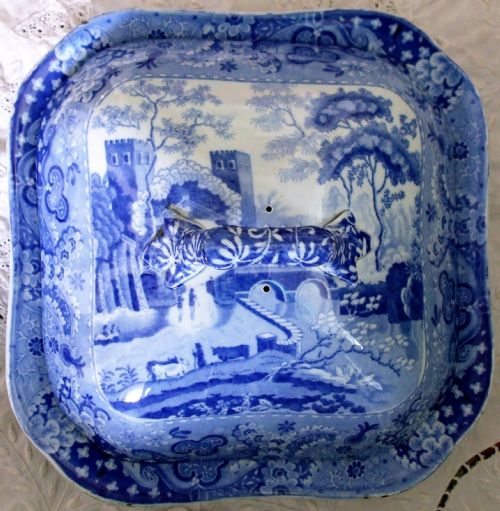
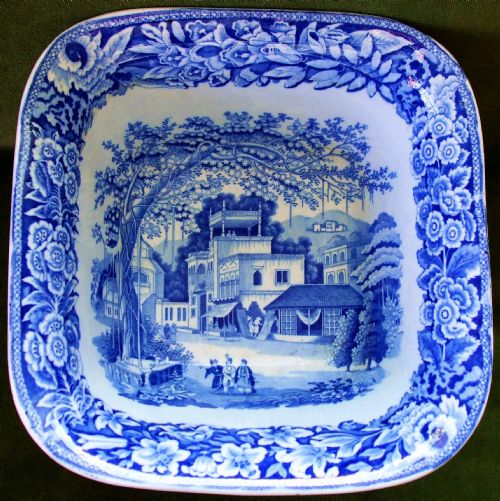
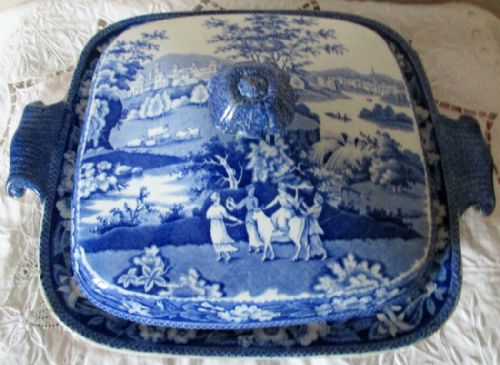
A transferware serving dish is a ceramic vessel designed for presenting food at the table, spanning forms such as large meat platters, vegetable tureens with covers, chargers, and bread stands. These pieces predominantly date from the nineteenth century, encompassing Georgian, Regency, and Victorian periods.
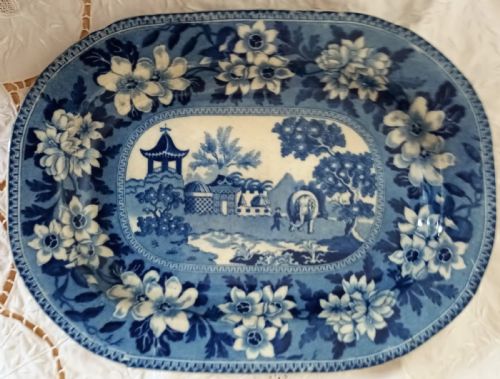
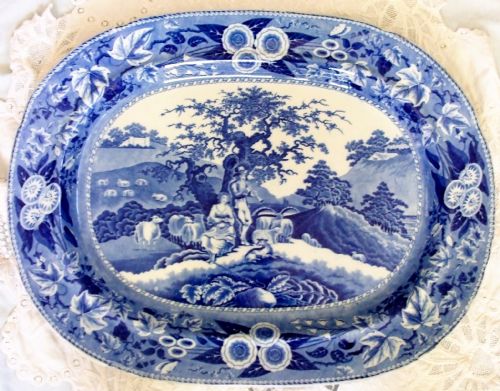
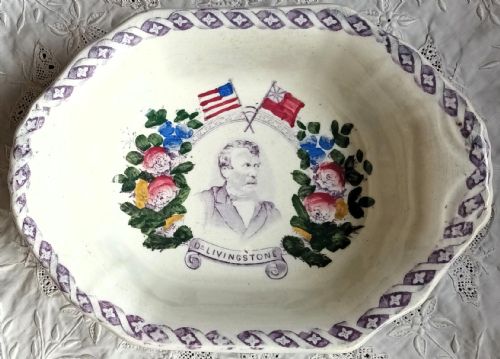
The buyer most frequently encounters blue and white earthenware platters and lidded tureens featuring detailed printed imagery. Designs range from topographical views and classical ruins to orientalist patterns and commemorative subjects.
How they were made
Potters produced these items using earthenware, pearlware, and improved stone china, shaped into substantial platters, bowls, and tureens. The bodies were coated in lead glaze or ceramic glaze to provide a smooth, protective finish.
Makers applied cobalt pigment through transfer printing, a technique where an engraved copper plate transferred a design onto tissue paper and subsequently onto the ceramic surface before firing.
Transferware Serving Dish Retail Price Guide 2026
Typical asking prices for transferware serving dish among the pieces listed under this phrase on Sellingantiques today, from the lower quarter to the upper quarter. They describe what is for sale here now, not the wider market.
Listings feature earthenware and pearlware bodies decorated with cobalt pigment under lead or ceramic glazes across the nineteenth century.
What varies in quality
The clarity and crispness of the transfer print dictate the visual success of the piece, separating finely detailed topographical scenes from blurred or heavily smudged impressions. The depth of the blue cobalt pigment and the evenness of the ceramic glaze also influence the overall refinement.
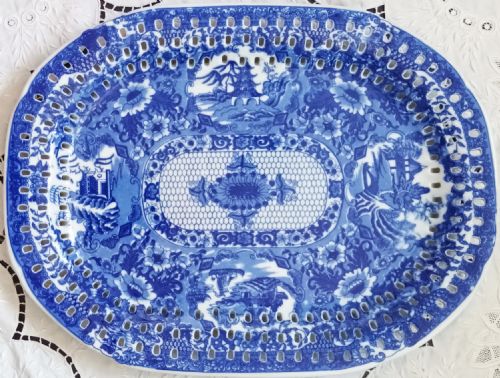
Substantial weight, balanced proportions, and complex moulded details such as pierced rims or fitted covers indicate superior manufacture. The prominence of the maker or the specific named pattern further elevates the standing of individual items.
Spode·Davenport·John Rogers And Son·James Wallace And Company·J And R Riley·J And R Clews·Minton·Thomas Lakin·Copeland And Garrett
The Transferware Serving Dish Glossary
- Transferware
- Pottery decorated by transferring a printed design from an engraved copper plate onto the ceramic body using a paper tissue. This technique allowed intricate pictorial scenes to be replicated consistently across large services.
- Pearlware
- A refined earthenware developed in the late eighteenth century featuring a subtle bluish glaze that pooled in crevices. It bridged the gap between creamware and later white earthenwares.
- Tureen
- A deep covered vessel designed for serving soups, vegetables, or sauces at the table. These often accompanied matching platters or stands.
- Charger
- A large ornamental or serving plate intended for significant display or presentation during formal meals. They frequently display expansive landscape or architectural patterns.
- Drainer
- A perforated ceramic insert placed inside a meat platter to allow juices to pool beneath the meat. These pieces are particularly prized when found intact with their original dish.
Transferware Serving Dish: Frequently Asked Questions
How were transferware serving dishes used?
These dishes formed part of large dining services used to present meats, vegetables, and sauces during substantial nineteenth century meals. Platters held large roasts while tureens kept soups and vegetables warm at the table.
Many featured specialised additions like drainer inserts or matching ladles to assist with serving. Their printed designs provided decorative conversation pieces during formal dining.
How do I tell Georgian pieces from Victorian ones?
Georgian and Regency pieces often employ pearlware bodies with a characteristic bluish tint in the glaze and lighter, more delicate potting. The blue pigment tends to be deep and pooling.
Victorian examples frequently utilise heavier earthenware or improved stone china with brighter white glazes and denser transfer printing. Makers marks stamped or printed underneath also help pinpoint the exact era of production.
Can I use an antique serving dish for food?
Most pieces possess lead glazes and porous earthenware bodies that are unsuited for modern dishwashers, microwaves, or acidic foods. Hand washing in warm water preserves the historic glaze and prevents crazing.
Many collectors prefer to use them for dry presentation or display rather than daily dining to protect the antique ceramic surface.
What do named patterns signify?
Named patterns indicate specific printed series produced by potteries, often depicting travel views, literary scenes, or historical events. Series like Byron Views or specific topographical titles allow collectors to date and attribute pieces accurately.
These titles often reflect contemporary interests in foreign exploration, classical antiquities, and picturesque scenery.