


Traditional Wooden Partners Desk
A traditional wooden partners desk offers double-sided workspace and storage, built for business in mahogany, oak or walnut during the Victorian and Edwardian eras.
Traditional Wooden Partners Desk
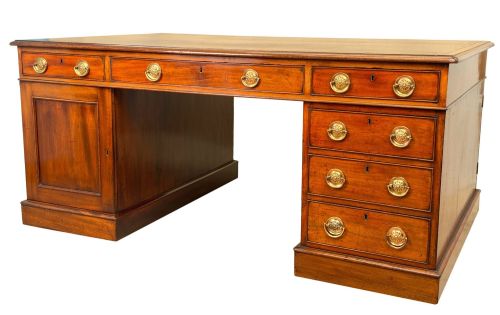
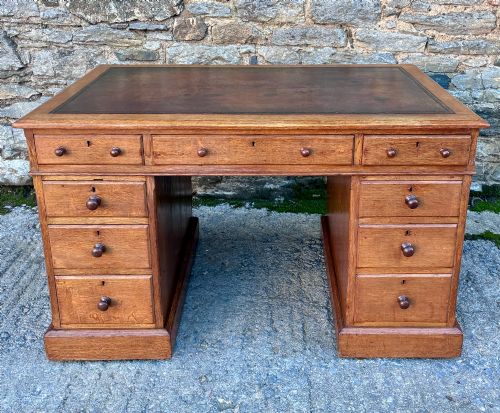
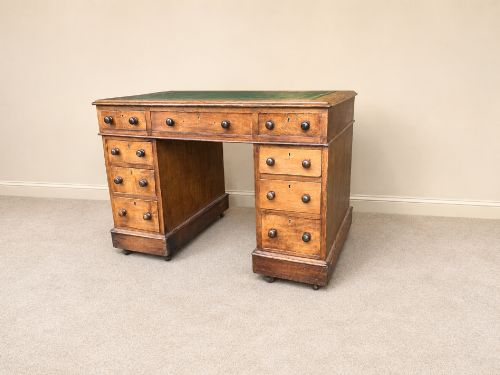
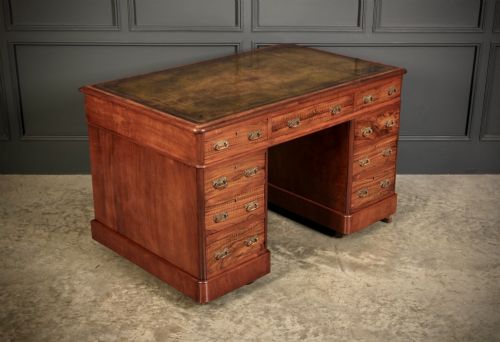
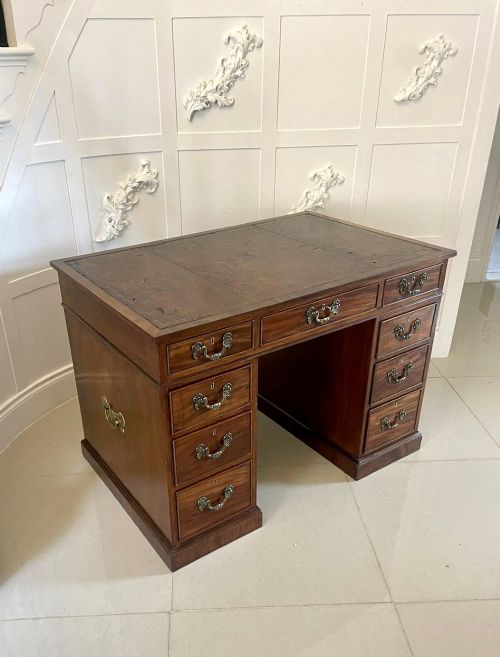
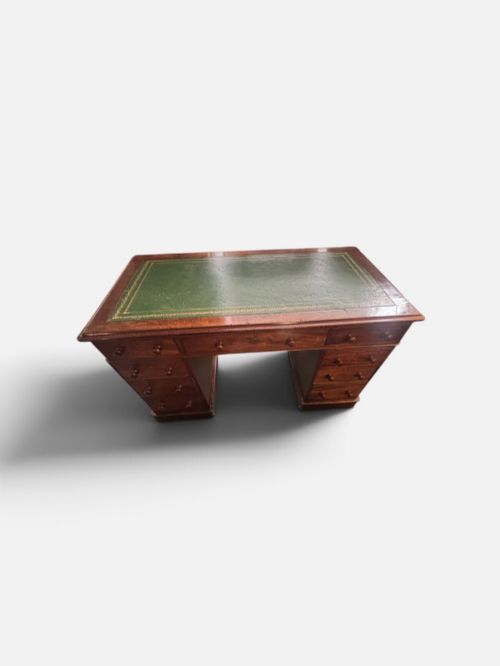
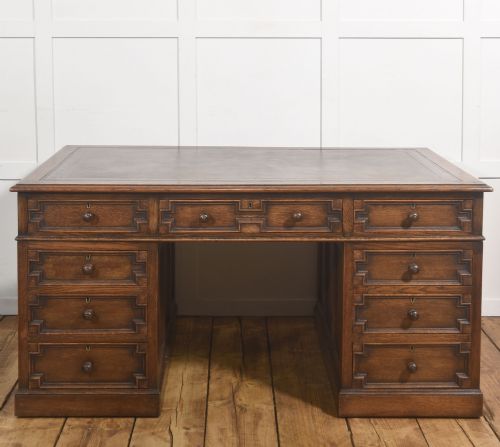
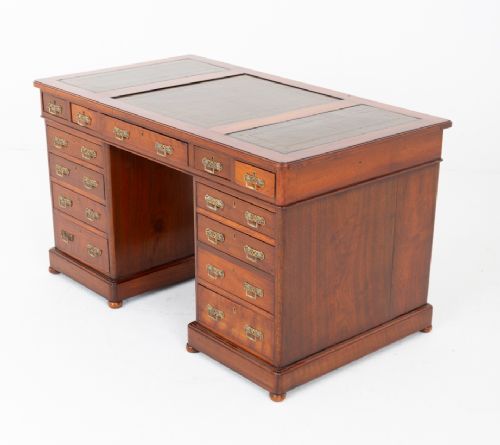
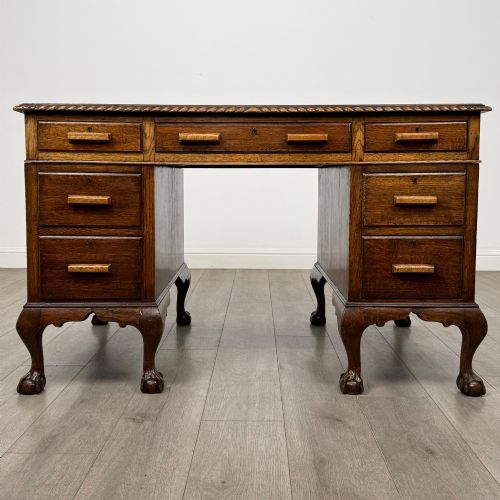
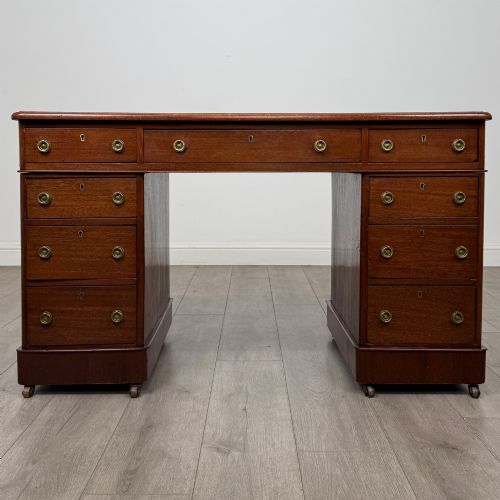
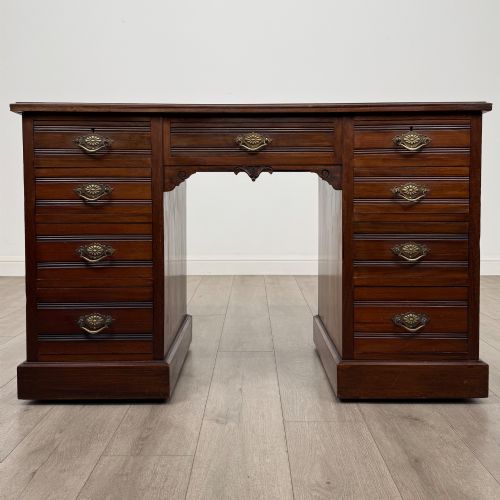
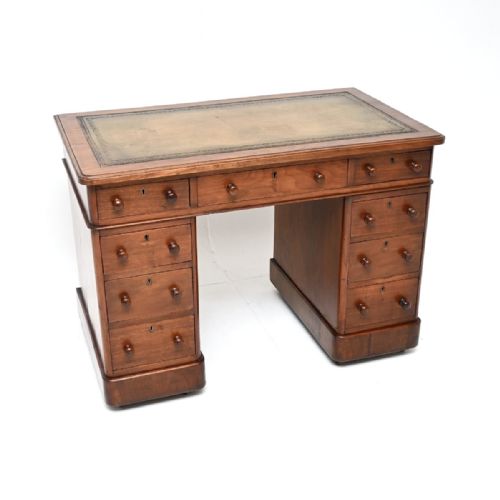
A traditional wooden partners desk is a large pedestal form designed with drawers and cupboards on both opposing sides, allowing two people to work face to face. The version you are most likely to meet on this page is the Victorian or Edwardian mahogany example, often fitted with a leather writing surface.
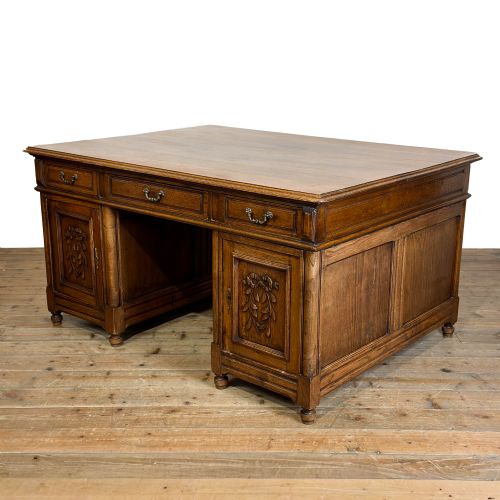
These pieces originated in large houses, banks and solicitors' offices where clerks or business partners required shared access to documents. Alongside mahogany, the listings show substantial examples built from oak, walnut, burr walnut and elm across the nineteenth and early twentieth centuries.
How they were made
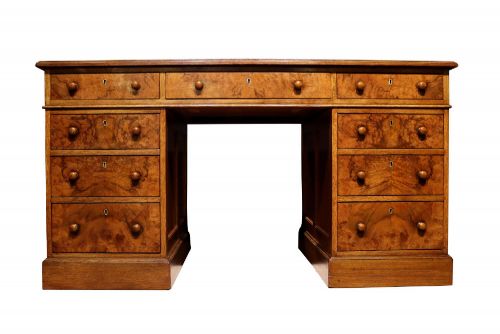
Cabinet makers built these substantial desks using dense timbers such as mahogany, oak and walnut, frequently applying burr walnut or curl mahogany veneers to the primary display surfaces. Drawers were constructed with traditional joints and often paired with fitted stationery compartments or integrated writing slides.
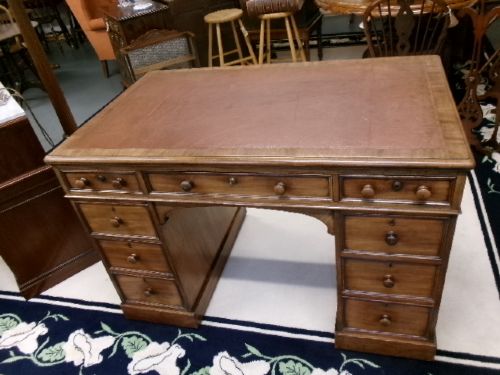
Working surfaces were typically inset with tooled leather writing panels, surrounded by solid timber margins. Brass handles, escutcheons and occasionally numbered drawer pulls finished the construction, providing durable hardware for heavy daily use.
Traditional Wooden Partners Desk Retail Price Guide 2026
Typical asking prices for traditional wooden partners desk among the pieces listed under this phrase on Sellingantiques today, from the lower quarter to the upper quarter. They describe what is for sale here now, not the wider market.
Listings span the Victorian and Edwardian periods, featuring mahogany, oak, walnut and burr walnut across pedestal and partners forms.
What varies in quality
Quality rests primarily in the choice of timber and the sophistication of the cabinet work, ranging from plain utility pieces in oak to finely figured golden mahogany and burr walnut examples with crossbanding. The depth of the proportions, the figuring of the grain and the presence of original brass hardware and fitted desk interiors distinguish finer workshops from standard production.
The architectural presence of the desk also dictates its standing, with well-proportioned cornices, panelled double-sided pedestals and harmonious drawer arrangements marking out superior pieces made for boardroom or country house environments.
Maple and Co
The Traditional Wooden Partners Desk Glossary
- Partners desk
- A large pedestal desk with drawers and cupboards accessible from both sides, designed for two people to work opposite each other. These pieces form the central focus of this page.
- Pedestal desk
- A form comprising two freestanding drawer columns supporting a wide writing top, frequently featuring a central kneehole. They provide substantial storage beneath the main surface.
- Writing slide
- A pull-out shelf housed above the drawers that extends the usable surface area for temporary paperwork. They are commonly faced in matching timber.
- Kneehole
- The central recessed space between the two pedestals where a chair sits. Some variations include a small concealed cupboard or drawer set deep within this opening.
Traditional Wooden Partners Desk: Frequently Asked Questions
What is a partners desk?
A partners desk is a double-sided pedestal desk designed with drawers and cupboards facing outwards on both sides. This allowed two people, such as business partners or bankers, to sit opposite each other and share the workspace.
Most examples seen here date from the Victorian and Edwardian periods and are constructed from timbers like mahogany, oak and walnut.
How do I know if it is genuine?
Authentic period desks show construction methods consistent with nineteenth and early twentieth century cabinet making, including hand-cut joints and timber shrinkage appropriate to age. Look for secondary woods inside the drawer linings and signs of genuine wear on the brass hardware and timber.
Makers such as Maple and Co occasionally marked their pieces, though many fine desks remain unsigned products of quality regional or London workshops.
Are partners desks heavy?
Yes, these are exceptionally heavy pieces of furniture built from solid hardwoods with multiple large drawers and internal carcases. They are frequently modular, separating into pedestals and a heavy top section to assist with movement and placement.
Due to their substantial scale, they require careful measurement of doorways and room layouts before installation.
What woods were used?
Mahogany is the most frequent timber found in these listings, often appearing in figured, curl or golden varieties. Oak and walnut, including burr walnut, are also well represented alongside occasional uses of elm and ash.
Writing surfaces are almost invariably inset with tooled leather panels framed by the solid primary timber.