
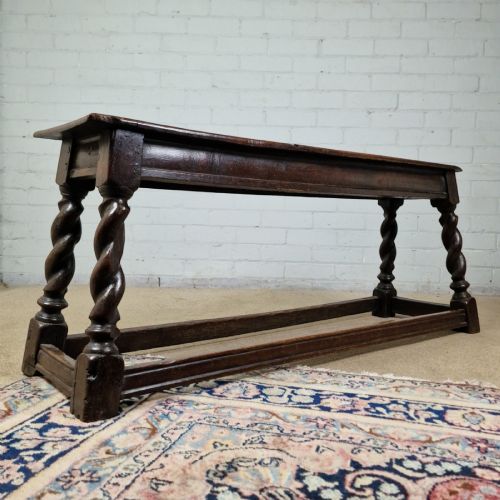
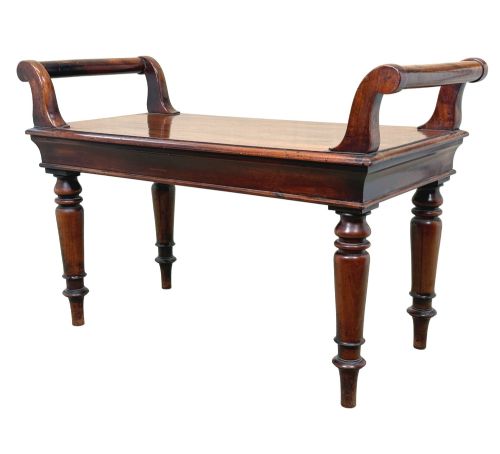

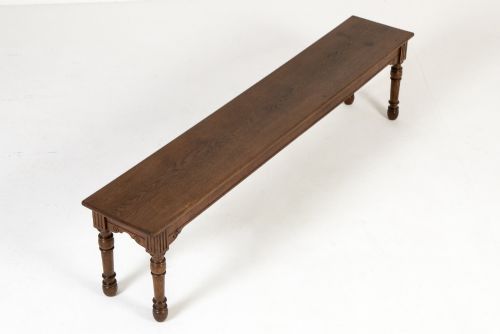

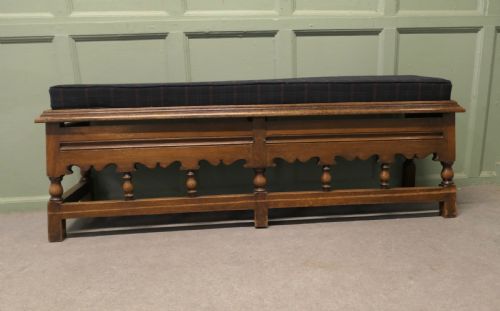
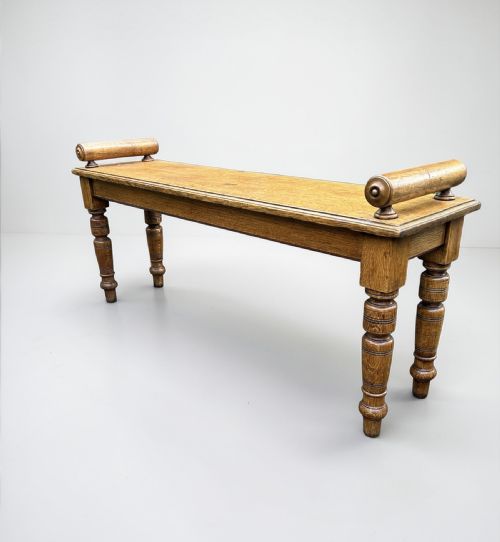


Traditional Window Bench
A traditional window bench brings functional seating and classical proportion to alcoves and hallways.
Traditional Window Bench
A traditional window bench bridges the gap between auxiliary seating and architectural joinery, designed specifically to sit low beneath sills or fill narrow halls. These pieces appear most frequently in mahogany, oak, and walnut timbers spanning the eighteenth, nineteenth, and early twentieth centuries.
The configurations range from long upholstered stools and piano duet seats to open-framed window seats and hall benches with carved details. Many examples integrate wool, leather, linen, and varied upholstery fabrics across their surfaces.
Design influences across the selection draw upon Regency, Victorian, Edwardian, and Adam or Neoclassical traditions. Pieces also include English Country House styles and Chinese carved hardwood variations.
Materials and construction methods
Construction relies upon dense hardwoods such as mahogany, oak, walnut, and rosewood, frequently shaped with fluted legs or ball and claw details. Joinery techniques secure the long frames required to span window recesses and hallways.
Upholstery incorporates traditional textile coverings including wool, linen, kilim, leather, and assorted patterned fabrics. Internal elements occasionally feature hinged seats for storage within ottoman and duet configurations.
One unexpected variant combines a hallway boot store with a tweed window seat.
Distinctions in construction and design execution
The standard of a traditional window bench rests upon the crispness of timber carving, the structural integrity of the frame, and the weight of the chosen hardwood. Superior examples display precise joinery in elements like fluted legs and ball and claw details.
Upholstery choices and the preservation of secondary timbers further separate standard workshop output from finer cabinet work. Proportion and the balance between frame and textile determine the visual success of each piece.
The Traditional Window Bench Glossary
- Duet Stool
- An extended seat designed for two players at a keyboard instrument. These frequently incorporate hinged lids and internal storage compartments.
- Ottoman Stool
- A fully upholstered seat or couch without a backrest. These pieces often serve double duty for seating and storage.
- Hall Bench
- A narrow wooden or upholstered seat positioned in entryways. They occasionally include boot storage or tweed upholstery.
- Kilim
- A flatwoven textile used historically as a durable covering for footstools and benches. It provides a distinct geometric pattern.
Traditional Window Bench: Frequently Asked Questions
Where should I place a window bench?
These pieces fit naturally beneath low window sills in living areas or bedrooms where extra seating is useful without blocking natural light.
They also function effectively in narrow hallways and entryways as a place to sit while removing footwear.
How do I identify a Victorian window bench?
Victorian examples frequently utilise ebonised finishes, rosewood, or heavy mahogany timbers with deep buttoning or patterned upholstery fabrics.
Look for architectural clues such as turned legs or heavy proportions typical of the nineteenth century.
Did window benches have storage?
Many piano duet stools and ottoman variants include hinged seats that lift to reveal a storage compartment beneath.
Standard open-framed window seats and hall benches typically kept the space beneath the frame entirely open.
What woods were used for these benches?
Cabinet makers relied primarily on dense hardwoods including mahogany, oak, walnut, and rosewood for the structural frames.
Chinese carved hardwood and bleached oak variations also appear alongside the more common European timbers.