



Traditional Wheel Back Chairs
Traditional wheel back chairs are sturdy seating pieces built for everyday utility, offering classic timber construction that grounds any dining room or kitchen.
Traditional Wheel Back Chairs
Traditional wheel back chairs span several distinct eras, drawing from Georgian, Victorian, and later nineteenth-century periods. These pieces serve primarily as functional dining, kitchen, or office seating rather than formal parlor furniture.
The selection here encompasses various forms, most notably Windsor chairs, armchairs, side chairs, and dining chairs. Buyers encounter sets alongside individual armchairs and side seating.
Origins stretch across English country workshops and regional centres such as the Thames Valley, reflecting vernacular furniture traditions. Sets range from matched groups to harlequin collections assembled over time.
Materials and construction methods
Maker construction relies on contrasting timber selection, frequently pairing elm seats with ash, beech, or oak spindles and frames. Yew wood also appears in specific regional pieces, valued for its rich grain and warmth.
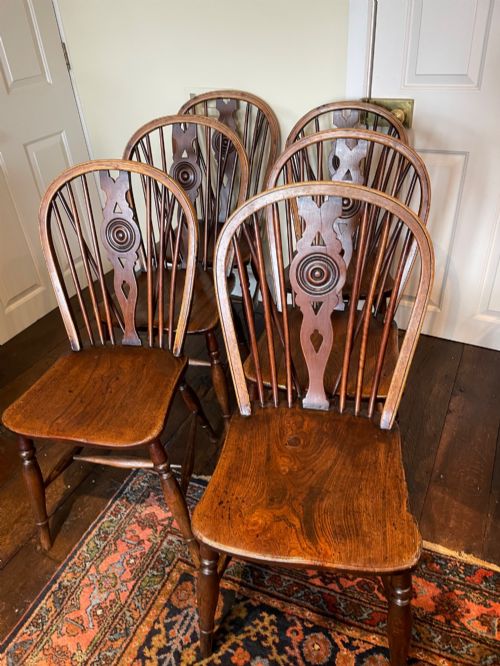
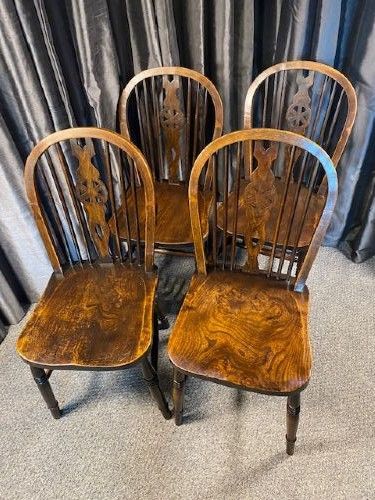
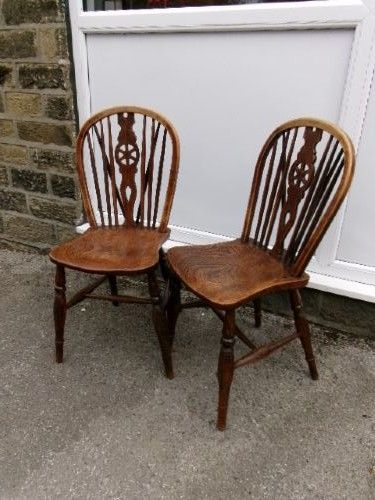
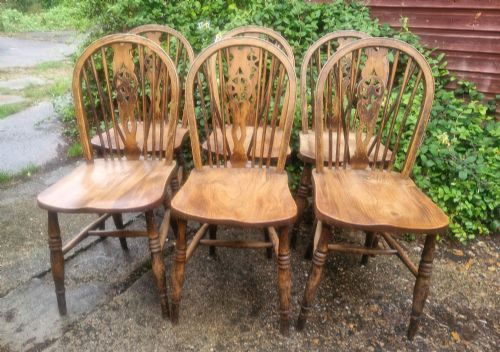
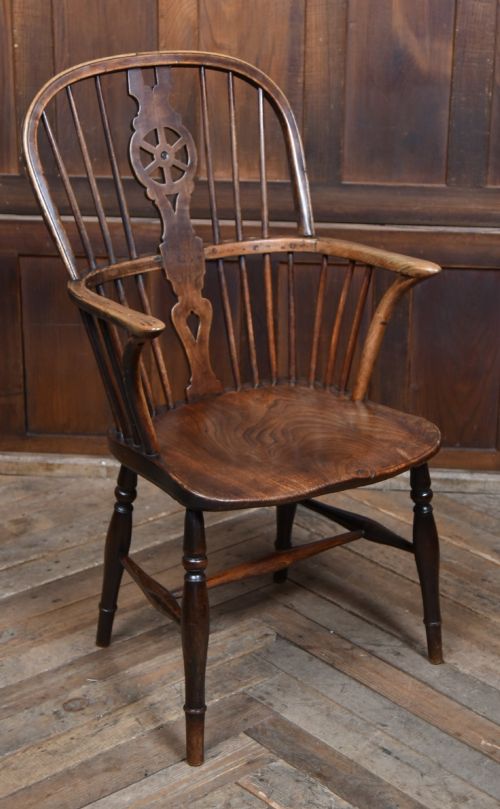
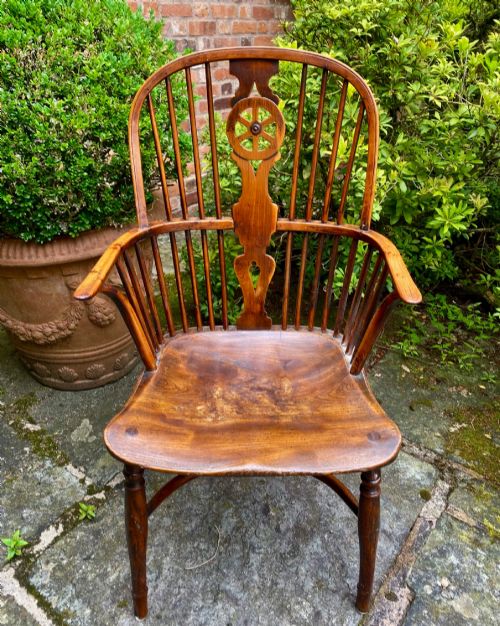
Constructors utilised traditional green woodworking techniques, steaming and bending timber to form the characteristic arched backs and pierced splats shaped like wagon wheels.
Traditional Wheel Back Chairs Retail Price Guide 2026
Typical asking prices for traditional wheel back chairs among the pieces listed under this phrase on Sellingantiques today, from the lower quarter to the upper quarter. They describe what is for sale here now, not the wider market.
Judging quality in construction and timber
Quality rests upon the selection of timber figures and the integrity of the spindle joints securing the seat to the undercarriage. Pieces featuring deeply sculpted solid elm seats display superior comfort and tactile depth.
The precision of the turned legs and the proportional balance of the wheel-carved splat separate standard utilitarian seating from finer regional craftsmanship.
The Traditional Wheel Back Chairs Glossary
- Windsor chair
- A wooden chair featuring a solid sculpted seat into which the back and legs are directly tenoned. This construction method provides robust stability.
- Wheel back
- A chair back featuring a central pierced splat carved in the shape of a spoked wheel. It serves as the defining decorative motif for these seating designs.
- Harlequin set
- A collection of dining chairs sharing a similar style or period while exhibiting minor variations in turning or timber tone. Such sets assemble naturally over decades.
- Thames Valley
- A geographical region renowned for distinct regional furniture production, often utilising local yew and elm. Pieces from this area command particular attention.
Traditional Wheel Back Chairs: Frequently Asked Questions
What defines traditional wheel back chairs?
Traditional wheel back chairs are wooden seating pieces defined by a pierced central splat shaped like a wheel. They typically feature a solid plank seat and spindle-backed construction.
Most examples originate from nineteenth-century English country workshops and regional traditions. They include Windsor armchairs, kitchen dining chairs, and occasional side seating.
How do I care for antique timber seats?
Maintain these chairs by keeping them away from direct heat sources and sudden humidity changes. This prevents the timber from drying out and splitting.
Apply natural beeswax periodically to nourish the wood and preserve the surface finish. Avoid harsh chemical cleaners that strip the historic patina.
Are these chairs suitable for daily dining?
These pieces were built for practical everyday use in kitchens and dining rooms. Their robust timber construction makes them durable enough for regular modern seating.
When purchasing sets for daily dining, check the seat heights and undercarriage stability. Harlequin sets offer a practical way to seat multiple people around a table.
How do I distinguish regional chair styles?
Regional differences appear in the choice of timber, such as yew wood versus elm, and the specific turning patterns of the legs. Thames Valley pieces often display refined craftsmanship and distinct local woods.
Comparing the arm shapes, stretcher configurations, and crest rails helps identify specific provincial traditions. The presence of makers' marks or specific regional characteristics guides attribution.