



Traditional Walnut Shelving Unit
These traditional walnut shelving unit pieces bring warmth and practical storage to a room, offering sturdy timbers and handsome grain.
Traditional Walnut Shelving Unit
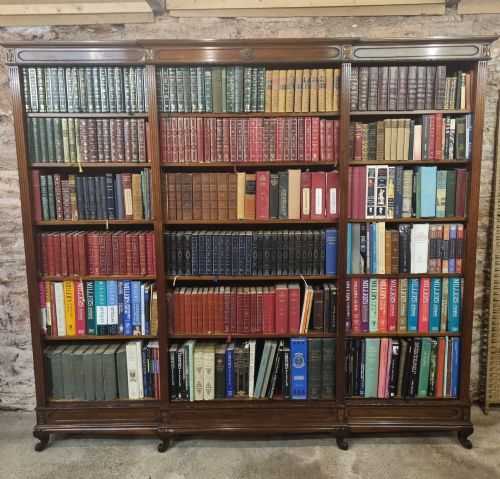
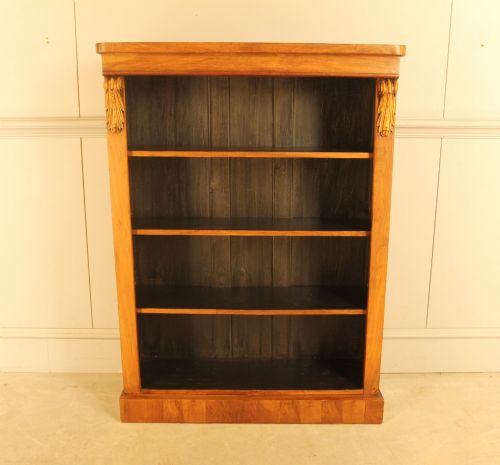
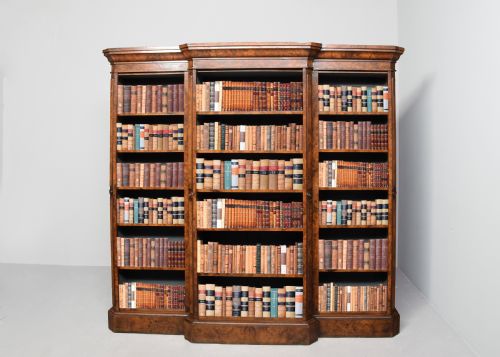
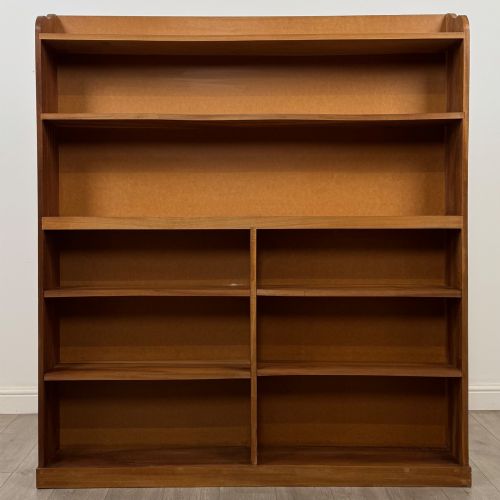
A traditional walnut shelving unit typically takes the form of an open bookcase designed to hold books and display objects. These pieces appear in configurations such as single sections, large stepped designs, and breakfront layouts.
The selections span from the mid-nineteenth century through the Edwardian era and into the 1930s. Buyers frequently encounter Victorian and early twentieth-century examples featuring adjustable shelves and carved details.
Makers often utilised timber frameworks finished with burr walnut veneers to create rich surface patterns. Such furniture serves both utilitarian and decorative purposes in domestic spaces.
How traditional walnut shelving unit pieces were constructed
Craftsmen built these bookcases using solid timber frames overlaid with walnut and burr walnut veneers to highlight the natural grain figures. Pine often served as a secondary timber for internal components and shelving supports.
Construction techniques include fitted adjustable shelf mechanisms alongside decorative additions like carved friezes and barley twist columns. Finished surfaces display the deep, warm tones characteristic of traditional cabinetmaking.
Traditional Walnut Shelving Unit Retail Price Guide 2026
Typical asking prices for traditional walnut shelving unit among the pieces listed under this phrase on Sellingantiques today, from the lower quarter to the upper quarter. They describe what is for sale here now, not the wider market.
Listings span from the mid-nineteenth century to the 1930s, featuring walnut, burr walnut, pine, and glass.
What varies in quality across traditional walnut shelving unit items
The distinction between standard examples and superior pieces rests on the choice of veneer and the complexity of the cabinetry. Breakfront forms and multi-section layouts require advanced woodworking skill.
Subtleties in the joinery and the presence of carved friezes or barley twist columns elevate a piece beyond basic utilitarian storage. Timber selection, particularly figured burr walnut, dictates visual presence.
The Traditional Walnut Shelving Unit Glossary
- Burr walnut
- A veneer taken from the wart-like growths on walnut trees, prized for its swirling grain patterns. It adds distinct visual texture to cabinet doors and shelves.
- Breakfront
- A piece of furniture where the central section projects forward from the side sections. This layout creates architectural depth.
- Barley twist
- A decorative turning shaped like a spiral resembling barley sugar. It appears on upright supports and columns.
- Frieze
- A broad horizontal band of decoration situated near the top of a bookcase. Carved examples display traditional ornamentation.
Traditional Walnut Shelving Unit: Frequently Asked Questions
Where should I place a traditional walnut shelving unit?
These open bookcases suit studies, libraries, and living rooms where books and decorative objects require prominent display.
Keep them away from direct heat sources and strong sunlight to protect the timber and veneer surfaces over time.
How do I adjust the shelves?
Many nineteenth and twentieth-century examples feature wooden support tracks or metal pins that allow shelves to move up or down.
Take care when lifting loaded shelves to avoid damaging the interior veneered surfaces.
Are these units suitable for heavy books?
Solid timber construction and sturdy shelving provide reliable support for standard volumes.
Verify the thickness of the individual boards before loading large or heavy collections onto a single tier.
How do I date a traditional walnut shelving unit?
Examine the construction methods, secondary timbers, and overall style indicators such as Victorian carvings or Edwardian proportions.
Details like barley twist columns and breakfront formats often align with specific revival periods.