




Traditional Walnut Carvers
Traditional walnut carvers combine sturdy domestic utility with grand revival silhouettes, offering substantial seating suited to formal dining rooms.
Traditional Walnut Carvers
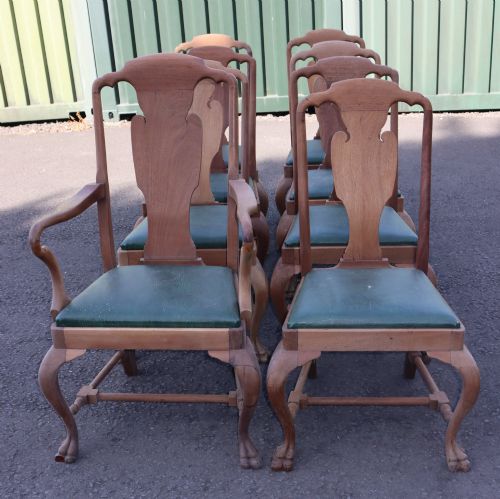
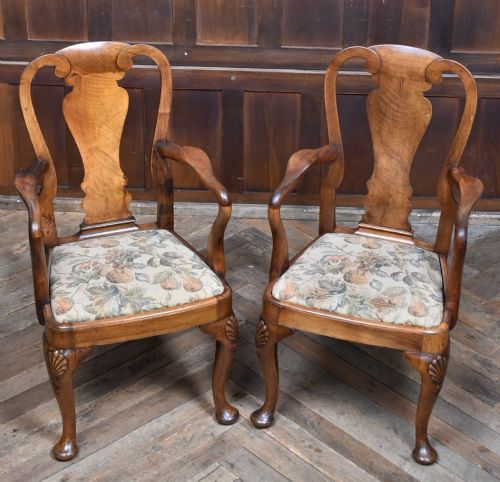
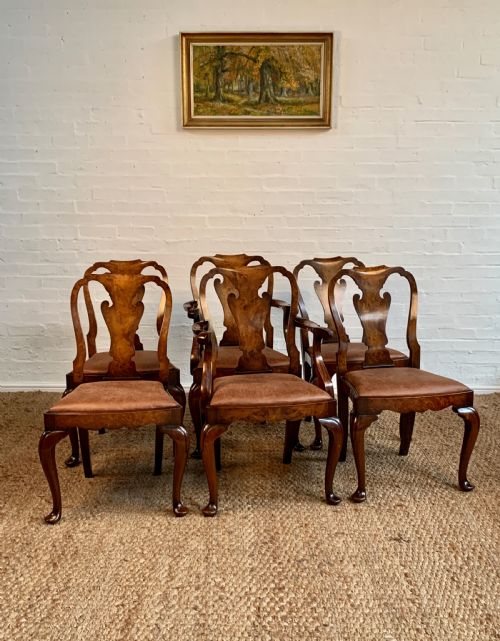
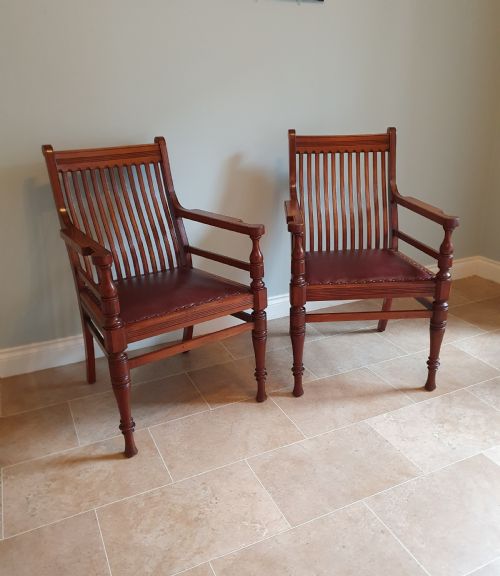
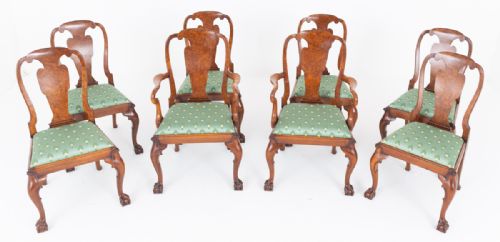
Traditional walnut carvers typically emerge as single armchairs, matched pairs, or larger dining sets originating from the Victorian, Edwardian, and early twentieth-century periods. These elbow chairs and armchairs frequently follow Queen Anne, George II, or Chippendale revival styles, displaying scrolled arms and supportive high backs.
Buyers encounter single desk chairs, child chairs, and extensive dining sets that incorporate carvers alongside side chairs. The form draws heavily on eighteenth-century precedents while utilising the rich timber figures popular in later decades.
Makers of these pieces adapted historic English and French provincial motifs, producing sturdy seating designed for practical daily use around dining and writing tables.
Materials and construction methods
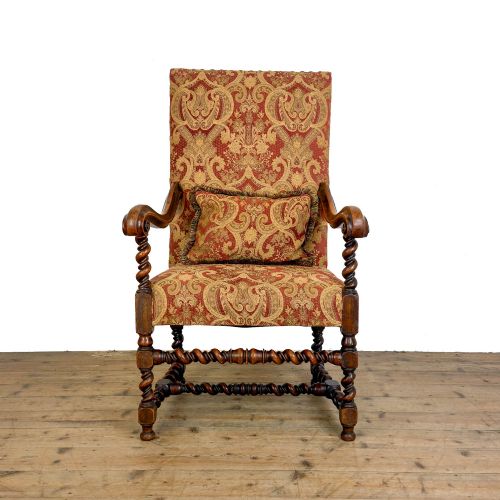
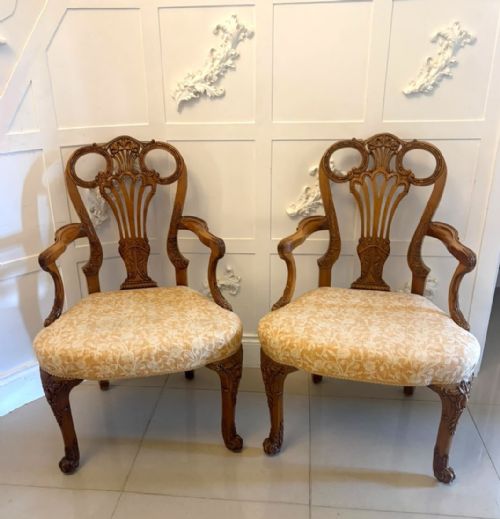
Workshops utilised solid walnut and burr walnut veneers over hardwood carcasses, applying deep carving to knees, splats, and crest rails. Turning and spiral decoration frequently appear on uprights and stretchers, anchoring the structural integrity of the frame.
Upholstery materials range from leather and velvet to patterned fabric and textile inserts, secured over sprung or padded seats. Brass details and studs occasionally accent the edges of the hide or woven coverings.
Upholstery options across these listings include durable leather, woven textile, and plush velvet, paired with hardwood frames.
Assessing quality in walnut seating
The distinction between standard production and exceptional examples lies in the crispness of the hand-carving and the choice of timber figurations, such as highly figured burr walnut. Superior frames exhibit harmonious proportions and seamless joinery in the arms and back splats.
The integration of the upholstery and the retention of original timber patination elevate the standing of a piece, distinguishing workshop output designed for wealthy households from ordinary domestic furniture.
Spillman & Co
The Traditional Walnut Carvers Glossary
- Carver
- An armchair designed with elbow supports, traditionally placed at the head and foot of a dining table. These seating pieces match the simpler side chairs in a larger dining set.
- Burr walnut
- A specialised timber veneer harvested from the irregular growth knots of the walnut tree. It provides a highly patterned, mottled grain highly prized in decorative furniture.
- Queen Anne style
- A revival aesthetic characterised by cabriole legs, pad feet, and spoon-backed or solid-splat chairs. It dominated much of the early twentieth-century production seen here.
- Carolean revival
- A decorative style echoing late seventeenth-century English furniture. It utilises rich carving, high upholstered backs, and heavily turned structural elements.
Traditional Walnut Carvers: Frequently Asked Questions
What is burr walnut?
Burr walnut is a decorative veneer cut from tree growths that produces swirling, organic patterns.
Cabinetmakers applied this timber to prominent surfaces like chair backs and tabletops to catch the light.
Are these chairs comfortable?
Most pieces incorporate padded, sprung, or leather-upholstered seats designed for extended sitting during meals or desk work.
Supportive high backs and curved elbow rests add physical comfort to the formal upright posture.
How do I date revival furniture?
Dating relies on examining secondary woods, construction hardware, and the specific style of revival popular at the time of manufacture.
Victorian and Edwardian workshops frequently reinterpreted eighteenth-century Queen Anne and Georgian forms with distinct late-period craftsmanship.