



Traditional Wall Table
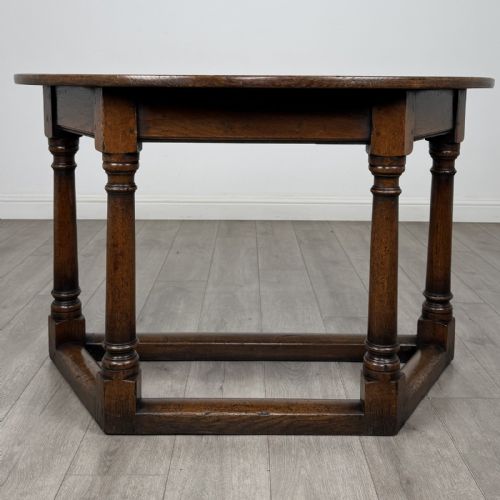
These traditional wall table designs are console and side pieces placed against interior surfaces, offering a practical display ledge for rooms.
Traditional Wall Table
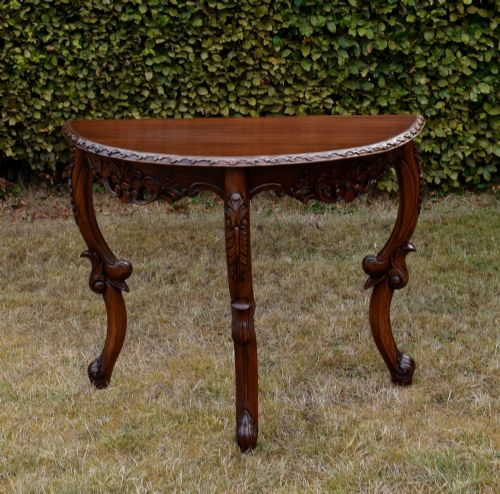
A traditional wall table typically takes the form of a console or side table designed to sit flat against a partition, often featuring a demi-lune or half-round top that projects minimally into the room. These pieces frequently appear in mahogany, walnut, and oak, reflecting historical idioms such as Victorian, Georgian Revival, and Queen Anne style.
The selections span various eras from the nineteenth century into the twentieth century, encompassing both English and continental origins. Alongside standard wooden console tables, the listings include specialised side formats and half tables suited for narrow hallways and reception spaces.
Materials and construction methods
Cabinetmakers utilised dense hardwoods such as mahogany and walnut to build the foundational frames of these tables, frequently employing polished veneers and curved timber sections for demi-lune tops. Joinery methods relied on traditional mortise and tenon construction to ensure stability while supporting weighted decorative objects placed against walls.
Secondary elements incorporate brass hardware and occasional lacquer finishes, depending on the specific regional workshop and period aesthetic. The manipulation of solid timber allows for shaped aprons and tapered or cabriole legs characteristic of revival and nineteenth century furniture production.
Traditional Wall Table Retail Price Guide 2026
Typical asking prices for traditional wall table among the pieces listed under this phrase on Sellingantiques today, from the lower quarter to the upper quarter. They describe what is for sale here now, not the wider market.
Distinctions in construction and design execution
Quality in a traditional wall table rests upon the selection of timber grain and the precision of the joinery within the framework and leg attachments. Finer examples display carefully matched veneers and hand-carved details along the apron, whereas simpler variants rely on straightforward machine-cut assembly.
The integrity of the structural finish and the preservation of original timber patination further separate standard production pieces from higher grade examples. Consistency in proportion and the weight of the underlying wood dictate the longevity and physical presence of the console.
The Traditional Wall Table Glossary
- Console table
- A table supported against a wall by console brackets or legs, usually designed with a flat rear edge.
- Demi-lune
- A half-moon shape used for table tops and furniture fronts, common in nineteenth century side tables.
- Mahogany
- A durable, reddish-brown tropical hardwood frequently utilised for cabinetmaking and revival furniture.
- Walnut
- A heavy, dark timber valued for its rich grain patterns and utilisation in decorative furniture production.
- Cabriole leg
- A furniture leg that curves out and then in, resembling the leg of an animal.
Traditional Wall Table: Frequently Asked Questions
Where should I place a console table?
These tables fit naturally in narrow hallways, entrance foyers, or against living room partitions where floor space is limited. Their flat rear edges allow them to rest securely flush against vertical surfaces.
They provide a convenient surface for lamps, clocks, and decorative objects without obstructing pathways through the room.
How do I identify a revival style table?
Revival pieces incorporate decorative motifs and structural forms borrowed from earlier eras like the Georgian or Queen Anne periods, constructed during later decades.
Examination of the interior timber and construction hardware often reveals twentieth century manufacturing methods beneath an older stylistic appearance.
What is the difference between a side table and a console table?
A console table is specifically engineered to stand against a wall, frequently anchored or supported in a manner that assumes one side remains out of view.
Side tables can often stand independently in open spaces, though many nineteenth century variants share overlapping functional roles.
How do I maintain wooden table surfaces?
Regular dusting with a soft, dry cloth preserves the polished finish of mahogany and walnut without building up unwanted chemical residues.
Avoiding direct sunlight and excessive moisture prevents the timber from warping or fading over extended periods of domestic use.