


Traditional Upholstered Accent Chair
A traditional upholstered accent chair brings period character and practical comfort to a room, spanning styles from Regency library seats to Victorian button-back armchairs.
Traditional Upholstered Accent Chair
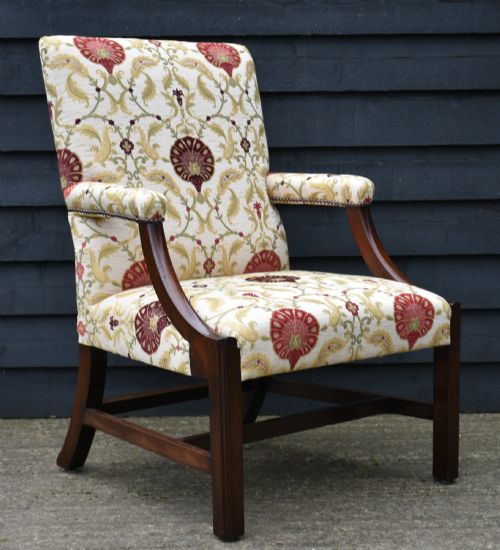
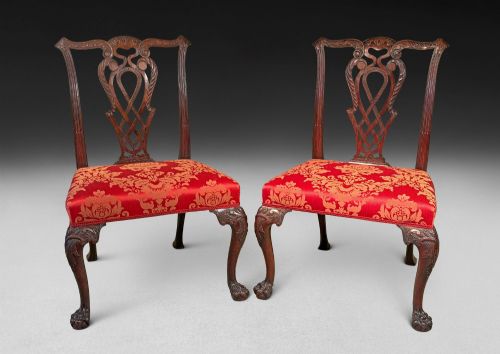
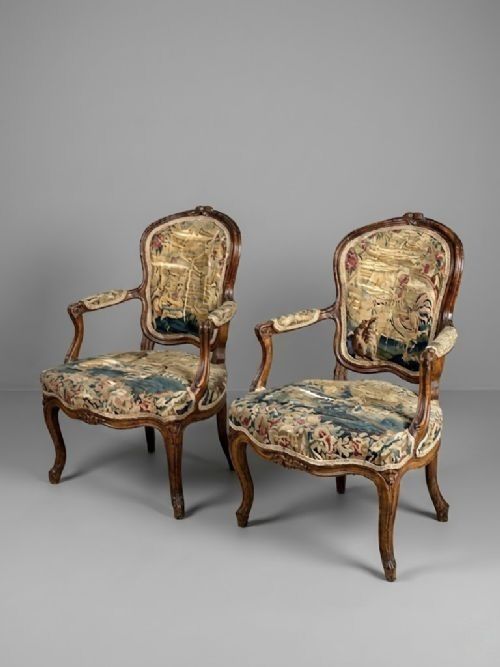
When you search for traditional upholstered accent chair, you encounter a varied selection of seating forms spanning the eighteenth, nineteenth, and early twentieth centuries. These encompass library armchairs, nursing chairs, wingbacks, and side chairs originating from English, French, and Dutch workshops.
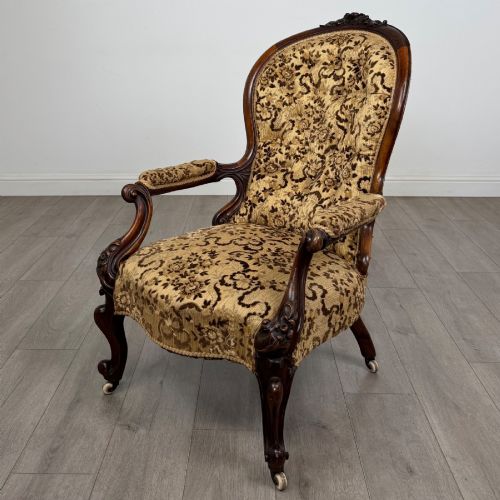
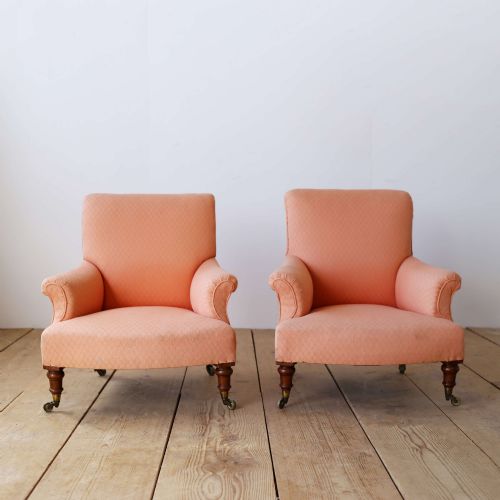
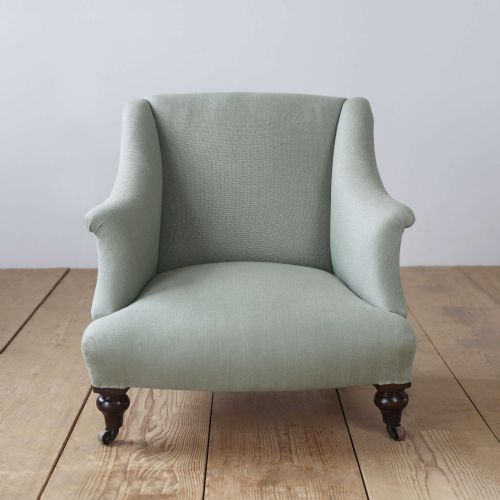
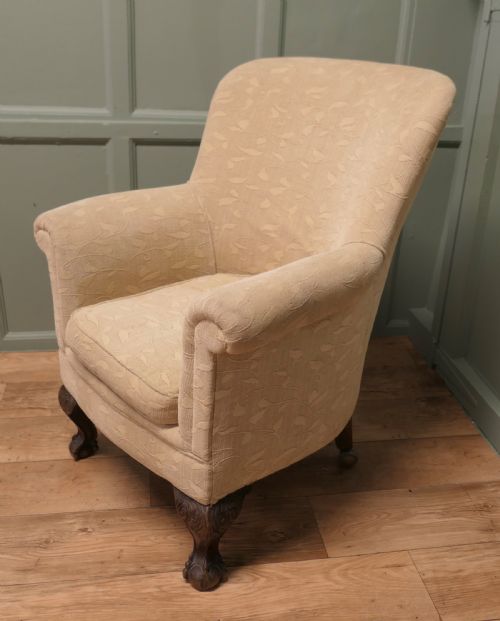
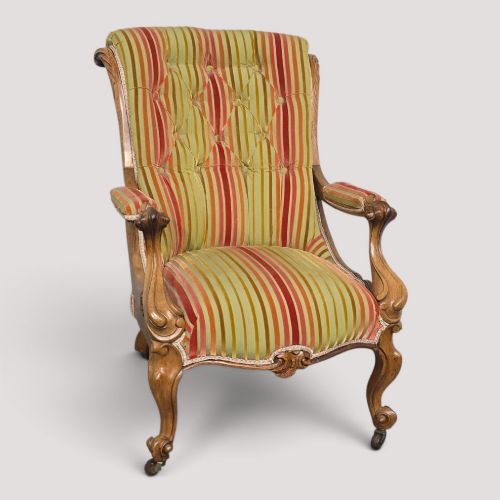
The most frequent examples on this page are Victorian and Edwardian armchairs, alongside Georgian and Regency revival pieces. Forms range from compact barrel-back and spinning chairs to oversized wingbacks upholstered in velvet, plaid, and calico over hessian foundations.
How they were made
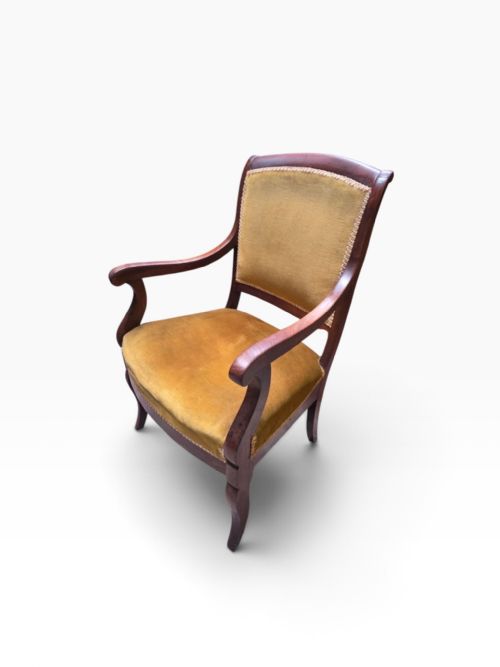
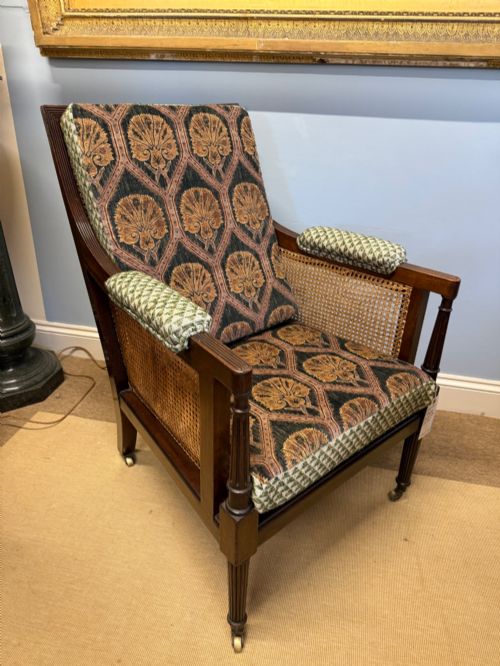
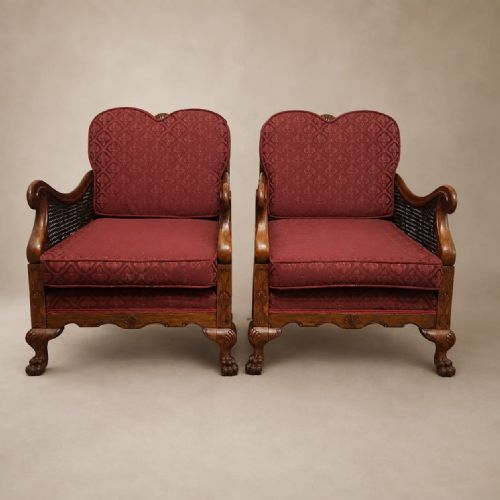
Frames rely predominantly on timber structures of mahogany, walnut, oak, and rosewood, frequently shaped with carved details or split cane panels. Brass accents occasionally appear on castors or structural mounts.
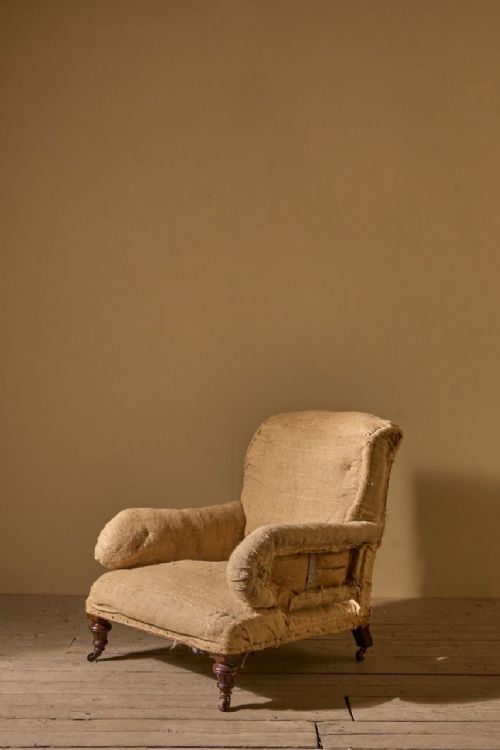
Upholstery techniques utilise traditional internal layers including hessian and calico as foundations beneath surface fabrics such as velvet, wool plaid, and patterned textiles.
The listings span from 18th-century Georgian pieces to 1930s armchairs, utilising materials like mahogany, oak, velvet, and hessian.
What varies in quality
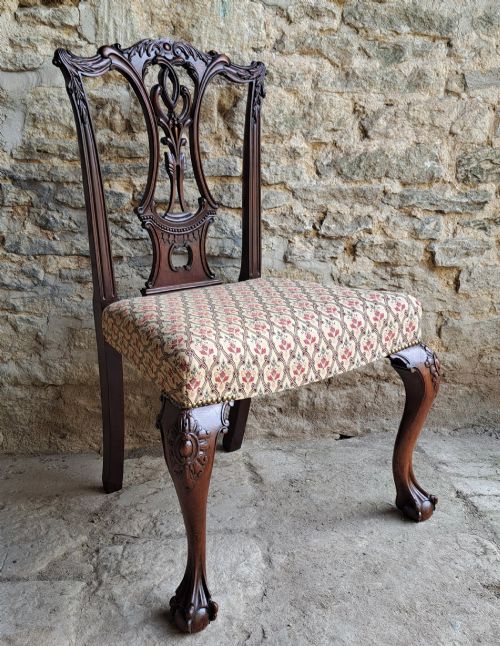
Quality rests in the sculptural precision of the timber frame and the integrity of the carving, distinguishing master-carved Chippendale or Regency models from simpler revival pieces. Wood selection, such as figured Cuban mahogany or rich walnut, dictates the baseline calibre.
The sophistication of the internal construction and the fidelity of the upholstery materials, from heavy silk velvets to traditional calico and hessian layering, separate standard seating from exceptional library and wingback chairs.
Charles Tozer·Howard and Sons·Hampton and sons
The Traditional Upholstered Accent Chair Glossary
- Wingback
- An armchair with side panels designed to shield the occupant from draughts while retaining heat from a fireplace.
- Nursing chair
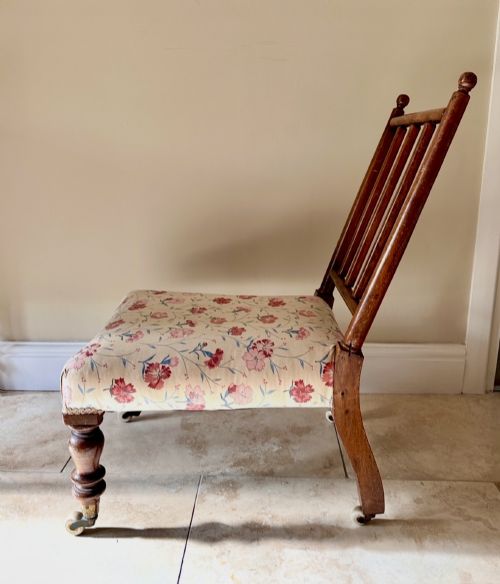
- A low-seated chair traditionally utilised for nursing infants, often featuring a buttoned back or upholstered sprung seat.
- Library chair
- A substantial armchair built for reading and study, frequently executed in mahogany or rosewood with upholstered arms and back.
- Bergere
- An enclosed upholstered armchair with wooden framing, often incorporating cane work on the sides and back.
- Bobbin chair
- A nineteenth-century seating form characterised by turned wooden spindles resembling spools or bobbins.
Traditional Upholstered Accent Chair: Frequently Asked Questions
What is a traditional upholstered accent chair?
A traditional upholstered accent chair is a period seating piece, such as a Victorian wingback or Regency library chair, designed to provide a focal point and comfortable seating.
These chairs combine timber frames in mahogany, walnut, or oak with traditional fabric coverings like velvet, calico, and wool.
How do I identify a Victorian armchair?
Victorian armchairs often feature deep button backs, turned wooden legs with castors, and robust frames in mahogany or oak.
They frequently employ heavy velvet or patterned fabric upholstery suited to nineteenth-century domestic interiors.
Where should I place a wingback chair?
Wingback chairs suit corners of living rooms, studies, or bedrooms where their high backs create a defined seating nook.
Their traditional proportions allow them to anchor a room while offering functional comfort.
What is the difference between an armchair and a side chair?
Armchairs feature structural supports for the arms, making them suitable for prolonged reading and relaxing.
Side chairs lack arms and are typically lighter, designed for occasional seating or placement around a table.