


Traditional Timber Shelving
Traditional timber shelving offers sturdy storage and classic display, built from mahogany, oak, elm, and rosewood across Victorian and Edwardian periods.
Traditional Timber Shelving
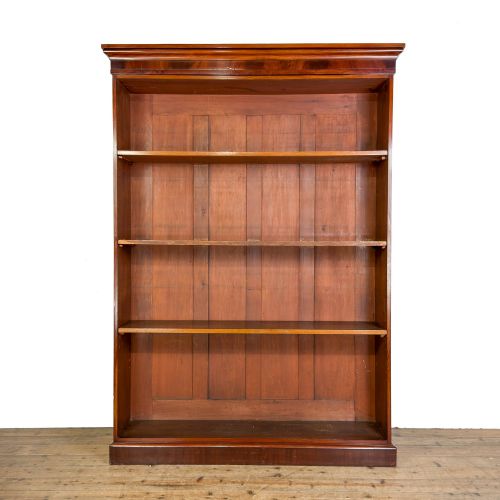
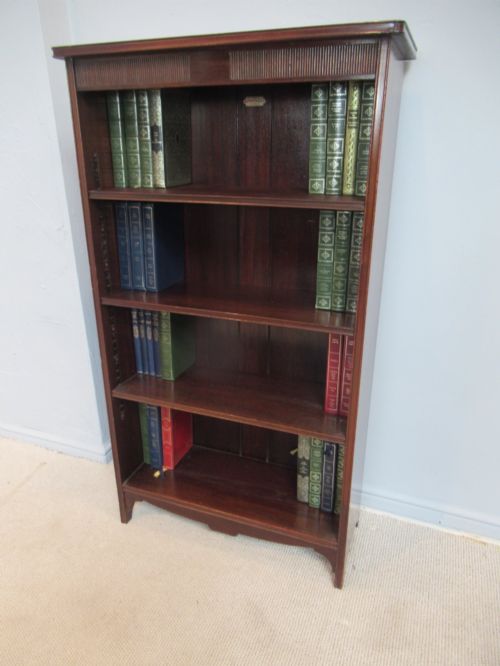
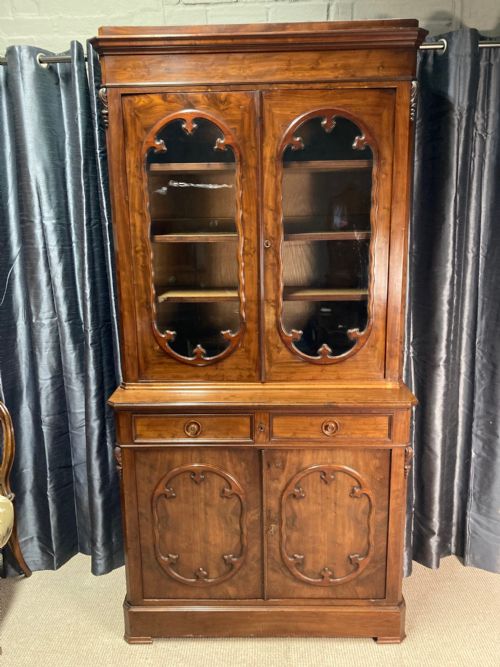
Traditional timber shelving comprises open bookcases, display cabinets, and storage units designed to house books and display objects. When exploring traditional timber shelving, buyers encounter pieces dating from the nineteenth and early twentieth centuries, spanning Victorian, Edwardian, and later traditional styles.
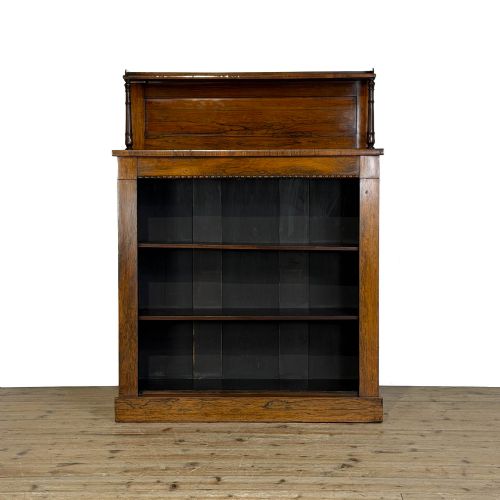
The selection includes freestanding waterfall display shelves, breakfront bookcases, and compact oak units alongside pigeon hole cabinets and Chinese cabinets. Mahogany and oak dominate the offerings, complemented by walnut, elm, and rosewood variants that reflect domestic storage needs of the past.
How traditional timber shelving was made
Cabinet makers utilised solid hardwoods such as mahogany, oak, elm, and rosewood, often pairing structural timbers with decorative veneers like burr walnut. Joinery relied on traditional framing and shelving supports built directly into the carcass or secured with brass fittings.
Surfaces were finished to highlight the natural grain of the wood, whether through polished mahogany finishes or the rustic texture of carved elm and pine. Construction methods ranged from robust stacking Barristers designs to breakfront architectural cabinetry.
Listings feature pieces spanning the 19th century through to the 1930s, including Victorian, Edwardian, and Regency style examples.
What varies in quality
Quality rests upon the selection of timber, distinguishing dense, figured mahogany and burr walnut from standard utility woods. Superior examples show refined proportions, careful timber matching, and crisp carving details rather than plain functional construction.
The integrity of the structural joins and the weight of the timber dictate the durability of each open bookcase or display cabinet. Finer pieces incorporate architectural mouldings and high-grade brass hardware that elevate the overall presence of the furniture.
Waring and Gillows
The Traditional Timber Shelving Glossary
- Breakfront
- A cabinet or bookcase featuring a central section that projects forward from the flanking sides. This architectural arrangement creates depth and visual interest in larger library pieces.
- Waterfall display shelf
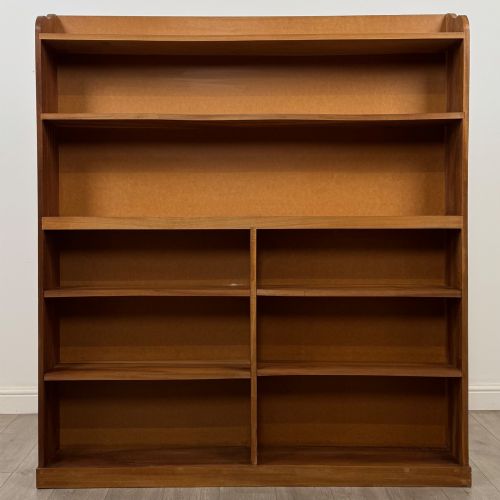
- A set of open shelves stepped back progressively from bottom to top in a cascading profile. This form is typically utilised for displaying small decorative objects or collections.
- Barristers stacking bookcase
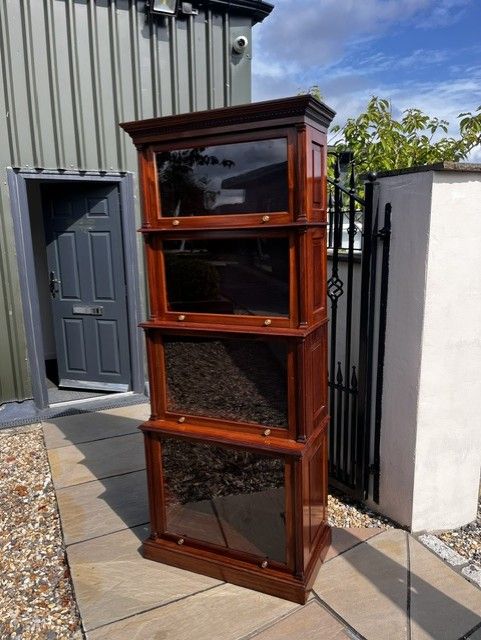
- A modular bookcase composed of several separate shelf sections with glass-fronted doors that lift and slide inward. It allowed lawyers and collectors to expand their library vertically piece by piece.
- Open bookcase
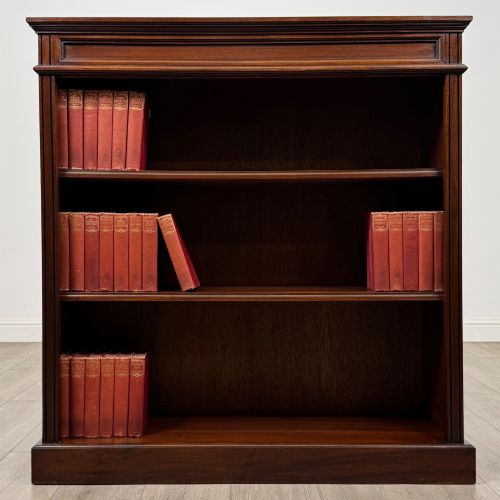
- A shelving unit without doors, designed for immediate access to books. These pieces focus attention on the book bindings and the timber grain of the interior.
- Pigeon hole cabinet
- A small storage unit divided into numerous small rectangular compartments for sorting papers and letters. These practical accessories were fixtures in traditional studies and offices.
Traditional Timber Shelving: Frequently Asked Questions
What is traditional timber shelving?
Traditional timber shelving encompasses antique bookcases, display cabinets, and storage units constructed from woods like mahogany, oak, and elm during the nineteenth and early twentieth centuries.
These pieces range from open library shelving and breakfront bookcases to specialised pigeon hole cabinets, designed for domestic storage and display.
How do I date these shelves?
Dating relies on identifying timber choices, construction techniques, and stylistic periods such as Victorian, Edwardian, or Chinese Qing Dynasty influences. Victorian and Edwardian pieces often display distinct moulding profiles and hardware consistent with their manufacturing era.
Makers' marks, where present, alongside specific forms like stacking Barristers bookcases or waterfall display shelves, help narrow down the period of origin.
Are these shelves suitable for modern books?
Most traditional timber shelving offers deep, sturdy platforms capable of holding modern hardbacks and paperbacks securely. Open bookcases provide straightforward access and flexible spacing for daily reading collections.
Buyers should check shelf depth and fixed partition heights to ensure larger modern volumes fit comfortably within the antique dimensions.
How do I care for antique timber?
Antique timber requires stable indoor humidity and protection from direct sunlight to prevent the wood from drying out or warping. Regular dusting with a soft, dry cloth preserves the polished finish of mahogany, oak, and rosewood surfaces.
A light application of appropriate beeswax periodically helps nourish the timber and maintain its natural lustre without building up heavy residues.