

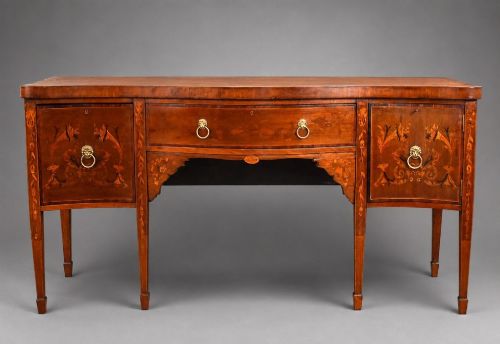
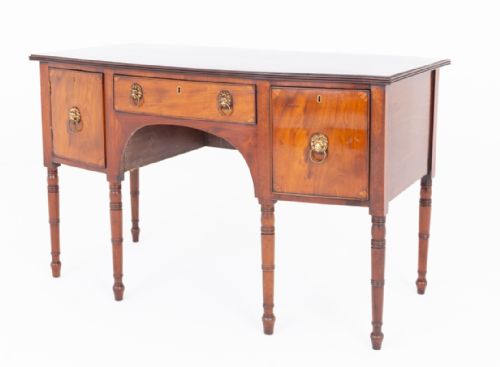


Traditional Timber Buffet
A traditional timber buffet serves as the anchor for a dining room, offering substantial storage and display space crafted from rich historical woods.
Traditional Timber Buffet
When buyers search for a traditional timber buffet, they seek practical dining room furniture that combines historic character with functional storage. The selection spans forms such as sideboard tables, dresser bases, court cupboards, and pedestal sideboards.
Most examples encountered here date from the Georgian, Victorian, and Edwardian eras, utilising classic cabinet-making forms shaped by regional British and English country traditions. Mahogany, oak, cherrywood, and elm dominate the available inventory, reflecting the durable timbers favoured by past makers.
Buyers will find pieces ranging from large mirror-backed Victorian servers to simpler 18th-century elm court cupboards. Each object provides a glimpse into domestic dining customs of its respective period, from grand country houses to modest rural homes.
How traditional timber buffet furniture was made
Cabinet-makers relied on solid hardwoods like mahogany, oak, cherry, and elm, often applying flame mahogany veneer to prominent drawer fronts and doors for decorative effect. Structural carcass work frequently incorporated secondary timbers such as pine, whilst iron and brass provided durable hardware for hinges and drawer pulls.
Surface ornamentation involved careful joinery, marquetry inlay, and mirror backs integrated into later Victorian and Edwardian iterations. Construction methods prioritised longevity, using traditional mortise and tenon joints to stabilise heavy timber frames and heavy panelled doors.
Traditional Timber Buffet Retail Price Guide 2026
Typical asking prices for traditional timber buffet among the pieces listed under this phrase on Sellingantiques today, from the lower quarter to the upper quarter. They describe what is for sale here now, not the wider market.
Some Victorian sideboards include secret cellarette drawers designed specifically to keep wine bottles cool and secure.
What varies in quality
The degree of material selection largely dictates quality, separating standard utility pieces from exceptional workshop outputs. Highly figured timber veneers, such as flame mahogany or pollard oak, paired with intricate marquetry inlay, indicate a finer commission.
Structural integrity and the retention of original brass hardware, glass panels, and mirror backs also define the tier of a piece. Finer examples display meticulous attention to interior drawer construction and smooth operation of heavy doors and serving surfaces.
The Traditional Timber Buffet Glossary
- Court cupboard
- A traditional enclosed piece of furniture used for storing and displaying food and plate, often featuring upper and lower tiers.
- Dresser base
- A sturdy lower cabinet fitted with drawers and cupboards, originating from country kitchens and dining spaces.
- Flame mahogany veneer
- A thin slice of mahogany timber cut from the point where branches join the trunk, creating a distinctive flamelike grain pattern.
- Marquetry inlay
- Decorative patterns formed by fitting contrasting pieces of wood veneer into a prepared surface.
- Pedestal sideboard
- A heavy dining room cabinet comprising a central table flanked by two pedestal cupboards.
Traditional Timber Buffet: Frequently Asked Questions
How do I style a timber buffet?
Pair your piece with complementary dining room furniture, using the top surface for lamps, serving dishes, or a mirror.
Ensure the scale of the buffet matches the proportions of your room to maintain a balanced interior.
What woods were used in these buffers?
Cabinet-makers utilised native and imported hardwoods including mahogany, oak, cherrywood, elm, and pollard oak.
Secondary woods like pine often appear in internal carcases and drawer linings.
How do I date a sideboard?
Examine the construction methods, timber choices, and stylistic details such as mirror backs or brass hardware.
Georgian pieces display simpler classical lines, whilst Victorian and Edwardian examples often incorporate larger mirrors and heavier carved ornamentation.
Are these pieces suitable for modern homes?
These sideboards and buffet servers offer deep drawers and cupboards that provide practical storage for modern dining rooms and living spaces.
Their substantial timber construction ensures they remain durable and functional for everyday use.