


Traditional Silver Desk Light
A traditional silver desk light brings classical illumination to a workspace, combining bright metallic reflection with period form.
Traditional Silver Desk Light
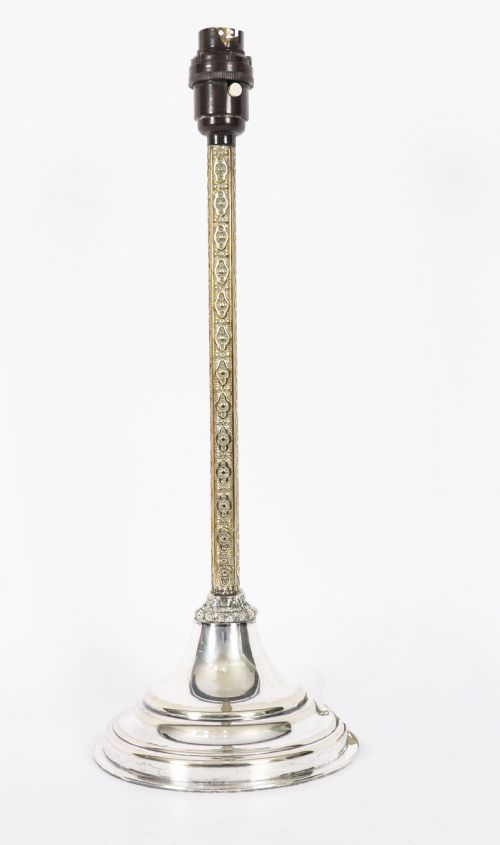
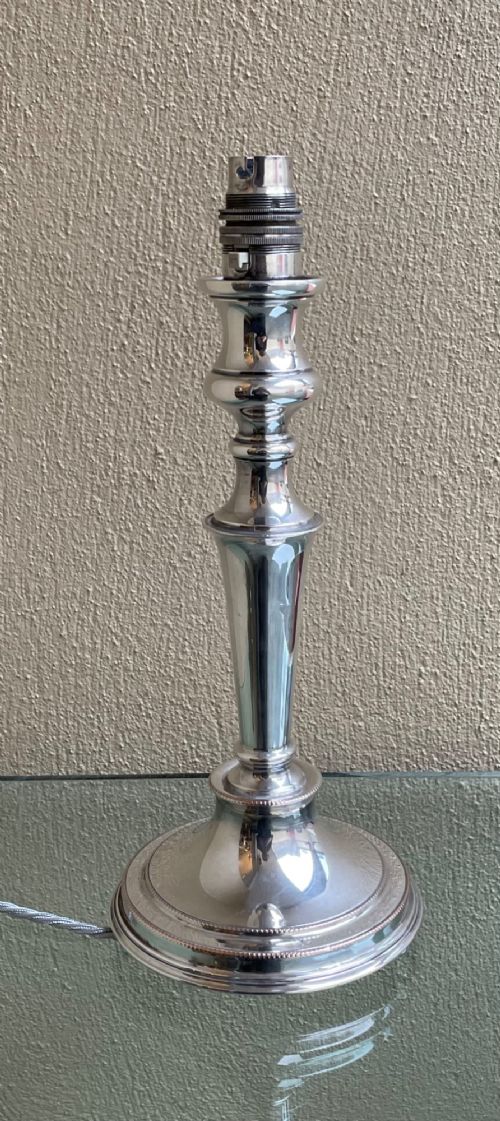
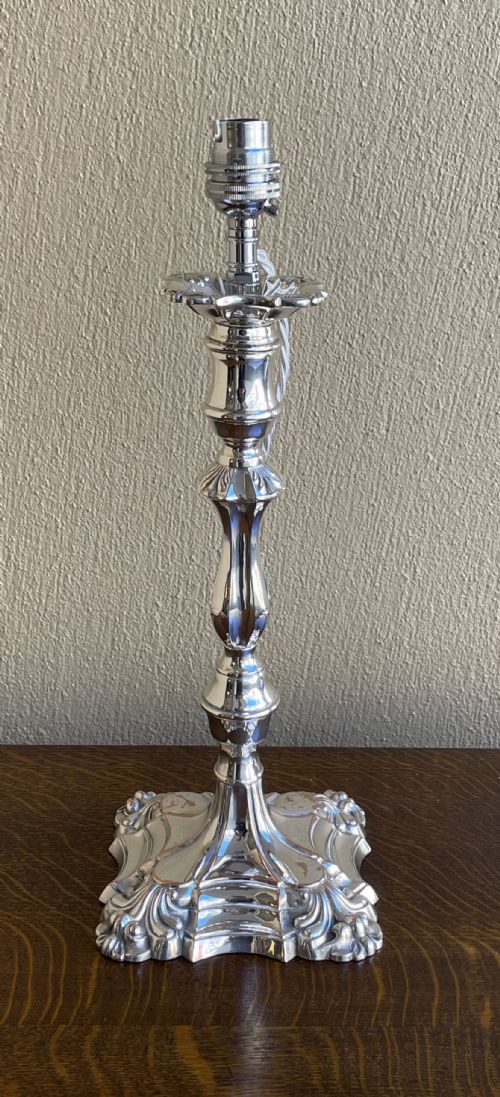
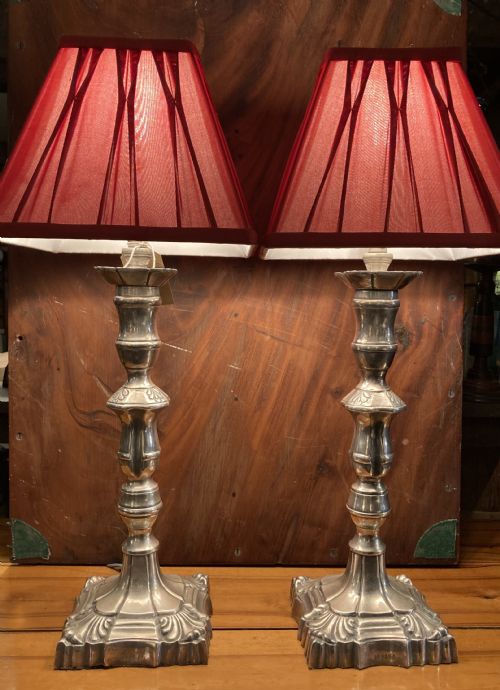
A traditional silver desk light appears most frequently as a silver plated table lamp or converted candlestick designed for task illumination. The selection spans the Victorian, Edwardian, and 1920 periods, capturing the architectural tastes of the late nineteenth and early twentieth centuries.
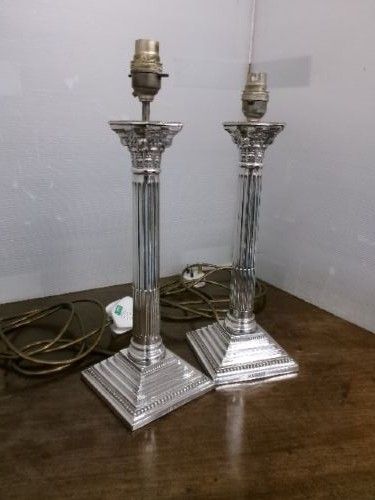
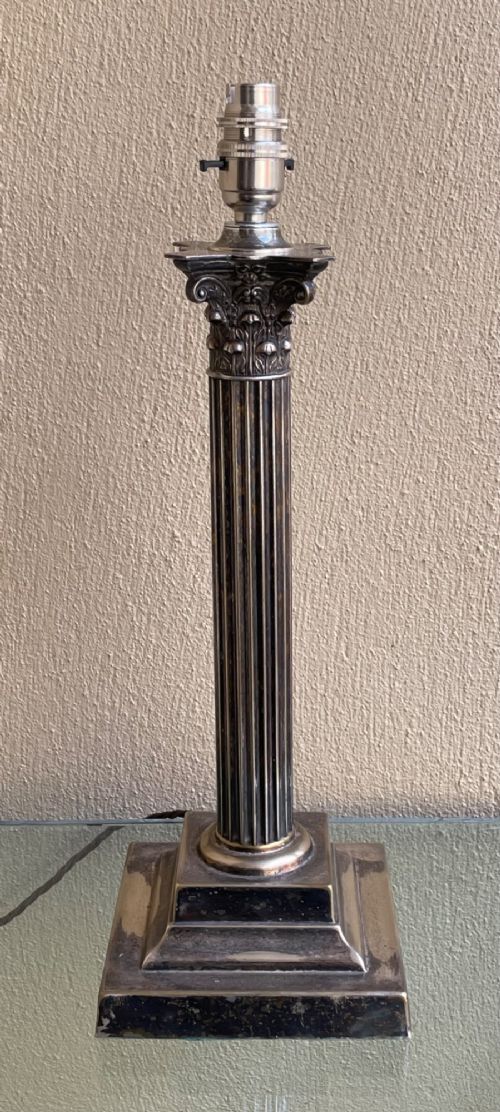
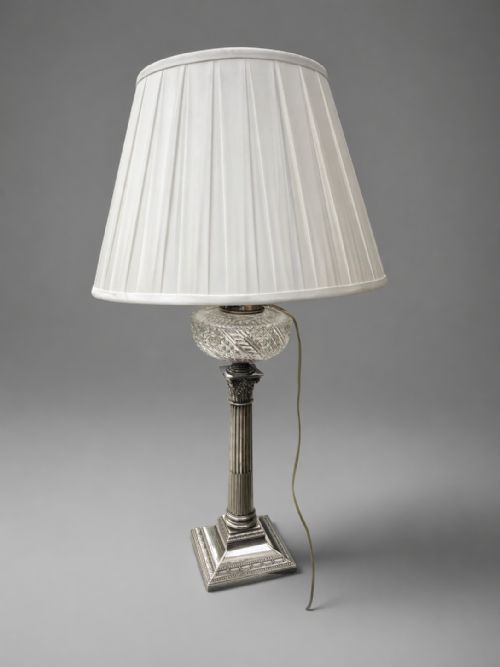
Buyers encounter substantial Corinthian column table lamps alongside simpler round based designs and converted oil lamps. These items reflect the domestic lighting needs of their eras, often adapting older candlesticks or manufacturing sturdy plated standards for desk use.
The evidence shows origins ranging from the late Victorian decade through to the 1920s, demonstrating a steady production of metalwork lighting. Most examples rely on silver plate over a base metal, frequently bearing marks from notable makers such as Mappin and Webb or Barker Ellis.
Materials and construction methods
Manufacturers built these lamps primarily using silver plate, electroplate, and brass, often combining metal bodies with fabric shades or cut glass elements. The technique of silver plating allowed workshops to produce durable domestic lighting that mimicked solid silver at a lower cost.
Many items utilise the Corinthian column form, casting detailed capitals and fluted shafts in metal before applying a silver or parcel gilt finish. Base metals like brass provided structural weight, while secondary materials such as bakelite occasionally appeared in later electrical components.
Some sturdy desk companions started life holding tallow candles before wiring dragged them into the twentieth century.
Distinctions in quality and execution
The crispness of the cast ornamentation separates finer examples from standard production pieces, particularly on the acanthus leaves and fluting of Corinthian columns. Superior items maintain an even silver plated surface with well-defined details that do not blur under heavy plating or polishing.
Weight and stability indicate higher grade construction, as better desk lamps use heavier gauge base metals to support extended heights without tipping. Maker attribution also influences standing, with stamped pieces from recognised firms commanding greater interest from collectors.
Mappin and Webb·Barker Ellis·Palmer and Co
The Traditional Silver Desk Light Glossary
- Silver Plate
- A thin layer of silver bonded to a base metal core such as brass or copper. This technique became widespread in the nineteenth century for producing affordable domestic metalware.
- Corinthian Column
- A classical architectural order featuring ornate capitals decorated with rows of acanthus leaves. Makers frequently adopted this column style for tall table lamps and candlesticks.
- Parcel Gilt
- A finish where specific areas of an object receive a thin coating of gold while the rest remains silver. This highlights decorative details on the metal surface.
- Electroplated
- An object coated with a layer of metal via an electrical current rather than mechanical application. This method created uniform silver coverings on nineteenth century lighting.
Traditional Silver Desk Light: Frequently Asked Questions
Are these lamps safe to use today?
Many older lamps have been rewired to meet modern standards for safe daily use on a desk.
Buyers should inspect the internal wiring and plug to confirm the electrical components suit contemporary sockets.
How do I clean silver plated lamps?
Gentle dusting with a soft cloth preserves the delicate silver plated surface without wearing away the finish.
Harsh chemical polishes remove the plating over time and should be avoided in favour of mild soapy water.
What is a Corinthian column lamp?
This lighting form imitates classical Greek and Roman architecture with fluted shafts and ornate leaf-carved capitals.
Victorian and Edwardian makers popularised this stately style for formal desks and reading tables.