


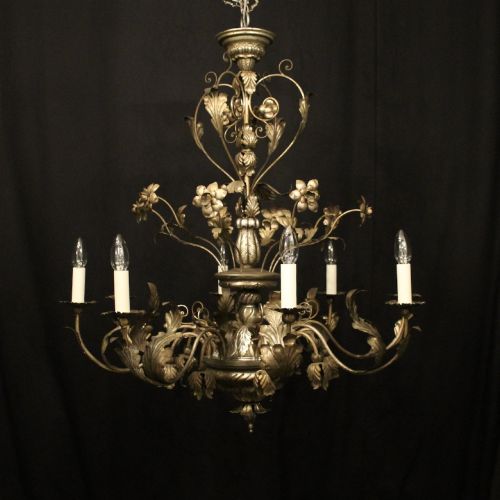
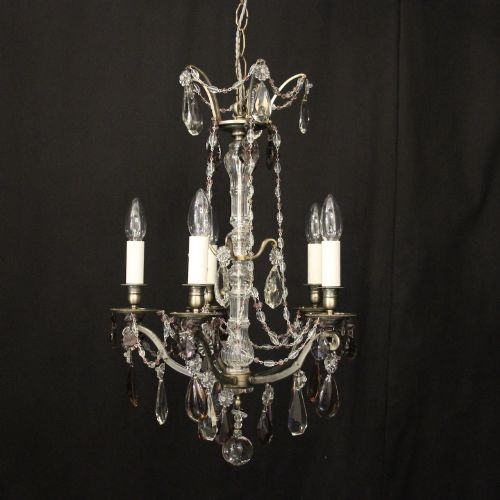
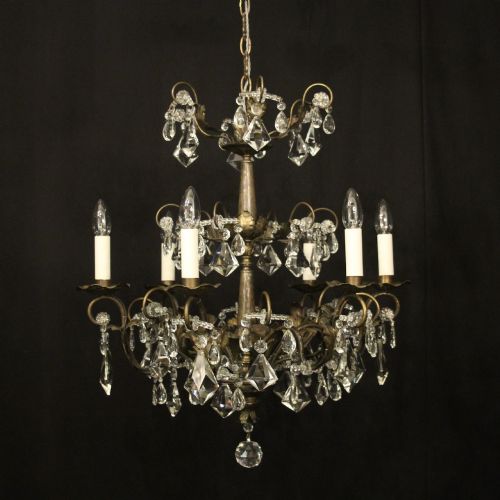
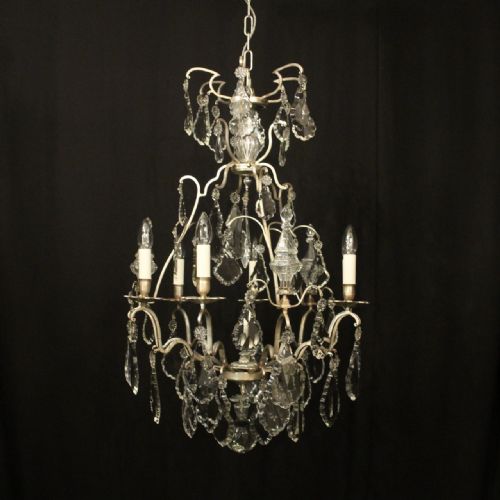


Traditional Silver Chandelier
These traditional silver chandeliers bring genuine period presence to a room, drawing the eye with their gleaming metalwork and brilliant glass.

Traditional Silver Chandelier
A traditional silver chandelier combines multi-light candle or lamp arrangements with reflective metallic finishes and glass drops. Buyers searching for a traditional silver chandelier will find pieces spanning the nineteenth century, the Victorian and Edwardian eras, through to the 1920s and 1930s.
French silver gilded bronze and brass examples dominate the offerings, often complemented by Italian Florentine and English silver plated productions. Most pieces carry multiple candle arms, commonly configured across five, six, eight, nine, or twelve lights.
Materials and Construction
Makers utilised cast and forged base metals including brass, bronze, and standard metal alloys, which were then silver plated or silver gilded to achieve a bright reflective surface. These structural skeletons support the weight of numerous candle arms and suspension hardware.
Crystal and cut glass elements contribute the signature sparkle, fashioned into pendants, drops, and bowls suspended from the metal framework. Combining silvered metal with high-clarity glass created fixtures capable of maximising candlelight and early electric illumination.
Traditional Silver Chandelier Retail Price Guide 2026
Typical asking prices for traditional silver chandelier among the pieces listed under this phrase on Sellingantiques today, from the lower quarter to the upper quarter. They describe what is for sale here now, not the wider market.
Some fixtures carry up to fifteen lights, ensuring nobody ever stumbles in the dark again.
Assessing Quality and Execution
The refinement of the cast metalwork separates standard production from finer pieces, visible in the crispness of foliate chasing and the proportion of the arms. Superior chandeliers demonstrate careful balancing across multiple branches and secure integration of the central stem.
Quality also resides in the cutting and purity of the crystal and glass components, where sharper facets catch and refract light more effectively. The integrity of the original silver plating or gilding, rather than later refinishing, preserves the authentic character of the piece.
The Traditional Silver Chandelier Glossary
- Silver Gilded
- A metallic surface treatment where a thin layer of silver or silver leaf is applied over a base metal such as bronze or brass. This technique provides the warmth of traditional gilding combined with the bright reflectivity of silver.
- Cut Glass
- Glass shaped and patterned by grinding and polishing on abrasive wheels to create sharp facets. These facets are specifically designed to refract light across a room.
- Hall Lantern
- An enclosed ceiling-hung light fixture traditionally positioned in entrance halls or corridors. These single-light or small multi-light lanterns protect the flame from drafts.
- Billiard Light
- A linear multi-lamp ceiling fixture originally designed to illuminate a billiard or snooker table evenly. The design distributes light across a wide horizontal span.
Traditional Silver Chandelier: Frequently Asked Questions
How do I clean a crystal chandelier?
Maintenance requires gentle cleaning with a mild soapy solution applied by hand to each crystal drop and metal arm. Avoid harsh chemical dips that strip historic finishes from silver plated or gilded surfaces.
Taking time to wipe components individually preserves the structural integrity and sparkle of both the glass and the underlying metal framework.
Can these antique chandeliers be wired for electricity?
Most period fixtures arrive adapted for modern electrical supply or can be easily rewired by a qualified professional. Wiring is typically run internally through the central stem and along the arms to discrete lamp holders.
Consulting an electrician ensures that vintage brass, bronze, and crystal assemblies meet current safety standards without compromising their historic structure.
Where should I hang a multi-arm chandelier?
These fixtures suit principal reception rooms, dining spaces, and high-ceilinged entrance halls where their scale and illumination can be fully appreciated. Proper placement depends on room dimensions and clearance heights for walking beneath the lower drops.
Large fifteen-light examples demand substantial space, whereas single-light lanterns fit comfortably in narrower corridors or landings.
How do I identify Victorian and Edwardian lighting?
Victorian pieces often display heavier cast bronze or brass structures with ornate Neoclassical or revivalist detailing. Edwardian and later 1920s designs frequently lean towards lighter silver plated finishes and refined crystal arrangements.
Comparing the arm configurations, mounting brackets, and surface treatments helps clarify the period of manufacture.