

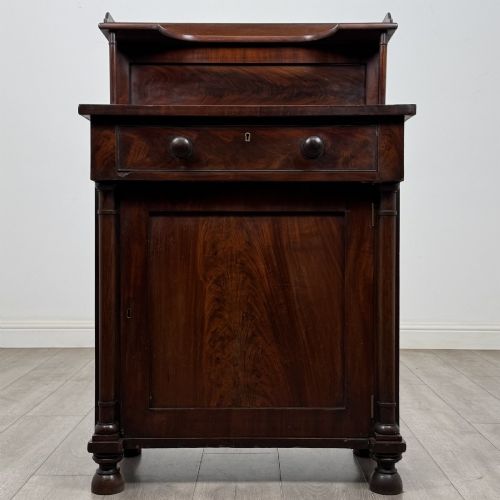
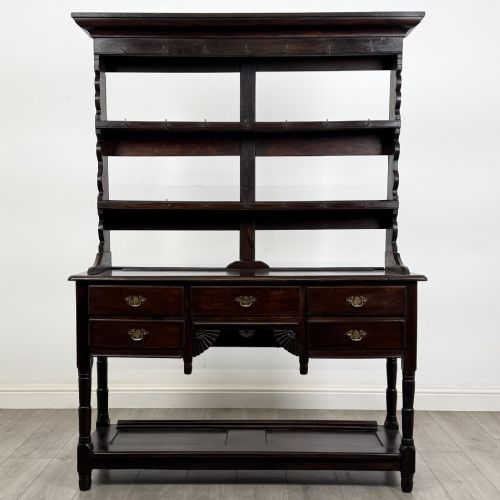
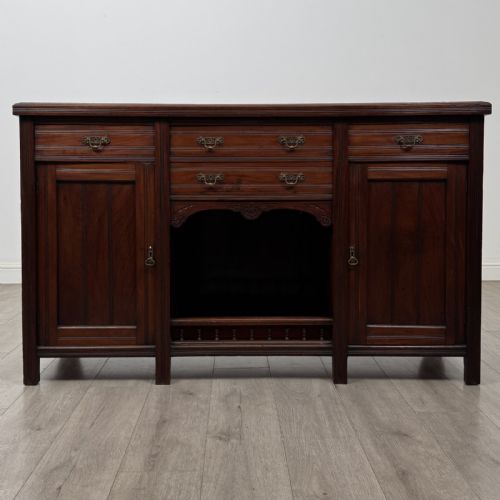
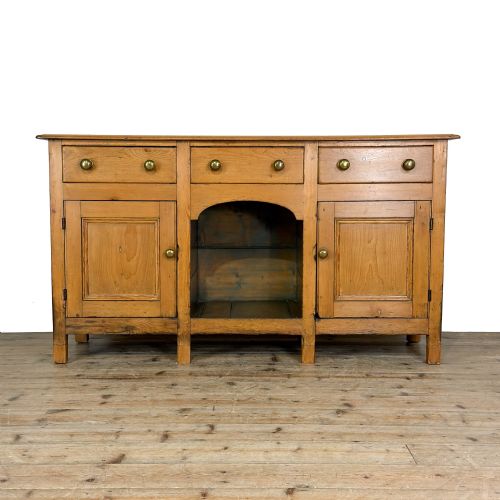
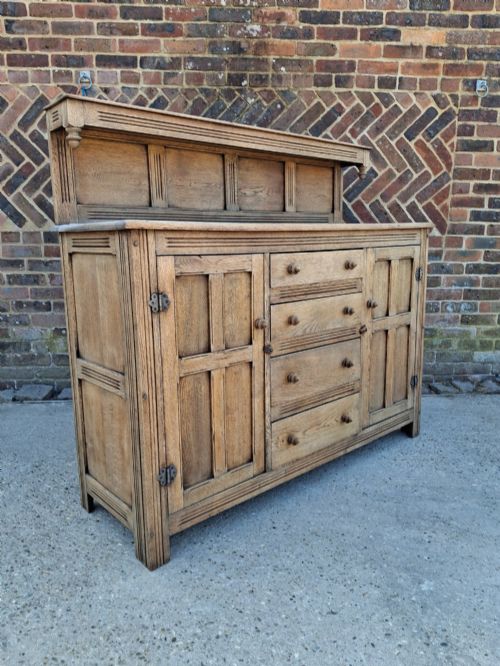
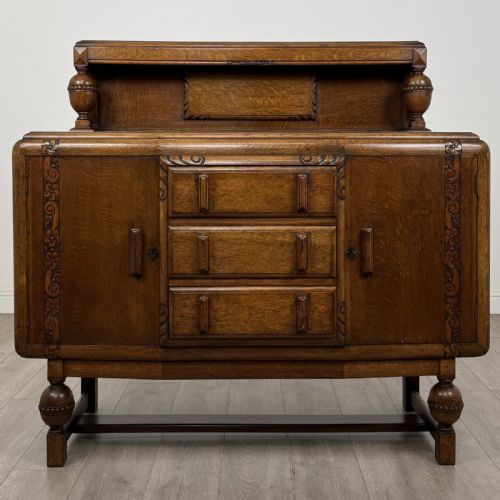
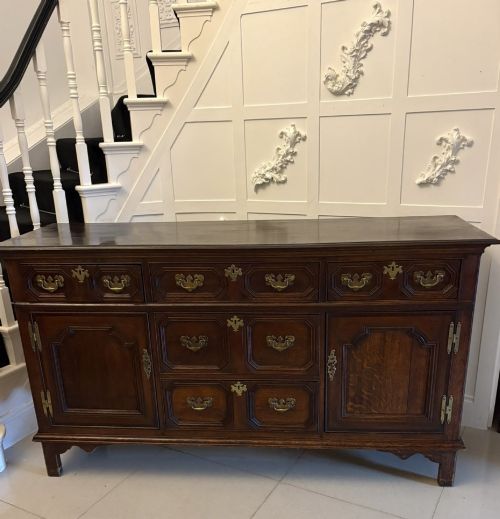
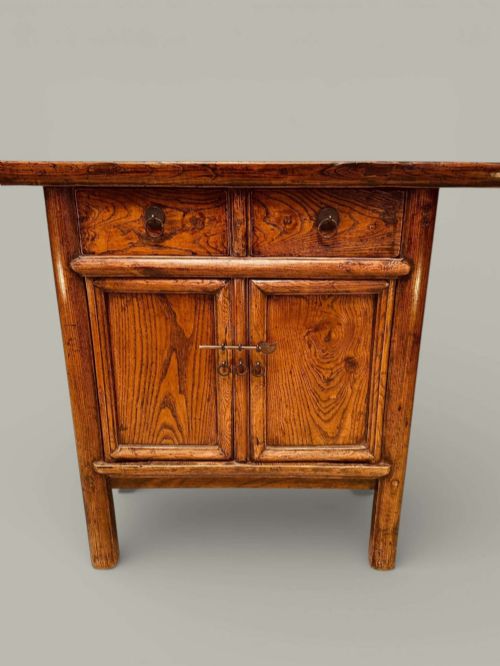
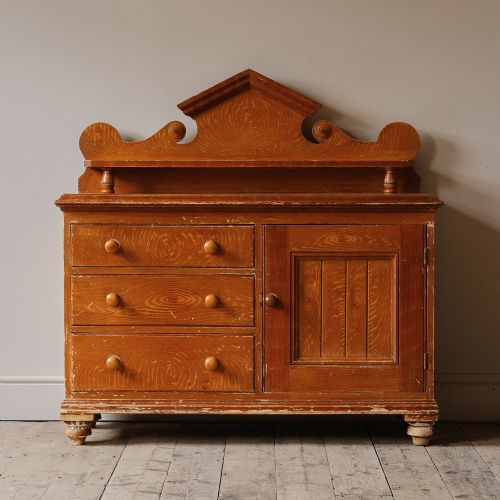
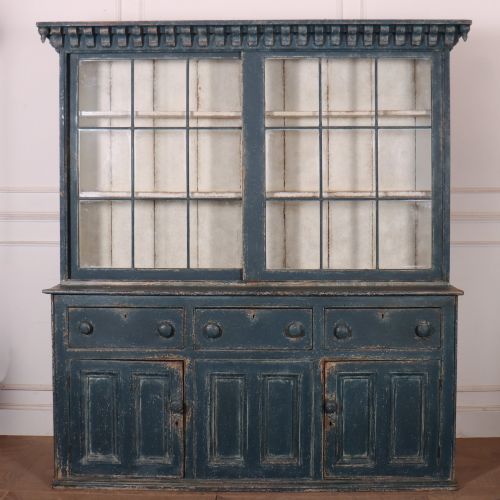
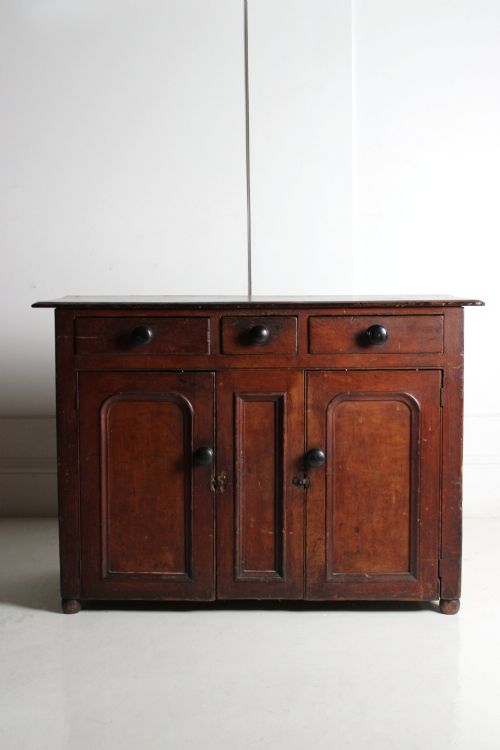
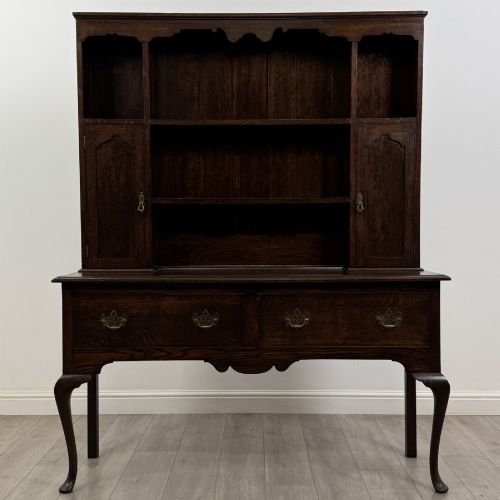
Traditional Sideboard Cabinet
These traditional sideboard cabinet pieces bring enduring storage and timber character to a room.
Traditional Sideboard Cabinet
A traditional sideboard cabinet encompasses large timber storage furniture intended for dining spaces and kitchens, taking forms such as dressers, sideboards, and cupboards. The pieces gathered here span from the Georgian period through the Victorian and Edwardian eras into the early twentieth century.
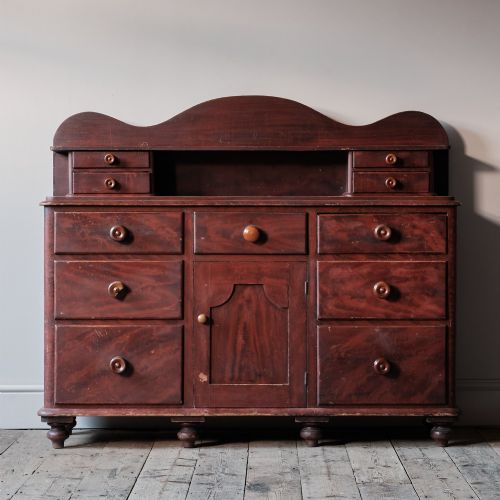
Oak, mahogany, and pine dominate the selection, appearing in both polished formal designs and painted country finishes. Buyers frequently encounter twentieth-century oak sideboards alongside nineteenth-century pine dressers and mahogany servers.
How they were made
Cabinet makers utilised solid timbers including oak, pine, and mahogany, frequently pairing them with burr walnut veneers or incorporating brass ring pulls, face handles, and iron details. Construction relies on traditional joinery techniques suited to large case furniture intended to bear heavy daily use.
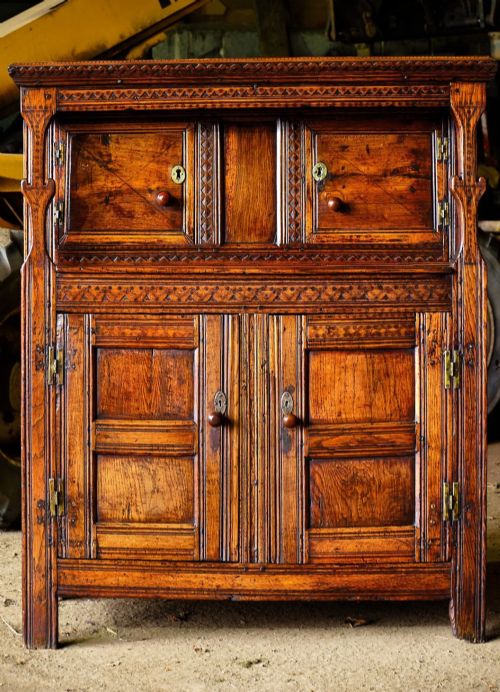
Surface treatments range from waxed and polished finishes to painted coatings and distinctive decorative elements such as carved linenfold panels, grill fronts, and glazed doors.
Traditional Sideboard Cabinet Retail Price Guide 2026
Typical asking prices for traditional sideboard cabinet among the pieces listed under this phrase on Sellingantiques today, from the lower quarter to the upper quarter. They describe what is for sale here now, not the wider market.
The listings span multiple centuries, uniting formal mahogany dining furniture with rustic pine kitchen dressers and oak cupboards.
What varies in quality
The standard of timber selection and the sophistication of the cabinet work dictate the distinction between simpler country pieces and formal urban furniture. Mahogany and burr walnut examples often display refined details such as serpentine fronts and inlaid borders.
Original surface patination and intact hardware contribute significantly to the character of a piece, while utilitarian kitchen items show the honest wear of domestic service.
The Traditional Sideboard Cabinet Glossary
- Dresser
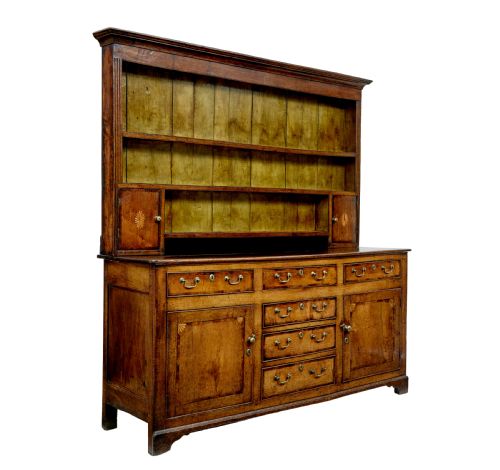
- A storage piece combining lower cupboards or drawers with upper open shelves or a rack for displaying plates.
- Sideboard
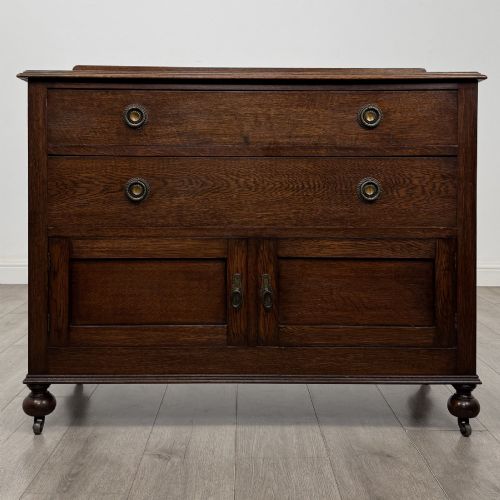
- A long low dining room cabinet designed for serving food and storing tableware.
- Enfilade
- A long formal sideboard or cabinet featuring a sequence of three or more doors along one facade.
- Linenfold
- A style of wood carving that resembles folded parchment or fabric, frequently seen on panelled cabinet doors.
- Serpentine
- A curved furniture front characterised by a convex centre flanked by concave ends.
Traditional Sideboard Cabinet: Frequently Asked Questions
What is a traditional sideboard cabinet used for?
These pieces provide substantial storage for dining rooms and kitchens, holding tableware, linens, and provisions. Their top surfaces also serve areas for serving food or displaying decorative objects.
In domestic settings, they act as focal storage units that organise tableware while adding solid timber presence to a room.
How do I identify a Georgian style piece?
Georgian style items typically feature formal timber varieties like mahogany, balanced proportions, and refined details such as bowed or serpentine fronts. They reflect the classical design principles of the eighteenth century.
Later reproductions and adaptations from the twentieth century often adopt these same classical lines while employing standard period joinery.
Where were these cabinets placed originally?
Sideboards traditionally stood in dining rooms against the wall near the dining table to assist with serving meals. Dressers and cupboards belonged primarily in kitchens and pantries for everyday utensils.
Over time, these pieces transitioned into general living spaces as households repurposed them for modern storage needs.
What is the difference between oak and pine pieces?
Oak items generally offer a heavier, more formal appearance with pronounced grain patterns and robust construction suited to Jacobean revival or Arts and Crafts designs. Pine versions tend to originate from country farmhouses and cottages, often featuring painted surfaces or simple waxed finishes.
Both timbers provide durable utility but create entirely different visual atmospheres within a home.