



Traditional Sheet Music Holder
A traditional sheet music holder keeps your scores sorted and close to hand, bringing period timber and brass into a music room or sitting room.
Traditional Sheet Music Holder
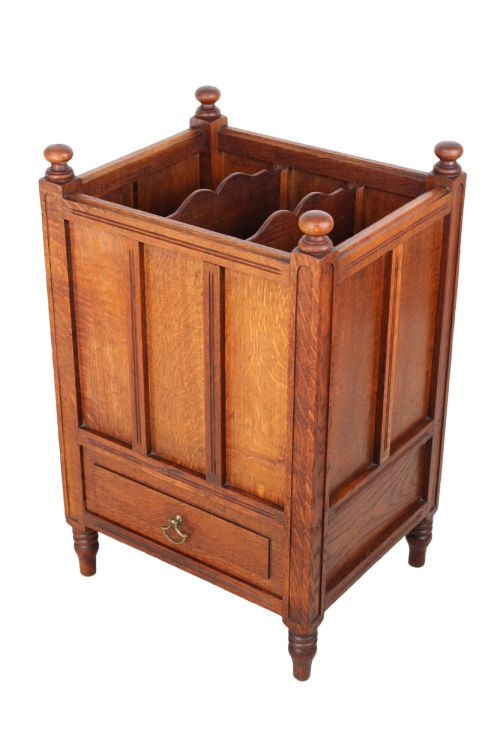
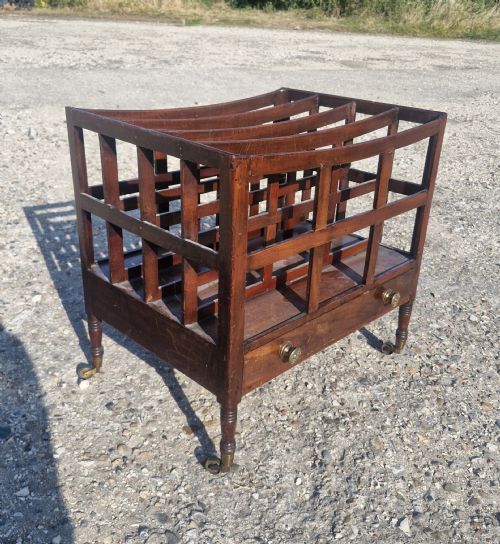
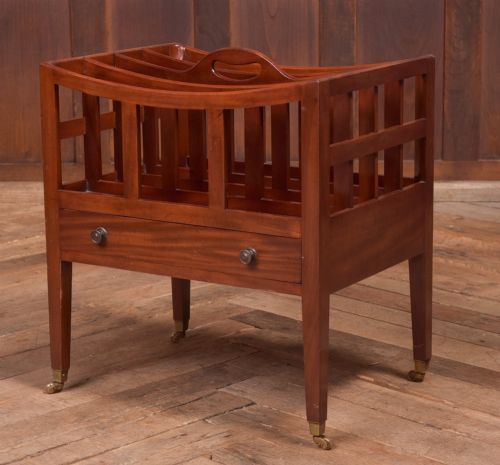
A traditional sheet music holder most frequently appears on this page as a Canterbury, designed to hold folios, newspapers, and magazines close to a piano or armchair.
The selections span the nineteenth century into the Edwardian era, taking forms such as freestanding canterburys with slatted dividers, music stands, and adjustable lecterns.
Makers and cabinetmakers produced these pieces in forms ranging from George III and Regency designs to Arts and Crafts interpretations.
How they were made
Cabinetmakers constructed these pieces primarily from dense hardwoods like mahogany, rosewood, walnut, and oak, often framing the sections with upright wooden slats.
Metalwork components, specifically brass, appear in adjustable fittings, handles, and castors that support the movement of heavy stands and rolling canterburys.
Traditional Sheet Music Holder Retail Price Guide 2026
Typical asking prices for traditional sheet music holder among the pieces listed under this phrase on Sellingantiques today, from the lower quarter to the upper quarter. They describe what is for sale here now, not the wider market.
Several canterburys come equipped with tiny brass castors, built so you can roll your sheet music across the floor mid-sonata.
What varies in quality
Quality rests on the selection of timber and the fineness of the joinery in the dividers and any integrated drawers, distinguishing standard production from superior cabinet work.
The inclusion of operational brass adjustments on music stands or integrated drawers beneath the rack marks out pieces with more complex original functions.
The Traditional Sheet Music Holder Glossary
- Canterbury
- A low freestanding stand with slatted partitions, originally used for sheet music and now frequently employed for magazines and newspapers. It often incorporates a small drawer beneath the rack.
- Lectern
- An adjustable reading stand designed to hold scores or books at a comfortable height and angle for the user. These pieces often feature pivoting wooden surfaces supported by brass stems.
- Regency
- A style and period spanning the early nineteenth century, characterised by classical restraint and rich cabinet woods like rosewood and mahogany. Pieces from this era show clean architectural lines.
- Arts and Crafts
- A design movement valuing honest construction and visible materials over excessive ornamentation. Items from this tradition focus on simple timber forms and straightforward utility.
Traditional Sheet Music Holder: Frequently Asked Questions
What is a traditional sheet music holder used for?
These pieces served to organise sheet music, folios, and periodicals near a piano or seating area for easy access during practice or reading.
Today, they function just as well holding modern magazines, newspapers, and scores in a living space.
How do I tell a Canterbury from a music stand?
A Canterbury is a low, compartmentalised floor rack designed to slide beside a chair or instrument, often featuring upright wooden dividers.
A music stand or lectern is raised on a central pillar, frequently with an adjustable desk top for reading scores while standing or sitting.
Which woods are most common?
The listings show a strong preference for rich timbers such as mahogany and rosewood, alongside walnut and oak.
These hardwoods were chosen for their durability and polished appearance in formal nineteenth-century interiors.
Can these holders store modern magazines?
The slatted partitions and open sections of these racks accommodate modern periodicals and newspapers alongside traditional sheet music.
Their original dimensions suit standard paper sizes comfortably without modification.