



Traditional Rush Side Chairs
Traditional rush side chairs bring organic texture and vernacular craftsmanship into modern dining spaces through woven seats and sturdy timber frames.
Traditional Rush Side Chairs
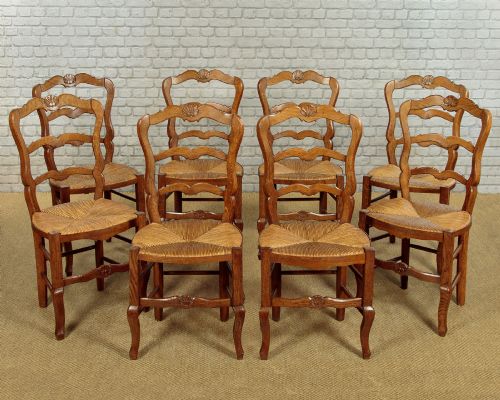
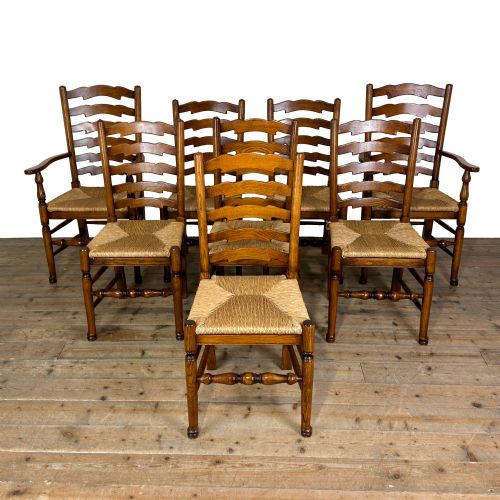
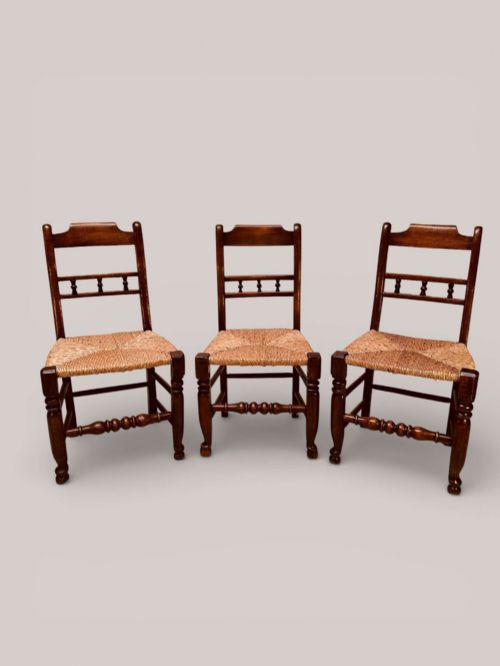
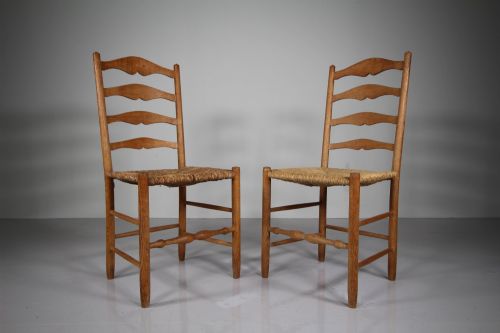
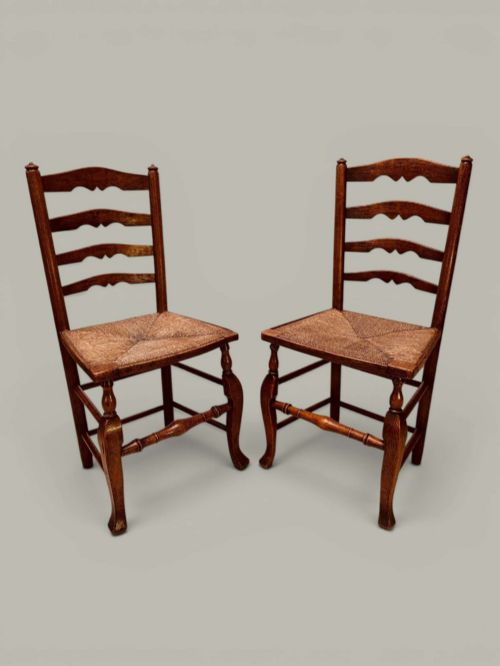
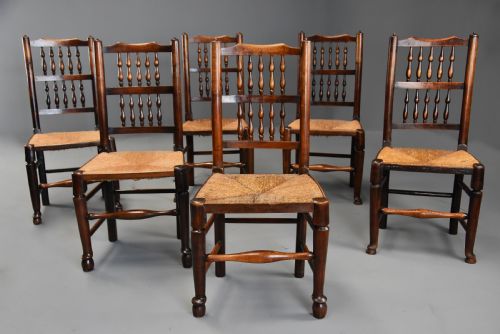
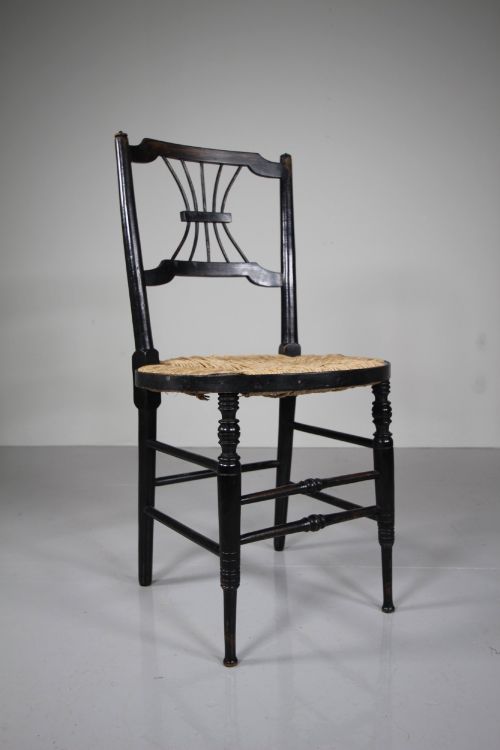
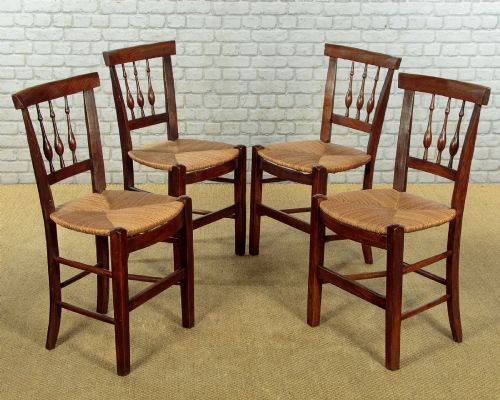
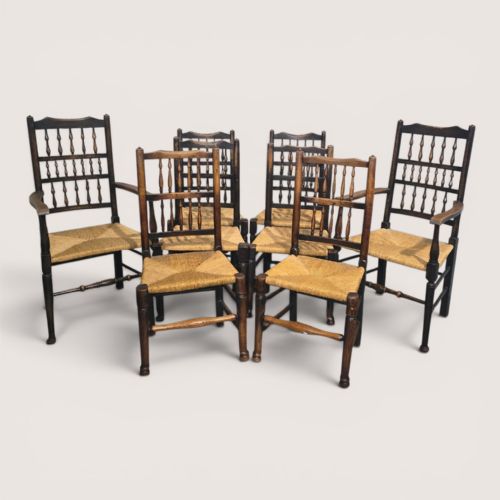
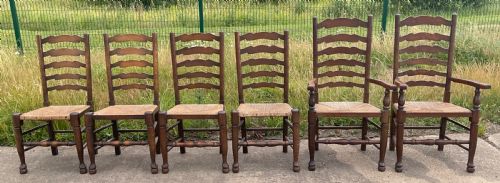
Traditional rush side chairs are utilitarian seating forms rooted in English country, Arts and Crafts, and vernacular domestic traditions. Buyers seeking these pieces encounter structural types including ladder backs, spindle backs, and spindleback designs configured for dining and kitchen use.
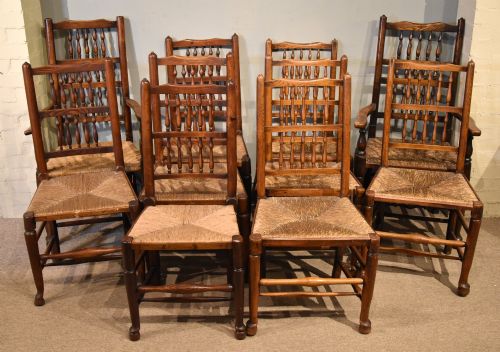
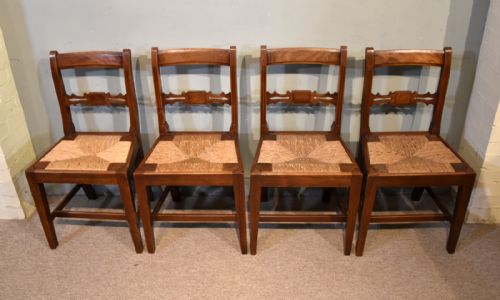
The selection ranges from single rustic farmhouse examples to matched sets of eight or ten chairs spanning the eighteenth, nineteenth, and early twentieth centuries. Elm, oak, ash, and fruitwood form the primary timber framework supporting the woven rush seating.
Regional variations appear across the inventory, encompassing English country workshops, Irish súgán forms, and French provincial styles. Most examples serve daily dining functions while retaining the honest construction methods of their rural origins.
What varies in quality
The integrity of the timber framing dictates the structural standard of each chair, separating tightly jointed vernacular pieces from those with excessive movement in the rungs. Original timber surfaces retaining centuries of wear hold greater character than stripped or overly modernised frames.
The tightness and regularity of the rush or plaited straw weaving define the craftsmanship of the seat, as evenly tensioned strands distribute weight more effectively. Matched sets displaying uniform turning and consistent wood selection command higher regard than assembled harlequin groups.
Traditional Rush Side Chairs Retail Price Guide 2026
Typical asking prices for traditional rush side chairs among the pieces listed under this phrase on Sellingantiques today, from the lower quarter to the upper quarter. They describe what is for sale here now, not the wider market.
Some nineteenth-century makers utilised fruitwood simply because the orchard was closer than the timber merchant.
William Morris·Rossetti·Lawrence Neal·Edward Gardener·Philip Webb·Morris & Co
The Traditional Rush Side Chairs Glossary
- Rush
- Dried marsh plant material used for hand-weaving flexible, hard-wearing chair seats. It provides a natural textured surface that yields slightly to the sitter.
- Spindle back
- A chair construction method utilising numerous slender turned wooden uprights within the backrest. This design lightens the visual weight of the frame while maintaining structural support.
- Ladder back
- A chair backrest composed of horizontal wooden slats set between two upright posts. The slats are frequently curved to fit the back of the sitter.
- Súgán
- An Irish term for a rope or twisted straw seating material used in traditional vernacular chairs. It offers a rustic texture similar to conventional rush.
- Patina
- The surface sheen and colour acquired by wood through age, handling, and use over generations. It indicates the historic depth of the material.
Traditional Rush Side Chairs: Frequently Asked Questions
How do I clean rush seats?
Gently brush the woven rush using a soft attachment to remove dust from the crevices. Avoid using excessive water or liquid cleaners, as moisture degrades dried plant fibres over time.
Maintain the material by keeping the chairs in dry environments with stable humidity levels. Occasional light wiping with a barely damp cloth is sufficient for routine upkeep.
Can I mix these with modern tables?
These chairs integrate effectively with contemporary dining tables by introducing textural contrast through natural timber and woven seats. Their restrained vernacular profiles prevent them from dominating modern interior schemes.
Pairing mismatched sets around a clean-lined table highlights the individual character of each chair. The variety in ladder back and spindle back designs adds visual rhythm to a dining space.
How do I date a ladder back?
Examine the turning style of the legs and upright posts, alongside the method of assembly used for the rungs. Eighteenth-century examples often feature heavier section timber and more pronounced hand-turned profiles compared to later nineteenth-century iterations.
Tool marks and construction details provide further clues to the period of manufacture. Regional variations in country workshops also influence the specific proportions and joinery techniques.
Are rush seats comfortable for dining?
Woven rush seats conform subtly to the body over time, offering a supportive surface for prolonged seating during meals. The natural elasticity of the dried plant material provides natural give.
Adding loose squab cushions can increase comfort if desired for extended seating. The inherent breathability of the woven construction also prevents heat buildup during use.