
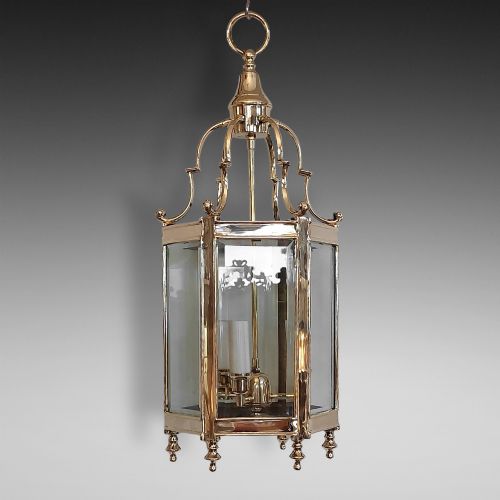
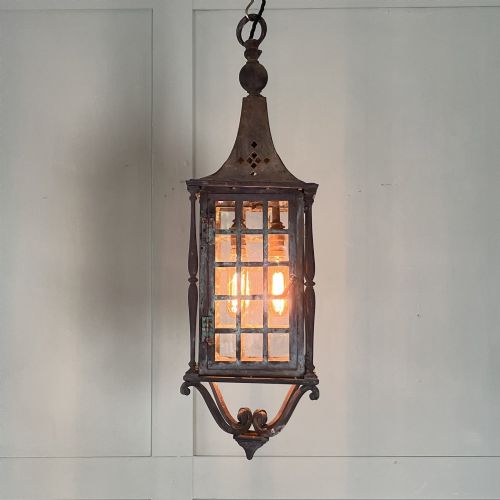
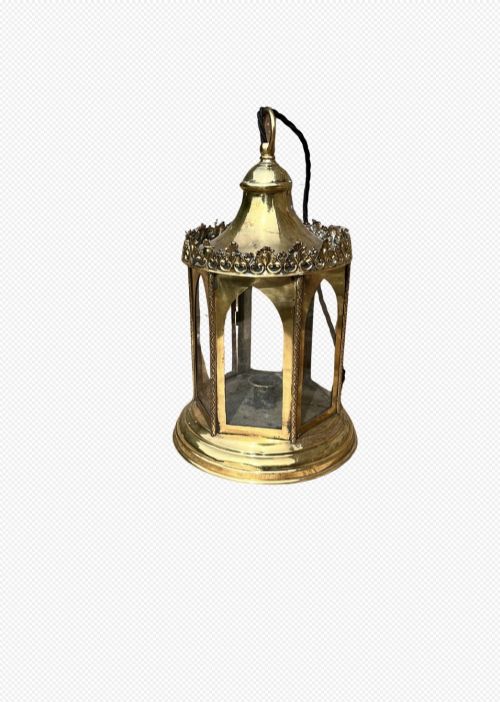
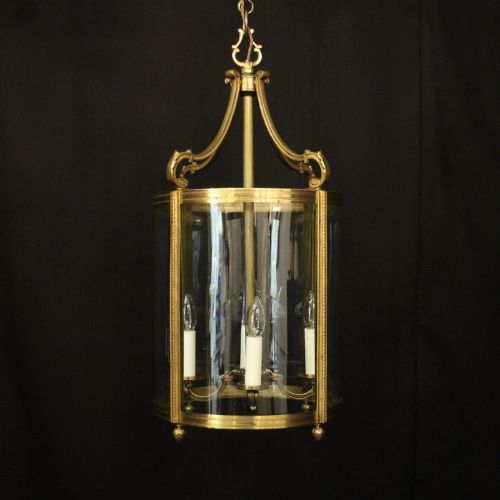


Traditional Porch Light
A traditional porch light brings authentic period character and warm illumination to an entrance, anchored by enduring brass, copper and ironwork.
Traditional Porch Light
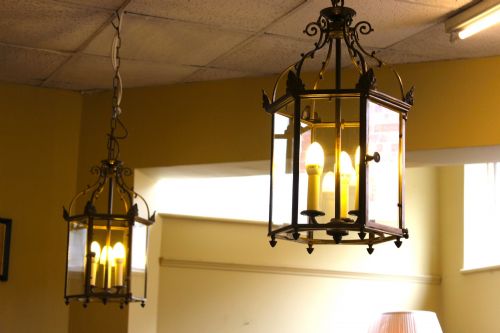
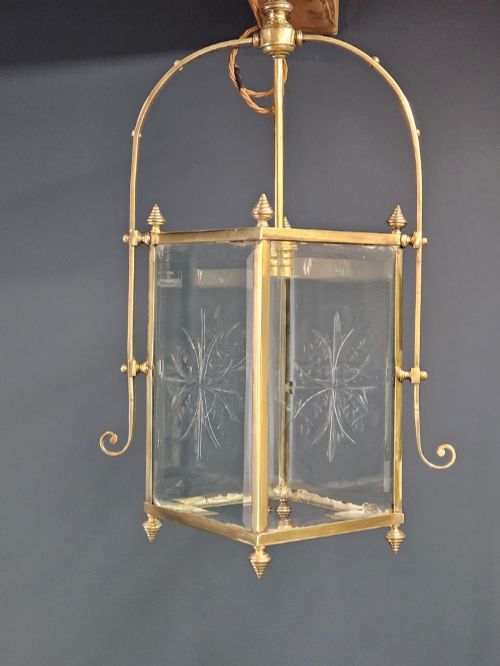
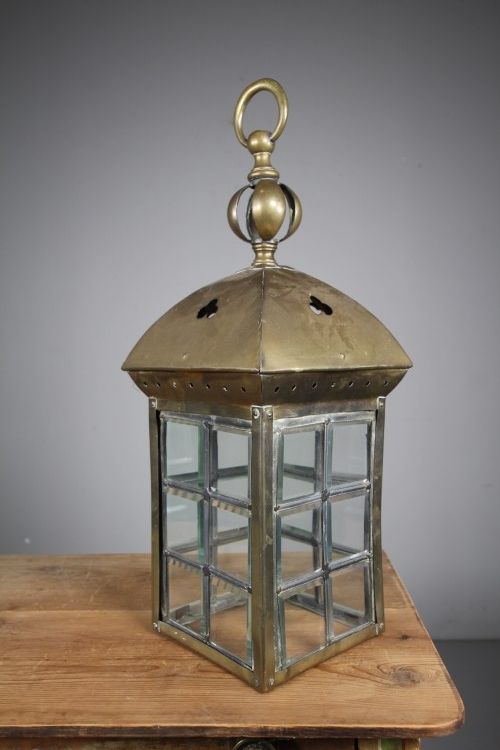
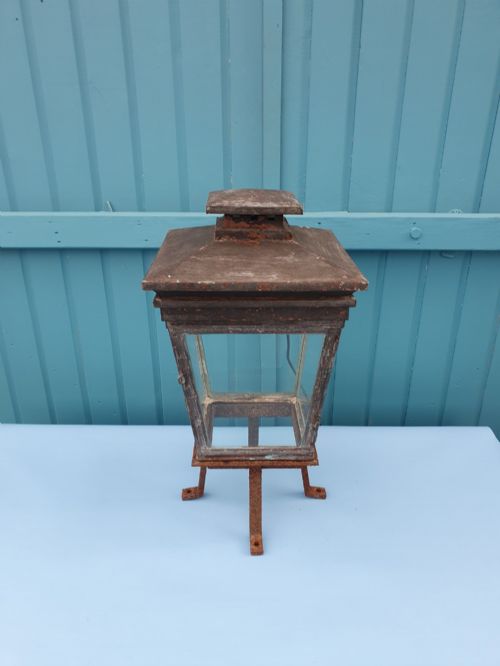
A traditional porch light encompasses hanging hall lanterns, wall-mounted lanterns and pendant lights designed for exterior or entrance illumination. These fixtures frequently date from the late nineteenth century through the early twentieth century, spanning Victorian, Edwardian and Arts and Crafts eras.
Buyers will most commonly encounter brass and copper iterations shaped in hexagonal or octagonal forms, alongside wrought iron designs. Many of these pieces originate from English and French workshops, reflecting period styles such as Gothic Revival and French Chateau.
Originating as gas or oil fixtures, the majority of these lanterns are now converted for electricity while retaining their original metal frames and glass panels. They serve both functional and decorative purposes for entranceways and porches.
What varies in quality
Quality in these lanterns rests upon the substance of the metal frame and the weight of the cast components. Heavier gauge brass, bronze and copper indicate sturdier construction than thin sheet metal.
The refinement of decorative details, such as hand-hammered surfaces or cast embellishments like shamrocks, distinguishes standard production from finer workshop pieces. Intricate geometric glazing and well-preserved original metal patination further elevate the standing of a fixture.
Design styles represented include Edwardian, Arts and Crafts, Gothic Revival, Industrial and French nineteenth-century aesthetics.
The Traditional Porch Light Glossary
- Hexagonal lantern
- A six-sided hanging or wall-mounted lighting fixture. This form allows light to disperse evenly across an entrance.
- Hall lantern
- An enclosed ceiling-hung light designed for narrow spaces like corridors and porches. They often feature glazed sides held within a metal framework.
- Gilded bronze
- Bronze coated with a thin layer of gold or gold-coloured leaf. This technique provides a rich finish that resists tarnishing.
- Wrought iron
- Iron that is heated and hammered into shape by hand. It yields a sturdy, textured material suited to exterior fixtures.
- Frosted glass
- Glass treated to appear opaque, softening the glare from the light source. It diffuses illumination evenly through the lantern panels.
Traditional Porch Light: Frequently Asked Questions
Are these porch lights suitable for outdoor use?
Most of these lanterns were originally built for exterior or sheltered porch placement using robust metals like copper and iron.
Buyers should check the current electrical wiring and sealing to ensure suitability for exposed outdoor conditions today.
How do I date a traditional porch light?
Dating relies on stylistic clues such as Arts and Crafts hand-beating, Edwardian brass frames, or Victorian gas conversion fittings.
Construction methods and metal types also point toward specific decades between the late nineteenth and early twentieth centuries.
Can converted gas lanterns use standard bulbs?
Many gas and oil lanterns have been successfully adapted to accept standard electrical lamp holders during conversion.
An electrician can verify the interior wiring capacity and bulb size to match your domestic installation.
What is the difference between a pendant and a wall lantern?
Pendant lights hang downward from ceilings by chains or brackets, illuminating open porch spaces from above.
Wall lanterns mount directly against exterior brickwork or timber beside a doorway to light the threshold.