
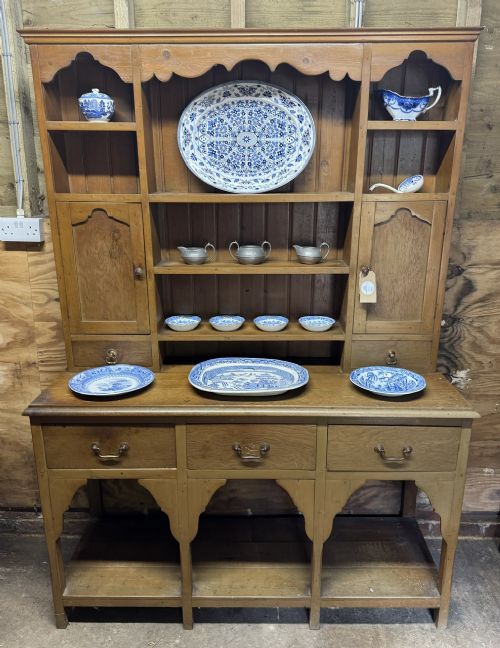
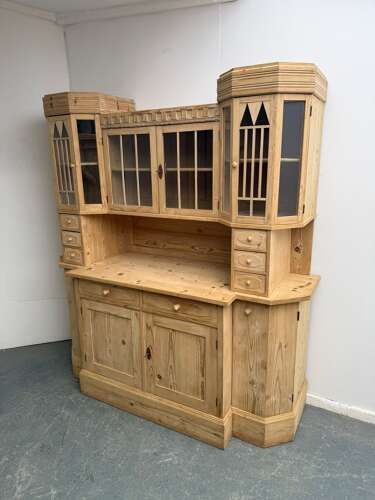
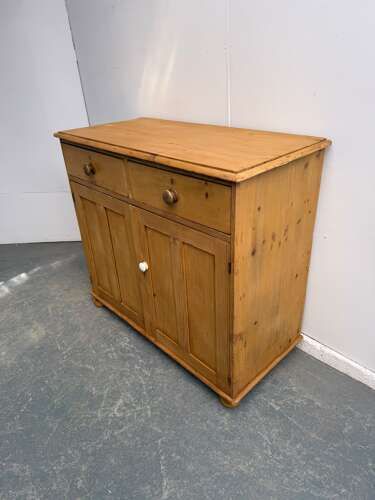
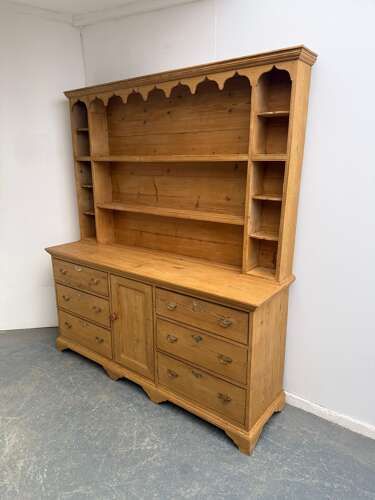


Traditional Pine Welsh Dresser
These traditional pine welsh dressers are utility storage pieces that anchor a room with honest vernacular character.
Traditional Pine Welsh Dresser
A traditional pine welsh dresser combines open rack shelving with a base of cupboards or drawers to display pottery and store provisions. These utility pieces emerge from vernacular traditions across Wales, the West Country, and wider English regions.
The versions met most frequently on this page date from the nineteenth century, finished in wax or historic paint. They range from dog kennel formats to two-piece constructions with deep pot boards.
Makers utilised local softwoods and hardwoods like pine and oak, creating sturdy furniture intended for everyday domestic life in cottages and farmhouses.
How they were made
Makers constructed these pieces primarily from solid pine and oak, incorporating brass hardware for handles and escutcheons. Surfaces were left to age naturally, resulting in genuine historic patina or coated in early paint layers.
Joinery methods reflect regional vernacular practices, uniting heavy timber frames with pegged joints, hand-cut dovetails on drawers, and boarded backs.
Some historic kitchen dressers still carry faint flour dust lodged deep inside their dovetail joints.
What varies in quality
Quality rests in the integrity of the timber and the honesty of the surface finish, distinguishing untouched examples from heavily altered ones. Retaining original backboards, brass pulls, and untouched patination elevates a piece above those with replaced timber.
Proportion and regional vernacular detailing also separate standard utilitarian items from finer country pieces, such as those featuring breakfront drawers or dog kennel configurations.
The Traditional Pine Welsh Dresser Glossary
- Pot Board
- An open lower shelf beneath a dresser base designed for storing heavy crockery. This traditional feature distinguishes many country kitchen furniture forms.
- Dog Kennel Dresser
- A central open recess flanked by cupboards in the lower section of a dresser base. This specific vernacular layout originates from West Country and Welsh traditions.
- Welsh Vernacular
- Regional furniture styles rooted in local building methods and domestic needs. These pieces reflect the specific craftsmanship traditions of Welsh workshops.
- Patina
- The surface sheen and colour acquired by wood through age, handling, and waxing. Original patination shows decades of domestic use.
Traditional Pine Welsh Dresser: Frequently Asked Questions
What is a traditional pine welsh dresser?
A traditional pine welsh dresser is a piece of vernacular furniture comprising a lower storage base and an upper display rack. They were originally built for farmhouses and cottages to store and display domestic kitchenware.
Today, buyers use them as statement storage pieces in kitchens and dining rooms. They appear in various regional forms, including painted finishes and stripped pine.
How do I date a pine dresser?
Dating relies on construction methods, timber choice, and hardware styles observed across different eras. Eighteenth and nineteenth-century examples often display hand-cut dovetails, pegged joinery, and specific regional proportions.
Later pieces from the early twentieth century shift towards simpler construction techniques and different surface treatments. Comparing the backboards and drawer linings helps determine the period of origin.
Are these dressers one piece or two?
Many traditional dressers are two-piece constructions, separating the upper plate rack from the lower sideboard base. This made transport through cottage doorways manageable for rural makers.
Some regional variants or simpler formats integrated the design differently, but two-piece arrangements remain common. Checking the join where the rack meets the base reveals the construction method.
How should I care for waxed pine?
Waxed pine requires periodic application of natural beeswax to nourish the wood and maintain its surface protection. Avoid placing these pieces near direct heat sources or strong sunlight to prevent timber movement.
Dusting with a dry cloth preserves the historic patina. Gentle maintenance keeps the wood from drying out while retaining its characteristic finish.