

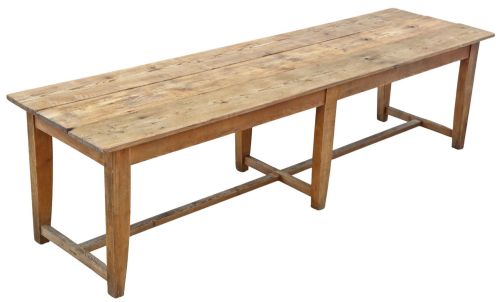


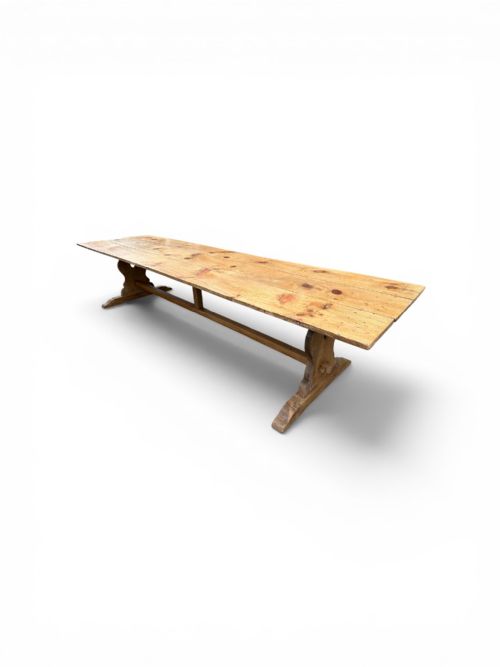


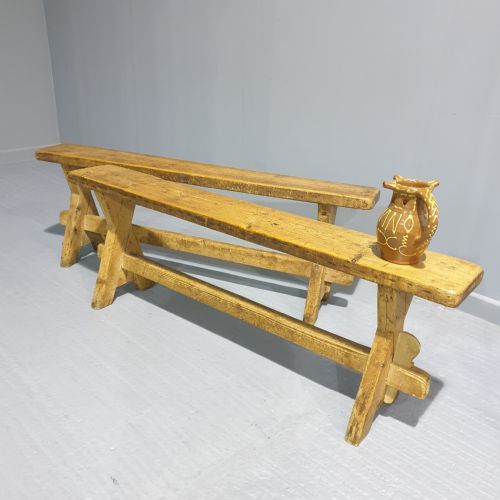

Traditional Pine Trestle
A traditional pine trestle brings utility and sturdy charm to a room, offering robust surfaces for dining and gathering.
Traditional Pine Trestle
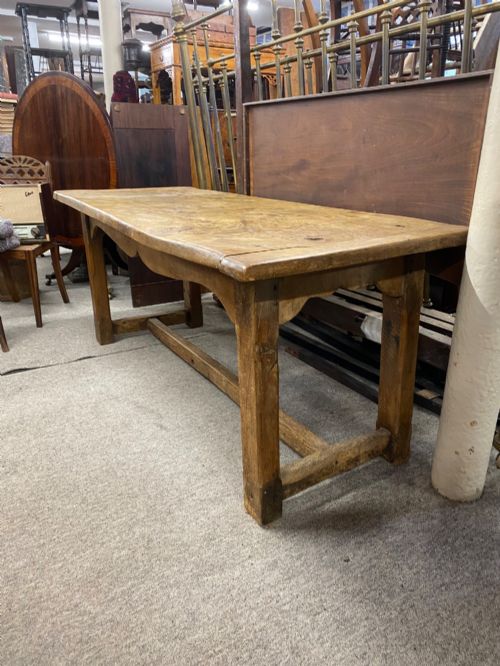
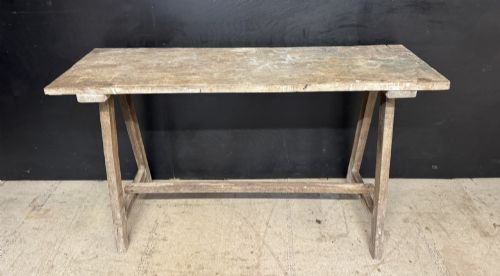
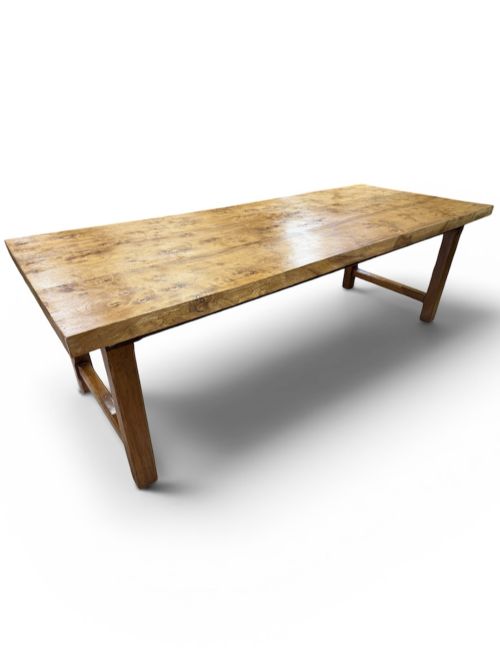
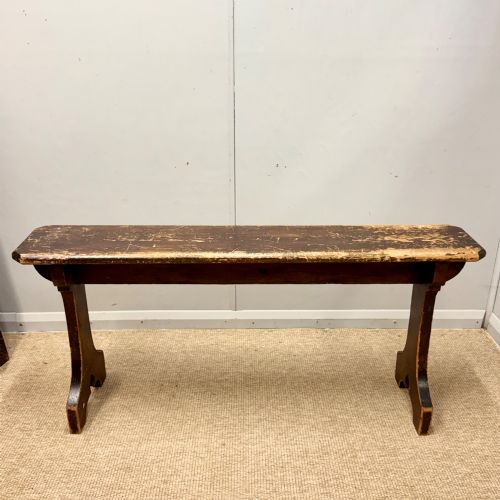
When you search for a traditional pine trestle, you encounter functional dining tables, kitchen tables, refectory tables, and benches suited for daily use. These forms emerge from nineteenth-century and early twentieth-century periods, capturing vernacular styles from English, Welsh, and Scandinavian country traditions.
You are most likely to meet rustic farmhouse tables and long benches constructed with plank tops and supportive underframes. The selection includes tavern tables with X-framed bases alongside simple kitchen work tables dating across the Victorian era up to the 1920s.
How they were made
Construction relies primarily on pine, timber, and oak, utilising sturdy cleated ends on plank tops to prevent warping over time. Iron components occasionally reinforce the structural framework, particularly on tavern and refectory tables designed for heavy commercial or domestic service.
Surfaces display natural wood finishes alongside applied treatments such as traditional Falu paint and stained timber. Joinery reflects straightforward country craftsmanship, prioritising durability and utility in tables and benches built to withstand decades of heavy daily use.
Traditional Pine Trestle Retail Price Guide 2026
Typical asking prices for traditional pine trestle among the pieces listed under this phrase on Sellingantiques today, from the lower quarter to the upper quarter. They describe what is for sale here now, not the wider market.
Listings span from 1850 through the Victorian era up to 1920, uniting English, Welsh, and Scandinavian country styles in pine and oak.
What varies in quality
Quality rests in the integrity of the timber and the honesty of the construction, distinguishing straightforward utilitarian pieces from more substantial architectural forms. Thickness of the plank top and stability of the trestle or X-frame base determine the overall substance of the piece.
Proportion and scale separate ordinary examples from exceptional refectory and tavern tables. The character of the surface, whether aged natural pine or surviving original paint, dictates the visual presence of each item.
The Traditional Pine Trestle Glossary
- Trestle
- A structural support consisting of a horizontal beam fixed to two splayed legs. This design provides maximum legroom beneath long dining and refectory tables.
- Refectory table
- A long, narrow dining table historically used in communal dining halls. These pieces often feature sturdy timber frames and substantial plank tops.
- Cleated ends
- Wooden battens fixed across the grain at the ends of a plank top. This technique helps maintain board flatness and prevents splitting in large wooden tables.
- Falu paint
- A traditional deep red paint originating in Sweden, composed of copper mine waste and linseed oil. It provides durable protection for exterior and interior timber surfaces.
- Vernacular style
- Domestic architecture and furniture design rooted in local traditions and available materials. These pieces prioritise practical function over high-style ornamentation.
Traditional Pine Trestle: Frequently Asked Questions
What is a traditional pine trestle used for?
These pieces serve primarily as dining tables, kitchen work surfaces, and long seating benches in domestic spaces. Their robust construction handles daily family meals and communal gatherings with ease.
Historically designed for utility in farmhouses, taverns, and schools, they bring a functional surface and rustic character to modern interiors.
How do I date a pine table or bench?
Dating relies on observing construction methods, timber characteristics, and style markers recorded across the nineteenth century and early twentieth century. Details like hand-sawn board marks and traditional joinery point toward earlier Victorian or nineteenth-century origins.
Later pieces from the 1900s to 1920s often show standardised milling techniques while retaining traditional country forms and proportions.
Are pine benches sold separately from tables?
Listings frequently feature individual benches, pairs of benches, or long school benches alongside complete dining and refectory table sets. You can source standalone seating or match forms according to length and period.
Matching a nineteenth-century bench with a similar farmhouse table offers flexible seating arrangements for kitchen and dining areas.
How do I care for a painted pine surface?
Painted surfaces, such as those finished with traditional Falu paint, require gentle cleaning with a soft, damp cloth without harsh chemical detergents. Preserving the original paint finish maintains the historical character and visual depth of the piece.
Avoid placing wooden furniture in direct sunlight or near extreme heat sources to prevent timber movement and paint flaking.