





Traditional Parlour Seating
Traditional parlour seating encompasses Victorian and Edwardian dining chairs, settees, and salon suites built to seat guests with proper composure.
Traditional Parlour Seating
Traditional parlour seating covers seating furniture designed for the reception rooms of nineteenth-century homes, taking the form of dining chairs, armchairs, and settees. These pieces served both domestic comfort and social display, accommodating family members and visitors alike.
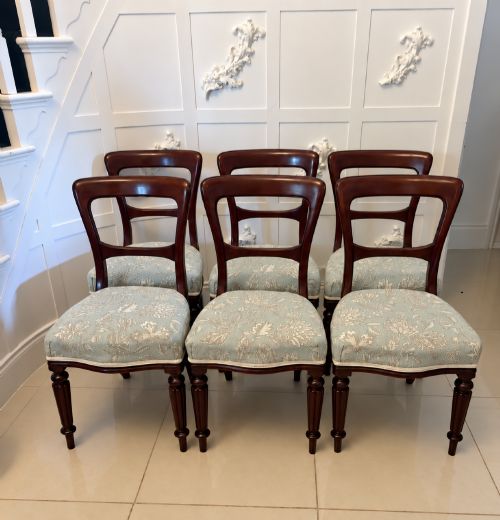
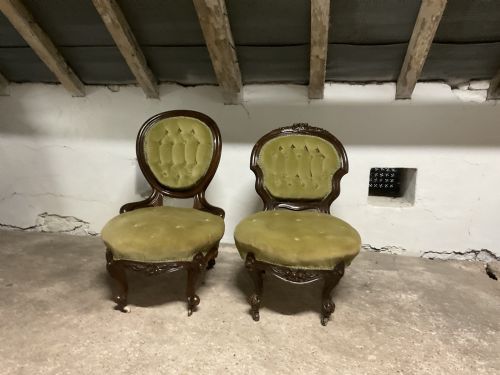
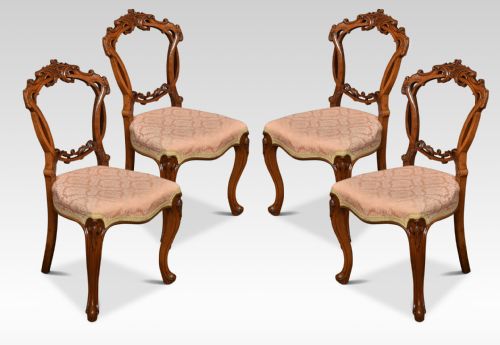
The most common versions met on this page are sets of Victorian mahogany dining chairs and Edwardian inlaid rosewood salon chairs. Alongside these chairs, buyers frequently encounter settees and sofas framed in mahogany, walnut, or rosewood.
Origins stretch from the Regency period through to the Edwardian era, spanning the styles of Victorian Rococo Revival and Chinese Export. Workshops built these forms to furnish formal rooms with matching suites or coordinated single seats.
How they were made
Cabinetmakers utilised hardwoods such as mahogany, walnut, and rosewood for the structural frames, often employing carved, turned, or inlaid details. These timbers provided the necessary strength for upright dining chairs and substantial settees.
Upholstery fabric, velvet, and cream upholstery fabric were applied over internal padding to finish the seats and backs. Brass fittings and components occasionally appear on specific forms to secure joints or provide decorative accents.
Traditional Parlour Seating Retail Price Guide 2026
Typical asking prices for traditional parlour seating among the pieces listed under this phrase on Sellingantiques today, from the lower quarter to the upper quarter. They describe what is for sale here now, not the wider market.
Object types span dining chairs, salon suites, nursing chairs, armchairs, and settees.
What varies in quality
The standard of timber selection and carving depth separates ordinary pieces from superior examples. Dense, well-figured mahogany or rosewood and crisp, hand-carved ornament indicate a higher grade of production.
The integrity of the frame construction and the fidelity of the period style determine the overall standing of a piece. Matching sets that survive intact demonstrate greater cohesion than assembled groups.
The Traditional Parlour Seating Glossary
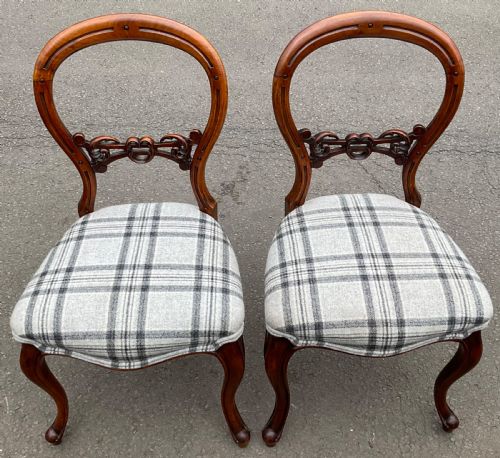
- Balloon back
- A chair back shaped like a rounded oval resembling a helium balloon, typical of Victorian seating. This profile supports the spine while offering a decorative silhouette.
- Salon suite
- A matched set of seating furniture, such as settees and armchairs, designed for a formal drawing room. These suites unify the decor of a parlour.
- Marquetry
- Decorative woodwork where pieces of veneer are fitted into a ground to form geometric or floral patterns. Edwardian makers applied this technique to rosewood furniture.
- Chesterfield sofa
- A large upholstered sofa with rolled arms and button-tufted backrest construction. This form provides deep cushioning for parlour comfort.
- Reeded legs
- Chair or table legs carved with parallel convex mouldings running vertically. This classical detail appears frequently on Regency and Victorian dining chairs.
Traditional Parlour Seating: Frequently Asked Questions
What is parlour seating?
Parlour seating refers to chairs, settees, and sofas produced during the nineteenth and early twentieth centuries for formal reception rooms. These items accommodated guests and demonstrated the household's social standing.
The category includes dining chairs, nursing chairs, and larger settees constructed from woods like mahogany and rosewood. They range from simple functional forms to elaborate carved salon suites.
How do I date these chairs?
Dating relies on identifying stylistic markers, timber choices, and construction methods associated with specific nineteenth-century periods. Regency and early Victorian pieces often display classical reeding or heavy rosewood frames, while Edwardian examples show lighter marquetry.
Matching the listed period to known design trends helps establish an approximate decade of manufacture. Consulting the recorded materials provides additional chronological context.
Were these seats used daily?
Many of these chairs and settees served in active household spaces like dining rooms and parlours. Dining chairs endured regular daily meals, while salon furniture saw lighter use during formal visits.
Sturdier frames in mahogany and walnut handled heavy domestic routines, whereas delicate inlaid rosewood pieces were treated with greater care.
How do I arrange a salon suite?
A salon suite of matched settees and armchairs is best arranged to encourage conversation in a principal reception room. Placing the pieces together preserves the visual harmony intended by the original maker.
Keeping the matching chairs and settee in the same room maintains the unified aesthetic of a Victorian or Edwardian interior.