



Traditional Paraffin Burner
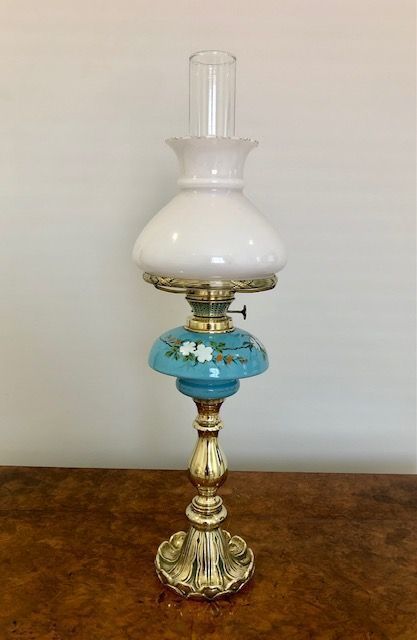
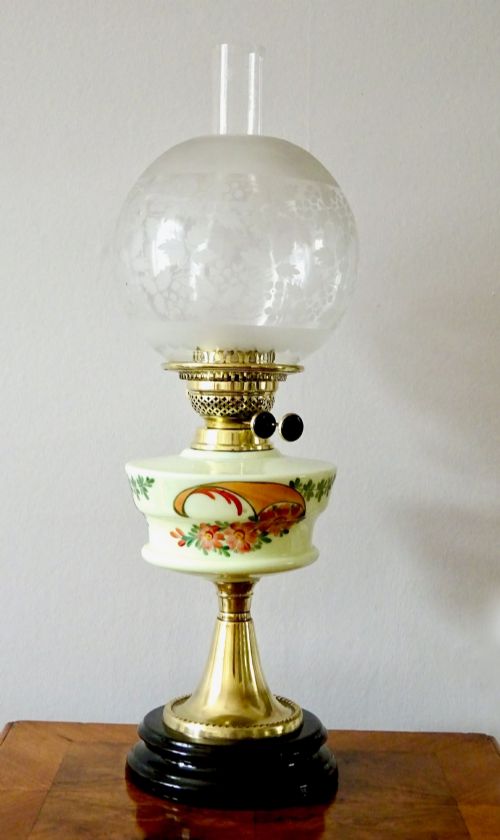
These traditional paraffin burner lamps bring warm, authentic illumination into a room, combining heavy brass columns with coloured glass fonts.
Traditional Paraffin Burner
A traditional paraffin burner is an oil lamp designed for domestic lighting, appearing primarily in Victorian and Edwardian forms across the nineteenth and early twentieth centuries. Most examples on this page combine a sturdy metal base with a decorative fuel reservoir and a matching glass shade.
The materials span brass, copper, ebonised wood and ceramics, paired with cut, opaline, cranberry or etched glass shades in tulip and globe forms. These lamps functioned as portable table lighting before widespread electrification, often standing on columns with Corinthian capitals or simpler stepped bases.
How They Were Made
Makers constructed the columns chiefly from cast brass or copper, sometimes mounting them on ebonised wooden bases for added stability. Metal components were turned, cast and occasionally plated to achieve a polished finish.
Reservoirs and shades utilised specialised glassmaking techniques, producing heavy cut glass, layered opaline glass or striking cranberry glass fonts. Etched designs upon glass shades required skilled handwork to create delicate floral or geometric patterns.
The listings span the Victorian and Edwardian eras, uniting brass and copper structures with cut, opaline, and cranberry glass elements.
What Varies in Quality
The substance of a traditional paraffin burner rests in the weight of its metal components and the clarity of its glass. Heavier brass columns and crisp, deep-cut glass fonts indicate superior construction compared to lighter plated alternatives.
The integration of specific makers' burners, such as Duplex mechanisms or marked components by known retailers, elevates an example. Furthermore, the presence of an undamaged, matching shade in opaline or cranberry glass separates standard utility items from finer decorative pieces.
Young's Special·Messengers·Harrods
The Traditional Paraffin Burner Glossary
- Duplex
- A burner mechanism utilising two flat wicks placed side by side to produce a brighter flame. This double-wick system required specific twin-knob controls.
- Font
- The oil reservoir of the lamp, typically formed from coloured, opaline or cut glass. It sits atop the main column to hold the paraffin.
- Opaline glass
- An opaque, milky-white glass popular in Victorian lighting shades. It diffused the bright paraffin flame into a soft, even glow.
- Cranberry glass
- A rich red-pink glass created by adding gold chloride to the molten batch. It provided a dramatic colour for lamp fonts and shades.
Traditional Paraffin Burner: Frequently Asked Questions
What is a traditional paraffin burner?
A traditional paraffin burner is a nineteenth or early twentieth-century domestic oil lamp that burns kerosene or paraffin for illumination. These pieces typically feature a brass or copper base supporting a glass fuel reservoir and a decorative shade.
Such lamps served as primary household lighting before electric bulbs became common. Today, they survive as decorative antiques that retain their original brass columns and glass components.
How do I date a paraffin lamp?
Dating these lamps involves examining the materials, burner mechanisms, and stylistic details recorded in the design. Victorian examples often display heavier brass castings and Corinthian columns, while Edwardian pieces lean towards simpler or distinctively shaped brass and glass combinations.
Maker marks stamped onto the metal burner knobs or collars provide precise attribution. Additionally, the style of the glass shade - whether etched tulip, cranberry, or opaline - helps place the lamp within its specific period.
How do I clean brass and glass parts?
Cleaning brass components involves using a soft cloth and a gentle metal cleaner suited to the finish without stripping its age. Avoid harsh abrasives that might damage stamped details or plating on the metal.
Glass shades and fonts wash safely in warm, soapy water using a soft sponge. Ensure all glass parts dry thoroughly before reassembling the lamp.