







Traditional Painted Tables
Traditional painted tables bring together the honest utility of pine refectories and dresser bases with decorative surface finishes rooted in country house tradition.
Traditional Painted Tables
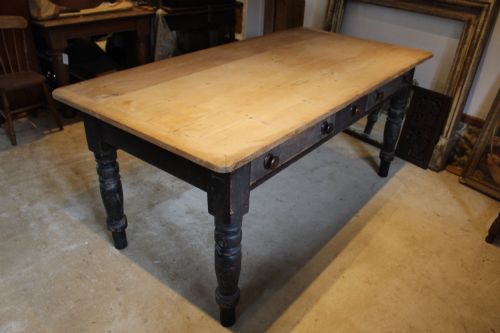
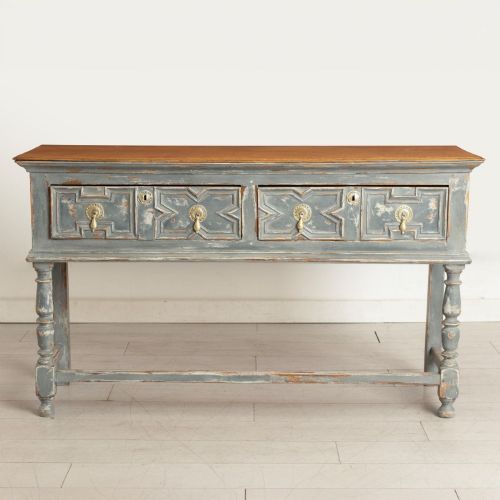
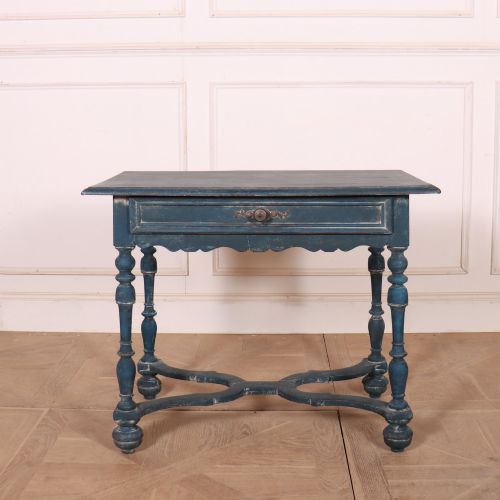
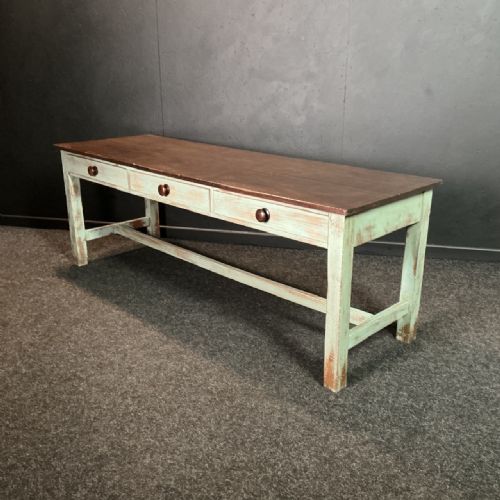
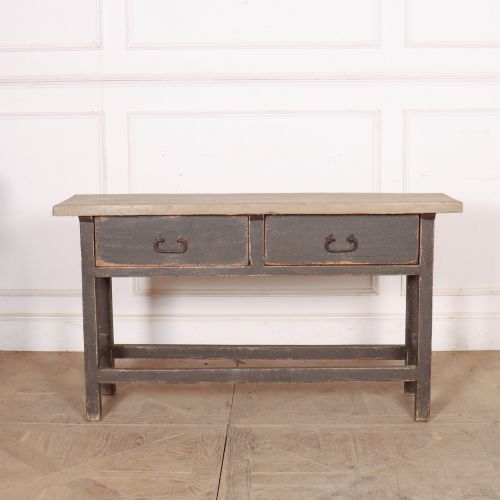
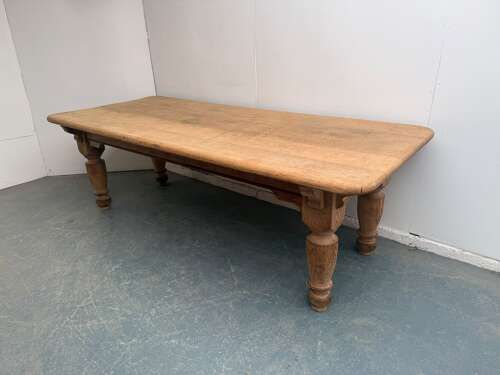
Traditional painted tables encompass robust pine refectories, kitchen dining tables, serving tables, and potboard dresser bases originating primarily from nineteenth-century rural workshops. These items often feature historic layers of paint, showing the wear of daily domestic use across English, Scottish, and wider European country houses.
Buyers seeking traditional painted tables frequently encounter utilitarian forms adapted for modern interiors, alongside decorative styles influenced by Scandinavian country furniture and French provincial design. The inventory balances rustic oak and pine construction with surface treatments ranging from simple white washes to darker aged patinas.
How they were made
Construction relies heavily on solid pine and oak timbers, joined with traditional methods suited to heavy farmhouse use such as pegged mortise and tenon joints. Table tops and dresser bases are built to bear weight, utilising thick planks of wood designed to withstand decades of kitchen or dining labour.
Surface finishes involve layers of paint applied over wood, sometimes distressed through generations of scrubbing and repainting. Cabinet makers and rural joiners utilised available local pigments and oils, creating surfaces that hold a chalky or soft sheen beneath later waxes.
Traditional Painted Tables Retail Price Guide 2026
Typical asking prices for traditional painted tables among the pieces listed under this phrase on Sellingantiques today, from the lower quarter to the upper quarter. They describe what is for sale here now, not the wider market.
Listings feature eighteenth-century and nineteenth-century pieces alongside Victorian and Edwardian examples constructed from pine, oak, brass, and glass.
What varies in quality
Quality rests significantly on the integrity of the original timber frame and whether the painted surface remains period-authentic rather than newly applied. Pieces retaining their early or primary paint layers command greater interest among collectors than those stripped and repainted in modern workshops.
Proportion and structural balance separate standard utilitarian workshop pieces from finer country house examples. The joinery beneath the painted skin must remain sound, with timber drawers running true and potboards securely fixed to the supporting legs.
Frank Moss Bennett·Jozsef Molnar
The Traditional Painted Tables Glossary
- Potboard dresser base
- A kitchen or dining sideboard featuring an open lower shelf, known as a potboard, traditionally used for storing heavy earthenware and pots.
- Refectory table
- A long, narrow dining table originally designed for communal dining halls, distinguished here by sturdy wooden legs and thick plank tops.
- Original paint
- Surface decoration applied during the period of manufacture rather than stripped and refinished in subsequent centuries.
- Pine
- A softwood commonly utilised in English and Scottish farmhouse furniture for its accessibility and workability in large domestic items.
Traditional Painted Tables: Frequently Asked Questions
How do I care for a painted table surface?
Protect the painted finish by avoiding direct heat and excessive moisture, cleaning gently with a dry or barely damp cloth.
Apply occasional clear beeswax where the paint has worn thin to nourish the underlying wood without clouding the historic surface.
Are these tables suitable for daily dining?
Most traditional painted tables were built for heavy kitchen or farmhouse use, making them structurally robust for everyday family dining.
Use placemats and coasters to guard the historic paint and timber top against heat rings and liquid spills.
How can I tell original paint from modern paint?
Original paint shows natural craquelure, soft edges, and wear patterns consistent with age, often revealing earlier colour layers underneath.
Modern repaint applications usually present a uniform matte or chalky texture without the integrated wear of a nineteenth-century surface.
Where were these painted tables originally used?
These tables served primarily in country house kitchens, sculleries, and farmhouse dining rooms across Britain and Europe.
Their utilitarian design meant they functioned as prep stations, serving surfaces, and family gathering spots.