

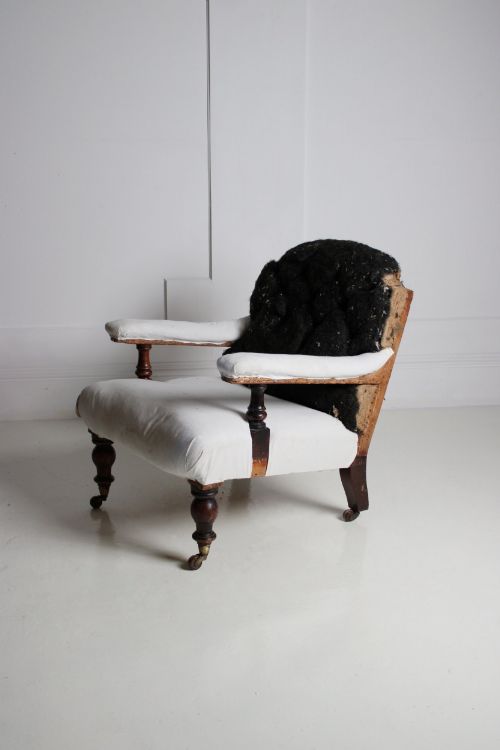
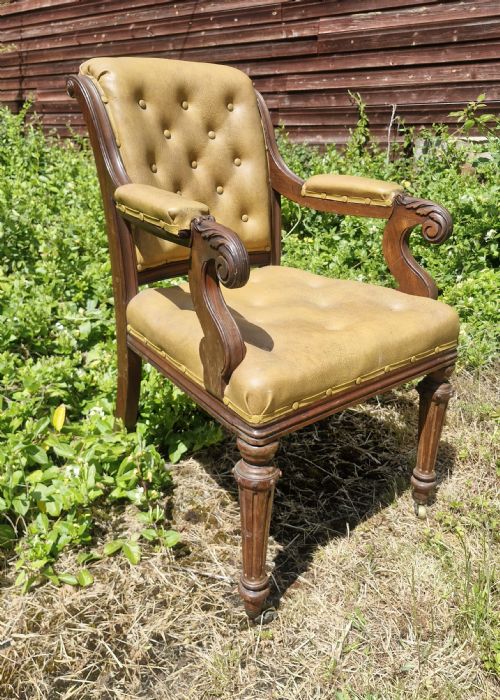
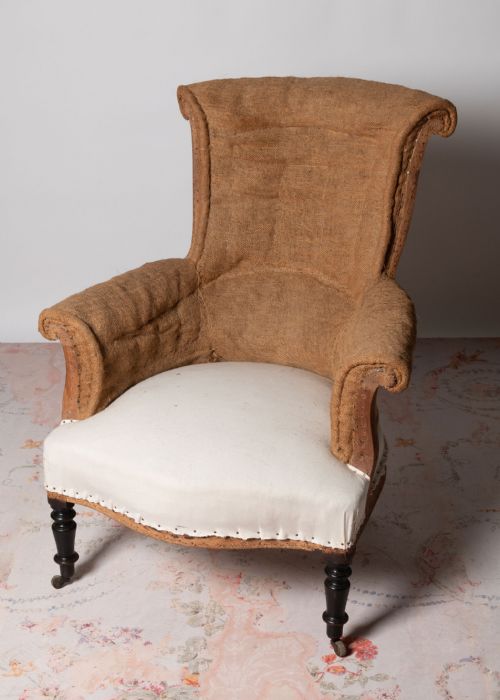


Traditional Padded Armchair
Traditional padded armchairs bring enduring comfort and classical proportions to a room, offering deep seats and substantial upholstered frames built for relaxation.
Traditional Padded Armchair
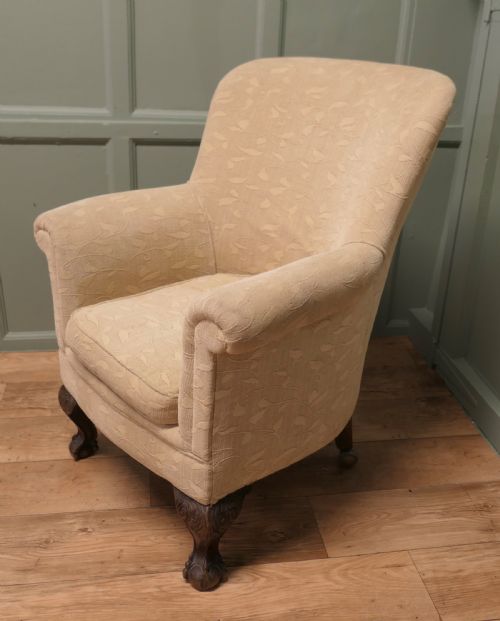
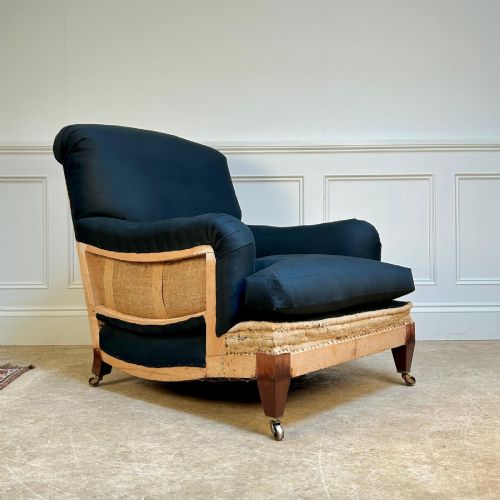
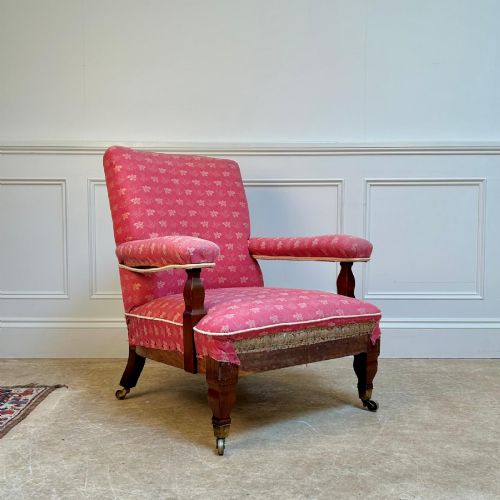
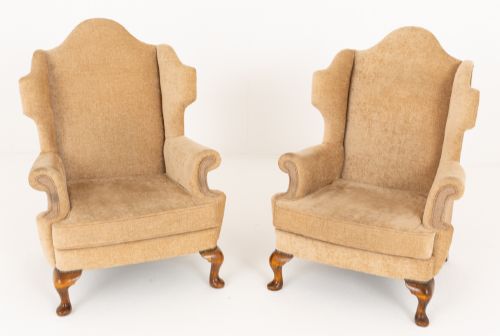
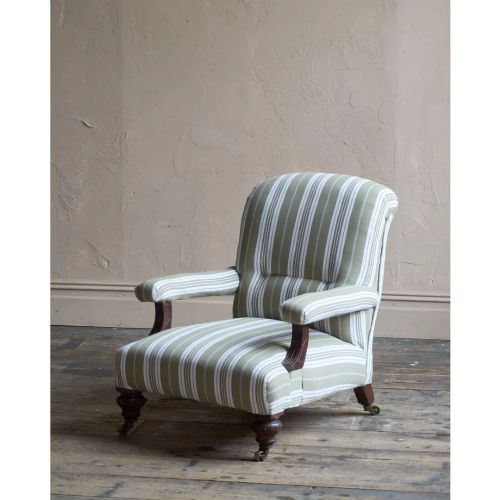
A traditional padded armchair provides deep seating supported by period frames ranging from nineteenth-century Victorian designs to early twentieth-century country house iterations. Buyers searching this phrase meet upholstered club chairs, wing chairs, and library armchairs featuring generous padding and supportive backs.
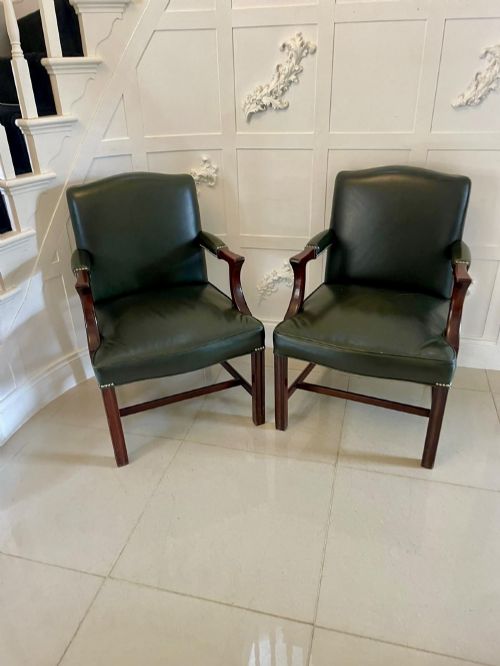
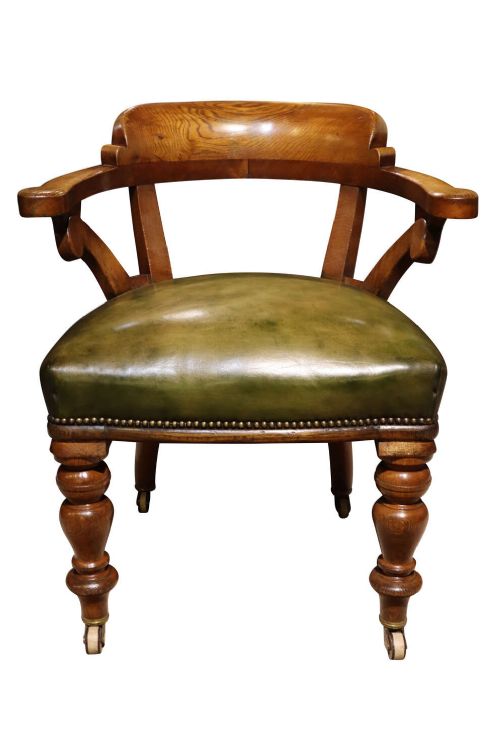
The selection includes specific regional and stylistic forms such as George II style Gainsborough chairs, Bridgewater styles, and robust mahogany desk armchairs. These seating pieces span the nineteenth century, Edwardian era, and early decades of the twentieth century.
Many examples showcase show frames in mahogany, oak, or walnut, combining exposed woodwork with soft upholstery in leather, velvet, or fabric. These chairs function as primary seating in studies, drawing rooms, and libraries.
Materials and Construction
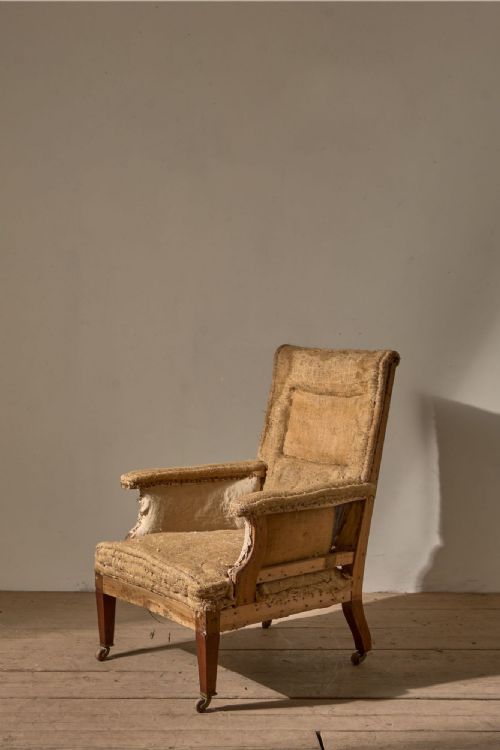
Makers constructed the structural frames of these armchairs using solid hardwoods such as mahogany, oak, walnut, and yew wood, often incorporating brass castors and fittings for mobility. Show frames frequently display carved details, exposed mahogany grain, or turned wooden legs.
Upholstery methods combined traditional stuffing materials with durable top covers in leather, velvet, and woven fabrics, frequently finished with buttoning or piped edges. The combination of dense interior padding and resilient outer hides or textiles created the characteristic comfort of these seats.
Even children received proper upholstery training from the makers, as evidenced by miniature antique childs armchairs scaled down from full-size originals.
Evaluating Quality and Proportion
Quality in these armchairs rests upon the integrity of the underlying wooden frame, the weight of the timber, and the precision of the joinery rather than surface appearance alone. Superior pieces exhibit balanced proportions, such as well-scaled wings on a wing chair or harmonious rake to an open armchair back.
The selection of covering materials also distinguishes the range, from standard fabric upholstery to fine quality leather and specialised maker output. Original show frames retaining their natural timber colour and stable structural joints represent the higher tier of surviving examples.
Howard and Sons·George Jack For Morris and Co
The Traditional Padded Armchair Glossary
- Wing Chair
- An armchair with side panels, or wings, attached to the back to shield the sitter from drafts. These upholstered seats date across Georgian, Victorian, and later revival periods.
- Bergère
- An enclosed armchair with stuffed or cane upholstery on the back and sides, usually featuring an exposed wooden frame. These classic French-influenced seats appear in mahogany and other hardwoods.
- Show Frame
- An upholstered armchair design where substantial portions of the polished wooden framework remain visible around the padding and covering. Mahogany and oak serve as common timbers for these exposed structures.
- Button Back
- An upholstery technique where indentations are formed in the padding by pulling buttons deep into the stuffing at regular intervals. This method secures the internal filling while creating a distinctive quilted pattern.
- Library Chair
- A sturdy, comfortable armchair designed for reading rooms, typically upholstered in leather or heavy fabric with supportive arms. These chairs often incorporate mahogany or oak frames.
Traditional Padded Armchair: Frequently Asked Questions
What defines a traditional padded armchair?
A traditional padded armchair is a comfortable seating piece featuring a solid wood frame combined with deep internal upholstery and covered in fabric, leather, or velvet.
These chairs span periods from the nineteenth century into the early twentieth century, encompassing styles like the club chair, wing chair, and library armchair.
How do I identify the period of an armchair?
Dating relies on examining the timber species, the carpentry of the show frame, and the characteristic silhouette of the arms, legs, and back.
Victorian and Edwardian examples often feature heavy mahogany or oak frames, whereas earlier Georgian styles display specific revival proportions and carved wooden details.
Where were these armchairs used historically?
These seating pieces were primarily placed in formal sitting rooms, private libraries, studies, and country house drawing rooms.
Their substantial padding and supportive structures made them ideal for long periods of reading or relaxation.
What timber is typically used for the frames?
Makers predominantly utilised mahogany, oak, and walnut for the exposed wooden elements and structural supports of these armchairs.
Some regional or country pieces also incorporate yew wood or alternative native hardwoods within their construction.