



Traditional Oval Mirror
A traditional oval mirror brings immediate breadth and light to a room, offering the clean architectural curve seen across pieces from the Regency period to the Edwardian era.
Traditional Oval Mirror
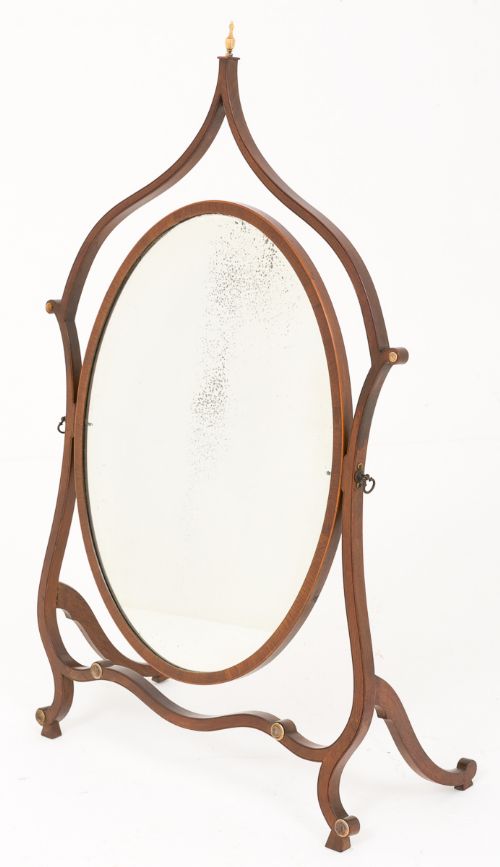
When you search for a traditional oval mirror, you encounter wall mirrors, hanging wall mirrors, and cheval mirrors spanning the nineteenth and early twentieth centuries. These pieces appear in forms ranging from compact Edwardian wall fixtures to large Victorian overmantel mirrors designed to anchor a room.
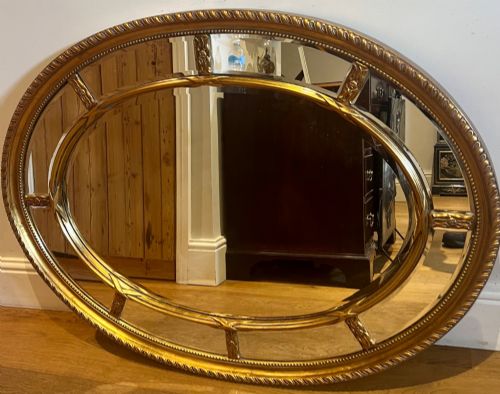
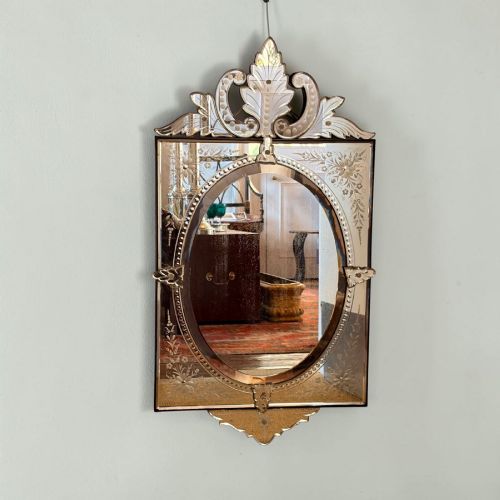
The selection on this page demonstrates styles such as Rococo, Jacobean Revival, Venetian, and Hepplewhite style, alongside plain Regency and Edwardian designs. Most examples date from the 1900s, 1910s, and 1920s, with earlier pieces representing the nineteenth century and the Regency period.
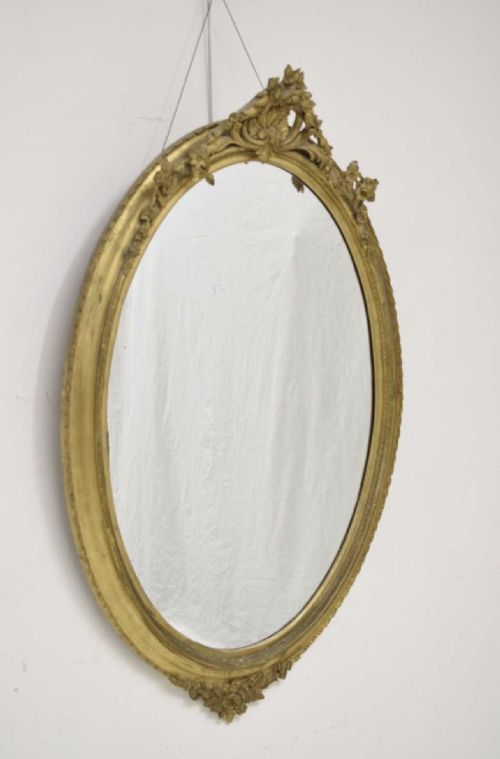
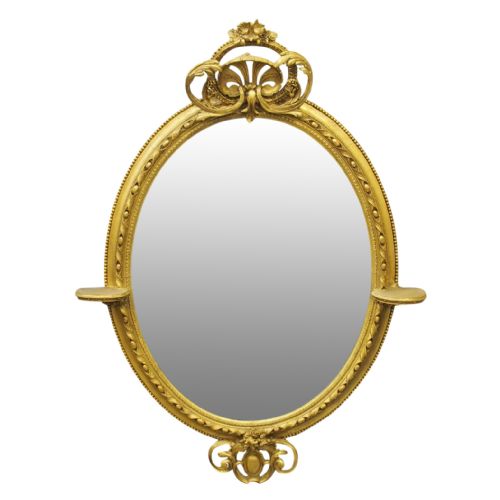
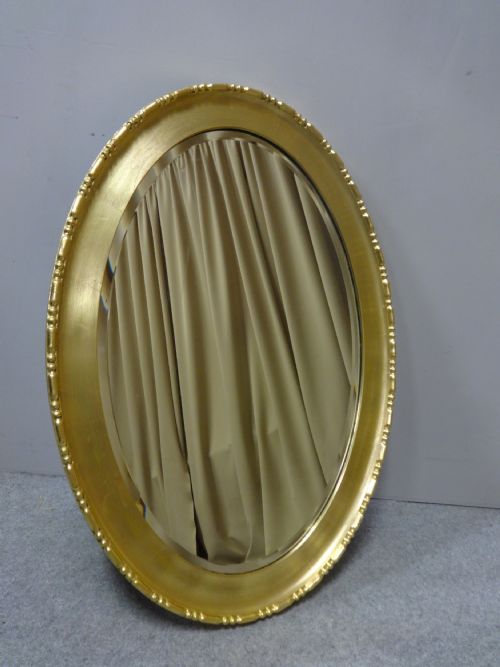
Makers and craftsmen utilised timber, oak, and mahogany for structural frames, frequently applying gesso, plaster, and gold leaf for decorative giltwood finishes. Buyers searching for a traditional oval mirror will find both dark wood frames and simulated wood finishes among the current selection.
How traditional oval mirrors were made
Makers constructed the primary frames of traditional oval mirrors using solid timbers such as oak and mahogany, or assembled carved timber sections joined for stability. Carpenters shaped the wood to form the characteristic curved outline required for wall and cheval designs.
Surfaces intended for gilding received coats of gesso and plaster applied over the timber base, which artisans then carved and gilded with leaf. Alternatively, frames were finished with a plain polished wood surface or a simulated wood finish to mimic finer grain patterns.
Traditional Oval Mirror Retail Price Guide 2026
Typical asking prices for traditional oval mirror among the pieces listed under this phrase on Sellingantiques today, from the lower quarter to the upper quarter. They describe what is for sale here now, not the wider market.
Listings on this site span the Regency period through to the 1920s, utilising materials such as mahogany, oak, giltwood, and glass.
What varies in quality
The standard of a traditional oval mirror rests upon the depth and crispness of the carved detail in the timber or gesso frame. Pieces featuring intricate Rococo scrollwork or substantial giltwood mouldings demonstrate a higher degree of artisan skill than plain wooden surrounds.
Material selection also dictates distinction, with genuine giltwood and dense hardwoods like mahogany representing superior construction compared to simulated wood finishes or simpler oak panels.
The Traditional Oval Mirror Glossary
- Giltwood
- Wood that has been coated with gold leaf or a gold-coloured finish. This technique was widely utilised on Regency and Victorian frames to catch the light.
- Gesso
- A plaster-like mixture applied to wood frames to create a smooth surface for carving and gilding. Artisans modelled fine relief decoration directly into this compound.
- Cheval mirror
- A freestanding mirror mounted in a frame that allows the glass to swing or tilt. These full-length pieces often appear in Hepplewhite styles.
- Overmantel mirror
- A large mirror designed to hang above a fireplace mantel. Victorian examples in this category frequently feature substantial giltwood frames.
- Hepplewhite style
- A furniture and decorative style originating from the eighteenth-century designer George Hepplewhite, noted for elegant and light proportions.
Traditional Oval Mirror: Frequently Asked Questions
Where should I hang an oval mirror?
An oval mirror suits narrow walls, hallways, and spaces above mantelpieces where a rectangular frame might feel too heavy.
The curved outline softens angular room layouts and reflects light effectively into darker corners.
How do I identify a Regency mirror?
Regency mirrors typically feature classical motifs, giltwood finishes, and restrained ornamentation associated with the early nineteenth century.
They emphasise symmetry and proportion, distinguishing them from later, more elaborate Victorian or Edwardian designs.
What is the difference between wall and cheval mirrors?
Wall mirrors mount directly onto vertical surfaces using hanging fixings, while cheval mirrors stand independently on the floor.
Cheval designs incorporate a pivoting frame that lets you tilt the glass angle.
How do I care for a giltwood frame?
Giltwood frames require gentle dusting with a soft, dry brush to protect the delicate gold leaf and gesso layers.
Avoid using liquid cleaners or abrasive cloths, which can strip the metallic surface over time.