


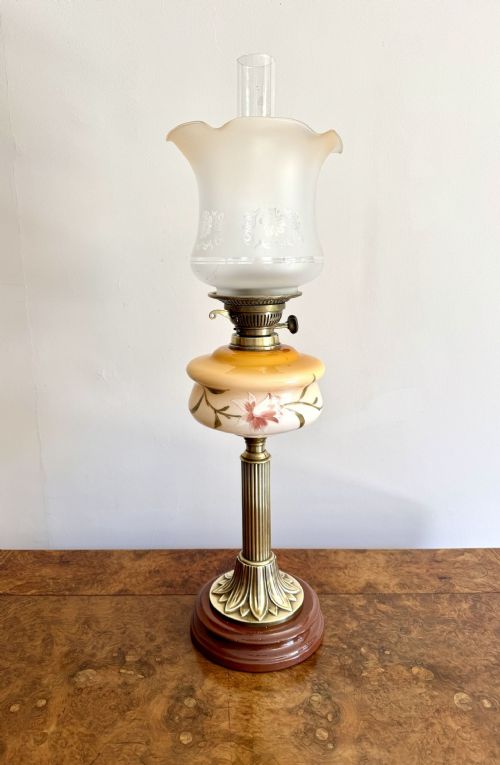


Traditional Oil Table Lamp
Traditional oil table lamp pieces bring Victorian and Edwardian weight to a room, combining heavy brass columns with coloured glass fonts.
Traditional Oil Table Lamp
A traditional oil table lamp is a domestic lighting fixture designed to burn paraffin or lamp oil, typically dating from the nineteenth and early twentieth centuries. When you search for a traditional oil table lamp, you encounter items built during the Victorian and Edwardian eras, spanning periods from the eighteen-fifties through to nineteen-thirty.
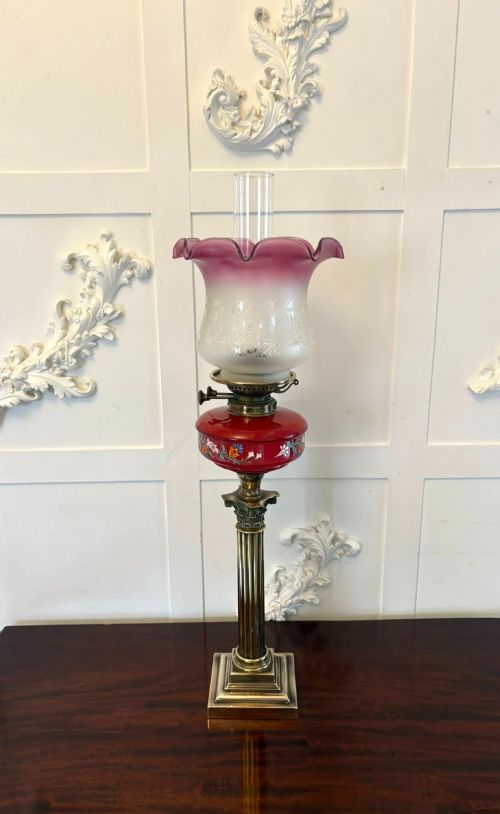
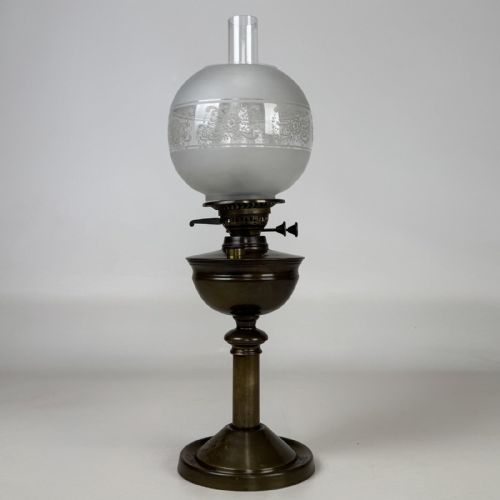
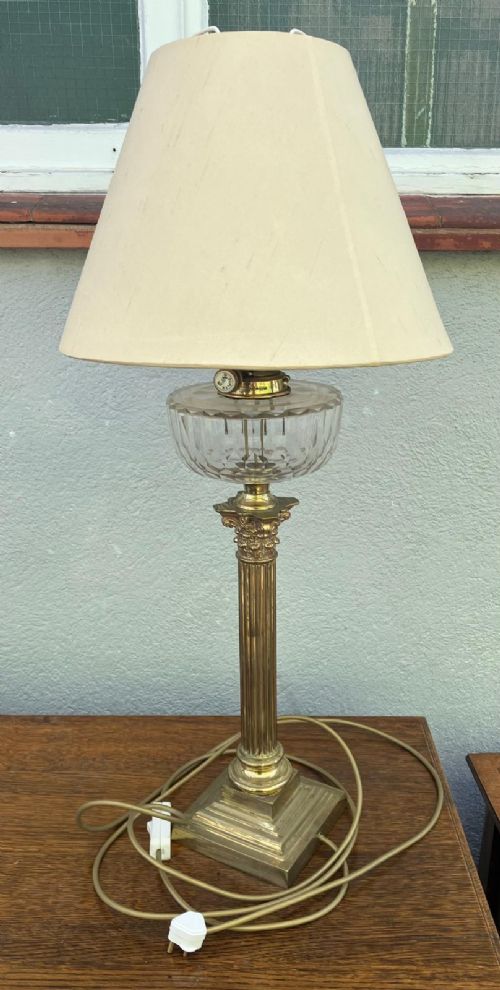
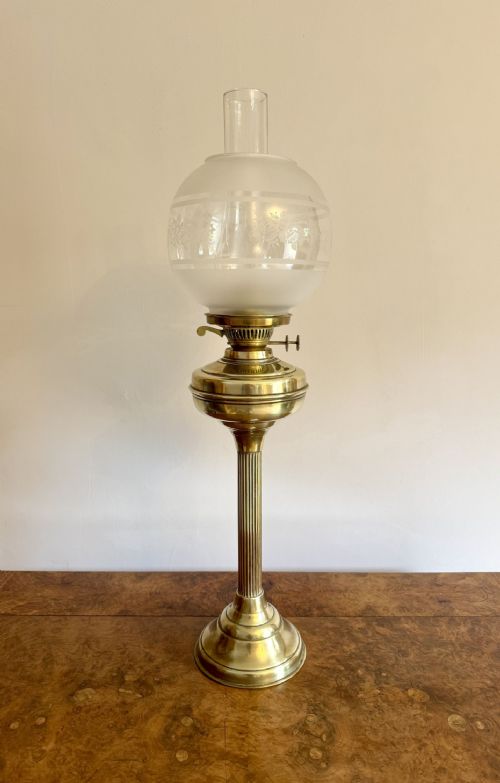
The most common examples on this page are upright brass column lamps, often featuring Corinthian capitals or stepped bases. Alongside these tall brass models, you find smaller cottage lamps, student lamps complete with implements, and examples paired with opaline or cut glass fonts.
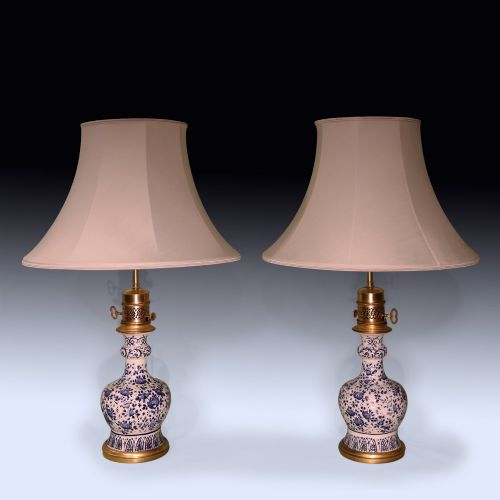
Many of these pieces originate from British and French workshops, encompassing styles from Neoclassical revival to Victorian Art Nouveau. While a large proportion retain their original character, several examples show thoughtful conversion to electric operation for modern domestic use.
How traditional oil table lamps were made
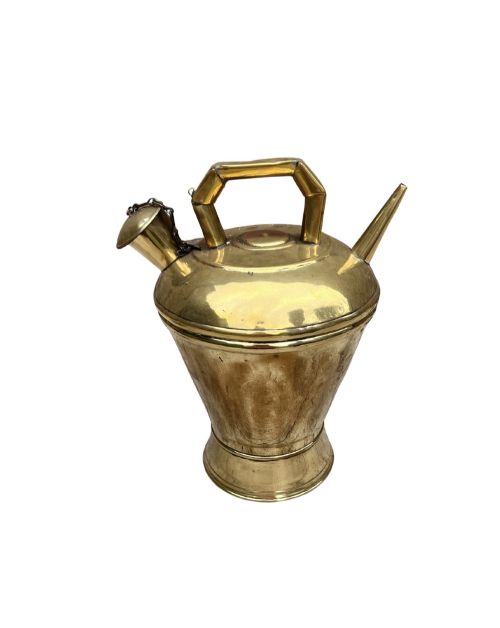
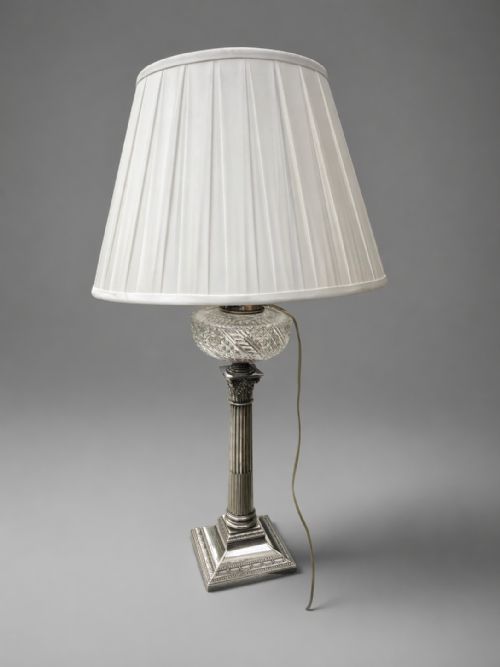
Makers constructed these lamps primarily using cast and spun brass, forming the sturdy columns and heavy weighted bases that prevented tipping. Metals such as copper and silver plate also appear, alongside repoussé work on French models.
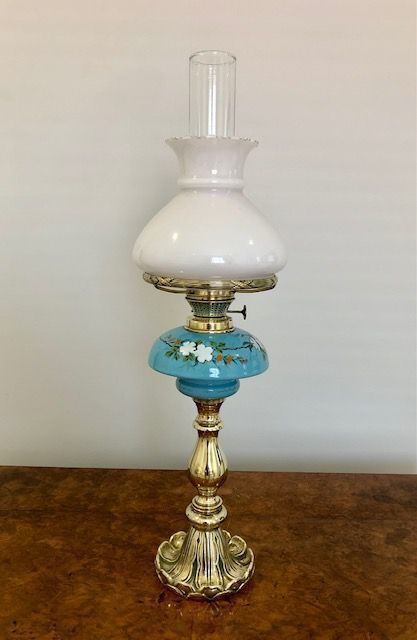
Reservoirs and shades utilise moulded, cut, opaline, or cranberry glass, mounted above the metal body to hold the fuel and diffuse the light. Fabric shades and etched glass tulip shades complete the upper assembly, paired with brass burners and mechanisms.
Traditional Oil Table Lamp Retail Price Guide 2026
Typical asking prices for traditional oil table lamp among the pieces listed under this phrase on Sellingantiques today, from the lower quarter to the upper quarter. They describe what is for sale here now, not the wider market.
Listings span the mid nineteenth century to the early twentieth century, incorporating Victorian and Edwardian periods with robust brass and glass construction.
What varies in quality in traditional oil table lamps
Quality shows in the casting definition of metalwork, particularly in the crispness of Corinthian column capitals and the heavy gauge of the brass used in the base. Superior examples display substantial weight and precise proportion across the entire column and reservoir.
The choice and execution of the glass font lift a piece, especially where hand-cut patterns catch the light or deep cranberry and opaline hues remain rich and uniform. Refinement in the burner mechanics and the presence of original shades or matching implements further distinguish the finer specimens.
Messengers·Harrods·Young's Special
The Traditional Oil Table Lamp Glossary
- Corinthian column
- A classical architectural column style featuring ornate, acanthus-leaf capitals used extensively for tall lamp bases. This form provides a formal, Neoclassical appearance popular in Victorian interiors.
- Font
- The oil reservoir sitting atop the lamp base, commonly made from glass or brass. Cranberry and opaline variants are frequently seen in this role.
- Duplex
- A type of burner mechanism utilising two flat wicks to produce a brighter flame than single-wick designs. It represents a significant nineteenth-century technological improvement for domestic lighting.
- Student lamp
- An adjustable desk or table lamp originally designed to provide focused light for reading or working. These practical items often include dedicated implements.
- Repoussé
- A metalworking technique where the metal is hammered from the reverse side to form a raised design. French examples frequently showcase this decorative method on their bases.
Traditional Oil Table Lamp: Frequently Asked Questions
How do I light an antique oil lamp?
Lighting an antique oil lamp requires filling the reservoir with appropriate lamp oil or paraffin and allowing the wick to saturate fully before ignition. Adjust the wick height carefully via the burner mechanism to maintain a steady, smoke-free flame.
Ensure the glass chimney is securely seated before lighting to protect the flame from drafts and to direct the heat safely away from the shade.
Can I convert an oil lamp to electricity?
Many period oil lamps have been converted to electricity over the decades to allow safer, cleaner everyday use in modern homes. This process typically routes wiring discreetly through the central column without altering the exterior brass or glass components.
Original burners and collars are often preserved during conversion, meaning the visual character of the nineteenth-century piece remains entirely intact.
What is a duplex burner?
A duplex burner uses two parallel wicks side by side, controlled by a single mechanism, to generate a wider and significantly brighter flame than standard single-wick models. This innovation was widely adopted on Victorian table lamps to improve illumination for evening reading.
Identifying a duplex burner is straightforward by inspecting the twin thumbwheels on the brass gallery where the wicks emerge.
How do I clean brass lamp bases?
Cleaning antique brass requires a gentle approach to preserve the warm patina accumulated over more than a century of existence. Avoid harsh abrasive compounds that can strip the fine details from cast column capitals and repoussé decoration.
A soft cloth and mild soapy water usually suffice for removing dust, while specialised brass cleaners should be used sparingly and only when necessary.
Are glass shades original to the lamps?
Glass shades on period oil lamps match the era of manufacture, though replacements and period-appropriate swaps occurred frequently over time. Opaline, cranberry, and etched tulip shades each reflect specific Victorian and Edwardian aesthetic preferences.
Examining the fitter rim where the shade meets the burner helps determine whether the glass sits correctly and harmonises with the proportions of the base.