

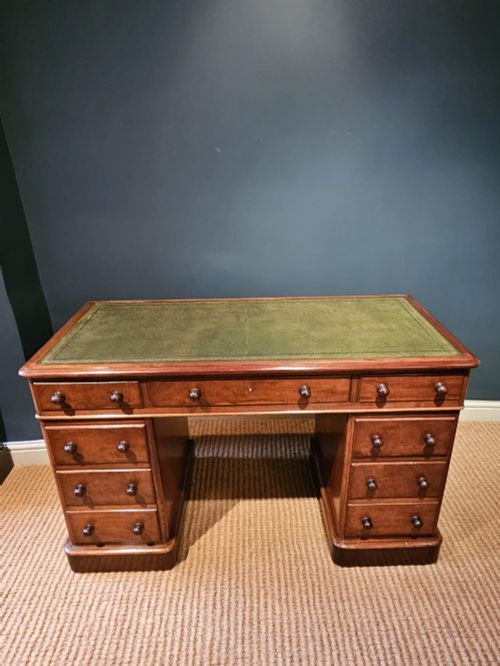
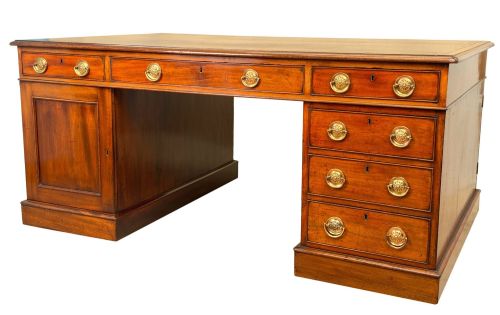
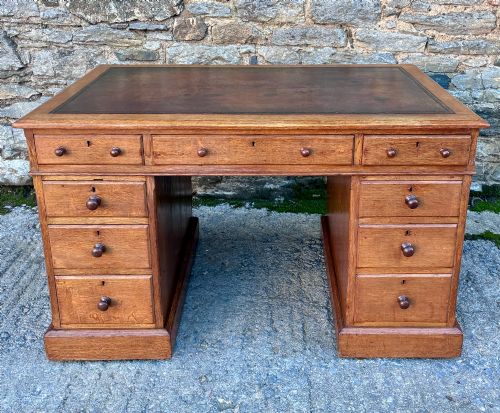
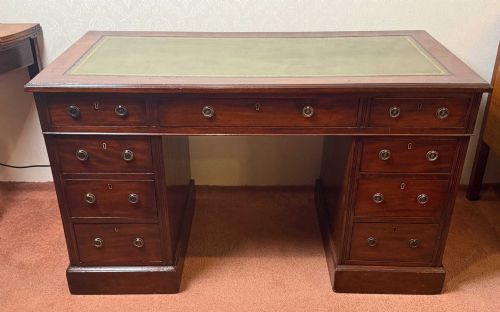
Traditional Office Table
A traditional office table grounds a workspace with solid timber and fitted drawers, offering a surface built for daily correspondence.
Traditional Office Table
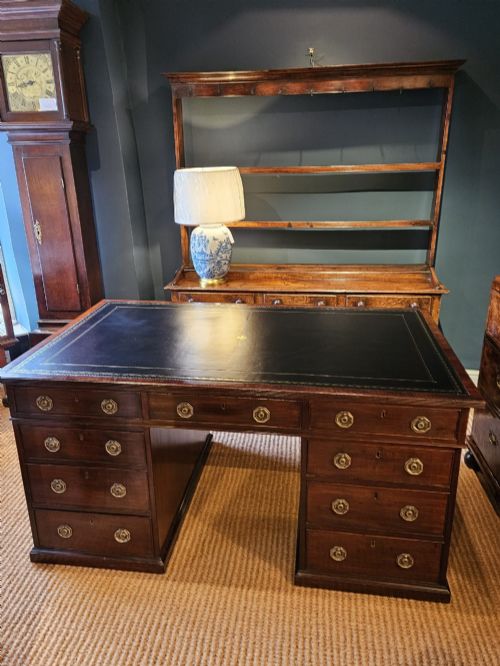
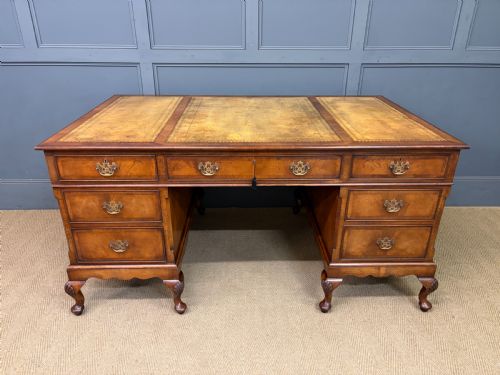
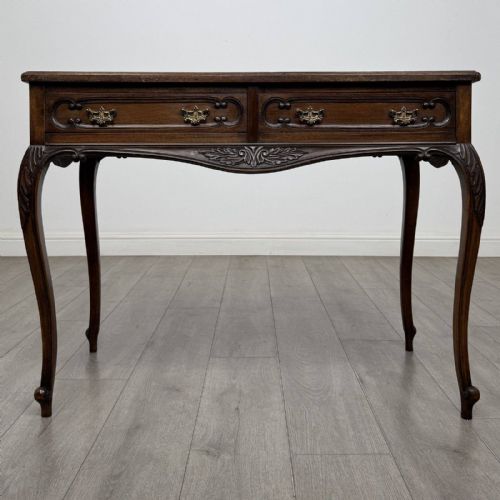
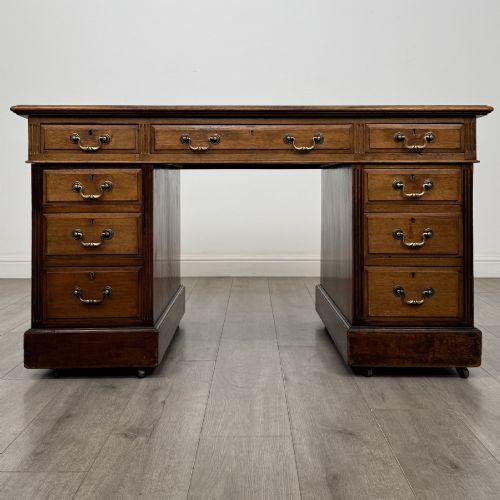
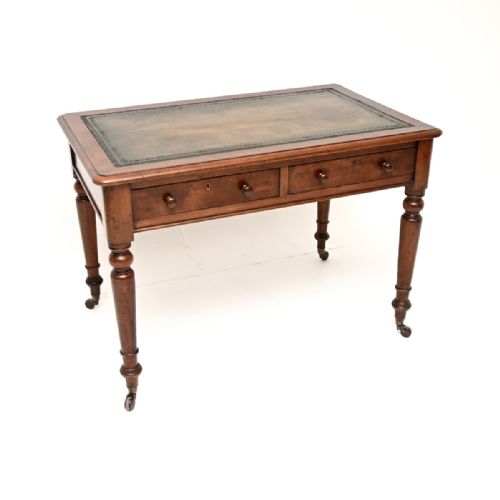
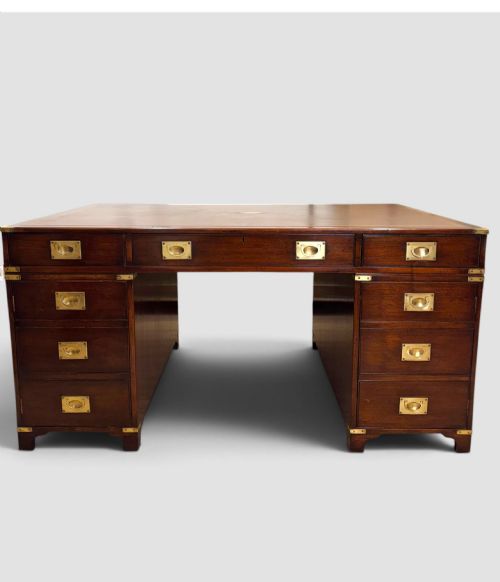
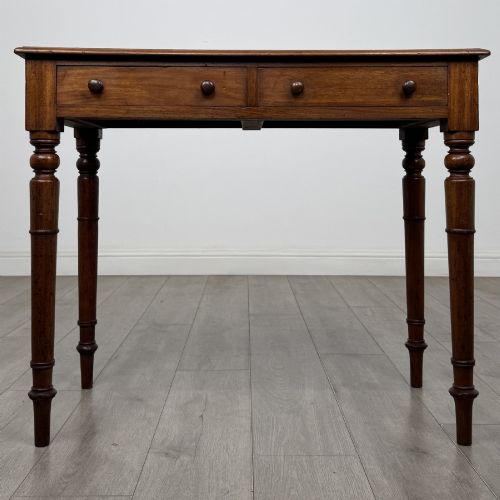
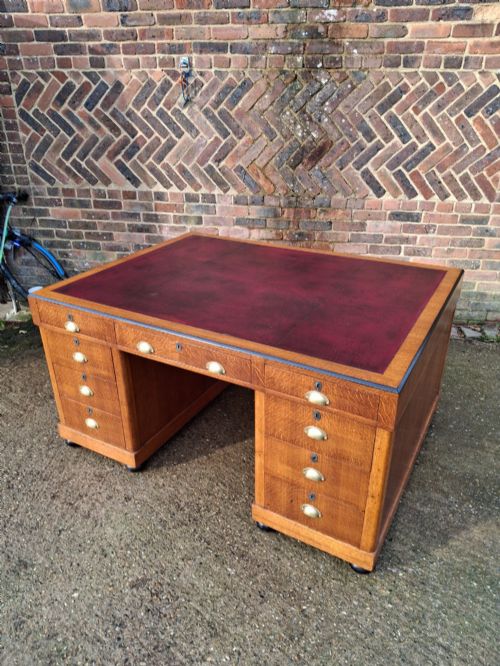
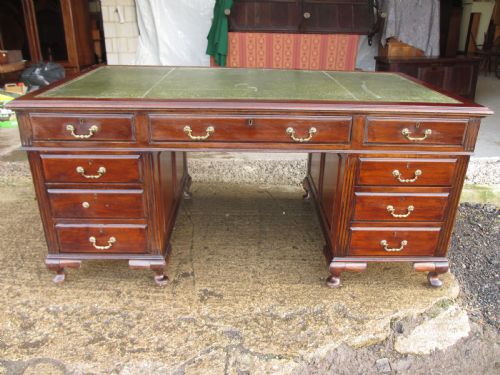
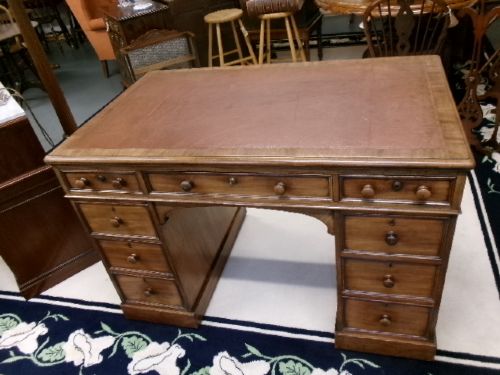
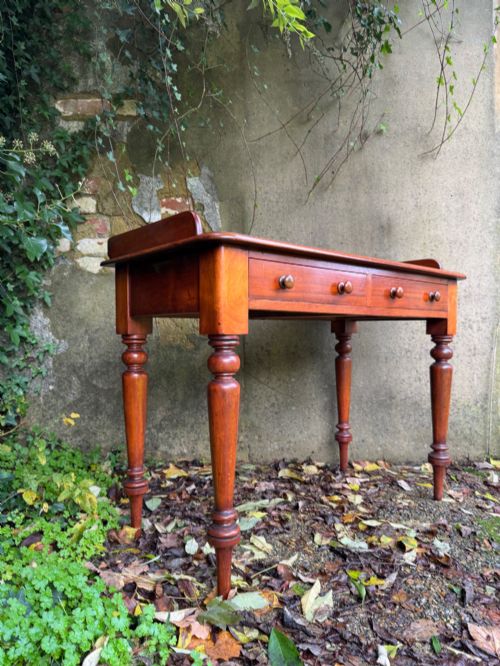
A traditional office table primarily encompasses writing tables, pedestal desks, and kneehole desks originating from the nineteenth and early twentieth centuries. These pieces serve as functional workspaces equipped with drawers, writing surfaces, and occasional stationery compartments.
Victorian and Edwardian examples dominate the selection, often taking the form of large mahogany partners desks or compact walnut writing tables. Pieces span styles from plain Victorian utility to ornate Queen Anne Revival and Georgian Revival interpretations.
How they were made
Cabinet makers utilised dense hardwoods including mahogany, walnut, and oak, frequently pairing them with inset leather writing surfaces and brass hardware. Burr walnut and satinwood appear as decorative veneers, while carved pillars and claw and ball feet show specific stylistic detailing.
Construction methods rely on robust joinery to support heavy pedestals and writing tops, incorporating fitted stationery drawers, sliding writing surfaces, and tambour mechanisms where appropriate.
Traditional Office Table Retail Price Guide 2026
Typical asking prices for traditional office table among the pieces listed under this phrase on Sellingantiques today, from the lower quarter to the upper quarter. They describe what is for sale here now, not the wider market.
Listings feature pedestal desks, partners desks, and writing tables constructed from mahogany, walnut, oak, and burr walnut across the nineteenth and twentieth centuries.
What varies in quality
The choice of timber and veneer determines the baseline quality, with burr walnut and figured mahogany sitting above standard utility woods. Intricate detailing such as carved oak linenfold panels, inlaid borders, and original brass handles elevate specific examples.
Structural complexity sets apart standard writing tables from partners desks, breakfront desks, and fitted pedestal formats that require extensive internal drawer architecture and freestanding finished backs.
Howard and Sons·Trollope and Sons
The Traditional Office Table Glossary
- Pedestal desk
- A heavy writing desk supported by two pedestals of drawers on either side of a central kneehole. These pieces provide substantial storage beneath the main writing surface.
- Partners desk
- A large double-sided desk designed for two people to work opposite one another, featuring drawers and cupboards accessible from both sides. They typically date from the nineteenth century.
- Kneehole desk
- A compact desk featuring a recessed central space for the legs, flanked by single or multiple columns of drawers. They offer a neat footprint for domestic offices.
- Writing table
- A freestanding table designed primarily for correspondence, usually featuring one or more shallow drawers beneath the top. They lack the heavy pedestals of larger executive desks.
- Tambour
- A sliding slatted door or shutter mechanism used on specialised desks to enclose pigeonholes and small drawers. This flexible wooden screen retracts smoothly into the body of the furniture.
- Linenfold
- A carved wooden panel moulding resembling folded linen fabric. This decorative motif appears on select Edwardian oak furniture.
Traditional Office Table: Frequently Asked Questions
What is a partners desk?
A partners desk is a large double-sided workspace designed with drawers and cupboards on both faces so two people can sit opposite each other.
These pieces typically date from the nineteenth century and use dense timbers like mahogany to handle heavy daily use.
How do I identify a Victorian desk?
Victorian desks are identified by their heavy proportions, dark mahogany or walnut timbers, and utilitarian or revival stylistic details. They often feature inset leather writing surfaces and original brass handles.
Many examples from this period take the pedestal or kneehole form with fitted stationery drawers.
What is an Edwardian writing table?
Edwardian writing tables are lighter nineteenth to early twentieth-century desks that often utilise inlaid mahogany, oak, or satinwood. They reflect lighter revival styles compared to earlier Victorian furniture.
These pieces suit home offices through modest proportions and integrated writing surfaces.
Are these desks suitable for daily work?
These traditional tables and desks provide robust wooden surfaces and practical storage drawers well-suited for modern writing and computer work. Their sturdy timber construction withstands continuous everyday use.
Care should be taken to protect antique leather inserts and polished wood surfaces from moisture and heat.