

Traditional Oak Stand
A traditional oak stand brings honest timber and sturdy utility into a hallway, meeting daily practical needs with quiet architectural presence.
Traditional Oak Stand
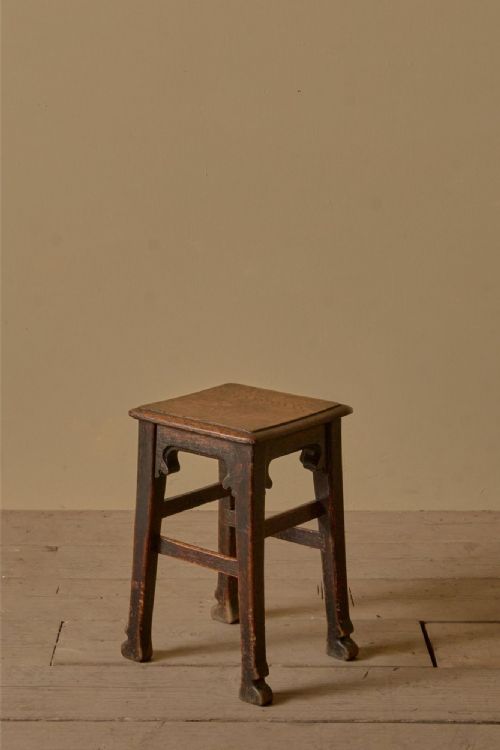
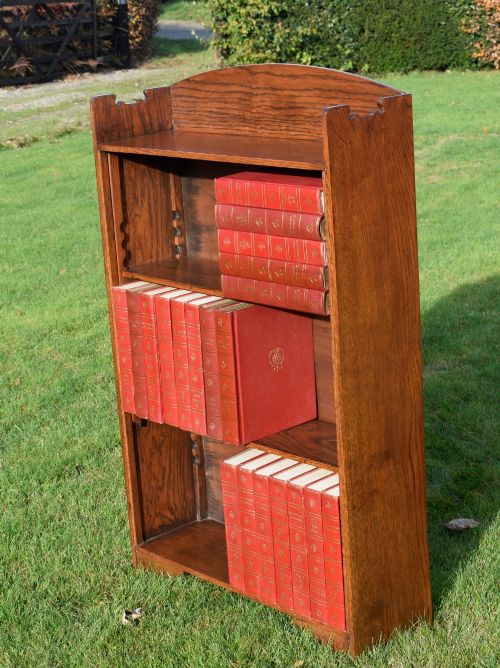
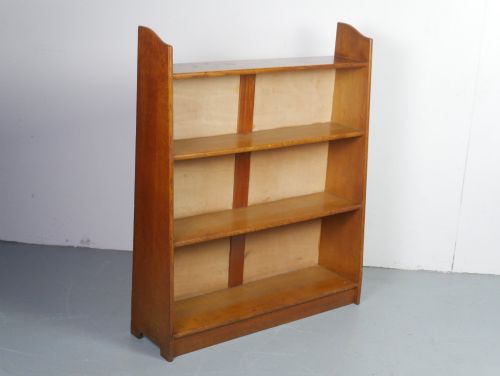
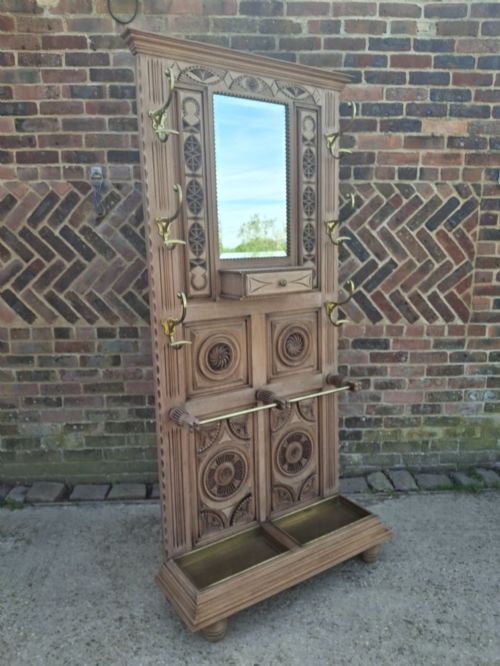
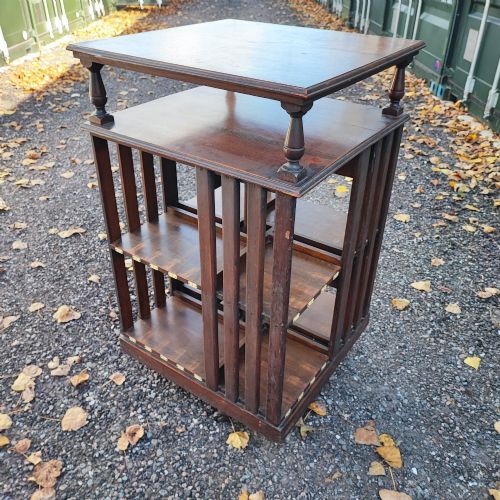
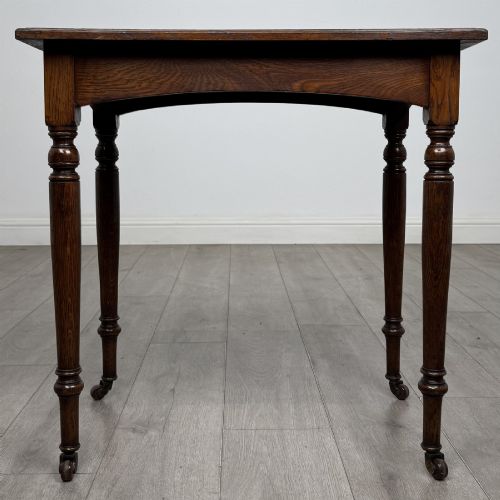
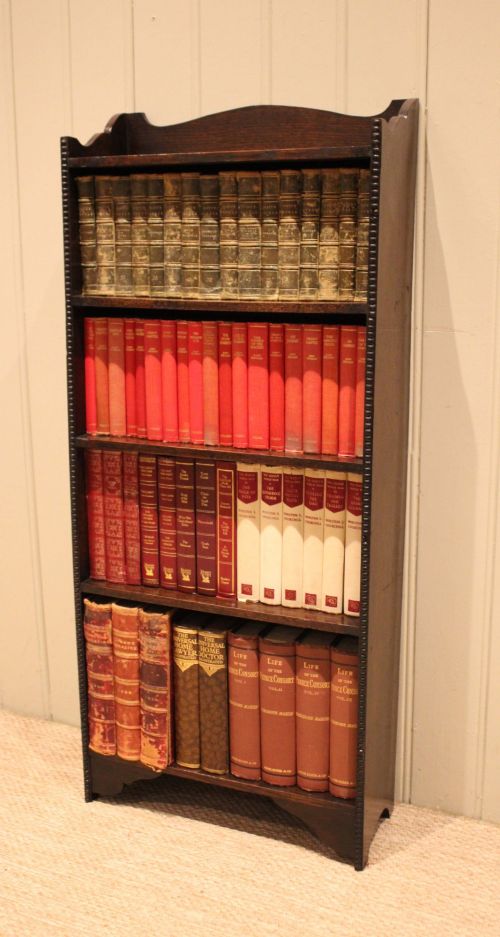
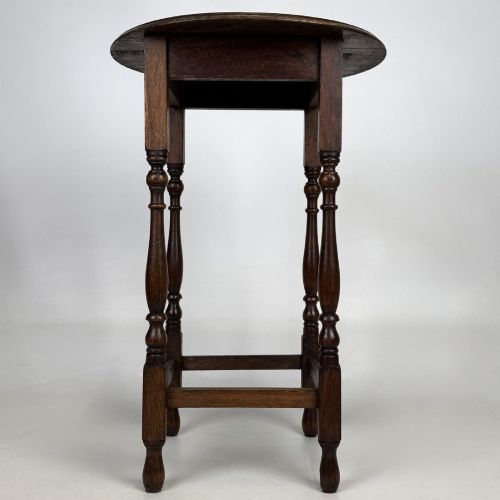
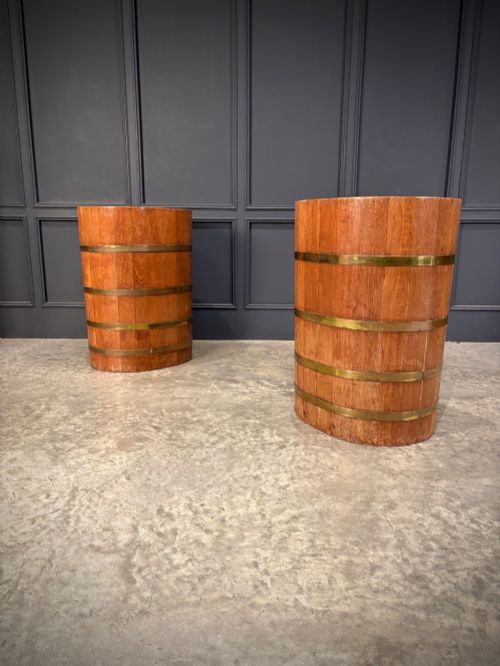
When you search for a traditional oak stand, you encounter a practical category spanning umbrella and stick stands, hall stands, cake stands, and chests on stands made from sturdy timber. These pieces range from upright Edwardian hall furniture with integrated mirror and coat hooks to compact Arts and Crafts stick holders and Georgian side tables raised on frames.
The version you are most likely to meet on this page is an Edwardian or early twentieth-century oak stand designed for hallway or parlour use, often combining utility with simple carved panels or brass appointments. Pieces extend across periods from the eighteenth century through to the Edwardian era, showing styles including Jacobean Revival, English Country, and Arts and Crafts.
The forms serve domestic organisation, from holding wet umbrellas and walking sticks to displaying books or supporting decorative items. Their straightforward proportions and visible grain make them adaptable additions to modern or traditional interiors alike.
Factors of Quality
The distinction between ordinary utility items and superior examples lies in the selection of the timber, the crispness of any carved detailing, and the integrity of the original hardware. Higher-quality pieces demonstrate thoughtful proportions and robust construction that withstands decades of daily hallway use.
Makers who invested time in selecting quarter-sawn oak with prominent medullary rays produced stands with superior visual depth. Original brass drip trays, intact mirror plates, and uncompromised joinery elevate a piece above standard utilitarian workshop production.
Traditional Oak Stand Retail Price Guide 2026
Typical asking prices for traditional oak stand among the pieces listed under this phrase on Sellingantiques today, from the lower quarter to the upper quarter. They describe what is for sale here now, not the wider market.
Listings feature oak combined with brass, glass, metal, and mirror across periods spanning the eighteenth, nineteenth, and twentieth centuries.
The Traditional Oak Stand Glossary
- Stick Stand
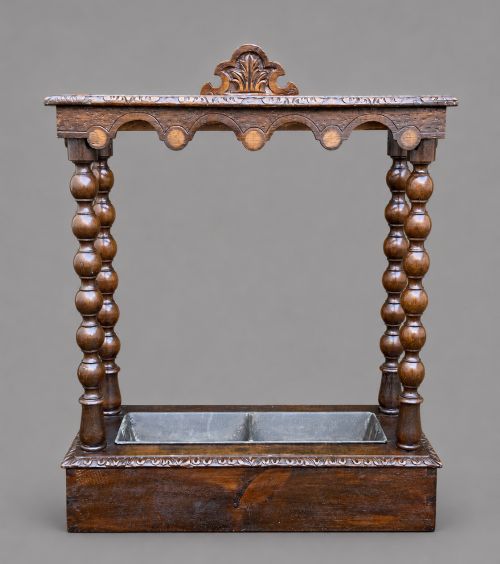
- A piece of furniture designed for holding walking sticks and umbrellas, frequently featuring a partitioned top frame and a metal tray below to catch moisture.
- Quarter-Sawn Oak
- Timber cut radially from the log, producing a distinctive decorative grain pattern known as medullary rays that indicates stability and quality.
- Gallery
- A raised decorative border around the top edge of a table, stand, or shelf, intended to prevent items from sliding off.
- Arts and Crafts
- A design movement prioritising traditional craftsmanship, visible construction, and the natural qualities of materials over mass production.
Traditional Oak Stand: Frequently Asked Questions
What is a traditional oak stand used for?
These stands serve primarily as functional hallway furniture, holding walking sticks, umbrellas, hats, or coats. Some variations act as display furniture for cakes, books, or decorative objects.
Their robust timber construction allowed them to handle heavy daily wear in busy domestic entryways.
How do I care for oak furniture?
Keep oak furniture away from direct heat sources and strong sunlight to prevent the timber from drying out or splitting. Dust regularly with a dry cloth and apply a quality beeswax periodically to nourish the grain.
Avoid excessive moisture on unsealed surfaces, particularly in umbrella stands where metal drip trays should be kept clean.
How can I tell Edwardian oak from earlier periods?
Edwardian pieces often feature machine-planed internal components alongside hand-finished details, reflecting industrial manufacturing shifts around nineteen hundred. They frequently display lighter golden oak finishes or revival styles influenced by earlier Jacobean and Georgian forms.
Earlier eighteenth and nineteenth-century examples tend to show hand-adzed tool marks, pegged joinery, and darker patination developed through long exposure to domestic environments.
Will an oak stand fit in a modern hallway?
The compact footprints of many stick and hall stands make them well suited to modern entryways where floor space is at a premium. Their neutral timber tones and clean architectural lines complement contemporary minimalist interiors as well as traditional homes.