





Traditional Oak Office Seating
Traditional oak office seating brings sturdy craftsmanship and enduring character to a working space, combining robust timbers with practical comfort.
Traditional Oak Office Seating
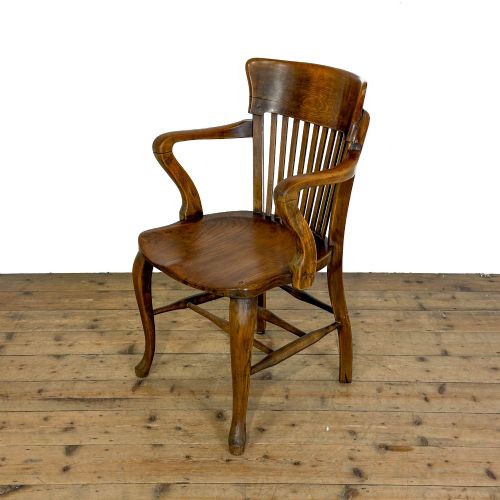
Traditional oak office seating encompasses desk chairs, armchairs, and library chairs produced across the Victorian, Edwardian, and early twentieth century periods. These heavy-duty timber seats were designed for administrative tasks, reading, and long hours at a partner desk.
The versions most commonly encountered on this page date from the late nineteenth century up through the nineteen-thirties, reflecting stylistic shifts from formal Victorian library seating to more functional Edwardian swivel mechanisms.
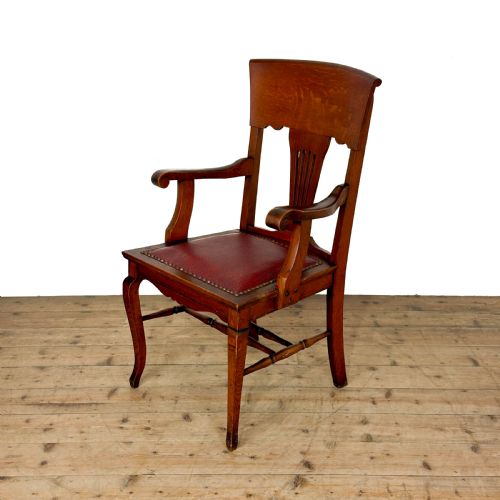
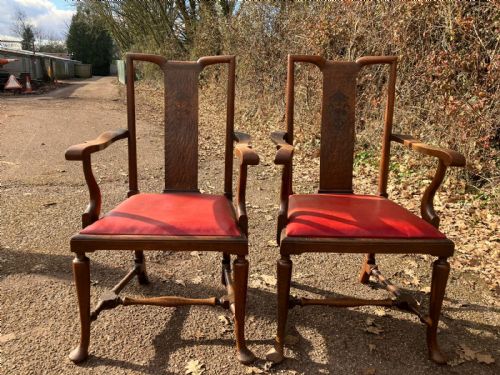
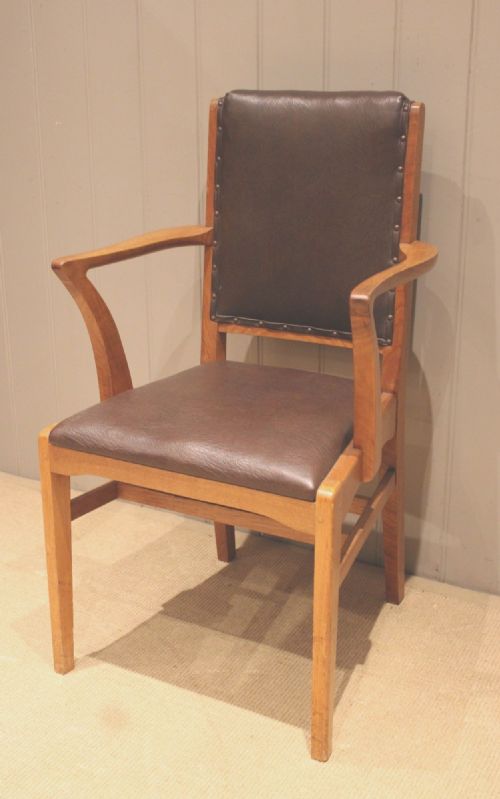
Makers utilised solid oak alongside secondary timbers such as beech and mahogany, pairing the robust wooden frames with leather, hide, or plain wooden seats to suit various workplace requirements.
Materials and construction methods
Construction relies heavily on solid oak for the primary framework, curved backrests, and spindle supports, often combined with beech elements and secured with iron or cast iron mechanical fixings.
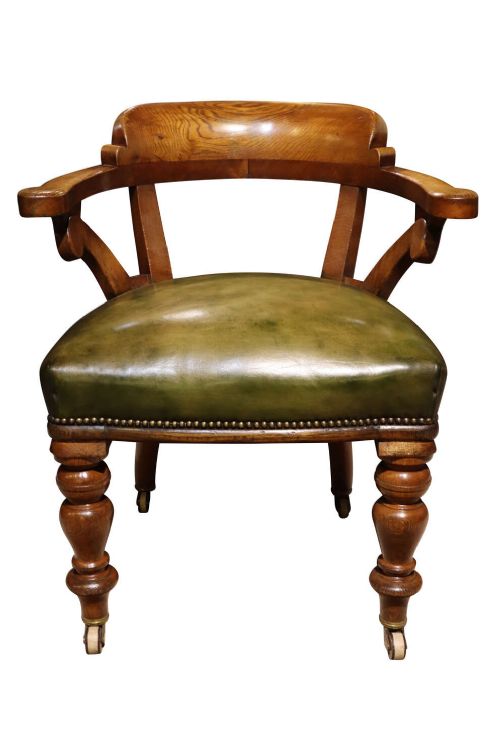
Upholstered examples feature green, red, or tan leather seats, frequently embellished with brass studding along the edges to hold the hide securely to the wooden base.
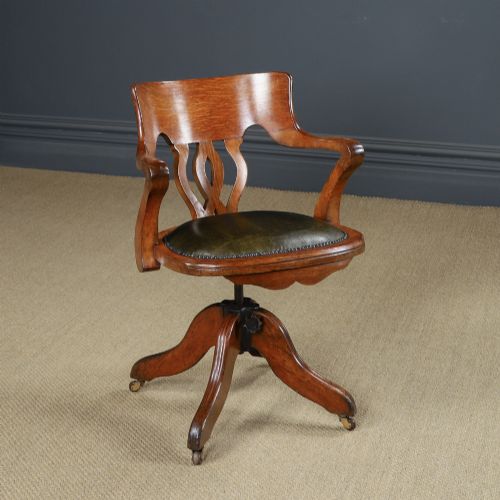
Swivel and tilt desk chairs incorporate early mechanical iron and brass apparatus beneath the seat, allowing rotation and backward tilt for the seated worker.
Traditional Oak Office Seating Retail Price Guide 2026
Typical asking prices for traditional oak office seating among the pieces listed under this phrase on Sellingantiques today, from the lower quarter to the upper quarter. They describe what is for sale here now, not the wider market.
Studded red leather seats and smoker's bows bring immediate pub-and-study charm to a quiet Zoom meeting.
Distinctions in quality
The standard of carving and the selection of timber grain set finer examples apart from utilitarian workshop seating, particularly in the shaping of curved captain's chair backs and arm supports.
The integrity of the original swivel and tilt mechanism dictates mechanical quality, where smooth rotation and solid underframe engineering demonstrate superior nineteenth and twentieth century manufacturing.
The Traditional Oak Office Seating Glossary
- Captain's Chair
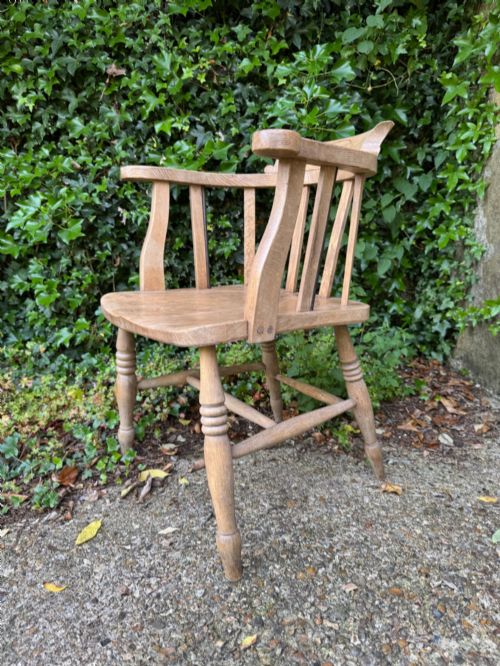
- A sturdy wooden armchair with a rounded low back supported by spindles, designed originally for shipboard or office use. It provides compact back support while remaining easy to move around a desk.
- Swivel Chair
- A desk chair featuring a central pivoting post or mechanical iron screw allowing the sitter to turn in various directions without moving the base. These emerged strongly during the Edwardian period for office efficiency.
- Club Elbow Chair
- A comfortable upholstered armchair with low arms, suitable for reading or relaxing in a library setting. They frequently appear framed in solid oak with leather upholstery.
Traditional Oak Office Seating: Frequently Asked Questions
What is an oak captain's chair?
An oak captain's chair is a traditional wooden armchair featuring a curved backrest supported by vertical spindles above a solid seat. These pieces were built for functional daily use at a partner desk or study table.
They combine a compact footprint with sturdy arm supports, making them practical for modern home offices as well as period interiors.
How do I identify an Edwardian desk chair?
Edwardian desk chairs often incorporate mechanical swivel and tilt functions supported by iron apparatus beneath the seat. They frequently combine oak frames with tan, green, or red leather upholstery.
Stylistically, they bridge heavy Victorian proportions and the simpler, lighter forms favoured in the early twentieth century.
Are swivel desk chairs sturdy?
Yes, period swivel desk chairs from the nineteenth and early twentieth centuries were constructed from dense solid oak with iron and brass mechanisms. Their heavy timber frames ensure long-term stability during daily sitting and turning.
Maintenance involves checking the central underframe screw and occasional lubrication of the iron swivel components to maintain smooth motion.
Where should I place a library desk chair?
Library desk chairs suit study spaces, home offices, and reading corners where their timber frames and leather seats can complement writing desks. Their ergonomic curved backs provide practical support for computer work or reading.
Positioning them away from direct heat sources helps preserve the natural moisture of the original oak timber and leather upholstery.