





Traditional Oak Office Seat
A traditional oak office seat brings sturdy utility and rich grain to a working room.
Traditional Oak Office Seat
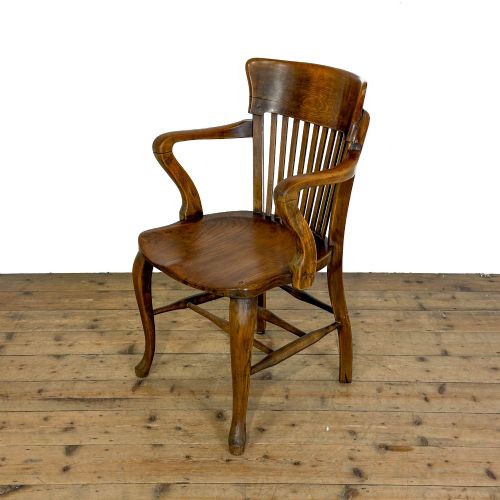
A traditional oak office seat is a sturdy working chair built for daily service at a desk or library table. Buyers searching this phrase will find a strong mix of desk chairs, armchairs, and office chairs dating from the nineteenth century through the early twentieth century.
The versions most commonly met on this page span the Victorian and Edwardian eras, incorporating Arts and Crafts influences alongside standard office forms. These pieces frequently feature swivel mechanisms, tilt actions, or robust elbow rests designed for long hours at a table.
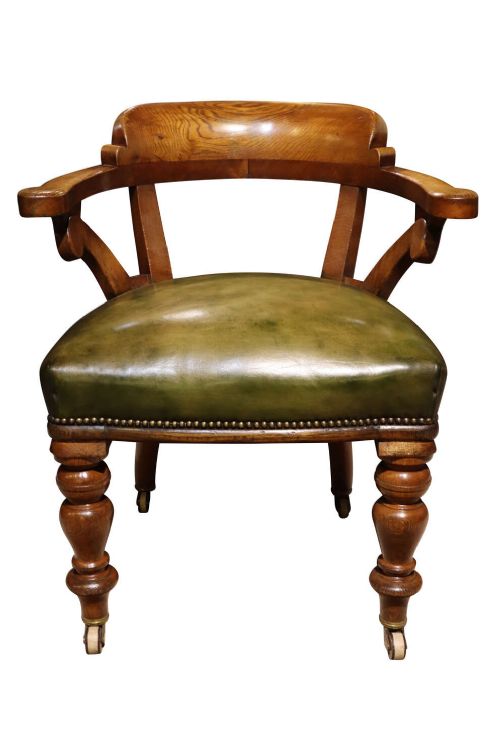
Makers utilised timber frames alongside secondary woods like beech and mahogany, mounting them on cast iron or metal hardware. Many examples pair a solid wooden seat or a leather upholstered pad with brass studs and casters for easy movement.
Construction and materials
Makers built these seats using solid oak for the primary frames, sometimes combining it with beech or mahogany components for turned spindles and curved backs. Joinery relied on traditional methods to ensure stability under constant movement.
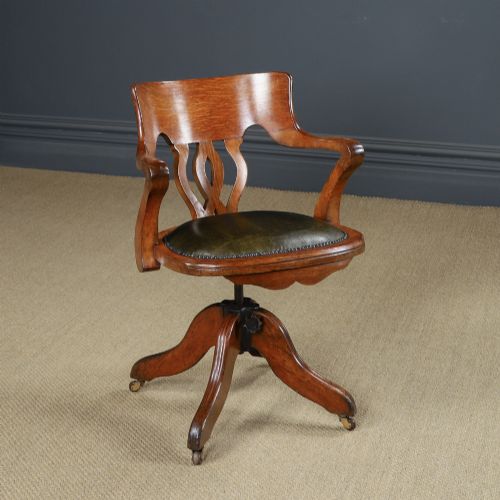
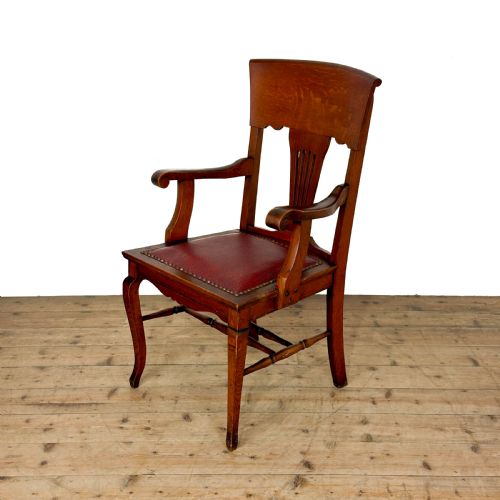
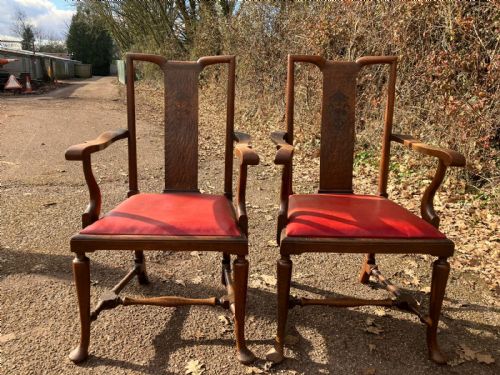
Upholstered versions incorporate leather inserts in green, tan, or red hides, secured with brass studs along the edges. Metal, brass, and cast iron hardware support the revolving and tilting mechanisms found on swivel desk chairs.
Traditional Oak Office Seat Retail Price Guide 2026
Typical asking prices for traditional oak office seat among the pieces listed under this phrase on Sellingantiques today, from the lower quarter to the upper quarter. They describe what is for sale here now, not the wider market.
Listings span from the Victorian period through the 1930s, showing a strong representation of Edwardian and Arts and Crafts styles.
Assessing quality and finish
Quality in these seats rests upon the integrity of the timber framing and the smoothness of any mechanical swivel or tilt actions. Better examples retain original iron and brass hardware that operates without excessive play in the spindle.
The depth of the grain and the condition of the leather upholstery also separate standard utility chairs from finer library armchairs. Original hide with honest wear holds more character than unsympathetic modern replacements.
The Traditional Oak Office Seat Glossary
- Captain's chair
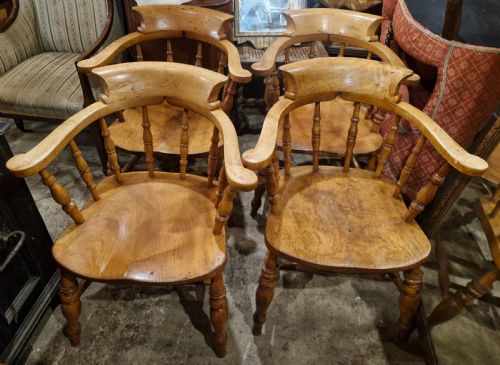
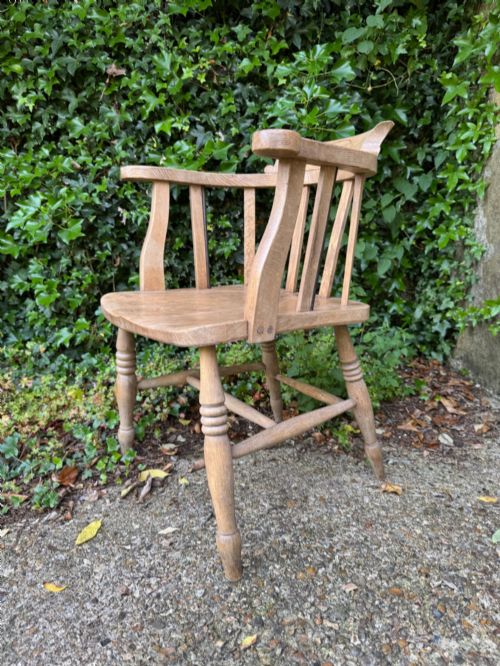
- A sturdy low-backed armchair with a rounded wooden top rail supported by spindles, designed for office or library use.
- Swivel desk chair
- A revolving seat mounted on a central iron spindle, often featuring a tilt mechanism for adjustable posture.
- Smokers bow
- A low wooden armchair with a continuous curved back rail and turned spindles, similar in form to a Windsor chair.
- Club elbow chair
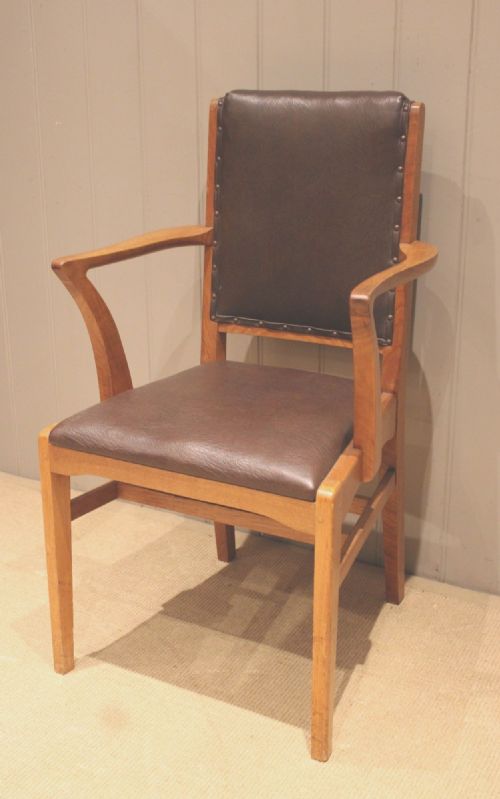
- A robust armchair with upholstered armrests and back, built for comfort in a study or library setting.
- Arts and Crafts
- A design movement favouring honest construction, simple geometric lines, and visible craftsmanship over heavy ornamentation.
Traditional Oak Office Seat: Frequently Asked Questions
Are these chairs comfortable for daily working?
Most of these designs offer strong lumbar support through curved wooden backs or upholstered pads.
Swivel and tilt functions allow users to adjust their seating position during long tasks.
How do I care for the leather seat?
Leather upholstery benefits from occasional conditioning to prevent the hide from drying out over time.
Keep these chairs away from direct heat sources to protect both the wood and the leather.
Do all these chairs swivel?
Swivel mechanisms appear on many twentieth-century and Edwardian desk chairs.
Fixed-leg options such as captain's chairs and library elbow chairs remain stationary.
How do I date an oak office chair?
Victorian and nineteenth-century examples often feature heavier turnings and simpler fixed frames.
Edwardian and later pieces frequently introduce complex cast iron swivel bases and lighter proportions.