

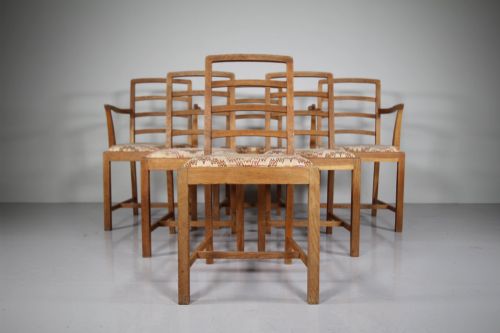
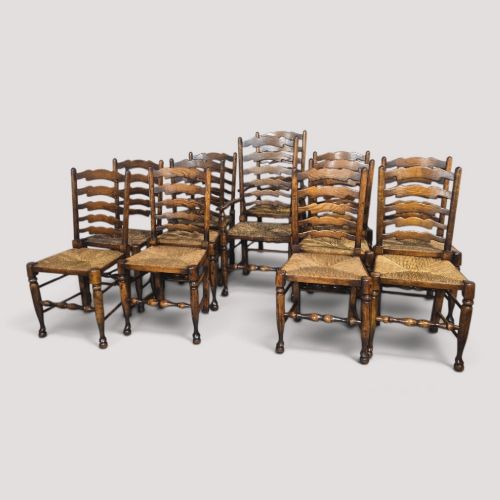
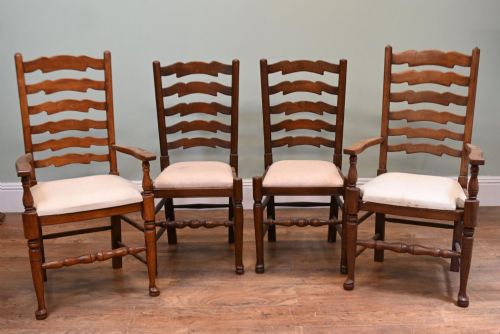
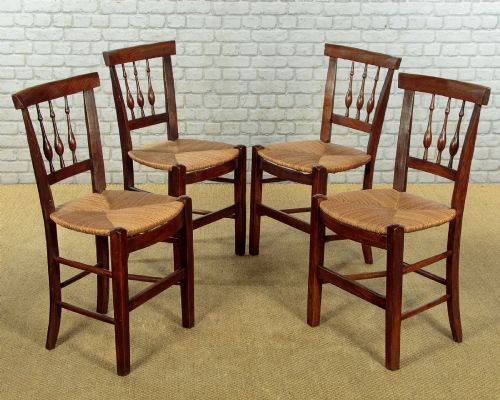
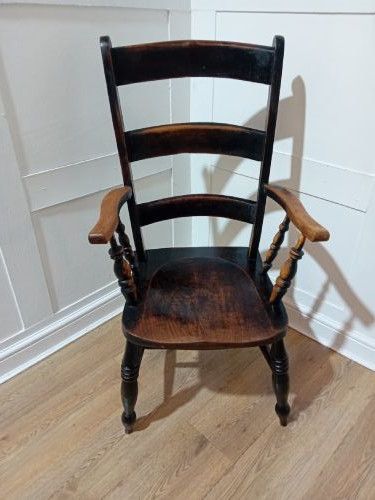
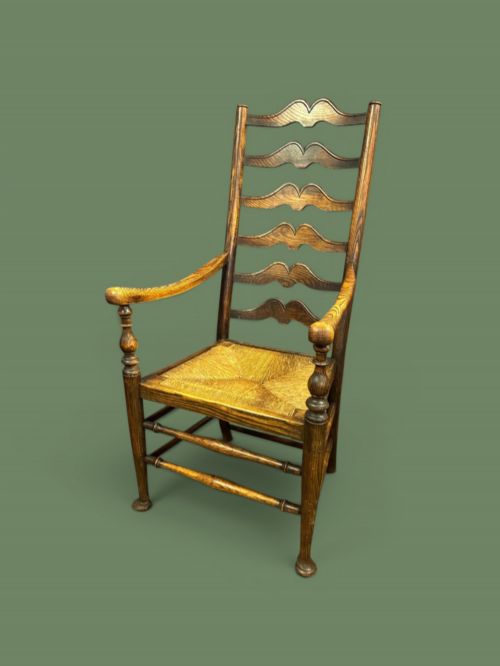

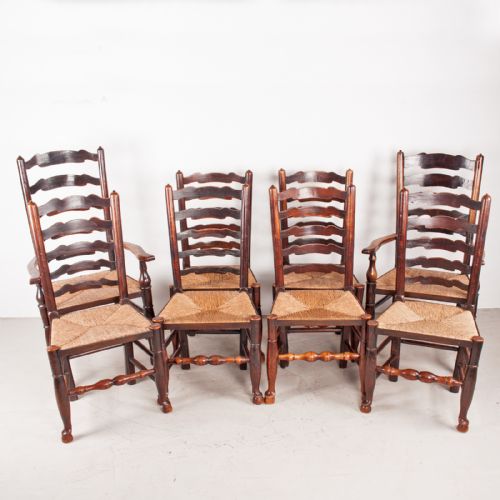
Traditional Oak Ladderback Chair
A traditional oak ladderback chair brings honest country craftsmanship and woven seating directly into the kitchen or dining room.
Traditional Oak Ladderback Chair
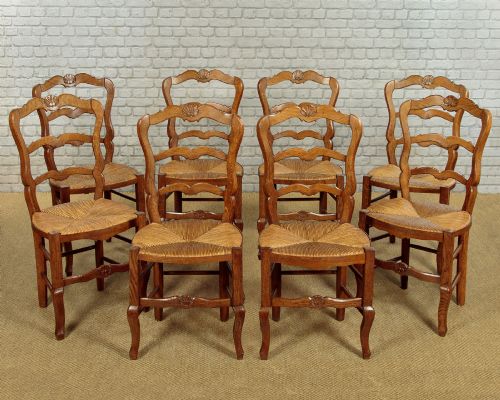
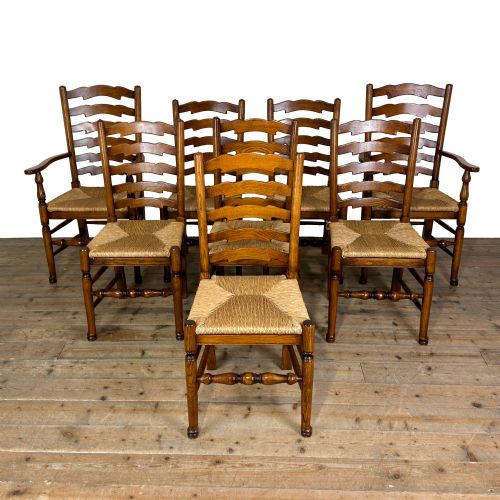
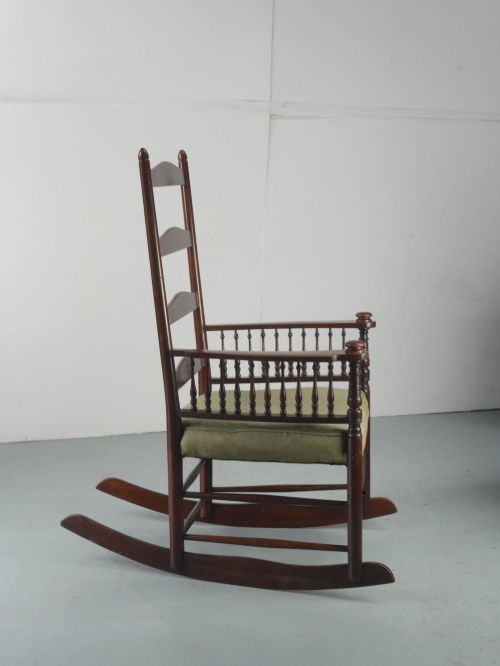
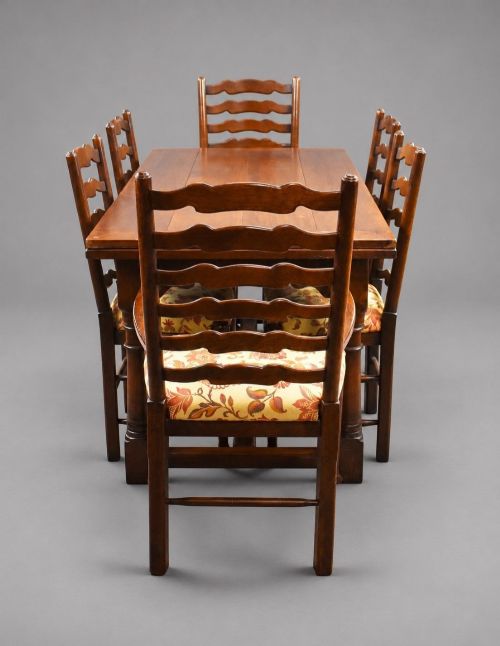
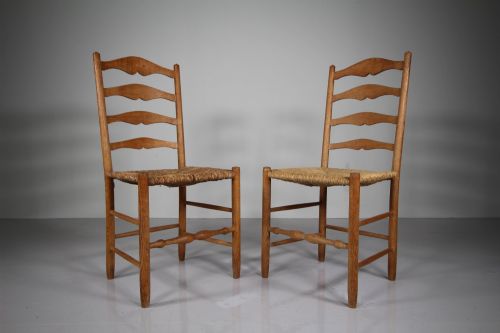
A traditional oak ladderback chair is a sturdy piece of country seating defined by horizontal slats between the rear uprights. These chairs appear in forms ranging from simple side chairs and carvers to large dining sets, rocking chairs, and children's high chairs.
The examples gathered here span centuries of vernacular making, from 18th-century Georgian pieces and 19th-century Victorian workshops to Arts and Crafts revivals of the early 20th century. Oak is the primary timber, often paired with elm, ash, or beech for structural components.
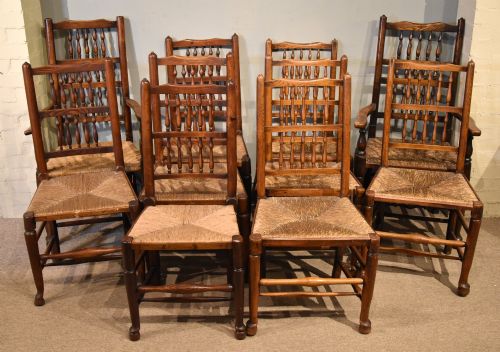
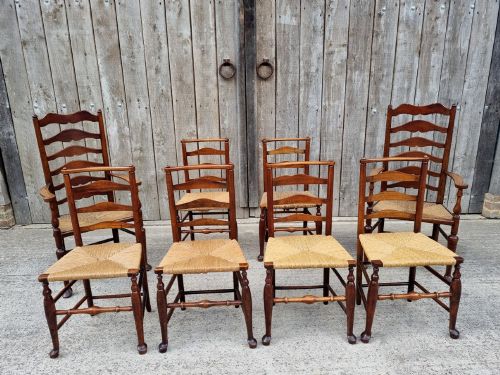
Buyers will encounter single chairs, pairs, and large matching or harlequin sets suitable for daily dining use. Many examples retain traditional woven rush seats alongside timber alternatives.
How they were made
Maker-joiners constructed these chairs using seasoned local timbers, turning spindles on a pole lathe and shaping ladder rails by hand. Traditional joints rely on mortise and tenon construction secured with wooden pegs.
Seats commonly feature hand-twisted river rush woven tightly around the seat frame to create a resilient surface. Some regional variations incorporate solid wood or woven fabric inserts instead of rush.
Traditional Oak Ladderback Chair Retail Price Guide 2026
Typical asking prices for traditional oak ladderback chair among the pieces listed under this phrase on Sellingantiques today, from the lower quarter to the upper quarter. They describe what is for sale here now, not the wider market.
Children's high chairs and miniature rockers scaled down for toddlers appear alongside full-sized dining carvers.
What varies in quality
Quality rests in the balance of proportions and the integrity of the turned components. Thicker, well-sculpted slats and robust rear posts show superior handling by the maker.
The tightness and neatness of the rush seating also indicate standard, as expert weaving remains firm under pressure over decades of use. Original surface patination elevates a piece above over-cleaned alternatives.
Dicon Nance·Lawrence Neal·Edward Gardener·Liberty and Co·Heals
The Traditional Oak Ladderback Chair Glossary
- Ladderback
- A chair design featuring horizontal slats or rails rising between the rear upright posts. These slats provide back support and define the vernacular aesthetic.
- Rush seat
- A seating surface woven from dried marsh grass twisted into cords. It offers a springy, durable platform common in country chairs.
- Harlequin set
- A collection of chairs that share a similar style, period, or maker but vary in minor details. These groups were gathered together over time rather than made as one original set.
- Carver
- An armchair, typically larger than a side chair, designed with armrests for the head of a table. In country sets, a pair of carvers often accompanies six or eight side chairs.
- Vernacular
- Everyday domestic furniture made by regional craftsmen rather than high-style urban cabinetmakers. These pieces prioritize local materials and practical function.
Traditional Oak Ladderback Chair: Frequently Asked Questions
How do I clean a rush seat?
Gently vacuum dust from the woven rushes using a soft brush attachment. Avoid applying excess water or harsh chemical cleaners, as moisture degrades natural dried grass.
Treat the timber frame separately with a dry or barely damp cloth. Linseed oil can nourish exposed oak parts when the wood appears dry.
Can I use these chairs daily?
These chairs were built for heavy kitchen and dining use and handle everyday sitting well. Solid timber joints and woven rush flex naturally under normal weight.
Check that peg joints remain firm before heavy use. Historic chairs benefit from gentle handling rather than harsh treatment.
What is a harlequin set?
A harlequin set consists of chairs matched by general style and period rather than a single workshop batch. Such groups formed organically as households collected matching chairs over time.
Harlequin sets offer variety while maintaining a cohesive dining room aesthetic. Look for matching heights and similar slat counts to ensure visual balance around a table.
How do I spot an Arts and Crafts piece?
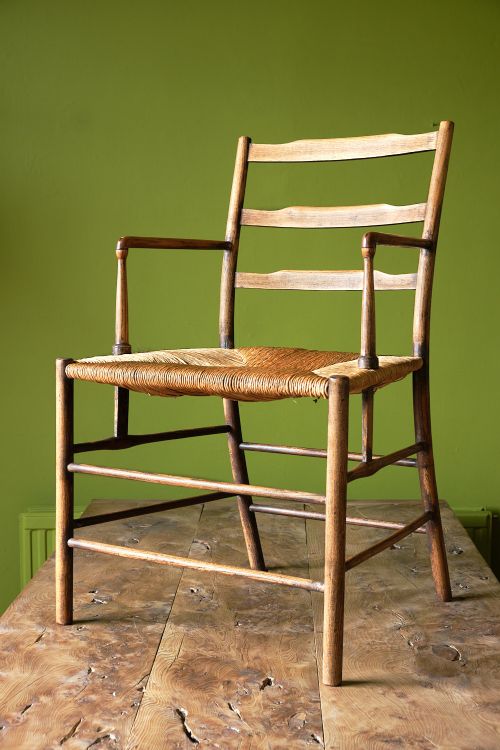
Arts and Crafts ladderback chairs often feature simpler, purposeful lines and prominent maker attribution. Workshops from the early 20th century emphasised honest construction and exposed joinery.
Examining labels, studio stamps, or distinct regional turning patterns helps identify these later revival pieces. They combine vernacular traditions with early modern design ideals.