





Traditional Oak Gate Leg
Traditional oak gate leg tables offer folding leaves supported by pivoting legs, providing adaptable surface space for dining and living rooms alike.
Traditional Oak Gate Leg
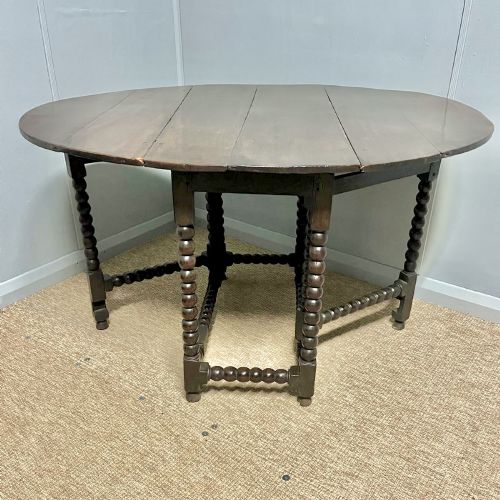
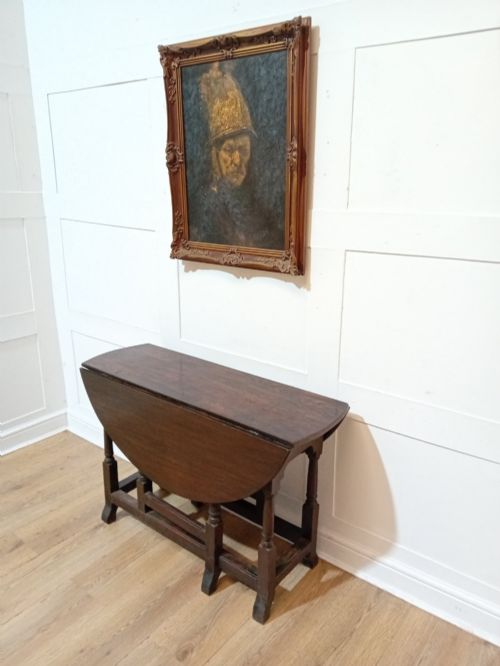
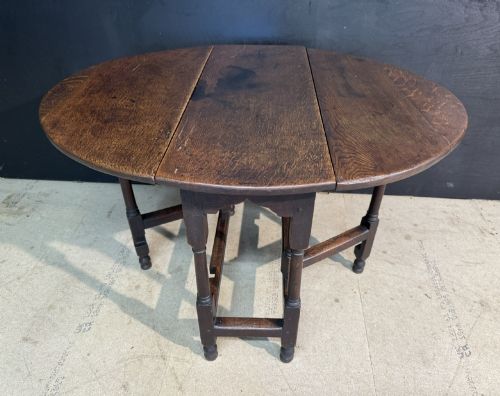
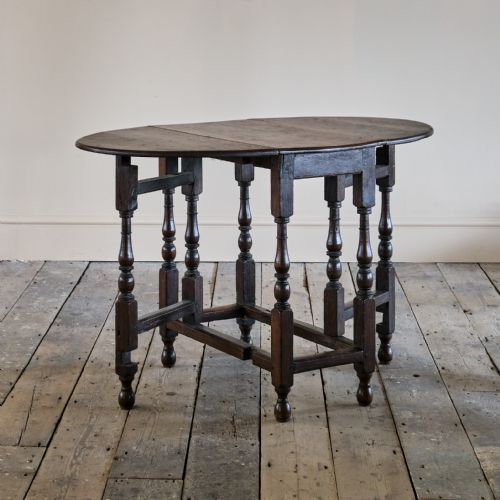
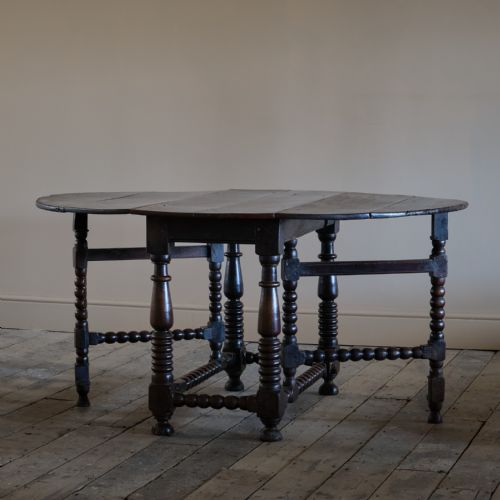
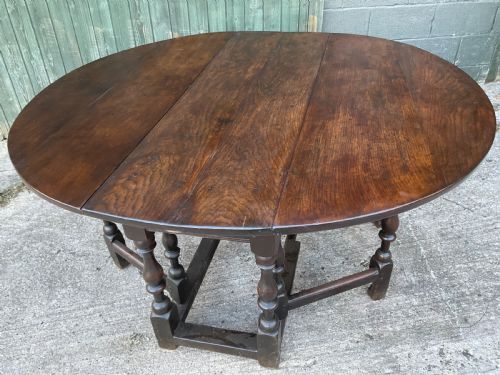
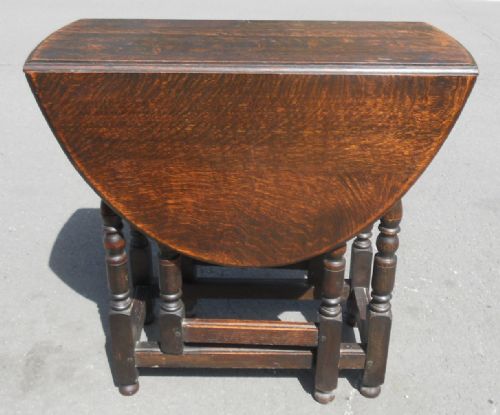
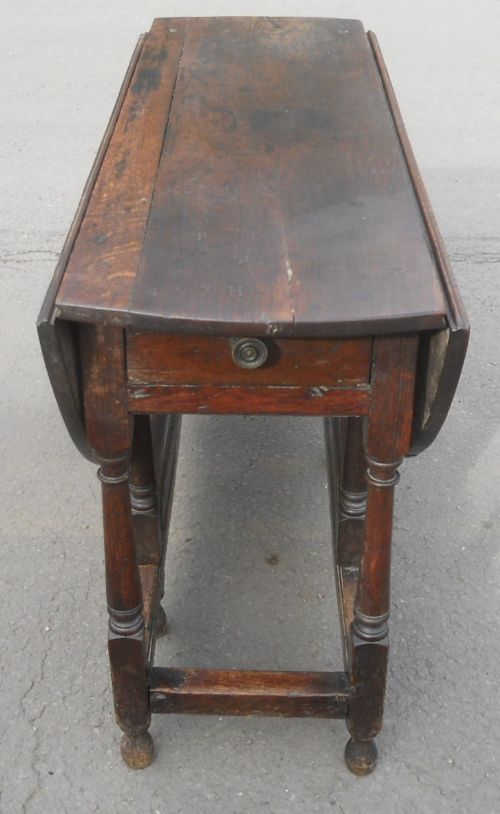
When you search for traditional oak gate leg, you encounter timber tables featuring hinged flaps that drop down or lift up to rest upon swing-out legs. These items span periods from the seventeenth century through to the twentieth century, taking the form of dining tables, coffee tables, and occasional tables.
The pieces appearing on this page demonstrate varied proportions, ranging from small side tables to large dining tables and wake tables. Their primary function remains the same across different eras, offering a compact footprint that expands when extra surface area is required.
Makers produced these designs in styles such as Jacobean, Georgian, and rustic farmhouse, utilising solid timber frames. Buyers find both antique examples dating back centuries and later revival interpretations.
How they were made
Carpenters constructed traditional oak gate leg furniture using solid oak timbers, often reinforced with iron or brass fixings for hinges and structural stability. The primary material provides a heavy, durable frame capable of supporting hinged flaps.
Turned supports and legs form a central part of the construction, sometimes featuring bobbin turning to shape the timber components. Joinery methods connect the fixed central underframe to the pivoting gate legs that swing outward to hold the leaves.
Traditional Oak Gate Leg Retail Price Guide 2026
Typical asking prices for traditional oak gate leg among the pieces listed under this phrase on Sellingantiques today, from the lower quarter to the upper quarter. They describe what is for sale here now, not the wider market.
Listings span periods from the seventeenth century through to 1960, featuring solid oak alongside brass and iron components.
What varies in quality
The grade of timber and the complexity of the leg turnings separate different examples of traditional oak gate leg furniture. Items featuring detailed bobbin turning display greater craftsmanship than plain supports.
Proportion and scale also dictate quality, with large dining tables requiring robust framing to support extended leaves without sagging. The smooth operation of the pivoting gate mechanism indicates precise initial carpentry.
The Traditional Oak Gate Leg Glossary
- Gateleg table
- A table with hinged leaves supported by legs that swing outward like a gate. This design allows the surface to fold down compactly when not in use.
- Bobbin turning
- A method of woodturning that produces a series of rounded spheres or discs resembling bobbins along the length of a leg or stretcher. This decorative detail appears frequently on seventeenth-century pieces.
- Wake table
- A large variant of the gate leg table, designed to seat many people for feasts or gatherings. These large formats utilise multiple folding leaves and extra support legs.
- Jacobean style
- An architectural and decorative style spanning the early seventeenth century, characterised by dark oak timber and geometric panel relief. Pieces from this period often display robust construction.
- Occasional table
- A small, movable table used for specific, temporary tasks around a room. Versions of this type include coffee tables and side tables.
Traditional Oak Gate Leg: Frequently Asked Questions
How do I use a gate leg table daily?
You keep the leaves folded down against the sides to save floor space in a smaller room.
When you need extra surface area for dining or working, you swing the pivoting legs outward and lift the flaps into place.
Can I seat six people at an oak gate leg table?
Larger formats, particularly dining and wake tables dating from the seventeenth and eighteenth centuries, provide ample clearance and surface area for multiple diners.
Smaller occasional or coffee table versions suit placement beside seating rather than meal service.
How do I distinguish seventeenth century oak tables?
Early examples typically display heavy solid oak construction, hand-carved details, and specific turnings such as bobbin shapes.
Later nineteenth-century and revival pieces often exhibit cleaner lines and different patination on the timber surfaces.
Are these tables sturdy when fully extended?
The structural stability depends on the tight fit of the pivoting gate mechanism and the weight of the solid oak leaves.
Properly aligned swing legs bear the downward pressure evenly, keeping the extended surface level.