
Traditional Oak Display
Traditional oak display pieces bring honest timber and glass into a room to hold books, china and collections.
Traditional Oak Display
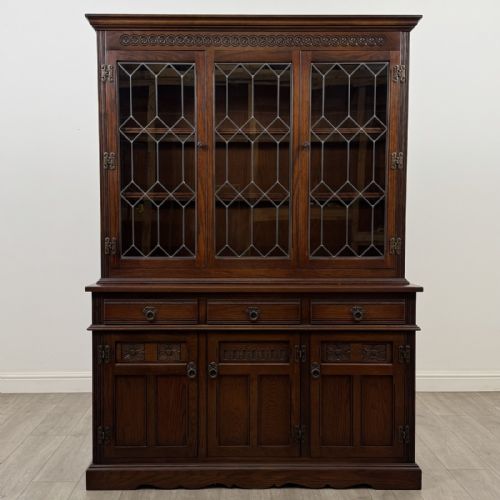
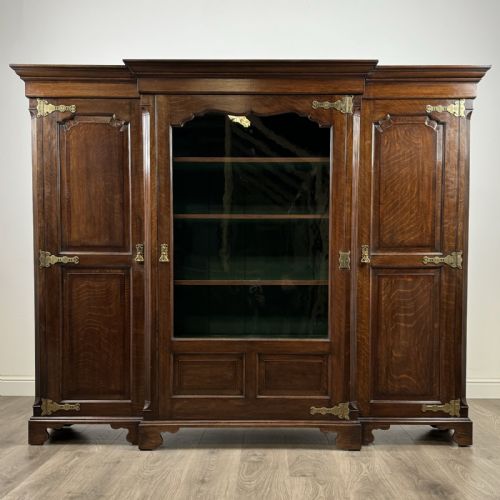
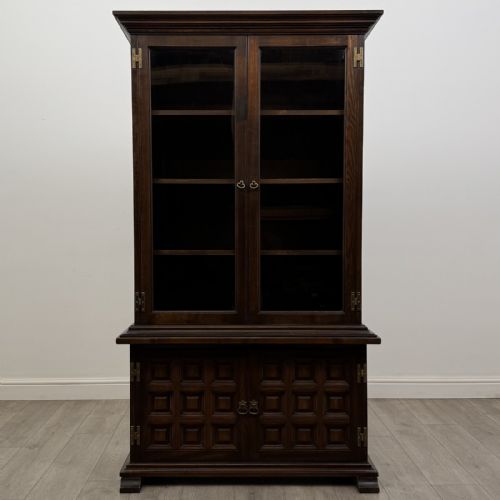
A traditional oak display groups together glazed cabinets, open bookcases, plate racks and dressers designed to exhibit and store domestic belongings. These items span periods from the eighteenth century through the Victorian era and into the Edwardian decades, reflecting shifting domestic fashions.
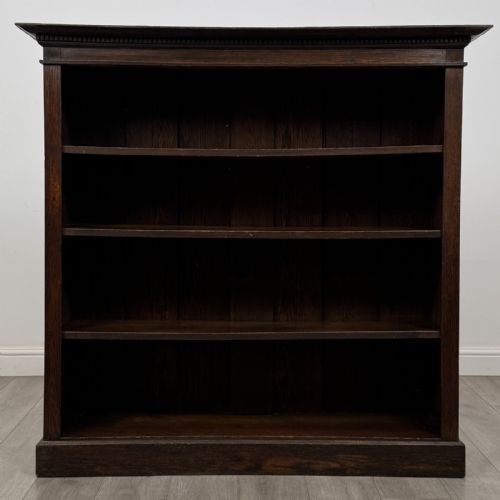
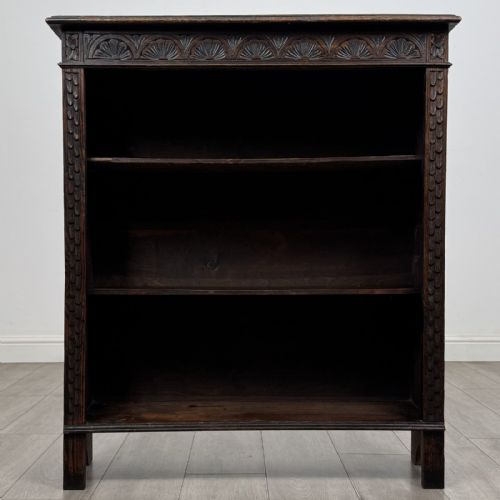
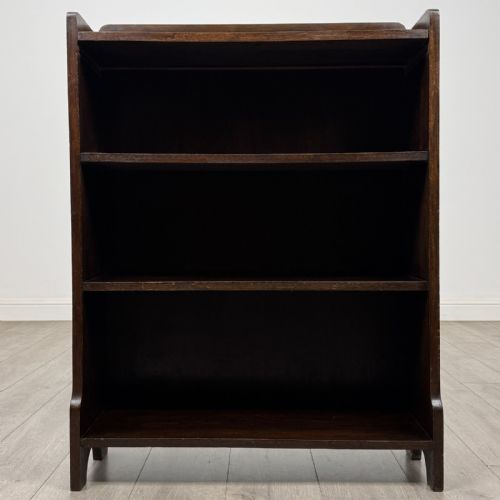
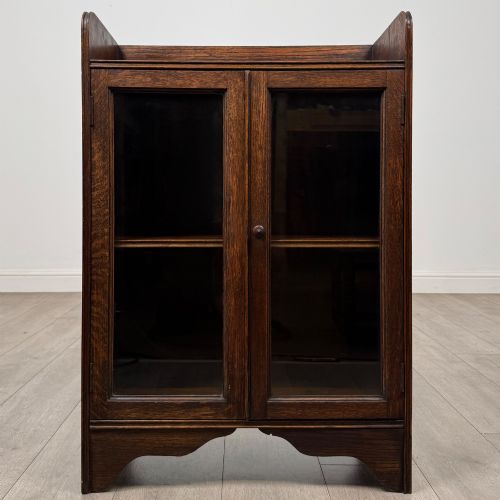
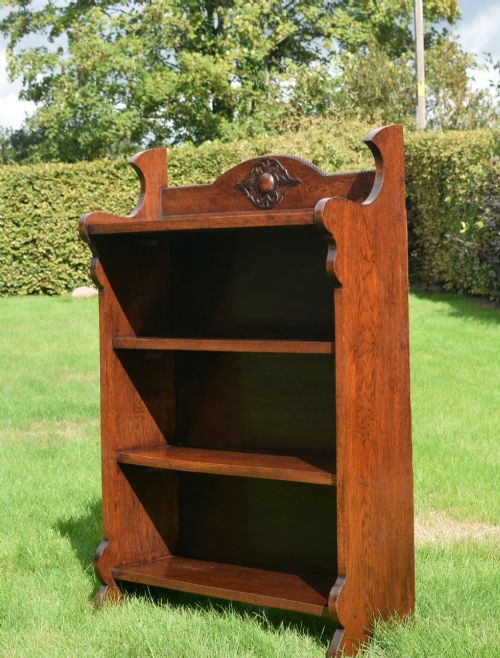
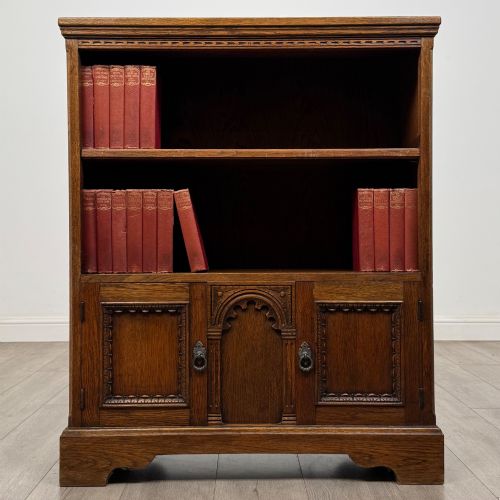
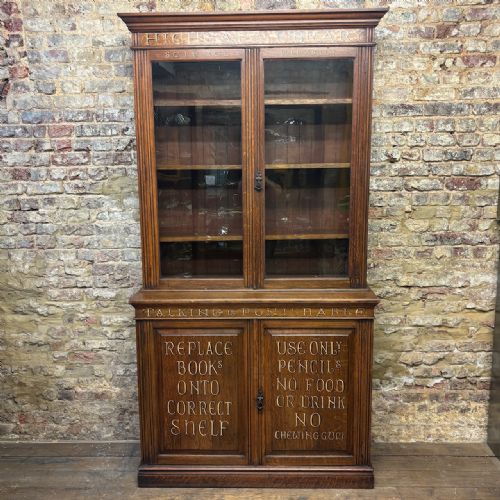
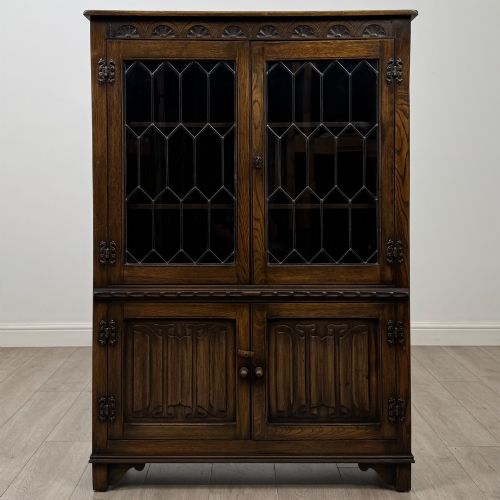
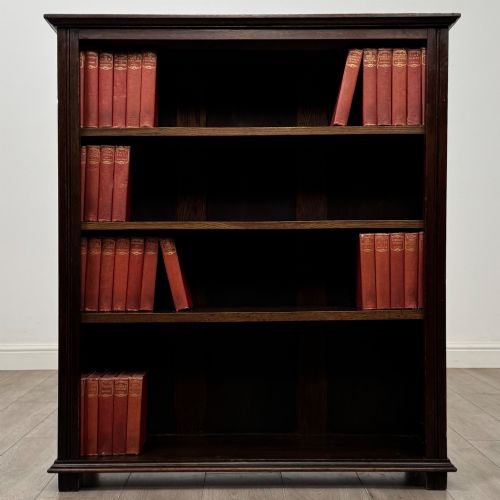
Bookcases and display cabinets form the majority of the examples encountered, frequently utilising solid timber construction with glass panelling. Buyers will find both compact open shelves and large glazed cupboards intended for living spaces and libraries.
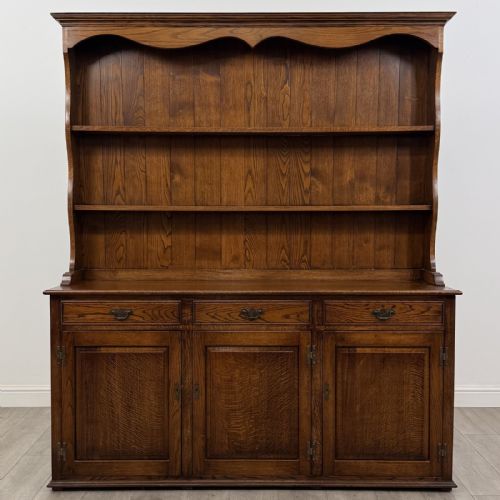
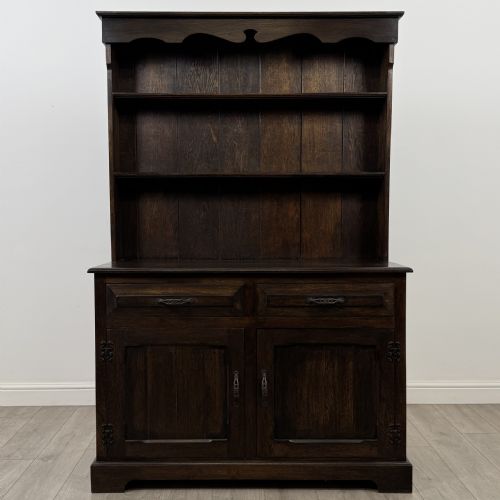
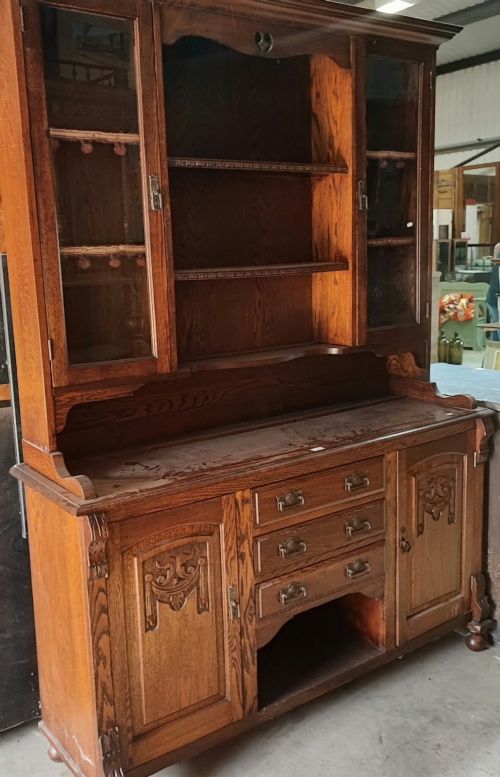
Regional forms such as Welsh dressers also appear, combining lower storage cupboards with upper plate racks or display shelving. These varied forms provide practical utility alongside period character.
How they were made
Makers built these pieces primarily from solid oak, sometimes incorporating mahogany or secondary woods, alongside brass hardware, iron fittings and lead light elements. Glazed doors utilised fitted glass panels to protect books and ceramics while maintaining visibility.
Construction techniques combined traditional joinery with carved detailing, linenfold panels and applied mouldings, particularly in pieces styled after Jacobean and Tudor revivals. Timber surfaces received polished finishes that highlighted the natural grain and golden tones of the oak.
A tiny jewelled clock cased in wood sits quietly among the heavy bookcases, keeping watch over the centuries of timber.
What varies in quality
The standard of timber selection and carving execution determines the calibre of a piece, distinguishing mass-produced items from finely worked examples. Dense grain figuring in tiger oak or golden oak elevates visual appeal.
The refinement of original brass fittings, bevelled glass and adjustable shelving systems indicates the level of craftsmanship invested in the cabinetmaking. Structural integrity in the joints and doors ensures longevity.
The Traditional Oak Display Glossary
- Welsh dresser
- A traditional kitchen and dining room storage form featuring a base of cupboards or drawers surmounted by open plate racks. These units evolved to display pewter, ceramics and delftware.
- Linenfold
- A style of relief carving used on wooden panels to imitate folded fabric or linen. This decorative motif appears frequently in revival furniture.
- Tiger oak
- Oak timber displaying prominent medullary ray figuring that resembles the stripes of a tiger. This distinct grain pattern is prized for its decorative effect.
- Delft rack
- An upper shelf unit designed specifically to display plates and earthenware dishes upright against a wall. They form the upper section of traditional dressers.
- Corner cupboard
- A triangular cabinet designed to fit neatly into the corner of a room, saving floor space while providing display or storage behind a single door.
Traditional Oak Display: Frequently Asked Questions
What is a traditional oak display cabinet used for?
These cabinets serve to store and exhibit books, decorative ceramics and treasured collections behind protective glass doors.
They keep items dust-free while allowing them to remain visible in living rooms, studies and hallways.
How do I identify an Edwardian oak bookcase?
Edwardian bookcases typically date from around 1900 to 1910, often displaying lighter golden oak tones and simple revival detailing.
Many feature adjustable shelves and slender proportions suited to smaller domestic spaces of that period.
Are these bookcases suitable for modern homes?
The sturdy construction and warm timber tones of these pieces allow them to integrate easily into contemporary interiors.
Open bookcases and narrow display units fit practical storage needs without overwhelming a room.
What is the difference between a dresser and a bookcase?
A dresser combines a lower enclosed cupboard or sideboard base with upper display shelving or a plate rack.
A bookcase consists primarily of vertical shelving units for holding books, though some include glazed doors.