





Traditional Oak Dining Server
These substantial traditional oak dining server pieces bring grounded character to a room, offering robust storage and historic presence for modern homes.
Traditional Oak Dining Server
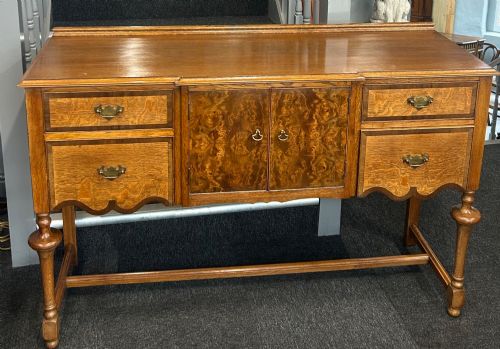
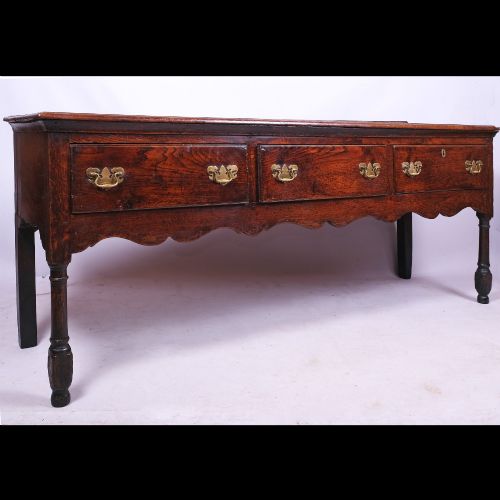
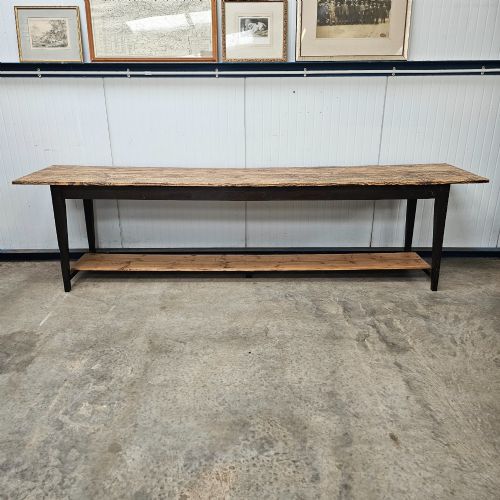
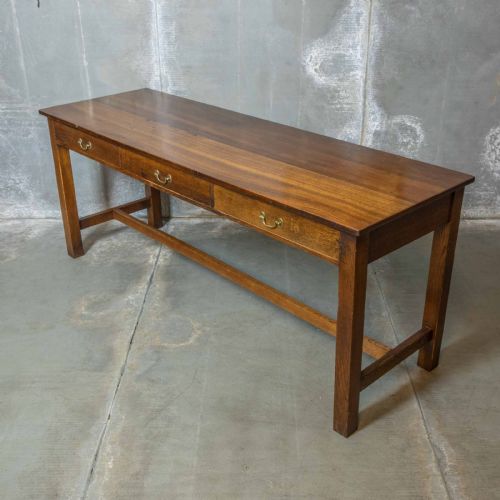
When searching for a traditional oak dining server, you encounter robust storage furniture primarily spanning the eighteenth, nineteenth, and early twentieth centuries. These items generally take the form of sideboards, dresser bases, and court cupboards designed for domestic dining spaces.
The selections available here lean heavily into solid construction, featuring styles from the Jacobean Revival and Queen Anne periods alongside simpler English country and rustic farmhouse forms. Oak remains the central material defining these substantial dining room pieces.
How they were made
Cabinet makers utilised solid oak timbers, occasionally accented with burr walnut or pollard oak veneers on decorative surfaces, to build these heavy storage units. Construction often involved traditional joinery techniques paired with hand-carved panels.
Metal hardware in brass or iron served practical and decorative functions, appearing on drawer pulls, drop handles, and hinges across various periods from the Victorian era onwards.
Traditional Oak Dining Server Retail Price Guide 2026
Typical asking prices for traditional oak dining server among the pieces listed under this phrase on Sellingantiques today, from the lower quarter to the upper quarter. They describe what is for sale here now, not the wider market.
Listings span periods from the 18th century through to the 1930s, utilising oak alongside brass, glass, and burr walnut.
What varies in quality
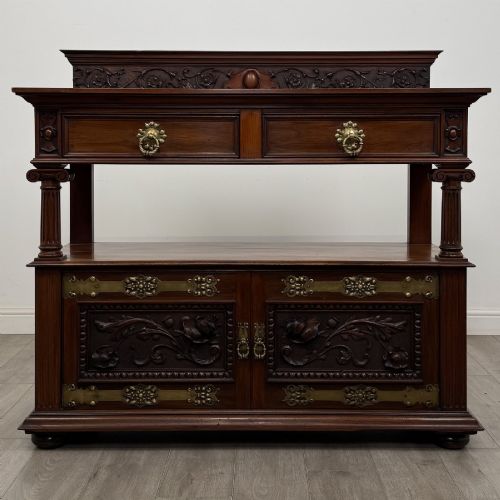
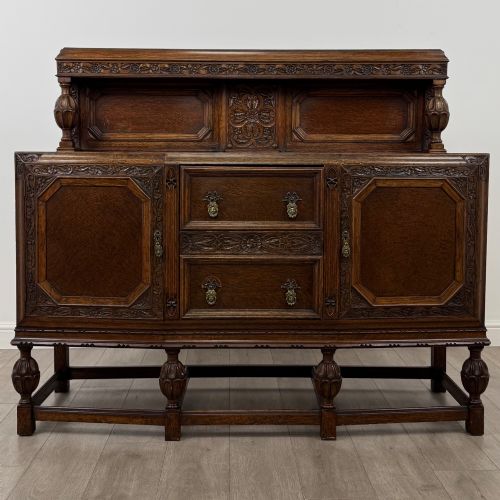
The depth and crispness of hand-carving distinguish standard production from superior examples, particularly within Revival pieces where ornamental detail defines the visual weight. Grain selection in the primary timber also dictates the overall finish.
Integrity of construction in the main carcase and drawers separates functional pieces from those possessing finer decorative proportions and heavier historic stock.
The Traditional Oak Dining Server Glossary
- Dresser base
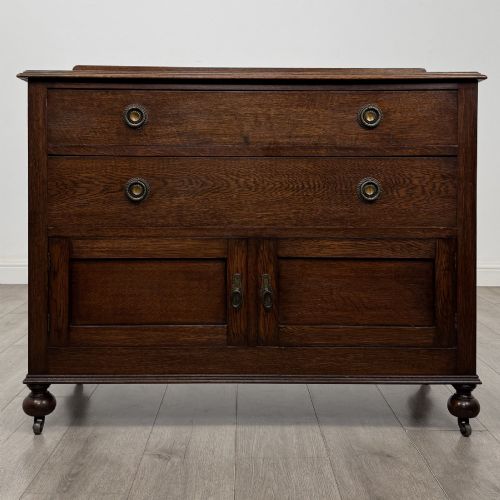
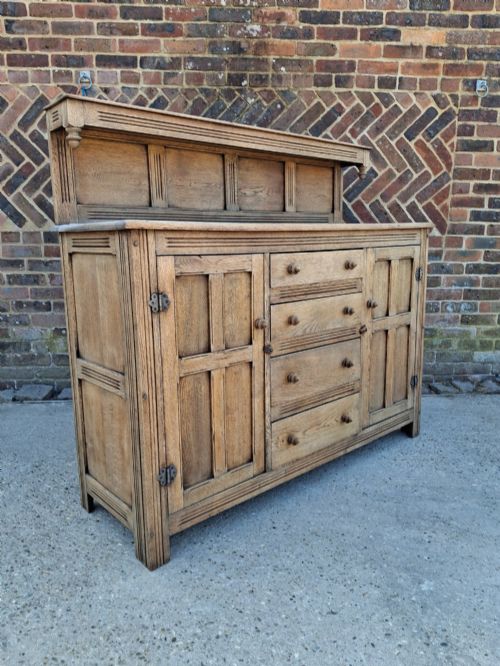
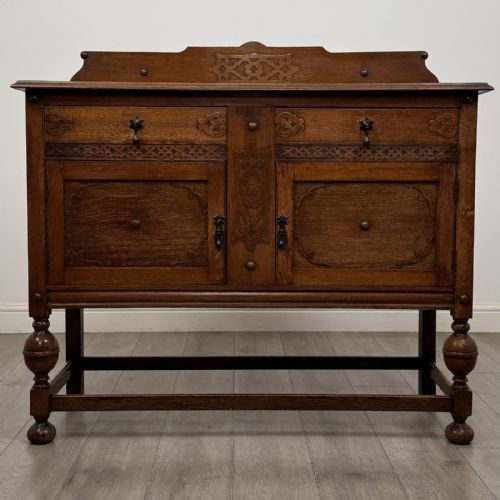
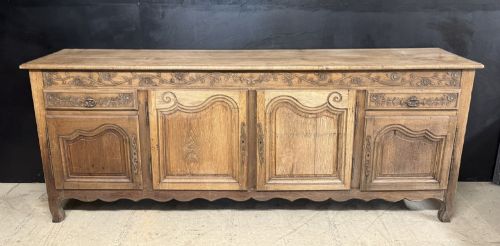
- A low wooden storage unit featuring drawers and cupboards, traditionally used for food preparation and serving in dining rooms. These pieces form a significant portion of early oak furniture.
- Court cupboard
- An enclosed historic cabinet featuring upper and lower tiers, often elaborately carved with Jacobean motifs. They provide substantial height and decorative presence in a room.
- Pollard oak
- Timber taken from trees that have been pollarded, producing a heavily knotted and highly figured grain pattern. This material was selected for prominent veneered surfaces on Victorian pieces.
- Refectory table
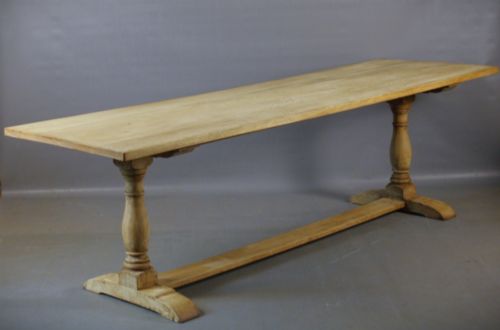
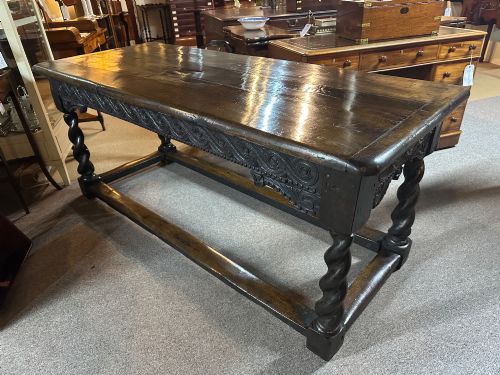
- A long, narrow dining table historically designed for communal dining halls. Examples in this category combine sturdy oak frames with elongated proportions.
Traditional Oak Dining Server: Frequently Asked Questions
How are dresser bases used today?
These low storage units function exceptionally well as sideboards in modern dining rooms or hallways, providing deep drawers and cupboard space for tableware and linens.
Their flat top surfaces also offer practical staging areas for serving food or displaying lamps and decorative objects.
What defines Jacobean Revival style?
This design movement draws inspiration from seventeenth-century English furniture, incorporating geometric mouldings, heavy turned legs, and deep strapwork carving.
Pieces from this stylistic group often display dark finishes and pronounced structural proportions.
How do I care for antique oak furniture?
Maintain the timber by keeping pieces away from direct heat sources and sudden humidity changes to prevent the wood from splitting. Regular dusting with a soft cloth preserves the natural finish without requiring heavy polishing.
Applying a traditional beeswax occasionally helps nourish older oak surfaces.
What is pollard oak?
Pollard oak refers to timber taken from trees pruned close to the trunk, which creates a tightly swirled and highly decorative grain pattern. Cabinet makers valued this wood for feature panels on nineteenth-century sideboards.
It contrasts with straight-grained oak to add visual depth to large case pieces.