
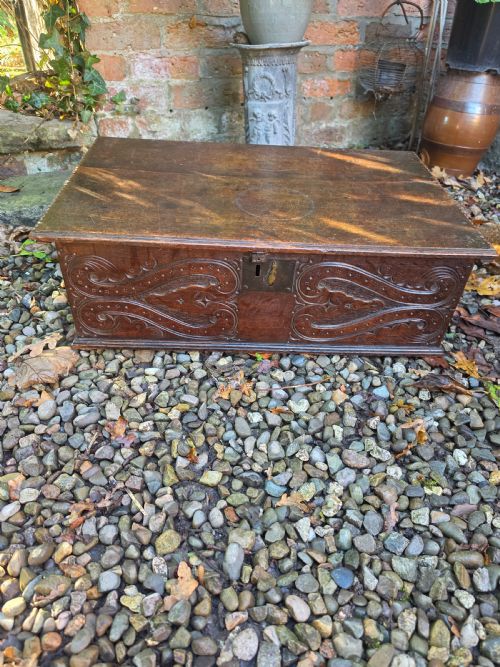
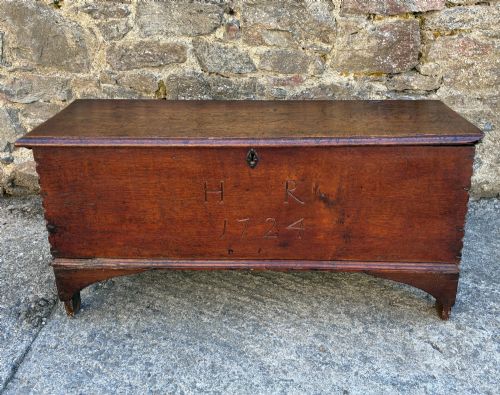
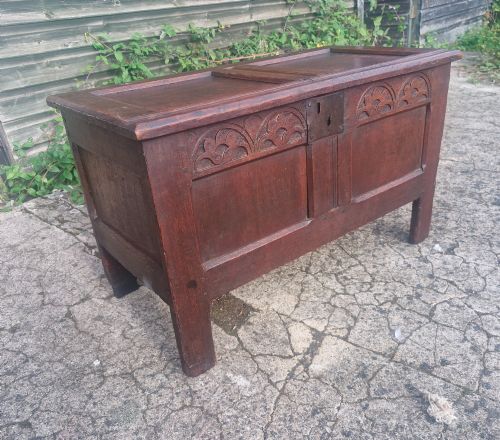
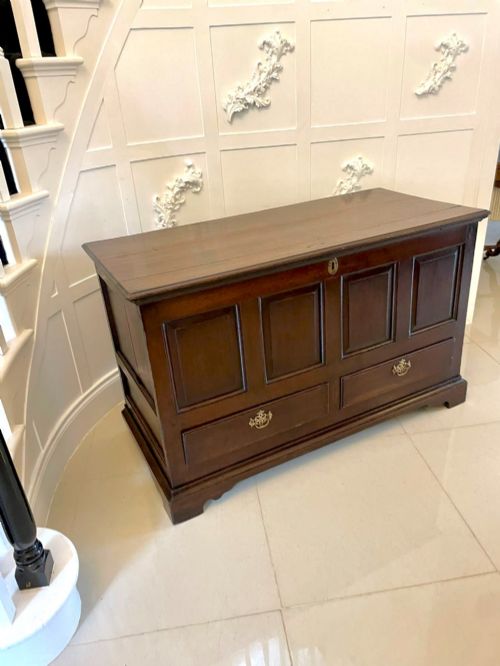
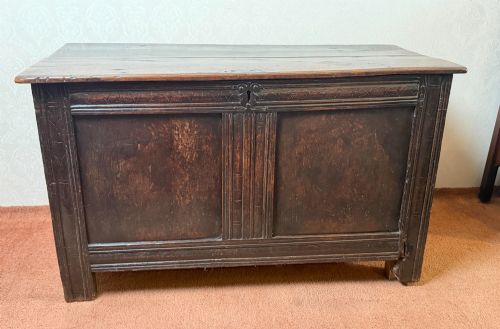
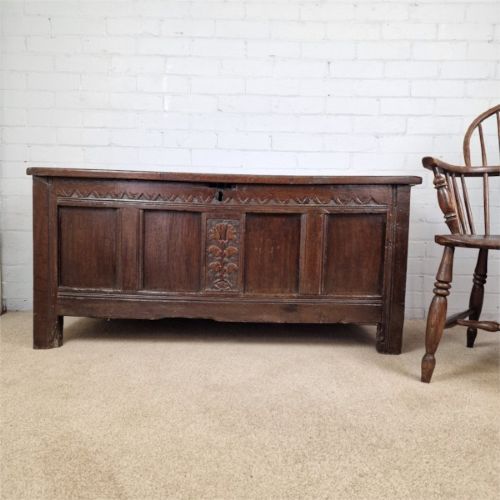
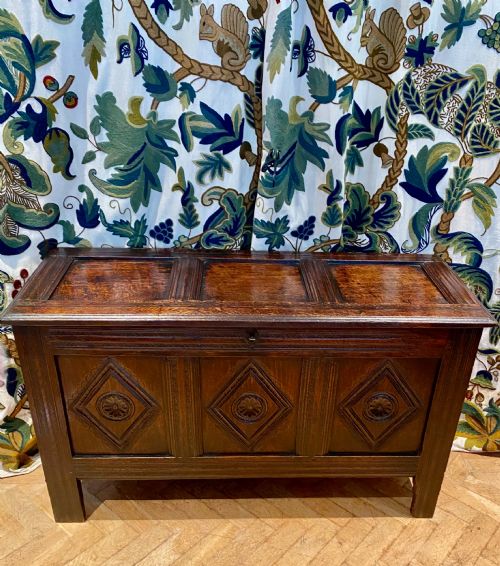
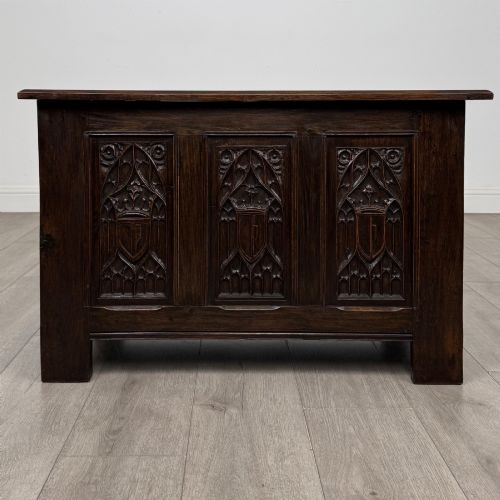
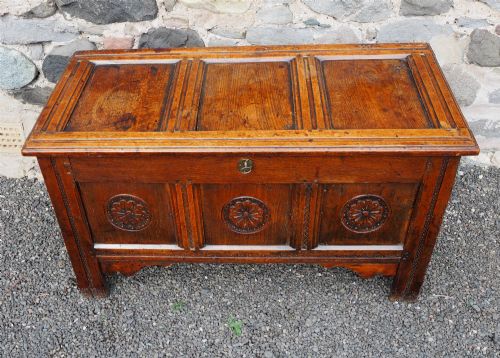
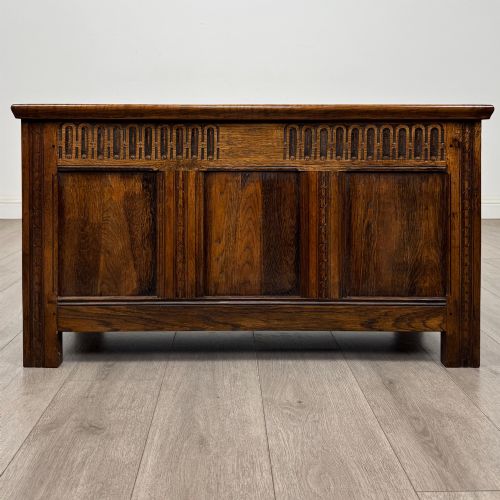

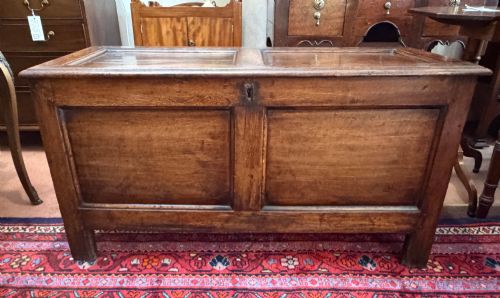
Traditional Oak Blanket Coffer
A traditional oak blanket coffer provides robust storage while anchoring a room with centuries of honest craftsmanship and heavy timber.
Traditional Oak Blanket Coffer
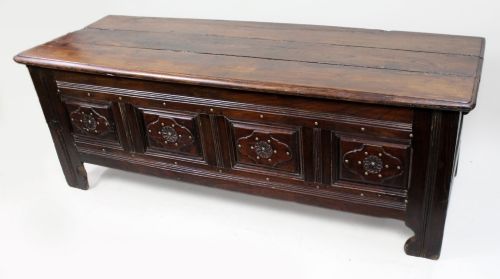
A traditional oak blanket coffer serves as a sturdy timber chest designed originally for household storage and bedding. The pieces you encounter here span several distinct periods, reaching from sixteenth century examples through seventeenth century joined constructions and eighteenth century Georgian forms into twentieth century revivals.
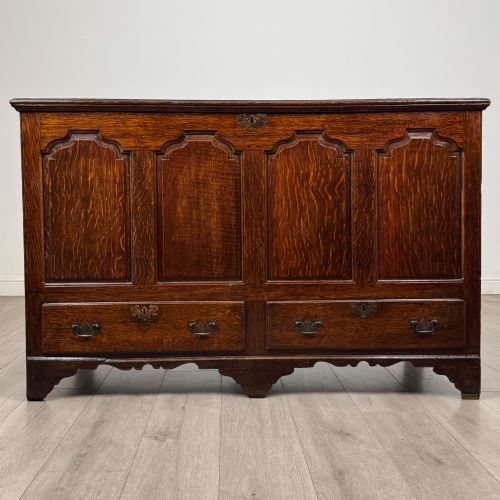
Most items on this page belong to the seventeenth and eighteenth centuries, alongside Georgian and later revival periods up to the 1930s. Alongside standard coffers, the selection includes mule chests featuring lower drawers, coffer bach variants, and panelled blanket boxes.
Origins range across English regional workshops like Dorset, Wales, and Carmarthenshire, alongside continental French provincial pieces. These chests display practical utility that suited domestic life across centuries of rural and urban use.
Materials and construction
Makers relied primarily on solid oak, frequently augmented with burr elm panels, mahogany crossbanding, and pine secondary woods. Iron and brass hardware such as hinges, straps, and lock plates secured the heavy lids and structural joints.
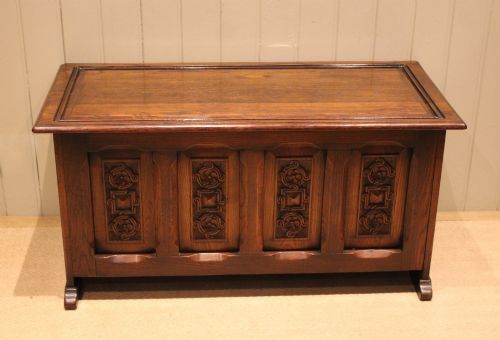
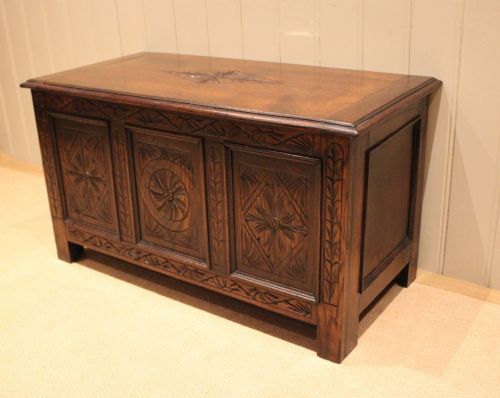
Joinery methods defined the build quality, utilising framed panel construction and joined framing rather than simple nailing. Carving and inlay decorated the exterior surfaces of many examples, while simpler pieces relied on the clean grain of the timber.
Listings feature solid oak, burr elm, mahogany, and iron, spanning periods from the sixteenth century through the 1930s revival eras.
Distinctions in quality
The standard of a traditional oak blanket coffer depends heavily on the integrity of its timber and the ambition of its joinery. Pieces featuring crisply executed period carving and well-proportioned panel framing sit distinctly above plain or heavily altered examples.
The survival of original hardware, feet, and lid hinges distinguishes superior survivals. Differences also emerge in the choice of secondary woods and the sophistication of regional details, such as crossbanded mahogany accents or burr elm inserts.
The Traditional Oak Blanket Coffer Glossary
- Coffer
- A heavy wooden chest used historically for storing valuables, textiles, and blankets. These pieces typically feature a hinged lid and robust board or panel construction.
- Mule chest
- A storage chest that combines a blanket box compartment with one or more lower drawers. This form became popular during the Georgian period.
- Joined oak
- Furniture construction utilising mortise and tenon joints locked with wooden pegs. This method superseded earlier simple board construction.
- Crossbanding
- A decorative border technique where veneer strips are laid perpendicular to the main grain. This is often seen on Georgian mule chests.
Traditional Oak Blanket Coffer: Frequently Asked Questions
What is a coffer bach?
A coffer bach is a miniature version of the traditional blanket chest originating from Wales. These smaller boxes were frequently made as wedding gifts or tokens of affection.
They share the robust construction methods of larger coffers but scale down the proportions for domestic tabletop or low shelf placement.
How do mule chests differ from coffers?
Mule chests add one or more drawers beneath the main lift-lid storage compartment. This development made stored items accessible without clearing objects off the top of the lid.
They appear frequently in eighteenth century Georgian contexts featuring oak and mahogany details.
Where were these chests made?
Production took place across English regional workshops, Welsh counties like Carmarthenshire, and French provincial centres. Local timber availability dictated whether makers used native oak, burr elm, or pine.
Regional joinery traditions often reveal the specific geographic origin of an unmarked piece.
How should I care for an antique oak chest?
Maintain stable indoor humidity levels and keep wooden chests away from direct heat sources and strong sunlight. Gentle cleaning with appropriate wax helps preserve the finish of the historic timber.
Avoid heavy modern polishes that can build up on carved surfaces and obscure the grain.