




Traditional Newspaper Rack
A traditional newspaper rack keeps daily reading organised, offering sturdy wood and brass designs that bring quiet period character to a room.
Traditional Newspaper Rack
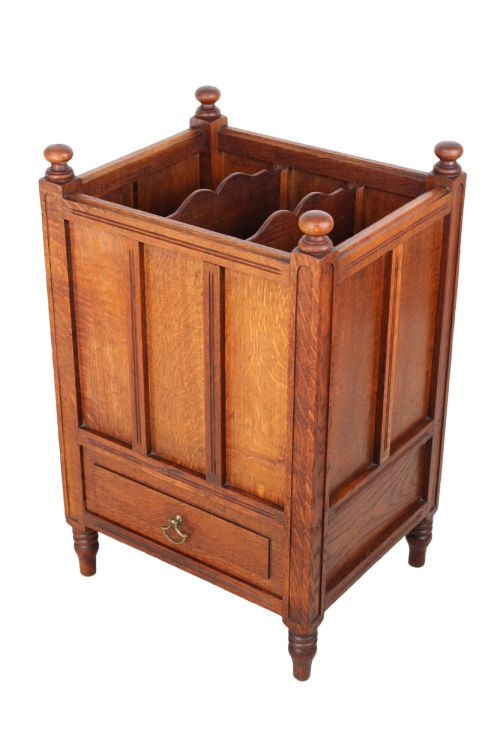
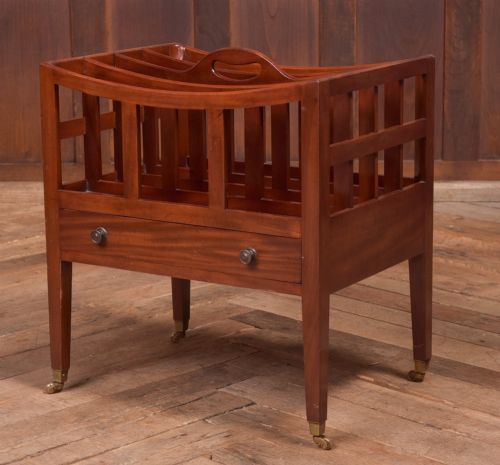
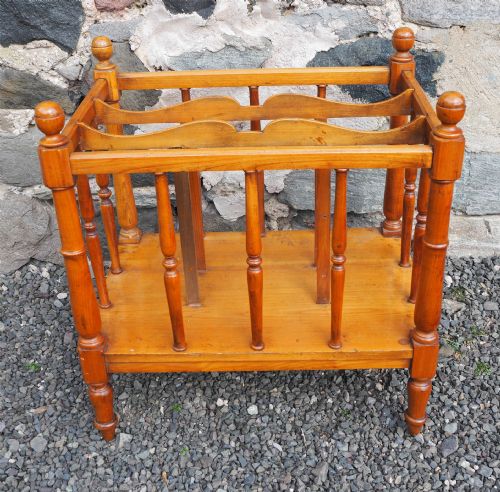
When buyers search for a traditional newspaper rack, they encounter freestanding furniture pieces designed to hold periodicals, newspapers, sheet music, and magazines in domestic spaces. These pieces serve as practical storage items that keep living areas tidy while displaying reading material close to seating furniture.
The selections span several distinct historical eras, with Edwardian pieces appearing alongside 19th Century examples and earlier Regency designs. Formats range from compartmented canterburys to revolving bookstands and simple tiered magazine holders.
Mahogany remains the dominant wood across the inventory, frequently accompanied by oak, rosewood, fruitwood, and brass elements. Buyers most commonly meet mahogany canterburys and Edwardian oak versions when browsing these listings.
How they were made
Cabinetmakers utilised solid timbers and selected veneers, including flame mahogany veneer and satinwood inlay, to construct the frames and slatted dividers of these stands. Joinery methods relied on traditional cabinet construction to support the weight of stacked papers and books.
Metal components such as brass appeared regularly, forming structural stands, carrying handles, or revolving mechanisms on specialised pieces like bookcases and magazine racks. These materials were combined to create durable stands capable of daily domestic use.
Traditional Newspaper Rack Retail Price Guide 2026
Typical asking prices for traditional newspaper rack among the pieces listed under this phrase on Sellingantiques today, from the lower quarter to the upper quarter. They describe what is for sale here now, not the wider market.
Early newspaper stands ensure your daily broadsheets no longer live in a chaotic heap upon the sofa.
What varies in quality
The distinction between standard examples and finer pieces rests upon the selection of timber figures, such as flame mahogany or figured rosewood, and the crispness of inlaid details like satinwood. Cabinet work that incorporates finely turned spindles, carefully joined slats, and substantial brass mounts demonstrates higher workmanship.
Proportion and scale also dictate quality, where oversized designs or harmonious multi-tier structures show more ambitious craftsmanship than simpler utility pieces. The integrity of the original joints and the warmth achieved through polished timber surfaces further distinguish superior examples.
The Traditional Newspaper Rack Glossary
- Canterbury
- A low freestanding stand fitted with partitions for holding sheet music, newspapers, or periodicals, often featuring a carrying handle and small legs.
- Satinwood inlay
- A decorative technique using contrasting light-coloured wood inserted into the primary timber surface to create linear or geometric patterns.
- Flame mahogany veneer
- A thin slice of wood cut from a mahogany log where the grain pattern resembles flickering flames, prized for its decorative appearance.
- Regency
- A British design period spanning the early nineteenth century characterised by classical influences, refined proportions, and dark timbers like rosewood and mahogany.
Traditional Newspaper Rack: Frequently Asked Questions
What is a canterbury?
A canterbury is a low stand with upright partitions designed specifically to hold newspapers, magazines, and sheet music off the floor. They usually include a carrying handle at the top.
These pieces originated in the eighteenth century and remained popular through the Victorian and Edwardian eras as practical furniture for the drawing room.
How were newspaper racks used?
These stands were placed beside armchairs or sofas to keep daily newspapers, journals, and sheet music tidy and within reach. They allowed households to manage loose paper materials before the advent of modern storage.
Today, they serve a similar function while adding period woodwork and brass detail to contemporary living spaces.
What woods were used?
Maker workshops predominantly utilised mahogany, oak, and rosewood, occasionally incorporating fruitwood and satinwood inlay for decorative contrast. Brass was also utilised for handles, stands, and revolving mechanisms.
These durable materials ensured the stands could support heavy stacks of paper during daily domestic use.
How do I date a rack?
Dating relies on identifying the prevailing style, construction techniques, and timber choices, such as Edwardian oak work or Regency rosewood pieces. Details like satinwood inlay or flame mahogany veneer often point to specific design periods.
Comparing the form against documented furniture styles from the nineteenth and early twentieth centuries clarifies the likely period of manufacture.