
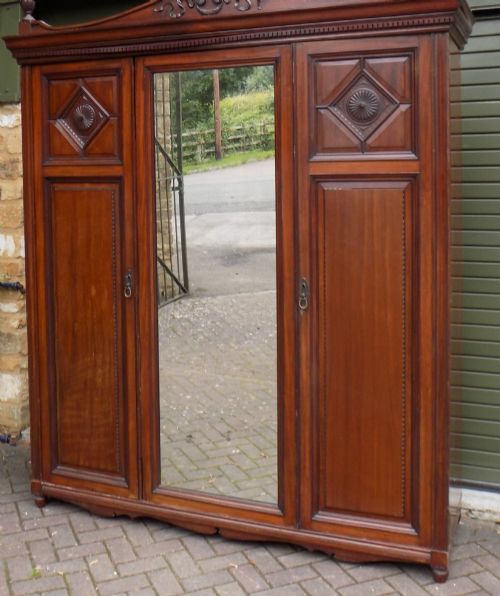
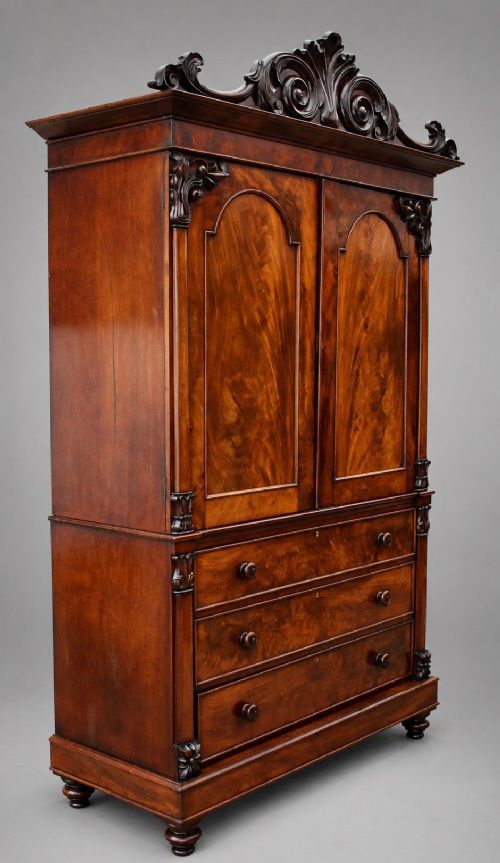


Traditional Mahogany Press
A traditional mahogany press provides substantial linen storage and hanging space, anchoring a bedroom with deep timber grain and classical proportions.
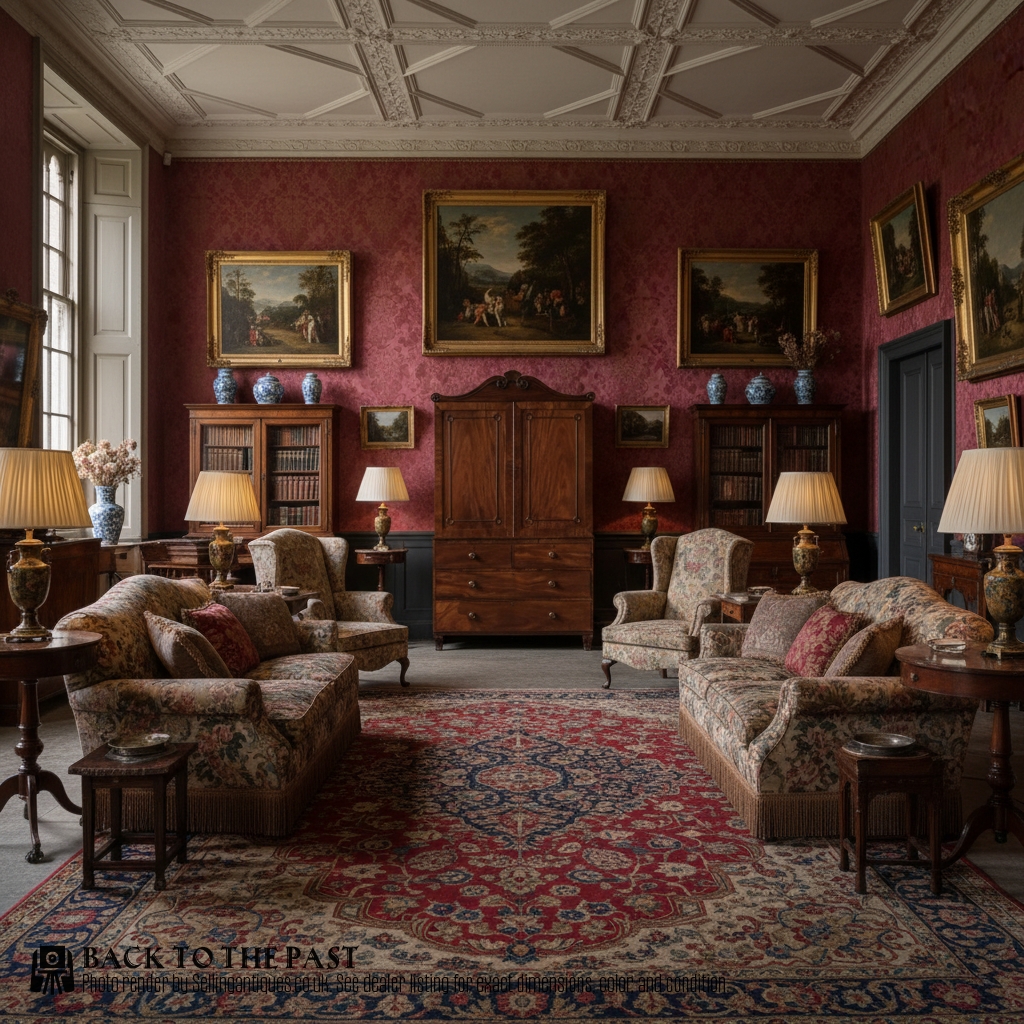
Traditional Mahogany Press
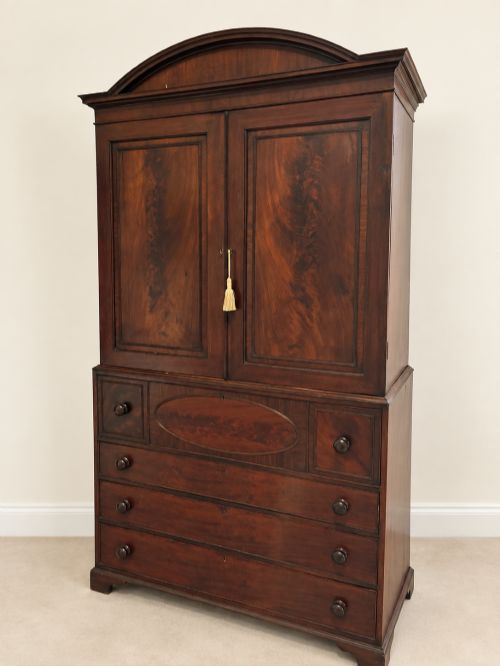
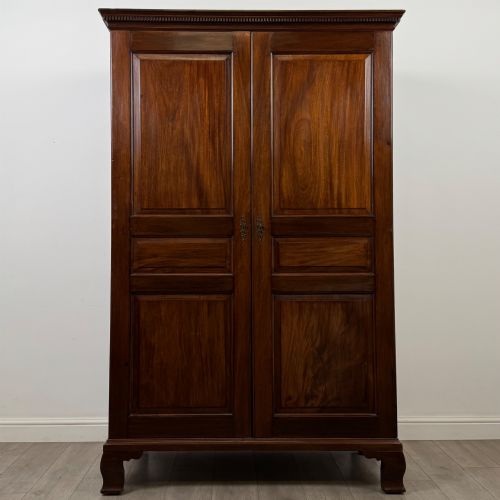
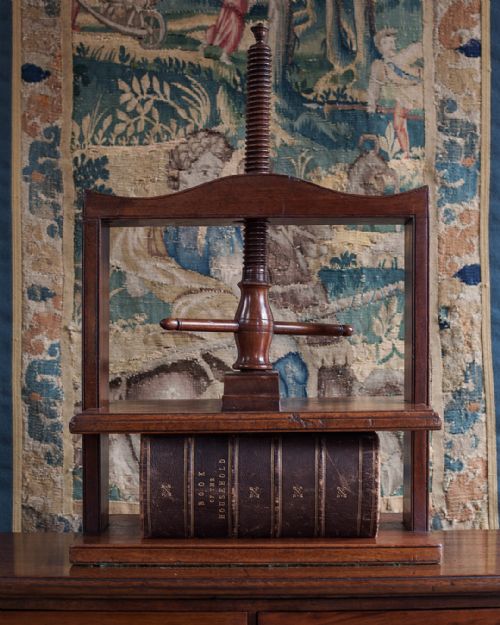
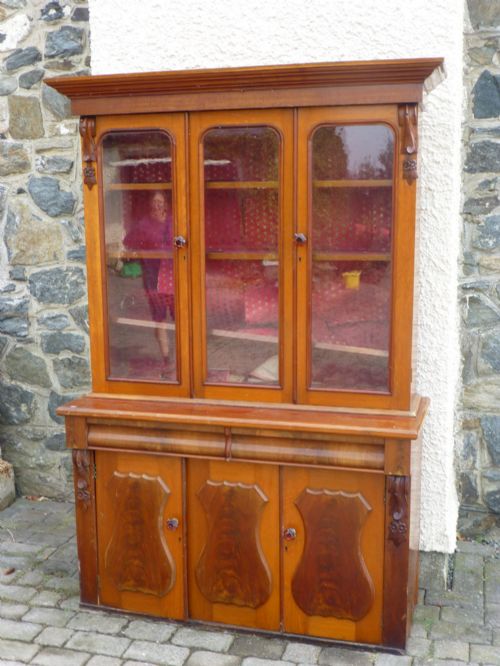
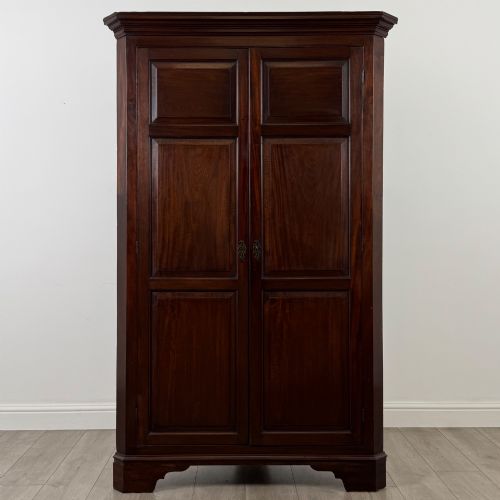
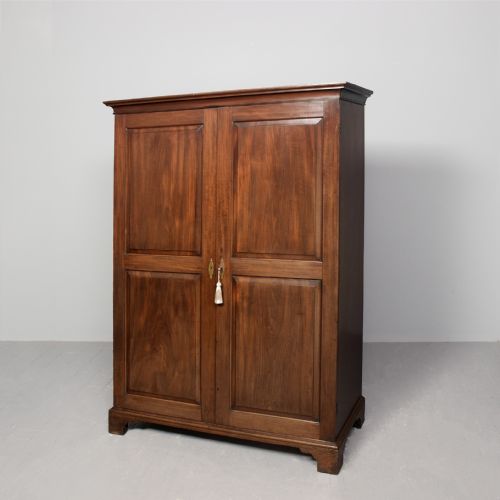
A traditional mahogany press primarily designates large case furniture designed to store garments and linens, spanning the eighteenth, nineteenth, and early twentieth centuries. When searching for a traditional mahogany press, buyers encounter forms ranging from compact linen cupboards to extensive breakfront wardrobes and tall kitchen dressers. These items emerge from Georgian, Regency, William IV, and Victorian periods, showcasing regional British craftsmanship as well as continental Dutch examples.
The objects combine upper storage sections, often featuring sliding trays or bookshelves, with deep lower drawers or hanging compartments beneath panelled doors. Buyers most frequently meet two-door and triple-door variations rendered in dense tropical timber, alongside specialised book presses and corner cabinets. Each piece reflects the domestic storage needs of past eras, translating utilitarian utility into architectural furniture.
How they were made
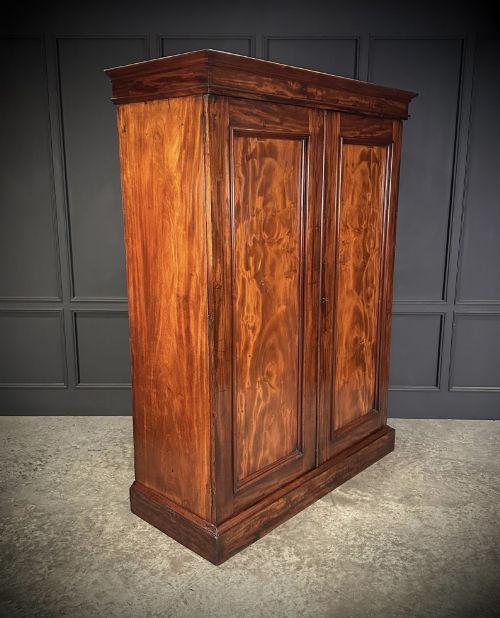
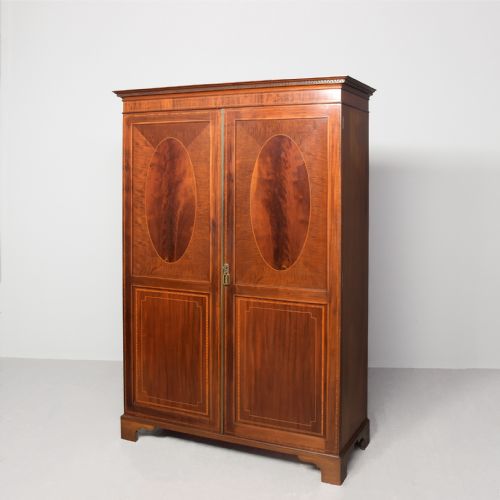
Cabinetmakers constructed these frames primarily using solid mahogany and flame mahogany veneer, supported by secondary timbers like oak for internal drawer linings and carcass framing. Skilled joiners applied intricate boxwood inlay and utilised brass hardware for handles, escutcheons, and hinges. Surface finishing relied on hand-applied French polish or wax to accentuate the rich figure of the wood.
Structural integrity depended on traditional joinery techniques, including dovetailing for drawers and mortise and tenon joints for door frames. Large wardrobes and breakfront presses were frequently built in modular sections to facilitate transport through domestic hallways, allowing heavy timber carcases to be assembled on site.
Several cupboards still retain their original brass hanging pegs, hand-forged to hold heavy woolen waistcoats in quiet readiness.
What varies in quality
Quality in these large case pieces rests upon the selection and matching of timber veneers, particularly the use of symmetrical flame mahogany across primary panel surfaces. Superior examples demonstrate rigorous grain continuity, crisp carving on cornices and pilasters, and substantial brass mounts that remain original to the piece.
Proportion and internal architectural arrangement also define the upper tier of the market, distinguishing standardised regional work from master cabinetmaker production. The smoothness of sliding internal trays, the alignment of heavy panelled doors, and the depth of the timber patination separate utilitarian storage from exceptional decorative art.
The Traditional Mahogany Press Glossary
- Flame mahogany
- A veneer cut from the fork of the mahogany tree where the branch meets the trunk, creating a distinctive swirling pattern that resembles flickering flames. Cabinetmakers reserved this figure for the most prominent door panels.
- Linen press
- A tall piece of case furniture featuring an upper cupboard with sliding wooden trays intended for flat textiles, positioned above a chest of drawers. Later iterations adapted this internal framework for garment hanging.
- Breakfront
- A piece of furniture where the central section projects forward from the flanking wings, creating a pronounced architectural rhythm across the facade. This layout is common in large nineteenth-century wardrobes and libraries.
- Compactum
- A multi-functional wardrobe designed to maximise storage by combining hanging space, shelves, and small drawers within a single unified carcass. These pieces appeared in the later nineteenth and early twentieth centuries.
- Dovetail
- A traditional interlocking joint used to secure drawer corners together without metal fasteners, utilising wedge-shaped pins and tails. The tightness and regularity of these joints indicate the maker's hand.
Traditional Mahogany Press: Frequently Asked Questions
What is a traditional mahogany press used for?
These pieces served historically to store folded linens, household textiles, and garments in large domestic bedrooms and dressing rooms.
Today, buyers utilise the deep internal shelves and hanging spaces for modern wardrobe storage while bringing historic timber character into the room.
How do I date a mahogany press?
Dating relies on examining the architectural style, hardware, secondary woods, and construction methods visible inside the drawers and carcass.
Georgian pieces display restrained classical lines, whereas Victorian and Edwardian examples often feature heavier breakfront proportions and wider door configurations.
Are these presses difficult to move?
Many of these large pieces were deliberately constructed in modular sections, allowing the upper cornice, central carcass, and base drawers to separate.
Professional removal ensures the heavy timber and delicate veneers remain undamaged during transport and reassembly in a new home.
How do I care for mahogany furniture?
Maintain the timber by keeping it away from direct heat sources and strong sunlight, which can dry out the wood and fade the polish.
Applying a traditional beeswax periodically helps nourish the surface and preserve the deep reddish-brown patination acquired over centuries.