


Traditional Mahogany Office Furniture
Traditional mahogany office furniture combines rich timber and practical workspace design, offering solid utility and period character for a home study.
Traditional Mahogany Office Furniture
Traditional mahogany office furniture centres on pieces designed for writing and storage, primarily pedestal desks, writing tables, and partners desks dating from the nineteenth and early twentieth centuries. These items originate from Victorian, Edwardian, and Georgian Revival periods, reflecting the heavy demand for functional study and office pieces during those eras.
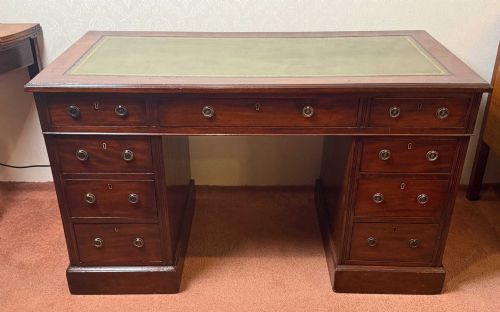
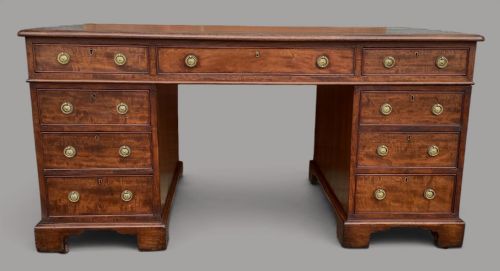
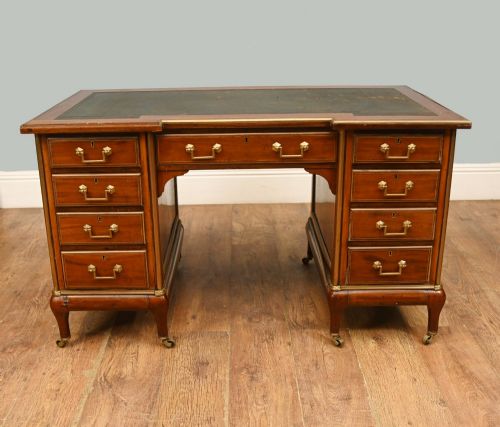
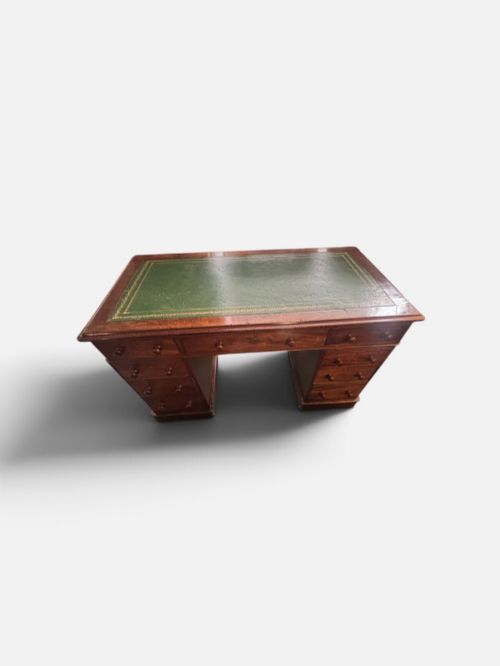
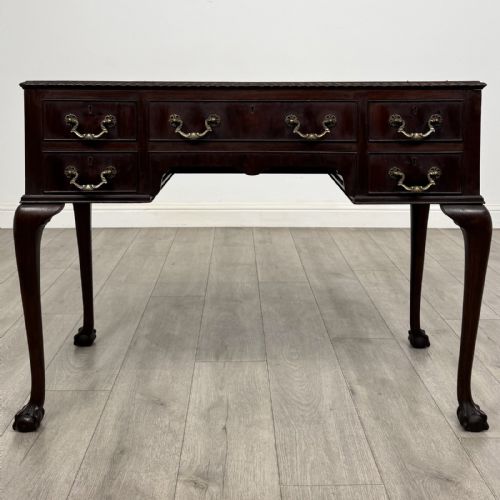
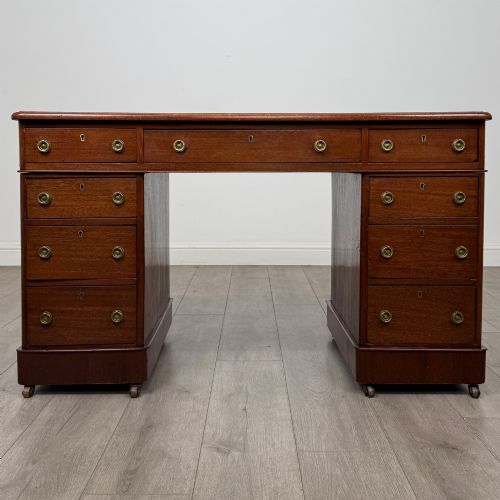
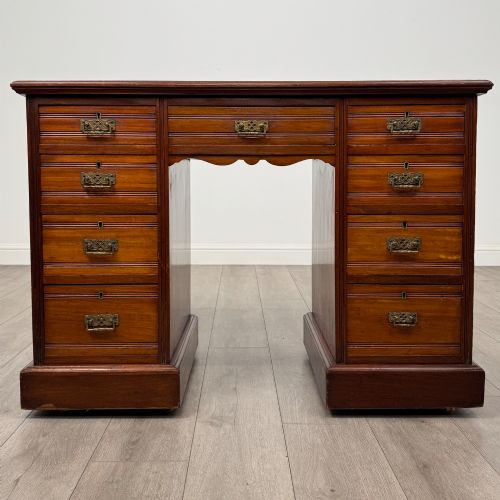
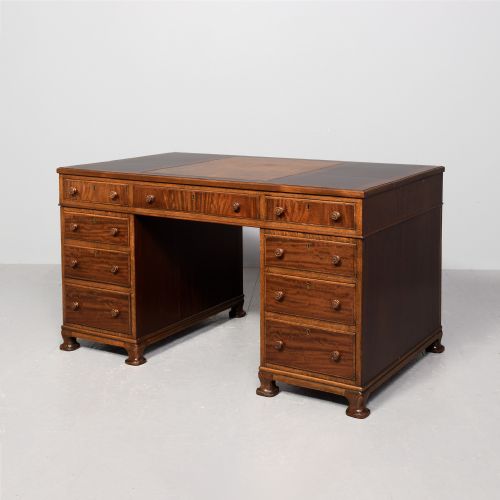
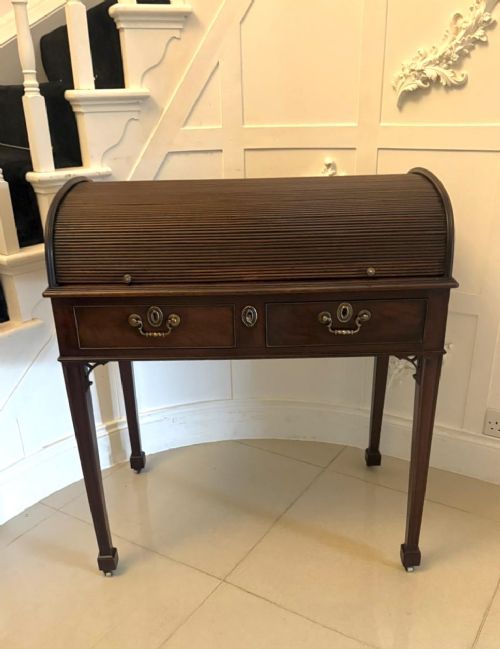
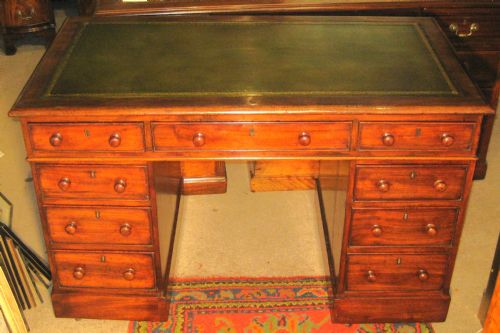
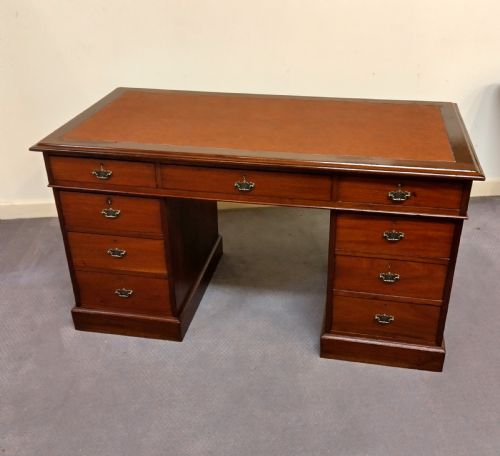
Pedestal desks form the majority of available pieces on this page, often featuring twin banks of drawers supporting a central writing surface inset with leather. Alongside these, buyers find specialised forms such as tambour top cylinder desks, bureau desks, and nineteenth-century filing cabinets.
Materials and Construction
Cabinet makers utilised solid mahogany and flame or curl mahogany veneers over secondary timbers, applying crossbanding and inlay to accentuate the grain. Writing surfaces incorporated leather inserts, frequently tooled in gilt, while structural hardware relied on brass handles, escutcheons, and iron mechanisms.
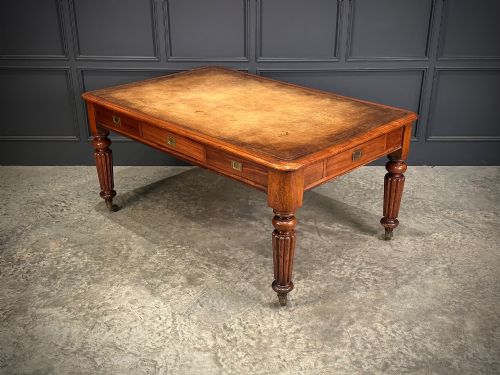
Construction techniques from the Victorian and Edwardian periods involved heavy framing, dovetailed drawer construction, and panelled pedestals built to withstand daily clerical labour. Carved pillars and decorative mouldings appeared on higher-status revival pieces, while standard office items prioritised sturdy timber framing.
Traditional Mahogany Office Furniture Retail Price Guide 2026
Typical asking prices for traditional mahogany office furniture among the pieces listed under this phrase on Sellingantiques today, from the lower quarter to the upper quarter. They describe what is for sale here now, not the wider market.
Nineteenth-century clerks accidentally spilled so much ink on pedestal desks that modern buyers now view original stained leather tops as badges of authentic office history.
Design and Execution
Quality varies according to the selection of timber grain, such as the use of highly figured flame or curl mahogany rather than plain wood, alongside the precision of crossbanding and inlay work. Superior examples exhibit refined carving on pillars and mouldings rather than mass-produced uniformity.
The architectural proportion and structural integrity dictate the grade of a piece, distinguishing standard utilitarian office desks from grand partners tables or library tables built by notable workshops.
Trollope & sons·Whytock & Reid of Edinburgh·Gillingtons of Dublin
The Traditional Mahogany Office Furniture Glossary
- Pedestal desk
- A heavy office desk featuring a central writing surface supported by two independent banks of drawers or cupboards. These units usually separate into three sections for transport.
- Partners desk
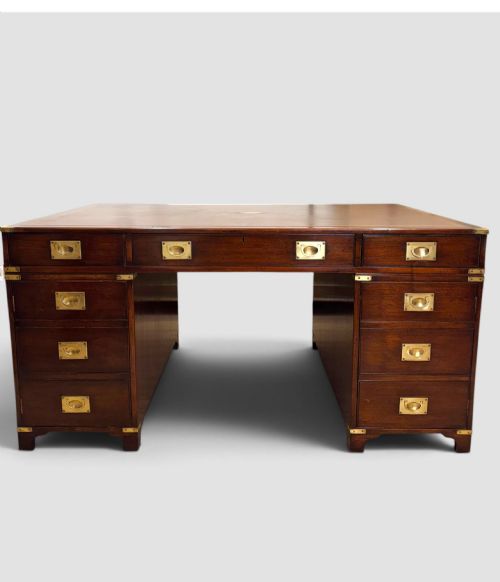
- A large double-sided writing table designed for two people to work opposite one another, featuring drawers on both long faces.
- Flame mahogany
- A veneer cut from timber where the branch junctions meet the trunk, creating a distinctive flickering flame pattern across the surface.
- Tambour
- A flexible sliding shutter formed of narrow strips of wood glued to canvas, used to enclose the upper writing section of a cylinder desk.
- Crossbanding
- A narrow strip of veneer laid perpendicular to the grain of the main surface, creating a contrasting border around drawer fronts or tabletops.
Traditional Mahogany Office Furniture: Frequently Asked Questions
How do I clean the leather top?
Maintenance requires gentle wiping with a damp cloth and occasional treatment with specialist leather cream to preserve the supple texture and any gilt tooling.
Harsh chemical cleaners and excessive water will damage the leather and ruin the antique surface finish.
How do pedestal desks dismantle?
Most twin pedestal desks separate into three manageable sections consisting of the left pedestal, the right pedestal, and the heavy top slab.
Lifting the top reveals fixing screws or wooden blocks inside the pedestals that secure the desktop to the storage bases.
What is a partners desk?
A partners desk is an oversized writing table built with drawers and cupboards on both sides so two individuals can sit face to face.
These pieces were traditionally manufactured for solicitors, bankers, and large libraries requiring shared workspace.
How do I distinguish Edwardian from Victorian desks?
Victorian desks generally display heavier proportions, darker timber tones, and robust construction suited to nineteenth-century administrative offices.
Edwardian pieces often show lighter mahogany shades, more restrained revival styles, and refined inlay work reflecting early twentieth-century tastes.